
Hà Giang
Viet Nam · Province · 10 destinations with guides
Photography coming soonWhy visit?
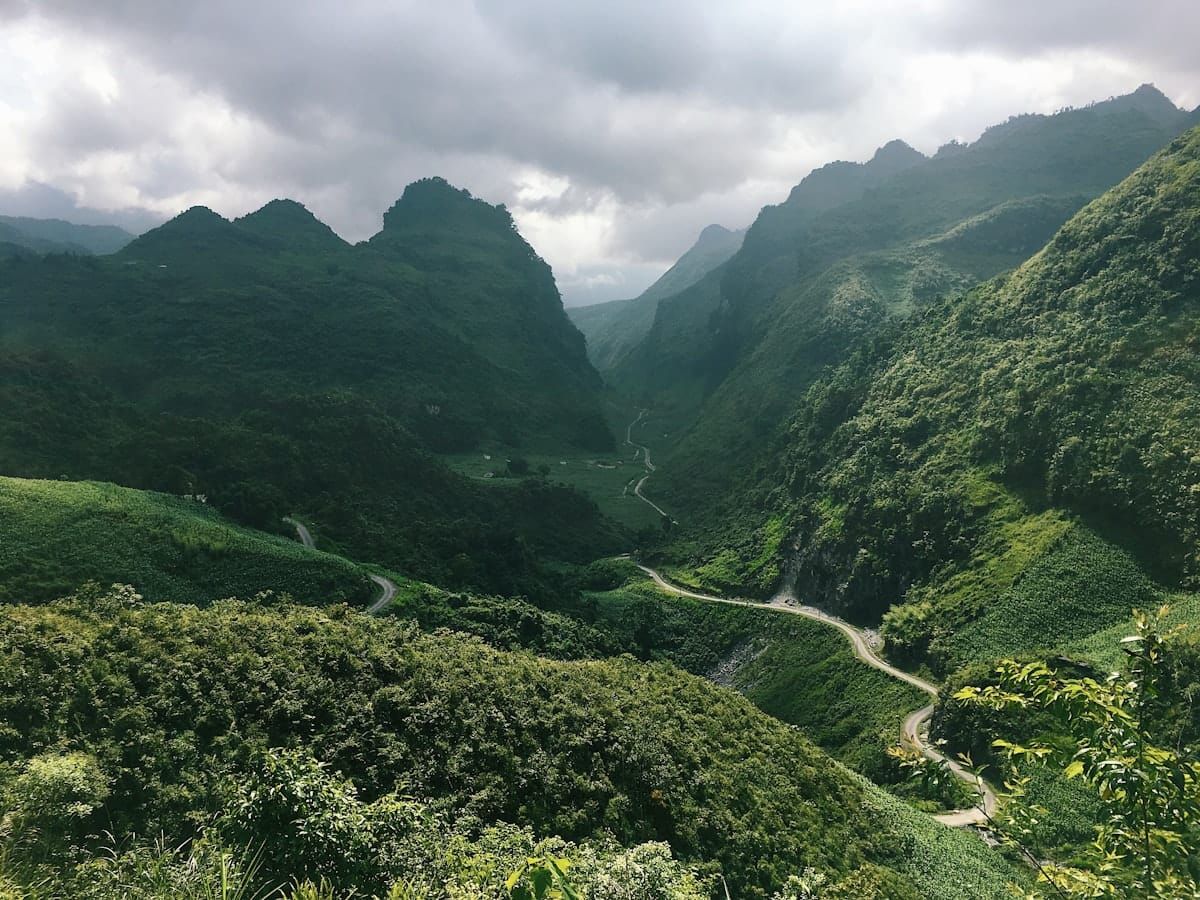
Hà Giang is Vietnam's northernmost province, sharing a 270 km border with China's Yunnan and Guangxi regions. Situated 300 km north of Hanoi, the landscape consists of steep karst limestone peaks, river valleys, and mountain passes rising above 2,000 metres. The Đồng Văn Karst Plateau, covering four northern districts, was designated a UNESCO Global Geopark in 2010.
Ethnic minority communities make up over 85 percent of the province population, including H'Mông, Dao, Tày, Lô Lô, and Giáy groups. Traditional agricultural practices shape the terrain, with corn and rice cultivated on hand-built stone terraces along mountain slopes. Weekly open-air markets serve as central trading points for livestock, handwoven textiles, and produce.
Climate varies significantly by altitude. Lowland areas around Hà Giang city experience humid subtropical conditions, while northern plateau districts like Đồng Văn and Mèo Vạc feature cool temperate weather. Annual rainfall ranges from 2,300 to 2,800 mm, with heavy monsoon precipitation concentrated between June and August.
When is the best time to visit?
- September to November: Autumn brings optimal weather and minimal rain. September marks the rice harvest in Hoàng Su Phì, turning terraced fields yellow. From mid-October through November, buckwheat (tam giác mạch) flowers bloom across Đồng Văn and Quản Bạ districts. Plateau temperatures average 15–22 °C during the day and drop to 8–12 °C at night.
- March to May: Spring offers clear skies and mild temperatures ranging from 18–26 °C. Peach, plum, and rapeseed blossoms flower across the valleys during this period.
- June to August: Summer monsoon season brings high humidity and heavy rainfall, often exceeding 400 mm per month. Flash floods and landslides frequently block mountain passes and cause travel delays. Temperatures in lower valleys range from 25–32 °C.
- December to February: Winter is cold, dry, and foggy. Night temperatures on high passes like Mã Pí Lèng occasionally drop below 5 °C. H'Mông New Year celebrations occur in rural villages during late December and January.
Tell us your dates and we'll shape a Hà Giang route around them.
WhatsAppTransport
By Bus
Express buses run daily between Hanoi's Mỹ Đình station and Hà Giang city terminal (300 km, 5.5 to 7 hours). Major operators include Bang Phan, Quang Nghi, Bằng Vượng, and Daiichi Travel. Buses run hourly throughout the morning and night. Standard sleeper bus tickets cost 250,000–350,000 VND ($10–$14 USD). VIP cabin buses with curtained berths cost 350,000–550,000 VND ($14–$22 USD). Most operators provide pickup services from Hanoi's Old Quarter.
By Train
No train service. The nearest railway stations are located in Hanoi (300 km south) and Lào Cai (200 km west).
By Car
Hà Giang city is accessible from Hanoi via Highway QL2 and Highway CT02 (Tuyên Quang–Hà Giang route). The 300 km drive takes 5.5 to 6.5 hours depending on traffic and road conditions.
By Air
No air service. The nearest commercial airport is Noi Bai International Airport (HAN) in Hanoi, located 270 km south (5 to 6 hours by road).
Getting Around
- Motorbike Rental: The standard method for traveling the 350 km Hà Giang Loop. Semi-automatic bikes (110cc Honda Wave or Blade) cost 150,000–220,000 VND ($6–$9 USD) per day. Manual off-road motorbikes (150cc Honda XR) cost 350,000–500,000 VND ($14–$20 USD) per day. Rental agencies include QT Motorbikes and Ha Giang Epic.
- Easy Rider: Passengers travel on the back of a motorcycle driven by a licensed local guide. Rates run 700,000–1,100,000 VND ($28–$44 USD) per day, covering fuel and guide fees.
- Local Taxis: Mai Linh Taxi serves Hà Giang city. Grab rideshare services do not operate within Hà Giang province.
What is there to see?
- Đồng Văn Karst Plateau UNESCO Global Geopark: A 2,350 sq km limestone mountain plateau spanning Quản Bạ, Yên Minh, Đồng Văn, and Mèo Vạc districts. Free access across public roads.
- Lũng Cú Flag Tower (Cột cờ Lũng Cú): National monument on Rồng (Dragon) Mountain marking Vietnam's northernmost border area. Entry fee: 20,000 VND ($0.80 USD).
- H'Mông King's Palace (Dinh Họ Vương): Built in 1919 in Sà Phìn village for ruler Vương Chính Đức, combining Qing Dynasty architecture with local stone craftsmanship. Entry fee: 30,000 VND ($1.20 USD).
- Mã Pí Lèng Pass: A 20 km section of Highway QL4C between Đồng Văn and Mèo Vạc running along cliff faces at 1,500 metres altitude. Free road access; parking at main viewpoint costs 10,000 VND ($0.40 USD).
- Nho Quế River & Tu Sản Canyon: River gorge located at the base of Mã Pí Lèng Pass. Boat tours operate through the canyon. Ticket: 120,000–150,000 VND ($5–$6 USD) per person, plus a 50,000 VND ($2 USD) motorcycle transfer to the boat dock.
- Hoàng Su Phì Terraced Fields: Rice terraces across Ban Luoc, Phung Village, and Nam Ty recognized as a National Heritage site. Free access along rural walking paths.
- Páo's House (Nhà của Páo): Traditional H'Mông earthen home in Sủng Là Valley featuring stone walls and tiled roofs. Entry fee: 10,000 VND ($0.40 USD).
- Quản Bạ Twin Mountains (Núi Đôi Quản Bạ): Conical karst formations visible from Quản Bạ Heaven's Gate along Highway QL4C. Free access.
Want the scenic legs and stays booked for you? Just ask.
WhatsAppWhat are the things to do?
- Ride the Hà Giang Loop: Drive or ride the 350 km mountain road circuit from Hà Giang city through Quản Bạ, Yên Minh, Đồng Văn, and Mèo Vạc over 3 to 4 days.
- Boat or Kayak on Nho Quế River: Take motorboat rides or rent kayaks (100,000–150,000 VND / $4–$6 USD per hour) along the emerald waters of Nho Quế River through Tu Sản Canyon.
- Trek in Hoàng Su Phì: Hike along mountain trails connecting Red Dao and Tày villages, passing bamboo groves and terraced hillsides.
- Visit Weekly Sunday Markets: Attend morning trading at Mèo Vạc Sunday Market or Đồng Văn Market, starting at 5:00 AM, where local villagers trade livestock, handwoven cloth, and mountain produce.
- Swim at Du Già Waterfall (Thác Du Già): Natural mountain pool and waterfall located near Du Già village in Yên Minh District. Free access.
What should you eat?
- Ngoi Do Restaurant (Hà Giang City): Spacious local restaurant serving mountain hotpots, black chicken, wild boar, and river fish. Mid-range (80,000–250,000 VND / $3.20–$10 USD per dish).
- Quang Dung Restaurant (Đồng Văn Old Quarter): Family restaurant offering regional dishes including stir-fried smoked buffalo, roasted pork, and mountain vegetables. Budget to Mid-range (50,000–150,000 VND / $2–$6 USD per dish).
- Cháo Ấu Tẩu 58 (Hà Giang City): Eatery specializing in aconite root porridge cooked with pork trotters and egg, traditionally eaten in the evening. Budget (30,000–50,000 VND / $1.20–$2.00 USD per bowl).
- Bánh Cuốn Bà Hà (Đồng Văn Town): Breakfast venue serving hot steamed rice rolls filled with egg and ground pork in bone broth. Budget (30,000–45,000 VND / $1.20–$1.80 USD per plate).
- Green Karst Restaurant (Đồng Văn): Restaurant serving local Vietnamese stir-fries alongside Western options including pizza and pasta. Mid-range (70,000–180,000 VND / $2.80–$7.20 USD per meal).
Travelling during a festival? We'll plan around the crowds.
WhatsAppWhere to stay?
- Budget:
- Ha Giang Historic Hostel (Hà Giang City): Dorm beds from 130,000–200,000 VND ($5–$8 USD) per night including breakfast.
- Dong Van Anchor Hostel (Đồng Văn): Dorm beds and basic private rooms from 150,000–350,000 VND ($6–$14 USD) per night.
- Mid-range:
- Lóng Cổn Homestay (Mèo Vạc / Pả Vị Village): Traditional Dao wooden stilt house in Pả Vị ethnic culture village. Private rooms from 450,000–700,000 VND ($18–$28 USD) per night.
- Lam Tung Hotel (Đồng Văn Old Quarter): Standard town hotel with air-conditioned private rooms from 500,000–850,000 VND ($20–$34 USD) per night.
- Upscale:
- Phoenix Hotel (Hà Giang City): 4-star hotel offering modern rooms, river views, and an on-site restaurant. Rooms from 1,200,000–2,200,000 VND ($48–$88 USD) per night.
- Plum Hillside Lodge (Đồng Văn): Stone mountain lodge overlooking valley landscapes. Private bungalows from 1,400,000–2,500,000 VND ($56–$100 USD) per night.
Where to go next?
- Cao Bằng Province: Located 240 km east of Hà Giang city via Highway QL34 (6–7 hours drive). Destination for Bản Giốc Waterfall and Pắc Bó Cave.
- Lào Cai / Sa Pa: Located 230 km west via Highway QL279 (6 hours drive). Access hub for Mount Fansipan and the Hoàng Liên Sơn range.
- Ba Bể National Park (Bắc Kạn Province): Located 210 km southeast via Highway QL279 (5.5 hours drive). Features Ba Bể Lake, limestone caves, and kayaking routes.
- Tuyên Quang City: Located 160 km south along Highway QL2 (3.5 hours drive). Highway stopover point between Hà Giang and Hanoi, near Na Hang Reservoir.
Top Destinations
Every destination in Hà Giang with a guide — tap a place for the full guide.
Bac Me
Bac Me is a rural district in southern Ha Giang province, located…
Bac Quang
Bac Quang is a district town in southern Ha Giang province, situated…
Dong Van
Dong Van is a town in the far north of Ha Giang province on the Dong…
Ha Giang
Ha Giang is the capital city of Ha Giang Province in northern…
Hoang Su Phi
Hoang Su Phi is a district in western Ha Giang province, renowned for…
Meo Vac
Meo Vac is a district town in the far north of Ha Giang province…
Quan Ba
Quan Ba is a district town in Ha Giang province, lying at the foot of…
Vi Xuyen
Vi Xuyen is a district in southern Ha Giang province, lying just…
Xin Man
Xin Man is a district in northwestern Ha Giang province, bordering…
Yen Minh
Yen Minh is a district town in central Ha Giang province, lying on…
Sample itinerary
See how a trip to Hà Giang comes together — a real Tripcuro plan, day by day.
Pair the highlights of Hà Giang into one easy trip — we'll plan the route.
WhatsApp
Contact Us
Get in touch with us.
Get in touch
Contact Us
Tell us where you'd like to go and how you like to travel. A real Tripcuro planner — not a bot — will craft an itinerary around you.
- Personalised, hassle-free planning end-to-end
- Transparent pricing, no hidden costs
- 24/7 support for complete peace of mind