
Otago
New Zealand · Region · 21 destinations with guides
Photography coming soonWhy visit?
Otago is a region of striking geographic duality, sprawling across the southeastern quarter of New Zealand's South Island from the windswept Pacific coast to the schist-and-tussock high country of the interior. Locals draw a hard mental line between Coastal Otago, anchored by the Edwardian-Gothic city of Dunedin and the Victorian streetscapes of Oamaru, and Central Otago — known simply as "Central" — a continental basin of fruit orchards, glacial lakes, and gold-rush relics ringed by the Southern Alps. Within Central sits the Queenstown-Lakes district, the country's adventure-tourism heartland, which gives Otago a reach few other regions can match: from albatross colonies and yellow-eyed penguins on one coast to bungy jumps and Pinot Noir cellars three hours inland.
The region's character was forged by the 1860s gold rush, which briefly made Otago the wealthiest part of New Zealand and seeded its towns with Scottish Presbyterian institutions, Chinese miners' settlements, and an enduring frontier streak. That legacy is everywhere — in Dunedin's bluestone university quadrangle, in the dry-stone ruins of Bendigo and St Bathans, in the cherry orchards that replaced the sluiced-out claims around Cromwell.
Travellers come for the combination: world-class Pinot Noir at 45° south, a 150-km former rail corridor turned into the country's flagship cycle trail, the Routeburn and Rees-Dart tracks reaching out of Glenorchy, and a coastline that delivers Moeraki Boulders, steampunk Oamaru, and the Otago Peninsula's wildlife in a single day's drive.
When is the best time to visit?
December to March is the headline window. Central Otago summers are hot and dry — Alexandra and Cromwell routinely hit 30–32 °C, the highest temperatures in New Zealand — perfect for cycling the Rail Trail, swimming at Lake Dunstan, or vineyard-hopping around Bannockburn. Coastal Otago is cooler and breezier; Dunedin rarely exceeds 22 °C even in January.
Autumn (April–May) is arguably the best time to visit Central, when the poplars, willows and larches around Arrowtown, Clyde and Bannockburn turn gold against the schist hills. The Arrowtown Autumn Festival runs in late April. Harvest in the wine country peaks in March–April.
Winter (June–August) is ski season — Cardrona, Treble Cone, the Remarkables and Coronet Peak all sit within the Queenstown-Lakes district. Central Otago experiences hard frosts, freezing fogs in the Maniototo basin, and occasional sub-zero nights; the Ida Valley and Naseby see outdoor curling and ice-skating in good years. Queenstown Winter Festival is held in late June.
Spring (September–November) is unpredictable but rewarding: Alexandra's Blossom Festival in late September marks the start of fruit-tree bloom around Roxburgh and Cromwell, and the lambing-season landscapes of the Maniototo are at their greenest.
Coastal Otago weather quirks: Dunedin can deliver four seasons in a day, and the cold southerly "buster" from Antarctica can drop summer temperatures by 10 °C in an hour. Central Otago's rain shadow means it is one of the driest inhabited parts of New Zealand — pack for sun and wind rather than rain.
Tell us your dates and we'll shape a Otago route around them.
WhatsAppHow do you get around?
Otago is a driving region. State Highway 1 runs the coast from Oamaru through Dunedin and on to Milton; State Highway 8 is the inland spine from Milton up through Roxburgh, Alexandra and Cromwell to Wanaka; and the scenic State Highway 85 ("the Pigroot") branches inland from Palmerston through Ranfurly and the Maniototo to Alexandra.
Rough driving distances and times:
- Dunedin → Oamaru: 115 km, ~1 h 30 min on SH1
- Dunedin → Queenstown: 280 km, ~3 h 30 min via SH8
- Dunedin → Cromwell: 215 km, ~3 h
- Queenstown → Wanaka: 70 km, ~1 h via the Crown Range (the higher, more scenic route) or 115 km, ~1 h 15 min via Cromwell
- Queenstown → Arrowtown: 20 km, ~25 min
- Queenstown → Glenorchy: 45 km, ~45 min along the lake
- Cromwell → Alexandra: 35 km, ~30 min
Air. Two airports serve the region. Dunedin Airport (DUD) has flights from Auckland, Wellington, Christchurch and Brisbane. Queenstown Airport (ZQN) is much busier internationally, with direct services from Auckland, Wellington, Christchurch and several Australian cities. There is no scheduled service to Wanaka or Oamaru.
Bus and shuttle. InterCity runs daily coach services Dunedin–Oamaru–Christchurch and Dunedin–Cromwell–Queenstown. Smaller operators (Catch-a-Bus South, Ritchies, Atomic) connect Dunedin with Invercargill and the Catlins, and shuttle services link Queenstown with Wanaka and Glenorchy. Expect one or two services a day on most routes — book ahead in summer.
Rail. There is no longer scheduled passenger rail in Otago, but the Dunedin Railways Taieri Gorge excursion train runs sightseeing trips inland from Dunedin when operating, and the disused Otago Central Railway corridor is now the Otago Central Rail Trail.
Cycling. The 150-km Otago Central Rail Trail (Middlemarch–Clyde) and the newer 55-km Lake Dunstan Trail (Smith's Way–Cromwell–Clyde) are flagship multi-day rides; bike hire and luggage transfer are available in Clyde, Alexandra, Cromwell and Middlemarch.
Taxis and rideshare. Uber operates in Queenstown and Dunedin. Outside those two cities, you'll need to call a local taxi or rely on tour operators.
Where should you go?
- Dunedin — the cultural and historic capital, with the country's oldest university, a Scottish-Edwardian streetscape, and the gateway to the Otago Peninsula.
- Queenstown — the adventure-sports capital of New Zealand, on Lake Wakatipu, ringed by the Remarkables.
- Wanaka — quieter, lake-and-mountain alternative to Queenstown, with easy access to Mount Aspiring National Park and four ski fields.
- Arrowtown — preserved gold-rush village in the Wakatipu basin, famous for autumn colour and the restored Chinese miners' settlement.
- Oamaru — Victorian-precinct port town, blue-penguin colony, and unofficial steampunk capital of New Zealand.
- Otago Peninsula — best for wildlife: Royal albatross at Taiaroa Head, yellow-eyed penguins, sea lions and Larnach Castle.
- Glenorchy — tiny lakehead settlement at the end of the road from Queenstown, trailhead for the Routeburn, Greenstone and Rees-Dart tracks and a frequent film location for The Lord of the Rings.
- Cromwell — Central Otago's fruit-and-wine hub on Lake Dunstan, with the historic Cromwell Heritage Precinct and the Bannockburn wine subregion at its doorstep.
Want the scenic legs and stays booked for you? Just ask.
WhatsAppWhat should you eat?
Otago's food identity rests on three pillars: cold-climate fruit, southern seafood, and high-country meat and game.
Stone fruit from the Cromwell-Roxburgh basin defines summer eating — cherries, apricots, peaches, nectarines and plums sold from orchard gates and roadside stalls along SH8 (Jones Family Fruit Stall in Cromwell and Mrs Jones Fruit Stall in Roxburgh are reliable; smaller roadside operations are usually better value than the coach-tour stops). Central Otago cherries (Lapins, Staccatos, Kordias) command a premium and ship worldwide in December–January.
Seafood along the coast: blue cod, groper (hāpuku), tarakihi, southern crayfish (kōura), Bluff oysters in season (March–August), Stewart Island salmon, and Aoraki salmon farmed near Twizel but commonly served in Dunedin. Fleur's Place at Moeraki is the regional benchmark for seafood; Fish Inn at Waikouaiti is the SH1 fish-and-chip stop.
Cheese and dairy. Whitestone Cheese in Oamaru (Windsor Blue, Vintage Windsor, Livingstone Gold) is the standout artisan producer; Evansdale Cheese at Waikouaiti runs a small factory shop daily 10:00–16:00.
Restaurants worth planning around.
- Riverstone Kitchen, 1431 SH1 about 10 km north of Oamaru — a destination restaurant set in its own gardens, sourcing from the on-site farm. Mains roughly NZ$38–48.
- No. 7 Balmac, Dunedin (Maori Hill) — long-running fine-dining bistro.
- Plato Café, Dunedin — seafood-driven, near the harbour.
- Amisfield Bistro, Lake Hayes (between Queenstown and Arrowtown) — vineyard tasting menu, frequently ranked among New Zealand's best.
- Rātā, Queenstown — Josh Emett's flagship.
- Mt Difficulty Cellar Door, Bannockburn — long lunches with vineyard views.
Beer and spirits. Speight's ("the Pride of the South") has been brewed in Dunedin since 1876; Emerson's, also Dunedin-based, leads the craft scene. Cardrona Distillery (between Wanaka and Queenstown) makes single-malt whisky, gin and vodka.
Dietary considerations. Vegetarian and vegan options are easy in Dunedin, Queenstown, Wanaka and Arrowtown; smaller Central Otago and Catlins towns are more limited. Gluten-free is widely catered for. Halal and kosher options are scarce outside Queenstown. Tap water is potable across the region.
What is the culture like?
Otago's cultural identity blends Kāi Tahu Māori heritage (the southern dialect uses "k" where most North Island iwi use "ng" — hence Otakou rather than Otango), a strong Scottish Presbyterian legacy from the 1848 Free Church settlement of Dunedin, and a multi-ethnic gold-rush layer that included thousands of Chinese miners whose presence is still visible at Arrowtown and Lawrence.
Dunedin is the cultural anchor: the Dunedin Public Art Gallery holds the country's oldest public art collection, the Otago Museum covers natural history and Pacific cultures, Toitū Otago Settlers Museum tells the migration story, and the city's "Dunedin Sound" indie-music heritage (The Chills, The Clean, Straitjacket Fits) gave it UNESCO City of Literature recognition in 2014.
Major annual festivals (dates approximate; confirm before travelling):
- Alexandra Blossom Festival — late September, marking the start of the fruit-bloom season; the oldest festival in Central Otago, running since 1957.
- Wanaka Festival of Colour — late March/early April (biennial in odd years), arts festival across music, theatre and visual arts.
- Arrowtown Autumn Festival — late April, parade, heritage walks and the famous gold-coloured tree-lined streets.
- Bannockburn Hāwea / Central Otago Pinot Noir Celebration — late January in Queenstown/Bannockburn, three-day celebration of the region's flagship grape.
- Queenstown Winter Festival — late June, ten-day snow-and-stage festival on the lakefront.
- Warbirds Over Wanaka — Easter weekend in even-numbered years, one of the southern hemisphere's biggest airshows at Wanaka Airport.
- Oamaru Victorian Heritage Celebrations — mid-November, full-period costume across the Victorian Precinct, penny-farthing races and Victorian fête.
- Steampunk NZ Festival — Queen's Birthday weekend (early June), Oamaru.
- iD Dunedin Fashion Week — March/April, with the railway-station runway show.
- Matariki (Māori New Year) — late June/early July, with public events in Dunedin, Queenstown and at Ōtākou Marae on the Otago Peninsula.
Crafts and traditions. Bone, paua and Tākiwai (Otago jade/serpentine) carving; the dry-stone walling of Central Otago; whisky-cask cooperage at Cardrona; and the small but distinctive Otago goldsmithing tradition that survived the rush.
Travelling during a festival? We'll plan around the crowds.
WhatsAppWhat are the standout experiences?
Cycle the Otago Central Rail Trail. The 150-km Middlemarch-to-Clyde trail follows the former Otago Central Railway through the Strath Taieri, Maniototo and Manuherikia valleys, crossing schist gorges on iron viaducts and stopping at restored station-pubs at Hyde, Waipiata, Wedderburn, Oturehua (don't miss Hayes Engineering Works and the Ida Valley) and Lauder. Most riders take 3–5 days; bike hire from around NZ$45/day with luggage transfers available.
Wildlife on the Otago Peninsula. A single afternoon out of Dunedin can take in the Royal Albatross Centre at Taiaroa Head — the only mainland breeding colony of northern royal albatross in the world — yellow-eyed penguin (hoiho) viewing at Penguin Place or Pilots Beach, New Zealand fur seals at Pipikaretu Beach, and Larnach Castle, the country's only castle.
Taste Central Otago Pinot Noir at 45° south. The world's southernmost commercial wine region produces some of New Zealand's most sought-after Pinot Noir from sub-regions including Bannockburn, Bendigo, Gibbston, Pisa and Lowburn. Cellar doors worth a stop: Felton Road and Mt Difficulty (Bannockburn), Rippon (Wanaka, with arguably the country's most photographed vineyard view), Amisfield (Lake Hayes), Carrick and Akarua. Many require booking; tasting fees typically NZ$15–30, often refundable on purchase.
The Taieri Gorge train and Dunedin's Edwardian core. When operating, Dunedin Railways' Taieri Gorge excursion runs from the country's most-photographed building — the 1906 Flemish-Renaissance railway station — inland through tunnels and viaducts to Pukerangi or Middlemarch, where Rail Trail riders join. Pair with a walk up Baldwin Street, officially the world's steepest residential street at a 35% gradient, and the Otago University bluestone quadrangle.
Steampunk Oamaru and the Victorian Precinct. Oamaru's whitestone Tyne and Harbour streets are the most intact Victorian commercial precinct in the southern hemisphere — home to Steampunk HQ, the Whitestone City living-history museum, Bookbinders and Slightly Foxed booksellers, and Scott's Brewing Co. Stay until dusk for the Oamaru Blue Penguin Colony, where little blue penguins (kororā) come ashore each evening (adult entry around NZ$40, year-round).
Walk into Mount Aspiring National Park from Glenorchy. The Routeburn Track (32 km, 2–4 days, Great Walk; book well ahead), the Rees-Dart circuit (4–5 days), and shorter day walks to Lake Sylvan and the Routeburn Flats start from road-ends beyond Glenorchy at the head of Lake Wakatipu, in some of the most photographed alpine landscapes in the country.
Top Destinations
Every destination in Otago with a guide — tap a place for the full guide.
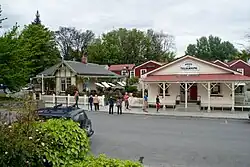
Arrowtown
Arrowtown is a picturesque former gold-mining village set on the…

Dunedin
Dunedin (pronounced "duh-NEE-din"), known as Ōtepoti in Māori, is the…
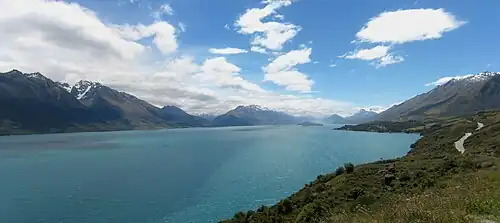
Glenorchy
Glenorchy is a tiny lakeside settlement of roughly 400 residents at…
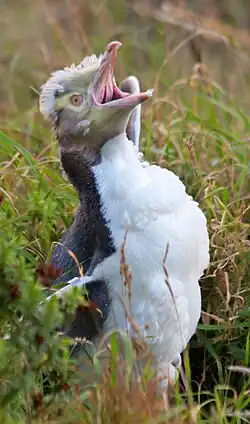
Oamaru
Oamaru (pronounced "oh-mah-ROO") is a small coastal town of around…
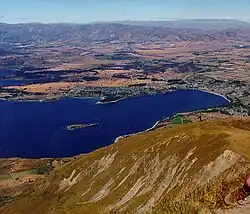
Wanaka
Wanaka is a lakeside town on the southern shore of Lake Wanaka in the…
Alexandra
Alexandra is a town in Central Otago, located at the confluence of…
Balclutha
Balclutha is the largest town in the Clutha District of South Otago…
Blueskin Bay
Blueskin Bay is a locality on the Otago coast, approximately 20 km…
Clyde
Clyde is a historic town in Central Otago, located on the Clutha…
Cromwell
Cromwell is a sun-drenched Central Otago town set at the confluence…
Lawrence
Lawrence is a historic gold mining town in the Otago region, located…
Milton
Milton is a town in South Otago, located on State Highway 1…
Mosgiel
Mosgiel is a town in the Otago region, located on the Taieri Plains…
Mount Aspiring National Park
Mount Aspiring National Park is a national park in the Southern Lakes…
Naseby
Naseby is a small historic town in the Maniototo region of Central…
Otago Peninsula
The Otago Peninsula is a long, hilly finger of land that curls…
Palmerston
Palmerston is a town in the Otago region, located on State Highway 1…
Port Chalmers
Port Chalmers is a town and the main port of Dunedin, located on the…
Queenstown
Queenstown sits on the shores of Lake Wakatipu in the Otago region of…
Ranfurly
Ranfurly is a town in the Maniototo region of Central Otago, located…
Roxburgh
Roxburgh is a town in the Teviot Valley of Central Otago, located on…
Pair the highlights of Otago into one easy trip — we'll plan the route.
WhatsApp
Contact Us
Get in touch with us.
Get in touch
Contact Us
Tell us where you'd like to go and how you like to travel. A real Tripcuro planner — not a bot — will craft an itinerary around you.
- Personalised, hassle-free planning end-to-end
- Transparent pricing, no hidden costs
- 24/7 support for complete peace of mind