
Ulaanbaatar
Mongolia · Capital city · 13 destinations with guides
Photography coming soonWhy visit?
Ulaanbaatar — Ulan Bator, "UB", or simply Khot ("the city") — is the capital and by far the largest city of Mongolia, and as an administrative unit it forms a self-governing capital region distinct from the surrounding provinces. With more than 1.6 million residents, it is home to roughly half the country's population and serves as the starting point for essentially all travel in Mongolia. The city sits at around 1,300–1,400 m above sea level in the valley of the Tuul River, ringed by mountains, with the sacred Bogd Khan Uul rising to its south.
Ulaanbaatar is a city of layers. Founded as the mobile monastic centre Urga in 1639 around the spiritual leader Zanabazar, it wandered the steppe for over a century before settling permanently at its present site in 1778. Successive eras — Qing-dynasty trading town, "Red Hero City" of the socialist period, and the booming post-1990 metropolis — have left their marks side by side. Within a five-minute walk you can pass a Buddhist monastery, a Soviet-era apartment block and a glass skyscraper. On the outskirts, vast ger districts of traditional felt tents climb the hillsides, a reminder of the rapid rural-to-urban migration that has tripled the city's population since the democratic revolution.
For travellers, Ulaanbaatar is both the gateway and a destination in its own right — the place to organise tours, museums and supplies, and to experience Mongolia's history and modern energy concentrated in one valley before heading out to the steppe.
When is the best time to visit?
The best time to visit is June to September. Summer days are mild and pleasant, averaging around 24°C, with cool nights near 13°C; July and August are the warmest and wettest, and the time of the great Naadam festival (11–13 July), the highlight of the Mongolian year. Late May, June and September offer clear skies and fewer crowds. Avoid the winter: Ulaanbaatar is the world's coldest capital, with January and February nights between roughly −15°C and −30°C, and the cold season also brings serious air pollution from coal burning in the ger districts. The cold is dry with little wind chill, but prolonged sub-zero conditions make winter sightseeing harsh. Spring can be windy and dusty.
Tell us your dates and we'll shape a Ulaanbaatar route around them.
WhatsAppHow do you get around?
Ulaanbaatar's main artery is Peace Avenue (Enkh Taivny Örgön Chölöö), running east–west through the centre past the southern edge of Sükhbaatar Square, the city's central plaza. The city centre is loosely defined by the Ikh Toiruu (Great Ring Road).
The city is served by an extensive public bus network, with electronic fare cards (the U-Money / smartcard system) used in place of cash. Taxis are ubiquitous — both metered companies and, in Mongolian fashion, ordinary cars flagged down for a per-kilometre fare — and ride-hailing apps operate in the city, a more reliable option for visitors. The centre is walkable, though traffic congestion is severe and street crossings demand caution. Be alert to overcharging by unofficial taxis and to pickpockets in crowded markets and on busy buses.
Ulaanbaatar is also Mongolia's transport hub: Chinggis Khaan International Airport (the new airport, about 50 km south of the city) handles all international flights, and the city's railway station is the heart of the Trans-Mongolian Railway, linking Beijing and Moscow. Long-distance buses to every provincial capital depart from the city's bus terminals.
What should you eat?
Ulaanbaatar offers Mongolia's widest range of food, from traditional fare to international restaurants. The national dishes anchor the scene: buuz (steamed dumplings, especially associated with Tsagaan Sar), khuushuur (fried meat pastries), tsuivan (stir-fried noodles with meat), and khorkhog (meat cooked with hot stones). The city's restaurants span Korean, Japanese, Chinese, Indian, European and Russian cuisines, and it is the easiest place in the country for vegetarian, halal and other dietary needs — a handful of dedicated vegetarian restaurants operate downtown, and modern cafés and bakeries are plentiful around Peace Avenue and Sükhbaatar Square. Markets and supermarkets make self-catering straightforward.
Want the scenic legs and stays booked for you? Just ask.
WhatsAppWhat is the culture like?
Ulaanbaatar is the cultural capital of Mongolia, with the country's leading museums, theatres and monasteries. The defining annual event is the Naadam festival (11–13 July), the national celebration of the "three manly sports" — wrestling, horse racing and archery — centred on the city's national stadium and Sükhbaatar Square, with an opening ceremony of music and dance. Tsagaan Sar, the lunar new year (January/February), is the major winter family festival. The city is a centre of Buddhist revival — Gandantegchinlen Monastery is its spiritual heart — and of the arts: traditional khöömii (throat singing), the morin khuur (horsehead fiddle), contemplative dance and the masterpieces of the 17th-century artist-monk Zanabazar are all celebrated here. Contemporary Mongolian music, theatre and a growing modern art scene round out the cultural calendar.
What are the standout experiences?
- Attend the Naadam festival in July — Mongolia's grandest celebration, with wrestling, archery and horse racing, is at its largest and most spectacular in Ulaanbaatar.
- Visit Gandantegchinlen Monastery — the country's most important active monastery, home to a towering golden statue of Migjid Janraisig and the heart of Mongolian Buddhism.
- Explore the National Museum of Mongolia — a comprehensive journey from prehistory and the Mongol Empire to the modern nation, the best single introduction to the country.
- Take a day trip to Gorkhi-Terelj National Park — dramatic rock formations, wildflower valleys and ger camps within easy reach of the city.
- See the Tsonjin Boldog Genghis Khan Statue — the colossal 40 m stainless-steel equestrian monument east of the city, with a viewing platform on the horse's head.
- Ride the Trans-Mongolian Railway — begin or end a legendary Beijing–Moscow rail journey from Ulaanbaatar's central station.
Top Destinations
Every destination in Ulaanbaatar with a guide — tap a place for the full guide.

Gandantegchinlen Monastery
Gandantegchinlen Monastery — usually shortened to Gandan — is the…
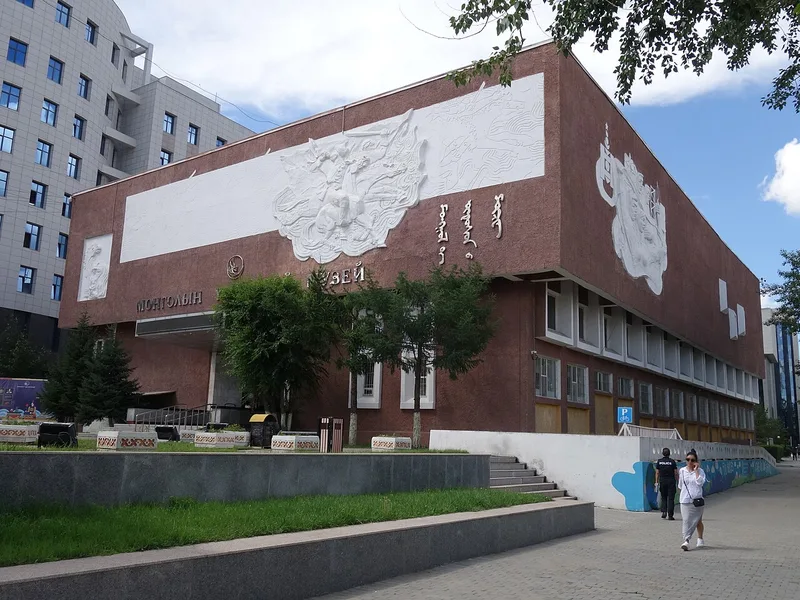
National Museum of Mongolia
The National Museum of Mongolia is the country's principal history…
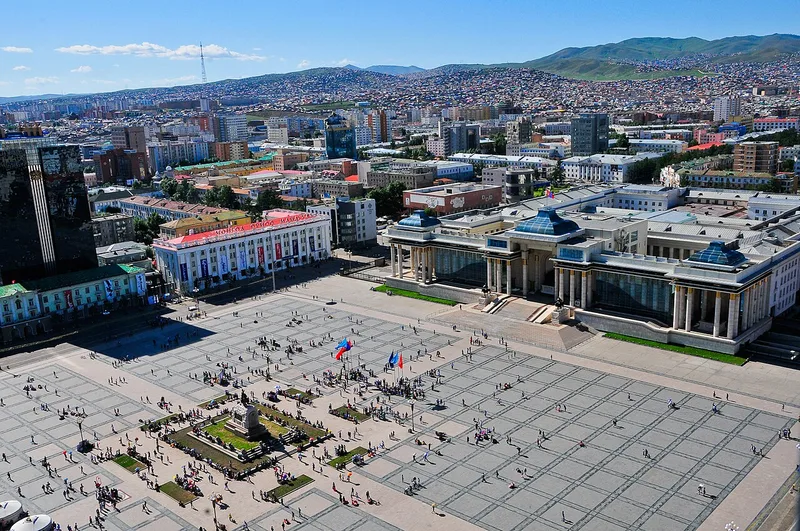
Sukhbaatar Square
Sükhbaatar Square is the vast central plaza of Ulaanbaatar and the…
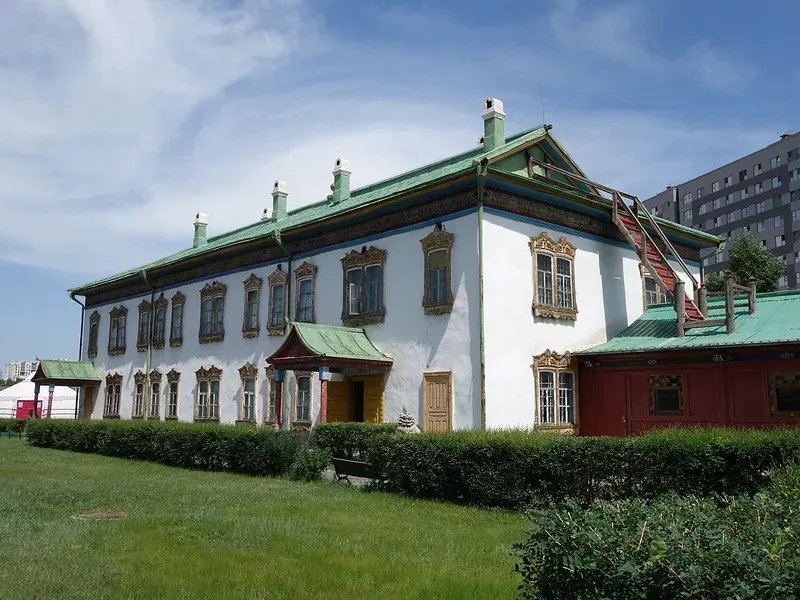
Winter Palace of the Bogd Khan
The Winter Palace of the Bogd Khan is the historic residence of…
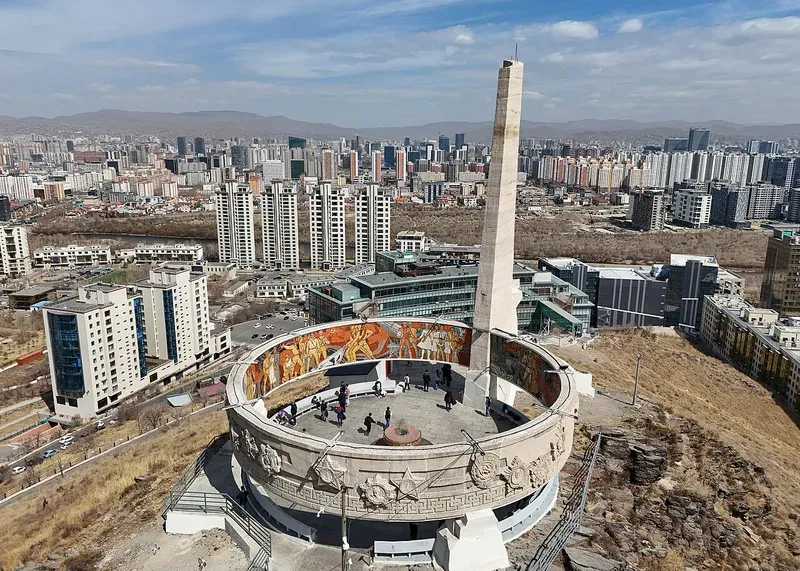
Zaisan Memorial
The Zaisan Memorial sits on a hilltop in the southern part of…
Bagakhangai
Bagakhangai is a district of Ulaanbaatar, located about 40 km south…
Baganuur
Baganuur is a district of Ulaanbaatar, located about 140 km east of…
Bogd Khan Palace Museum
The Bogd Khan Palace Museum preserves the residence of Mongolia's…
Bogd Khan Uul Strictly Protected Area
Bogd Khan Uul Strictly Protected Area (SPA) is a protected mountain…
Choijin Lama Temple Museum
The Choijin Lama Temple Museum is a beautifully preserved complex of…
Nalaikh
Nalaikh is a district of Ulaanbaatar, located about 35 km east of the…
Naran Tuul Market
Naran Tuul Market — widely known to visitors as the "Black Market"…
Ulaanbaatar
Ulaanbaatar (also spelled Ulan Bator; Mongolian: Улаанбаатар) is the…
Pair the highlights of Ulaanbaatar into one easy trip — we'll plan the route.
WhatsApp
Contact Us
Get in touch with us.
Get in touch
Contact Us
Tell us where you'd like to go and how you like to travel. A real Tripcuro planner — not a bot — will craft an itinerary around you.
- Personalised, hassle-free planning end-to-end
- Transparent pricing, no hidden costs
- 24/7 support for complete peace of mind