
Ulaanbaatar
Ulaanbaatar, Mongolia
About Ulaanbaatar
Ulaanbaatar (also spelled Ulan Bator; Mongolian: Улаанбаатар) is the capital and largest city of Mongolia, with a population of over 1.5 million — nearly half the country's population. Founded in 1639 as a nomadic monastic centre, the city has transformed into a bustling, modern capital while retaining strong connections to Mongolia's nomadic heritage. The name means "Red Hero" in Mongolian.
The city sits in the Tuul River valley at 1,350 m elevation, surrounded by four sacred mountains: Bogd Khan Uul to the south, Songino Khairkhan to the west, Chingeltei to the north, and Bayanzurkh to the east. The climate is extreme continental: long, cold winters (-25 to -35°C from November to March) and short, warm summers (20-25°C in July). The city is famous for its temperature extremes, often the coldest capital in the world. The best time to visit is June through August, though September offers beautiful autumn colours.
Ulaanbaatar is the political, economic, and cultural heart of Mongolia. It is home to the country's best museums, monasteries, restaurants, and nightlife, as well as a gateway to the surrounding natural attractions of Töv Province.
Planning Ulaanbaatar? Tell us your dates and we’ll tailor the trip.
Ask on WhatsAppHow to reach
By Plane
Chinggis Khaan International Airport (UBN IATA) is located about 50 km south of the city centre in Khoshig Valley. Opened in 2021, it is a modern facility. Taxis to the city cost 40,000-60,000₮ (30-40 minutes). Airport buses and shuttle services are also available. MIAT, AeroMongolia, Hunnu Air, and international carriers including Turkish Airlines, Korean Air, and Air China serve the airport.
By Train
The main railway station (Ulaanbaatar Station) is on the Trans-Mongolian Railway. Trains connect to Moscow (5 days), Beijing (30 hours via the Trans-Mongolian), and domestic destinations including Darkhan, Sukhbaatar, Erdenet, and Sainshand. The station is in the city centre on Peace Avenue.
By Car / Road
Ulaanbaatar is connected by paved roads to all provincial capitals, though many roads become rough outside the main routes. The city has several long-distance bus stations: Dragon Center (western destinations), Bayanzurkh (eastern destinations), and the Botanical Garden area (northern destinations).
The city has a growing public transport system including buses (500₮), trolleybuses, and a planned metro. Taxis are abundant; flag one on the street or use ride-hailing apps (see "UBCab" and similar). Fares start at about 1,500₮ within the city. Traffic congestion is severe during peak hours (08:00-10:00 and 17:00-19:00). The city is walkable in the compact central area around Sukhbaatar Square, but most sights require transport.
Things to do
Sukhbaatar Square — The central square, dominated by a statue of Damdin Sükhbaatar on horseback and the Government Palace. The palace has a large Chinggis Khaan statue in the lobby (free entry).
Gandantegchinlen Monastery (Gandan) — Mongolia's most important functioning Buddhist monastery, with a 26-m-high golden statue of Migjid Janraisig (Avalokiteshvara). Daily prayer ceremonies at 10:00. Admission 5,000₮.
National Museum of Mongolia — The country's best museum, with exhibits from prehistoric times through the Mongol Empire to the modern era. Daily 09:00-18:00. Admission 10,000₮.
Choijin Lama Temple Museum — A beautifully preserved Buddhist temple complex from the early 20th century. Daily 09:00-17:00. Admission 8,000₮.
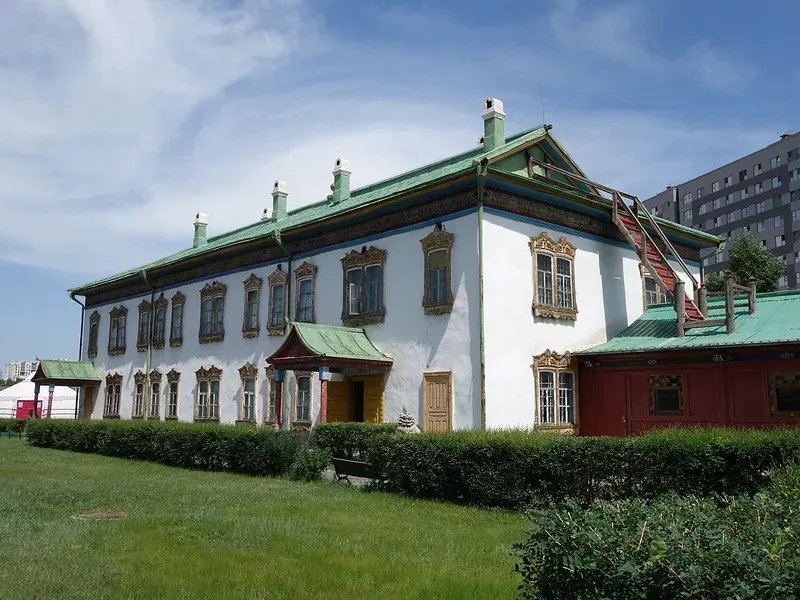
Winter Palace of the Bogd Khan — The former residence of Mongolia's last king (Bogd Khan), now a museum. Daily 09:00-18:00. Admission 8,000₮.
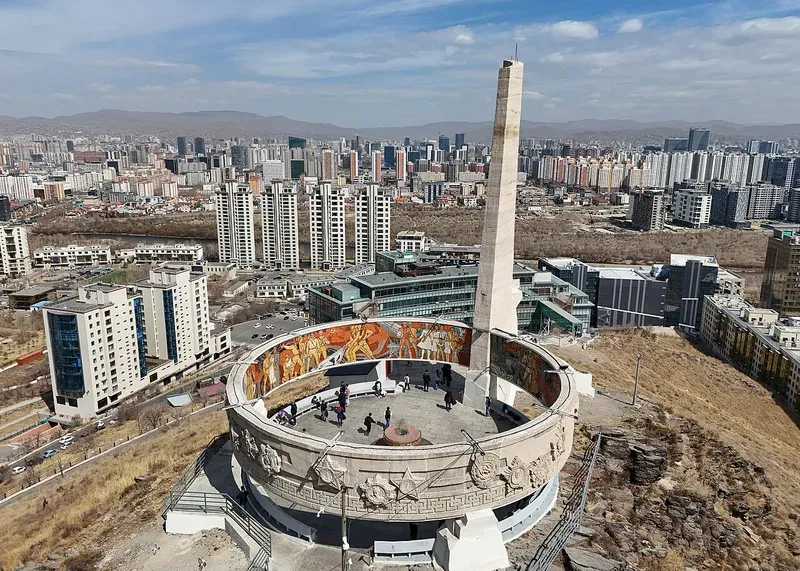
Zaisan Memorial — A Soviet-era monument on a hill south of the city, offering panoramic views of Ulaanbaatar. Free. The walk up takes about 30 minutes.
Bogd Khan Uul Strictly Protected Area — A mountain south of the city with hiking trails through forest to the summit.
Cultural Performance — The Tumen Ekh Ensemble performs traditional Mongolian music, dance, and throat singing. Daily performances at 18:00. Admission 15,000₮.
Cashmere Shopping — Ulaanbaatar is the world's cashmere capital. Visit Gobi Cashmere, Evseg, or the Narantuul (Black Market) for deals.
Dine Out — The restaurant scene includes Mongolian, Korean, Japanese, European, and fusion options.
Night Out — Bars and clubs on Seoul Street and around the State Department Store area.
Day Hikes — Hike Bogd Khan Uul for city views and forest trails.
Planning Ulaanbaatar? Want these on a customised itinerary?
Ask on WhatsAppFood & Dining
- Hazara (Indian) — Excellent Indian cuisine in the city centre. Mains 12,000-20,000₮.
- Luna Blanca (Vegetarian/ Vegan) — Creative vegetarian and vegan dishes. Mains 10,000-18,000₮.
- Modern Nomads (Mongolian) — Traditional Mongolian cuisine including khorkhog (stone barbecue). Mains 12,000-25,000₮.
- BD's (Korean BBQ) — Korean barbecue popular with locals. Mains 10,000-18,000₮.
- Khaan Buuz (Mongolian Dumplings) — Quick-service buuz and khuushuur chain. 3,000-6,000₮.
- Market Food Stalls — Khuushuur and buuz at Narantuul and local markets. 500-1,500₮ each.
Cafes & Nightlife
- Millie's Espresso — Specialty coffee and Western-style café.
- K2 Club — Popular expat bar with live music.
- Tumen Ekh Bar — Traditional airag (fermented mare's milk) bar near the cultural centre.
- Tap water in Ulaanbaatar is not safe to drink. Bottled water is cheap and widely available. Airag-alcohol content varies.
Planning Ulaanbaatar? We’ll book the stays and dining for you.
Ask on WhatsAppPlaces to Stay
- Budget — Lotus Hostel, Green Steppe Hostel: dorm beds 15,000-30,000₮, private rooms 40,000-60,000₮.
- Mid-range — Kempinski Hotel Khan Palace, Best Western Premier Tuushin: 150,000-300,000₮.
- Upscale — Shangri-La Hotel, Blue Sky Tower Hotel: 300,000-600,000₮.
- Ger Accommodation — Some guesthouses near the city offer ger stays as a budget alternative.
What to buy
- State Department Store — The city's most famous department store, with souvenirs, cashmere, and Mongolian crafts on all floors.
- Gobi Cashmere Store — The flagship store of Mongolia's premier cashmere brand.
- Narantuul Market (Black Market) — The largest market in Ulaanbaatar, selling everything from cashmere to electronics, food, and antiques. Bargaining expected.
- Cashmere Shops — Evseg, Goyo, and numerous smaller boutiques along Peace Avenue and Seoul Street.
Go next
- Terelj National Park (55 km east) — Gorkhi-Terelj National Park with granite rock formations, hiking, and horse riding.
- Hustai National Park (90 km south-west) — Home to reintroduced Przewalski's horses (takhi).
- Bogd Khan Uul Strictly Protected Area (10 km south) — A large forested mountain with hiking trails right from the city.
- Khustain Nuruu National Park (90 km south-west) — Another name for Hustai NP, same park.
- Genghis Khan Equestrian Statue (54 km east) — A 40-m-tall stainless steel statue of Chinggis Khaan, the world's tallest equestrian statue.
- Zuunmod (60 km south) — Töv provincial capital with a small museum.
Nearby in Ulaanbaatar
More places to explore around Ulaanbaatar.
Portions adapted from Wikivoyage, CC BY-SA 4.0.

Contact Us
Get in touch with us.
Get in touch
Contact Us
Tell us where you'd like to go and how you like to travel. A real Tripcuro planner — not a bot — will craft an itinerary around you.
- Personalised, hassle-free planning end-to-end
- Transparent pricing, no hidden costs
- 24/7 support for complete peace of mind