
Khar Us Lake National Park
Hovd, Mongolia
Why visit Khar Us Lake National Park?
Khar Us Lake National Park protects the second-largest freshwater lake in Mongolia, lying in the desert basin of Hovd Province in the country's far west. "Khar Us Nuur" means "Black Water Lake", though its waters are in fact shallow, reed-fringed and alive with birds. Fed mainly by the Khovd River flowing down from the Altai Mountains, the lake is part of a chain of basin lakes — together with Khar Lake and Dörgön Lake — set among sand dunes, marshes and steppe. The park was established to safeguard this wetland and its extraordinary birdlife within an otherwise arid landscape.
The park's distinction is its wetland: a vast expanse of open water and dense reedbeds that forms a crucial oasis on a major migratory flyway. It is one of the most important breeding and stopover sites for waterfowl in Central Asia, with relict, dalmatian and great white pelicans, geese, ducks, swans, herons and waders all recorded here, and the surrounding desert-steppe holding wild Bactrian camels, gazelles and raptors. For visitors, Khar Us Lake is above all a birdwatching and nature destination — a place of big skies, water, dunes and silence, close enough to the provincial capital to make an easy excursion.
The climate is harshly continental: long, very cold winters and hot, short summers, with little rain. The realistic visiting window is late spring to early autumn (May to September). Spring and autumn are best for migratory birds, while summer brings warm days and the breeding season; winter freezes the lake and access becomes difficult. There are no towns inside the park — only scattered herder camps and the small sums around its edges — so the practical base is Khovd city, about 40 km away.
Planning Khar Us Lake National Park? Tell us your dates and we’ll tailor the trip.
Ask on WhatsAppHow do you get there?
By Plane
The nearest airport is Khovd Airport (IATA: HVD), around 6 km south of Khovd city and roughly 40–50 km from the lake. Khovd is served by flights from Ulaanbaatar on Hunnu Air and AeroMongolia. From the airport, a taxi runs on the standard local rate of about ₮500 per km into Khovd, where you arrange onward transport to the park.
By Car / Road
The park is reached overland, almost always from Khovd city, about 40 km to the west. The route runs over unpaved desert and steppe tracks, and a 4WD vehicle with a driver who knows the area is essential — there are no road signs and the marshy lake margins can be confusing. Allow one to two hours from Khovd depending on the exact destination on the lakeshore and on conditions. Most visitors hire a jeep or furgon (4×4 UAZ van) at Khovd's central market, or come on a guided tour. There is no scheduled bus or public transport to the lake itself; the shared vehicles that leave Khovd for the surrounding sums (such as Mankhan, Buyant and Durgun) can drop travellers near the park's edges but do not serve viewpoints or camps.
There is no public transport, walking infrastructure or ride-hailing within the park. Getting around means the 4WD and driver that brought you, supplemented by walking along the shore and dunes once you reach a chosen spot. For birdwatching, a local guide is invaluable — they know where the pelican colonies and best viewing points are, and how to reach the water's edge through the reedbeds without getting stuck. Boats can sometimes be arranged informally with herders for closer access to nesting islands; agree terms in advance. Distances around the lake are large, so plan each day's route with your driver.
What are the things to do?
Lakes and wetlands
- Khar Us Lake (Khar Us Nuur) — The centrepiece: a huge, shallow, reed-ringed freshwater lake, Mongolia's second largest, and a magnet for water birds. Open access; no ticket booth, though a national park fee may be collected.
- Reedbed islands and the Khovd River delta — Dense reed islands within the lake host major breeding colonies of pelicans and other waterfowl; the river delta where the Khovd enters the lake is especially rich.
- Khar Lake and Dörgön Lake — Neighbouring basin lakes within or beside the park, set among sand dunes, worth combining with Khar Us on a longer trip.
Landscapes
Sand dunes and desert-steppe — The lakes are framed by dunes and arid steppe, a striking contrast of water and desert that is itself a sight.
Birdwatching — The headline activity: with binoculars and a guide, watch pelicans, swans, geese, herons and migrating waders from the shore and dunes. Spring and autumn migrations and the summer breeding season are the highlights.
Wildlife and nature photography — Big skies, water, dunes and birds make for outstanding photography, especially at dawn and dusk.
Walking and dune hikes — Explore the shoreline and climb the surrounding sand dunes for panoramic views over the lake.
Boating — Where it can be arranged with herders, a small boat gives the closest views of the reedbed bird colonies — keep a respectful distance from nesting birds.
Visiting herder camps — Families living around the park's edge offer a glimpse of life in this desert-and-water landscape.
Planning Khar Us Lake National Park? Want these on a customised itinerary?
Ask on WhatsAppWhere to eat?
There are no restaurants within Khar Us Lake National Park. Visitors either bring their own food and cook with their group, or eat with herder families if a homestay is arranged. Provisions should be bought in Khovd.
- Self-catering — Carry staples, snacks and a stove; this is the standard approach for anyone camping at the lake.
- Homestay meals — If staying with a herder family, expect home-style Mongolian fare: mutton, milk tea, buuz (steamed dumplings) and dairy products such as aaruul (dried curds).
- Dining in Khovd — For a proper meal, the canteens and restaurants of Khovd city, about 40 km away, are the realistic option.
Vegetarians should plan ahead and carry their own food; meat-free and gluten-free options are not available at the lake.
Where to drink?
There is nowhere to buy drinks within the park, so carry plenty of water. Lake and river water should not be drunk untreated — the lake is a shallow, bird-rich wetland — so boil, filter or treat all water, or bring bottled water from Khovd. Herder families may offer süütei tsai (salty milk tea) and, in summer, airag (lightly alcoholic fermented mare's milk). For bars and cafés, you will need to return to Khovd.
Planning Khar Us Lake National Park? We’ll book the stays and dining for you.
Ask on WhatsAppWhere to stay?
- Budget: Camping with your own tent is the most common way to stay — pitch on the shore or among the dunes; it is free, but bring everything you need and practise leave-no-trace. Informal herder homestays around the lake offer a bed in a ger with meals, typically around ₮25,000–60,000 per person per night, arranged through a guide.
- Mid-range: Seasonal tourist ger camps sometimes operate near the lake or along the Khovd River in summer, offering gers with beds and shared facilities; availability is limited and they close outside the warm months.
What should you buy?
There are no shops, markets or craft stalls inside the park — bring all the food, water, fuel and supplies you need from Khovd city, whose central market is the place to stock up (closed Thursdays). Herder families around the lake may sell small handmade items such as felt goods or woollens; buying directly supports them, and prices are modest with little bargaining expected. Do not rely on finding anything to buy at the lake itself.
Where to go next?
- Khovd (~40 km, 1–2 hr) — The provincial capital and the natural base for the park, with the airport, market, museum and hotels.
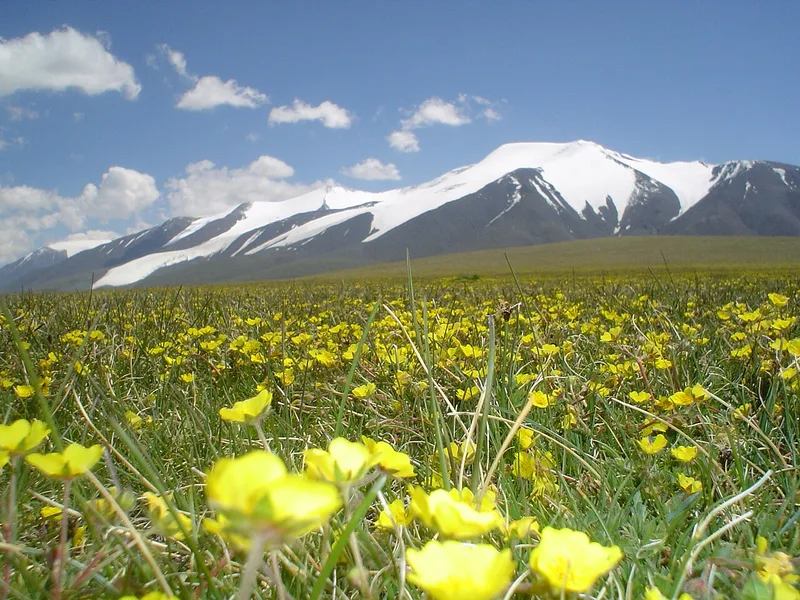
- Tsambagarav Uul National Park (toward the Bayan-Ölgii border) — A glacier-capped Altai massif and snow-leopard habitat.
- Dörgön Lake (adjacent basin lake) — A scenic lake among dunes, often combined with Khar Us on a longer trip.
- Mankhan sum (~100 km from Khovd) — Site of the Tsenkheriin Agui cave paintings, around 15,000 years old.
- Ölgii (~210 km from Khovd) — The Kazakh-majority capital of Bayan-Ölgii and gateway to the Altai Tavan Bogd.
Nearby in Hovd
More places to explore around Khar Us Lake National Park.

Guide content as of May 2026. Portions adapted from Wikivoyage, CC BY-SA 4.0.

Contact Us
Get in touch with us.
Get in touch
Contact Us
Tell us where you'd like to go and how you like to travel. A real Tripcuro planner — not a bot — will craft an itinerary around you.
- Personalised, hassle-free planning end-to-end
- Transparent pricing, no hidden costs
- 24/7 support for complete peace of mind