
Shibuya
Tokyo, Japan
Why visit Shibuya?
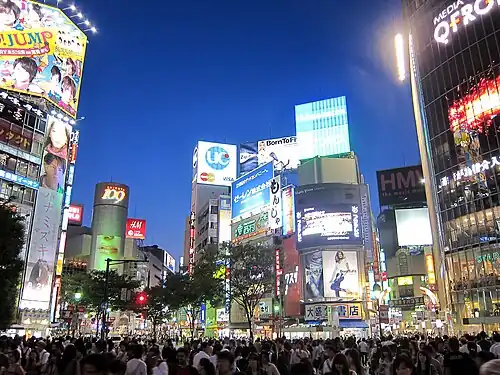
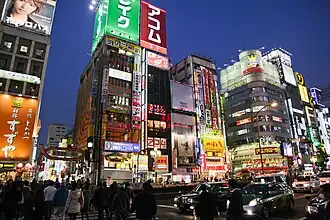
Shibuya (渋谷) is one of Tokyo's most famous shopping and entertainment districts, a magnet for young Tokyoites and a global byword for the city's youth culture. It is dense, neon-lit and energetic, with what feels like more giant outdoor video screens than anywhere else on earth. Most of the action concentrates in the hectic blocks northwest of Shibuya Station.
The best place to get your bearings is the Hachikō exit, which opens onto Shibuya Crossing — the celebrated five-way pedestrian scramble beneath a wall of video screens. Radiating from the square are the Dōgenzaka slope, the 109 building, Bunkamura-dōri, Center-gai, the Q-FRONT building with its monstrous screen, Kōen-dōri and Inokashira-dōri. South of the station, beyond an elevated highway, redevelopment continues with the Shibuya Stream and Sakura Stage complexes. Two large neighbourhoods within Shibuya ward — Harajuku (with Omotesandō, Yoyogi Park and Meiji Shrine) and the nightlife district of Ebisu — are usually treated as separate areas.
Shibuya shares Tokyo's humid subtropical climate: mild winters, hot and humid summers, a rainy season from June into early July, and a typhoon risk in September. Spring and autumn are the most pleasant. The district is busiest in the evenings and at weekends, when the crossing is at its most spectacular.
Planning Shibuya? Tell us your dates and we’ll tailor the trip.
Ask on WhatsAppHow do you get there?
By Plane
From Narita Airport (NRT), the JR Narita Express runs directly to Shibuya every 30–60 minutes, taking about 70 minutes for ¥3,190. Alternatively, take the Keisei Skyliner to Nippori and change to the JR Yamanote Line (about 75 minutes, ¥2,670); budget travellers can use a regular Keisei limited express to Nippori then the Yamanote (about 110 minutes, ¥1,230). Airport limousine buses serve the Shibuya Excel Hotel Tokyu and Cerulean Tower Tokyu Hotel (90–120 minutes, ¥3,100). From Haneda Airport (HND), take the Keikyu Airport Line to Shinagawa and change to the JR Yamanote Line (about 35 minutes, ¥580); limousine buses also serve Shibuya hotels (about 1 hour, ¥1,030).
By Train
Shibuya Station is a notoriously convoluted web of passageways — follow the signage carefully. It is served by JR (Yamanote, Saikyo, Shonan-Shinjuku lines), Tokyu (Tōyoko and Den-en-toshi lines), the Keio Inokashira Line, and Tokyo Metro (Ginza, Hanzomon and Fukutoshin lines). The Tōkyū Tōyoko Line, several storeys underground, is the cheapest and most convenient route to Yokohama and connects through to the Fukutoshin Line for points north. You can also walk to Ebisu and Harajuku to pick up Yamanote trains.
By Car / Road
Shibuya is reached via Tokyo's expressway network, but driving into the district is impractical given congestion and parking costs. Highway buses generally use other terminals; airport limousine buses are the main long-distance road option.
Shibuya's core is compact and best explored on foot, with the surrounding districts (Harajuku, Ebisu, Omotesandō) all within walking distance. The JR and subway lines handle longer trips, with fares from about ¥150–180; IC cards (Suica, PASMO) are simplest. Taxis are widely available but pricey. There are no tuk-tuks. The area is safe, though watch for nightlife touts on Dōgenzaka; avoid bars without posted prices.
What are the things to do?
Shibuya Crossing — The world-famous scramble crossing, with crowds surging in every direction. The renovated Starbucks above the crossing offers a classic vantage point for photos.
Hachikō (ハチ公) — The small statue of the loyal Akita dog outside the Hachikō exit, Tokyo's best-known meeting point. Hachikō waited at the station for his late owner for almost ten years; the statue draws a constant crowd and makes for great people-watching.
Center-gai (センター街) — The narrow street leading off the crossing, birthplace of many Japanese youth fashion trends and packed with clothing shops, music stores and arcades.
Moyai Statues (モヤイ像) — A popular meeting spot on the south side of the station, a local spin on Easter Island's moai carved from volcanic pumice; the inspiration for the 🗿 emoji.
Bunkamura — On Bunkamura-dōri, a cultural complex with an art museum and theatres for film and stage.
Shibuya Hikarie (渋谷ヒカリエ) — A major tower on the east side with restaurants, galleries and theatres, opened in 2012.
Myth of Tomorrow (明日の神話) — A huge mural by artist Tarō Okamoto commemorating the Hiroshima bombing, near the Inokashira line entrance about 100 m from Hachikō.
Watch the crossing — Simply observing Shibuya Crossing from street level or an elevated café is an experience in itself.
Visit the Tokyo Anime Center — 2F Shibuya MODI, Jinnan 1-21-3. Information, screenings, demonstrations and events around anime and gaming; free except for special exhibitions, open 11:00–20:00.
Browse arcades and electronics stores — Center-gai and the surrounding streets are full of game arcades and tech shops.
See a film — Several cinemas operate in and around the district.
Experience the nightlife — Dōgenzaka and the surrounding blocks hold a dense concentration of clubs and bars.
Planning Shibuya? Want these on a customised itinerary?
Ask on WhatsAppWhere to eat?
In Shibuya you cannot turn around without spotting restaurants — from one-coin (under ¥500) noodle bowls to gourmet dining. Center-gai and the side streets are thick with ramen shops, curry houses and casual eateries; the department-store food halls offer quick bites; and the upper floors of buildings like Hikarie hold more refined restaurants. Kujiraya (Dōgenzaka 2-29-22) is an unusual specialist serving whale-meat dishes. Vegetarian and international options are increasingly common, but it is worth checking menus in advance for specific dietary needs.
Where to drink?
Dōgenzaka and the blocks around Center-gai hold a dense cluster of bars, clubs and izakaya, making Shibuya one of Tokyo's prime nightlife districts. Stylish cafés are everywhere, including a branch of Paris's Les Deux Magots in Bunkamura. Tap water across Tokyo is safe to drink.
Planning Shibuya? We’ll book the stays and dining for you.
Ask on WhatsAppWhere to stay?
- Budget — Hostels and capsule hotels around Shibuya offer beds from roughly ¥3,000–5,000.
- Mid-range — The Shibuya Excel Hotel Tokyu, atop the station's Mark City complex, is a convenient mid-to-upper option.
- Upscale — The Cerulean Tower Tokyu Hotel on Dōgenzaka is the district's landmark high-end property.
What should you buy?
Shibuya is a shopping powerhouse, much of it dominated by the Tokyu conglomerate (and challenger Seibu). For anime and manga, Mandarake (BEAM B2F, Udagawa 31-2) is a massive trove of manga, figurines and collectibles. For fashion, the 109 Building ("Ichi-maru-kyū") is the teenage-fashion icon, and Marui (0101) carries higher-end brands. For music, Shibuya is rich ground — Tower Records on Kōen-dōri is famously huge, Disk Union on Center-gai specialises in punk, rock, jazz and dance, and RECOfan (Magnet 6F) is a vast second-hand hall with records from ¥100. Hands (12-18 Udagawa-chō) and Loft cover crafts, hobby goods, stationery and homeware. Prices are fixed; bargaining is not customary.
Where to go next?
- Harajuku — A 15-minute walk or one Yamanote stop north, with Takeshita-dōri and Meiji Shrine.
- Ebisu — Just south within Shibuya ward, a refined dining and nightlife district.
- Shinjuku — One Yamanote stop, Tokyo's vast secondary centre.
- Roppongi — A short ride east, known for museums and nightlife.
- Yokohama — About 30 minutes south on the Tōkyū Tōyoko Line, a major port city.
- Daikanyama — One stop from Shibuya on the Tōyoko Line, a stylish, low-rise neighbourhood.
Nearby in Tokyo
More places to explore around Shibuya.

Guide content as of May 2026. Portions adapted from Wikivoyage, CC BY-SA 4.0.

Contact Us
Get in touch with us.
Get in touch
Contact Us
Tell us where you'd like to go and how you like to travel. A real Tripcuro planner — not a bot — will craft an itinerary around you.
- Personalised, hassle-free planning end-to-end
- Transparent pricing, no hidden costs
- 24/7 support for complete peace of mind