

Akihabara
Tokyo, Japan
Why visit Akihabara?
Akihabara (秋葉原), known in slang as Akiba, is Tokyo's "Electric Town", on the eastern edge of the central Chiyoda ward. The area is packed with thousands of shops selling every imaginable technological gadget — computers, gaming consoles, cameras, components — generally at reasonable prices. Over time it has become equally identified with anime and manga subculture, earning the nickname "Gamer's Mecca" and drawing legions of otaku enthusiasts known as Akiba-kei.
The district radiates out from Akihabara Station along its main thoroughfare, Chūō-dōri (中央通り), which is lined with massive neon-lit storefronts; smaller streets branching off hold even more shops, and prices tend to improve the further you stray from the main street (though the shops also become less foreigner-friendly). Akihabara is also Japan's last great stronghold of classic arcade gaming, with the towers of major arcade operators impossible to miss. The local Akiba Info tourist office sits on the 2F of the Akihabara UDX building.
Akihabara shares Tokyo's humid subtropical climate: mild winters, hot and humid summers, a June–early July rainy season, and a typhoon risk in September. Spring and autumn are most comfortable. The district is busiest at weekends, especially Sundays.
Planning Akihabara? Tell us your dates and we’ll tailor the trip.
Ask on WhatsAppHow do you get there?
By Plane
There is no direct airport connection, but Akihabara is easily reached. From Narita Airport (NRT), take the Keisei Skyliner to Nippori and change to the JR Yamanote Line (about 55 minutes total, ¥2,550), or the Narita Express to Tokyo Station and connect (about 75 minutes, ¥2,940); the cheaper Keisei limited express raises travel time to about 90 minutes but lowers the fare to ¥1,150. From Haneda Airport (HND), take the Tokyo Monorail to Hamamatsuchō and change to the JR Yamanote Line (about 40 minutes, ¥620).
By Train
Akihabara centres on Akihabara Station, on the JR Yamanote, Keihin-Tōhoku and Chuo-Sōbu Local lines — take the "Akihabara Electric Town" exit to land in the middle of the action. It is also the terminus of the Tsukuba Express Line to Tsukuba and points in Ibaraki and northern Chiba (about 45 minutes to Tsukuba). Subway access is via Akihabara Station on the Hibiya line, or nearby Suehirochō and Kanda stations on the Ginza line; Iwamotochō Station on the Toei Shinjuku line is a 10-minute walk.
By Car / Road
Akihabara is reached via Tokyo's expressway network, but driving in is impractical given congestion and parking costs. The rail and subway network is overwhelmingly the better choice.
Akihabara is compact and explored entirely on foot — the whole district is a walkable cluster of shops, arcades and cafés around the station. On Sunday afternoons the main Chūō-dōri is closed to vehicle traffic, becoming a pedestrian zone. Subway and JR lines cover longer trips, with fares from about ¥180; IC cards (Suica, PASMO) are simplest. There are no tuk-tuks. Watch out for aggressively touting maid-café and "guide" promoters on the street; ignore them and choose venues with clearly posted prices.
What are the things to do?
Kanda Myōjin Shrine (神田明神) — 2-16-2 Sotokanda, to the left off Chūō-dōri walking toward Ueno. Akihabara's own shrine, where you can buy a charm (around ¥1,000) said to protect electronic devices; noted for its festival around May. Free.
AKB48 Theater — On the top floor of Don Quijote, home venue of the home-grown idol group AKB48, which performs six days a week (ticket lottery applies; around ¥3,000 for men, ¥2,000 for women).
Arcades — Akihabara is one of the world's last great arcade-gaming hubs. The towers of Taito Station ("Hey" on Chūō-dōri) and GiGO are landmarks; recommended for both classic 1980s games and the latest crazes.
Sunday street scene — When Chūō-dōri closes to traffic on Sundays, the street fills with cosplayers, performers and small vendors.
Purikura booths — Take photo-sticker pictures in one of the district's many purikura booths, many of which lend cosplay clothing.
Game in the arcades — Spend an afternoon among retro cabinets and cutting-edge machines.
Visit a maid café — A quintessentially Akihabara experience, with themed service and entertainment; check prices and cover charges before entering.
Browse on a Sunday — The pedestrianised main street, with its performers and flea-market atmosphere, is the day to come.
Take purikura — Photo-sticker booths are a fun, only-in-Japan diversion.
Planning Akihabara? Want these on a customised itinerary?
Ask on WhatsAppWhere to eat?
Akihabara's dining leans casual and themed. The district is thick with ramen shops, curry houses (Japanese-style curry rice is a local staple) and cheap eateries catering to long shopping sessions. Its signature dining experiences are the maid cafés and other themed restaurants, where the novelty service is the point. Department-store and building food floors offer more conventional meals.
Where to drink?
Akihabara's drinking scene revolves around its themed venues — maid cafés serving novelty drinks and desserts, and concept bars tied to anime and gaming franchises — alongside ordinary izakaya and standing bars near the station. Tap water across Tokyo is safe to drink.
Planning Akihabara? We’ll book the stays and dining for you.
Ask on WhatsAppWhere to stay?
- Budget — Akihabara and nearby districts have capsule hotels and hostels, with beds from roughly ¥3,000–6,000.
- Mid-range — Numerous business hotels around the station, typically ¥10,000–20,000 per night.
- Upscale — Higher-end options are limited in Akihabara itself; the luxury hotels of Marunouchi and central Tokyo are a short ride away.
What should you buy?
Shopping is the entire point of Akihabara.
Electronics — Massive multi-floor stores line Chūō-dōri. Yodobashi Akiba, at the JR Showa-dōri exit, is Yodobashi's nine-storey flagship (daily 09:30–22:00) with everything from PCs to cameras, multilingual staff and tax-free service. LaOX Duty Free and ONODEN specialise in export products with multilingual staff. Radio Center, near the Electric Town exit, is a two-floor warren of tiny shops selling LEDs, capacitors, meters and components — a flashback to old Akiba. Note that Japanese AC electronics run on 100 volts and may need a transformer abroad; many lack international warranties. Larger shops can arrange tax exemption on purchases over ¥10,000 with your passport.
Anime and manga — Along Chūō-dōri, Animate offers seven floors of otaku goods, Comic Toranoana is a dōjinshi haven, Mandarake is an eight-floor second-hand shop for manga, games, toys and collectibles, Book-Off has floors of manga, and Radio Kaikan holds many separate figure and goods shops. For figurines, do not buy the first one you see — prices vary widely between shops and even within the same store.
Prices are generally fixed, though used and street-vendor goods are negotiable; bargaining is not the norm in chain stores.
Where to go next?
- Ueno — One JR stop north, with its museums, park and zoo.
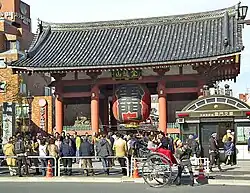
- Asakusa — Nearby, home to Sensō-ji temple.
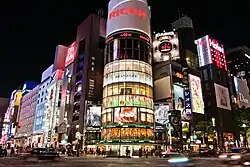
- Ginza — A short ride south, the luxury shopping district.
- Tokyo Station / Marunouchi — A few stops away, the polished business core.
- Tsukuba — About 45 minutes on the Tsukuba Express, a science city in Ibaraki.
- Tokyo Skytree — A short hop east, the city's tallest tower.
Nearby in Tokyo
More places to explore around Akihabara.
Guide content as of May 2026. Portions adapted from Wikivoyage, CC BY-SA 4.0.

Contact Us
Get in touch with us.
Get in touch
Contact Us
Tell us where you'd like to go and how you like to travel. A real Tripcuro planner — not a bot — will craft an itinerary around you.
- Personalised, hassle-free planning end-to-end
- Transparent pricing, no hidden costs
- 24/7 support for complete peace of mind