
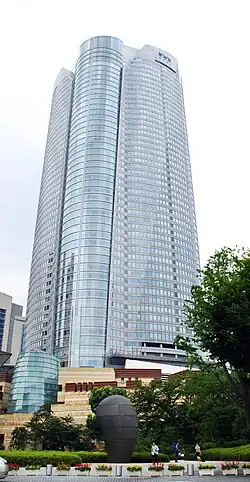
Roppongi
Tokyo, Japan
Why visit Roppongi?
Roppongi (六本木) is an upscale section of Tokyo's Minato ward, long famous for its nightlife — much of it geared toward foreign visitors — and increasingly a daytime destination thanks to two enormous shopping-and-dining complexes and a cluster of major museums. The name means "six trees", after six old, large trees that once marked the area; nothing of that era survives, the district having been levelled first by the 1923 earthquake and then by World War II bombing.
Nightlife has thrived here since the 19th century, driven first by the Japanese and later the American military presence, and since the 1960s by a famous disco and club scene. In recent decades Roppongi has also become a magnet for corporate headquarters — Google, Apple, Goldman Sachs and others — with three large office-and-entertainment skyscrapers built to accommodate the growth. It is the most cosmopolitan place in Japan, with the highest concentration of embassies and foreign residents, and a genuine modern-art hub. Despite the frenzy, it keeps peaceful green corners, small parks, temples and ordinary residential life in its back alleys. The quieter, largely residential area of Azabu lies to the south and west.
Roppongi shares Tokyo's humid subtropical climate: mild winters, hot and humid summers, a June–early July rainy season, and a September typhoon risk. Spring and autumn are most comfortable.
Planning Roppongi? Tell us your dates and we’ll tailor the trip.
Ask on WhatsAppHow do you get there?
By Plane
There is no direct airport rail link, but Roppongi is easily reached from central Tokyo. From Narita Airport (NRT), take an airport train (Skyliner or Narita Express) into the city and transfer to the Hibiya or Ōedo subway lines. From Haneda Airport (HND), take the Tokyo Monorail or Keikyu line toward central Tokyo and connect to the subway.
By Train
The Tokyo Metro Hibiya Line (H04) crosses Tokyo from southwest to northeast via Ebisu, Ginza, Akihabara and Ueno. The Toei Ōedo Line (E23) loops around the city in a rough "6" shape and is the best route from Shinjuku or Yoyogi. Roppongi can also be reached on foot from nearby stations including Tameike-Sannō (Ginza line), Roppongi-Itchōme (Namboku line) and Nogizaka (Chiyoda line) — check a map first, as these lie in different directions.
By Car / Road
Roppongi is reached via Tokyo's expressway network, but driving in is impractical given congestion and parking costs. Until about 21:00 you can catch an eastbound Toei public bus (T01/都01) along Roppongi-dōri, beneath the elevated highway, running between Shibuya and Shimbashi stations.
Roppongi's core is compact and walkable, centred on Roppongi Crossing, the big intersection of Roppongi-dōri and Gaien-higashi-dōri under the elevated highway. From Shibuya you can walk east to Roppongi in about 40 minutes via Roppongi-dōri, or hop on a frequent daytime bus along the same road. A pleasant approach is to alight at Azabu-jūban, enjoy the shopping street, then walk north to Roppongi (about 10 minutes), nice at night. The Hibiya and Ōedo subway lines cover longer trips, with fares from about ¥180; IC cards are simplest. Watch for nightlife touts around the crossing — ignore them and avoid bars without posted prices.
What are the things to do?
- Roppongi Hills (六本木ヒルズ) — 6-10-1 Roppongi. A vast, sleek shopping and entertainment complex centred on the 53-storey Mori Tower. Open daily 07:00–03:00; entry to the complex is free.
- Mori Art Museum (森美術館) — Mori Tower 53F. A leading contemporary-art museum hosting major special exhibitions; admission around ¥1,500 depending on the show, and the ticket includes the Tokyo City View observation deck. Open W–M 10:00–22:00, Tu 10:00–17:00.
- Tokyo City View — Mori Tower 52F. A 360-degree observation deck 250 m above sea level, with admission included in the Mori Art Museum ticket. Open daily 09:00–24:00.
- National Art Center (国立新美術館) — 7-22-2 Roppongi, by Nogizaka station. A striking wave-shaped building by architect Kishō Kurokawa, devoted entirely to changing exhibitions. Open W–M 10:00–18:00; fees vary by exhibition, some free.
- Mohri Garden (毛利庭園) — Within Roppongi Hills. A small landscaped park; the killifish here were among the first animals to breed in space. Open daily 07:00–23:00. Free.
- Sumitomo Collection (泉屋博古館) — 1-5-1 Roppongi. Bronzes, utensils and paintings from Japan and China collected by the Sumitomo family. ¥520, students ¥310, under-15s free. Tu–Su 10:00–17:00.
Together with Tokyo Midtown's Suntory Museum of Art (in the adjacent Akasaka area), these institutions form the celebrated Roppongi "Art Triangle".
- Sing karaoke — Karaoke-kan (Roppongi 5-1-6) is a central branch, open until early morning at weekends.
- Catch a film — Toho Cinemas at Roppongi Hills Keyakizaka is a nine-screen multiplex with reserved seating, open until 01:00 (all night on Fridays and Saturdays); around ¥1,800 standard, ¥1,000 on the 1st and 14th of each month.
- Visit TV Asahi — In Roppongi Hills on the Azabu-jūban side, the network behind Doraemon, with a free mini-museum.
- Time a festival — Roppongi Art Night, on a Saturday at the end of March (17:00–05:00), turns the whole district into a modern-art playground; the late-August Roppongi Hills Bon Odori coincides with the Azabu-jūban Noryo Festival of food stalls.
- Experience the nightlife — Roppongi's clubs and bars are its long-standing signature, busiest from late evening.
Planning Roppongi? Want these on a customised itinerary?
Ask on WhatsAppWhere to eat?
Roppongi has a plethora of international restaurants and some of Tokyo's best dining, though finding the gems takes some research.
- Budget — Fujisoba (Roppongi 7-14-10), a 24-hour buckwheat-noodle stand, around ¥600 a meal; Ippudo serves some of the area's best ramen, around ¥1,000; TETSU (Roppongi Hills, Metro Hat B2F) does tsukemen dipping noodles, around ¥1,000; Go!Go!Curry serves Japanese curry rice around ¥800. Turkish doner-kebab shops are popular for post-club refuelling.
- Mid-range — Tsurutontan (Roppongi 3-14-12) serves huge udon bowls with free extra portions, around ¥1,500; Bangkok (3-8-8) is a Thai lunchtime favourite; yelo (Roppongi 5-2-11) does elaborate shaved-ice desserts, around ¥1,000.
- Splurge — L'Atelier de Joël Robuchon at Roppongi Hills, the celebrated chef's first overseas venture, with courses ¥2,900–12,800 (telephone reservations only); Fukuzushi (5-7-8 Roppongi, behind the Hard Rock Cafe), a refined sushi restaurant with an excellent ¥3,000 lunch set; Roku Roku, a six-restaurant complex in the Grand Hyatt.
Where to drink?
Roppongi is one of Tokyo's most famous nightlife districts, with a dense concentration of bars and clubs around the crossing, many catering to an international crowd. Stylish cocktail bars sit high in the skyscrapers, and quieter cafés cluster in Azabu. Be wary of touts and any venue that will not show prices up front. Tap water across Tokyo is safe to drink.
Planning Roppongi? We’ll book the stays and dining for you.
Ask on WhatsAppWhere to stay?
- Budget — Budget options are limited within Roppongi itself; hostels and capsule hotels are easier to find in nearby districts, from roughly ¥3,000–6,000.
- Mid-range — Several business and boutique hotels around Roppongi, typically ¥15,000–30,000 per night.
- Upscale — The Grand Hyatt Tokyo in Roppongi Hills, and The Ritz-Carlton Tokyo in nearby Tokyo Midtown, are landmark luxury choices, generally from ¥60,000 upward.
What should you buy?
Roppongi's top shopping destination is Roppongi Hills, attached to the Mori Tower, with upscale fashion boutiques and restaurants. The other major mall, Tokyo Midtown, lies a few blocks north of the crossing. Don Quijote (Roppongi 3-14-10) is a five-floor discount store open 24 hours, selling everything from snacks and electronics to costumes and souvenirs, and is one of the cheapest places in town for sake and Japanese whisky. The Azabu-jūban shopping street to the south offers smaller specialist and traditional shops. Prices are fixed; bargaining is not customary.
Where to go next?
- Akasaka — Adjacent to the north, with Tokyo Midtown and the Suntory Museum of Art.
- Azabu-jūban — Just south, a charming traditional shopping street.
- Shibuya — A short ride or 40-minute walk west, the youthful shopping district.
- Ebisu — A short hop south on the Hibiya line, a refined dining and nightlife district.
- Ginza — A direct ride on the Hibiya line, the luxury shopping district.
- Tokyo Tower — Within walking distance, the classic red-and-white landmark in nearby Shiba-kōen.
Nearby in Tokyo
More places to explore around Roppongi.
Guide content as of May 2026. Portions adapted from Wikivoyage, CC BY-SA 4.0.

Contact Us
Get in touch with us.
Get in touch
Contact Us
Tell us where you'd like to go and how you like to travel. A real Tripcuro planner — not a bot — will craft an itinerary around you.
- Personalised, hassle-free planning end-to-end
- Transparent pricing, no hidden costs
- 24/7 support for complete peace of mind