
Sakai
Osaka, Japan
About Sakai
Sakai (堺) is a large city immediately south of Osaka, forming part of the continuous Osaka conurbation. Today it is the second-largest city in Osaka Prefecture, but its importance is far older: in the medieval and early-modern periods Sakai was one of Japan's wealthiest and most self-governing merchant ports, a hub of overseas trade that grew rich on commerce with China and Southeast Asia. That mercantile prosperity made it a centre of craftsmanship and culture — Sakai was the home town of the tea master Sen no Rikyū, who shaped the Japanese tea ceremony, and it remains famous for two enduring crafts: forged kitchen knives and senkō incense.
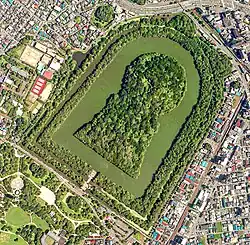
Sakai's standout sight is far older still. The city contains the Mozu Tombs, a cluster of immense keyhole-shaped kofun burial mounds dating from the 5th century, inscribed on the UNESCO World Heritage List as part of the Mozu-Furuichi group. The largest, Daisen Kofun, is traditionally identified as the tomb of Emperor Nintoku and is one of the biggest tombs anywhere in the world by area. Despite this heritage, Sakai sees relatively few foreign visitors and makes an easy, uncrowded day trip from central Osaka.
Osaka Prefecture has a humid subtropical climate. Spring (late March–May) and autumn (October–November) are the most comfortable times to visit. June is the rainy season, and July–August are hot and humid. Winters are cool but rarely snowy.
Planning Sakai? Tell us your dates and we’ll tailor the trip.
Ask on WhatsAppHow to reach
By Plane
The nearest international airport is Kansai International Airport (KIX), on Osaka Bay roughly 30 km southeast of Sakai. The Nankai line links the airport towards central Sakai with a transfer; trains and limousine buses also connect via central Osaka.
By Train
Sakai is well connected to central Osaka. The Nankai Main Line runs from Namba to Sakai Station in roughly 10–15 minutes, and the Nankai Kōya Line serves Sakaihigashi Station. The JR Hanwa Line stops at Mozu Station and Tsukuno Station, both close to the Mozu Tombs, on the route from Tennōji. The Hankai Tramway, a surviving streetcar line, also links Osaka's Tennōji area to Sakai.
By Car / Road
Sakai is reached from central Osaka in about 30–40 minutes by road via the Hanshin Expressway network, traffic permitting. Local and highway buses connect Sakai with surrounding areas.
Central Sakai is reasonably walkable, and the Mozu Tomb area can be explored on foot or by bicycle, though the giant mounds are best appreciated from designated viewpoints. Local trains and the Hankai Tramway streetcar connect the main districts, and city buses fill in the gaps. Fares for local trains and trams are modest, typically a few hundred yen; an ICOCA contactless card is the simplest way to pay. Taxis are available, and ride-hailing apps such as GO can book one. There are no particular scams to watch for.
Things to do
Daisen Kofun (Tomb of Emperor Nintoku) — The largest of the Mozu keyhole tombs and one of the biggest tombs in the world by area, part of the UNESCO-listed Mozu-Furuichi kofun group. The mound itself is off-limits, but it is best viewed from the surrounding moat-side paths and viewpoints.
Mozu Tombs cluster — Numerous other keyhole and round burial mounds surround Daisen Kofun, scattered through a parkland landscape.
Sakai City Museum — Located in Daisen Park beside the tombs, with exhibits on the kofun, Sakai's merchant history, and local crafts.
Sakai Plaza of Rikyu and Akiko (Sakai Risho no Mori) — A cultural facility honouring tea master Sen no Rikyū and the poet Yosano Akiko, both natives of Sakai.
Nanshuji Temple — A Zen temple historically linked to Sakai's tea culture.
Daisen Park — A large landscaped park beside the Nintoku tomb, with a Japanese garden.
Visit a knife workshop — Sakai's forged kitchen knives are prized by chefs worldwide; several workshops and showrooms offer demonstrations and let visitors see traditional blacksmithing and blade-sharpening.
Tea ceremony experience — As the birthplace of Sen no Rikyū, Sakai is a fitting place to take part in a Japanese tea ceremony, offered at cultural facilities such as the Risho no Mori complex.
Cycle the Mozu Tombs — Renting a bicycle is a pleasant way to circuit the spread-out burial mounds and their parklands.
Explore the merchant-quarter streets — Wander the older districts that recall Sakai's golden age as a free trading port.
Planning Sakai? Want these on a customised itinerary?
Ask on WhatsAppFood & Dining
Sakai shares Osaka's food culture — okonomiyaki, takoyaki, and udon are everywhere — and adds its own historic specialities. The city is known for chinchirō / kifune-style sweets and is sometimes credited as a birthplace of certain Japanese confections; its long trading history also left a taste for refined cuisine.
- Local okonomiyaki and udon shops (budget) — Casual restaurants throughout the central districts serve Osaka staples cheaply.
- Traditional Japanese sweets shops (budget) — Sakai has long-established wagashi makers; their seasonal confections pair with tea.
- Tea-house and kaiseki dining (mid-range to splurge) — In keeping with its tea-ceremony heritage, Sakai has restaurants serving refined Japanese cuisine.
Vegetarian, halal, and gluten-free options are limited; ask about fish-based dashi when ordering, and note that central Osaka offers more specialised dining.
Cafes & Nightlife
Sakai shares the Kansai drinking culture of izakaya and casual bars, found around the main stations. As a city steeped in tea culture, it is also a good place to drink matcha and other Japanese teas, served at cultural facilities and tea houses. Tap water is safe to drink, and vending machines selling chilled tea, coffee, and soft drinks are everywhere.
Planning Sakai? We’ll book the stays and dining for you.
Ask on WhatsAppPlaces to Stay
Most visitors treat Sakai as a day trip from Osaka, but the city does have accommodation around its main stations.
- Budget: Business hotels and guesthouses near Sakai and Sakaihigashi stations, typically ¥4,000–8,000 per person per night.
- Mid-range: Standard business hotels in central Sakai, generally ¥8,000–15,000 per double room.
- Upscale: Higher-end options are limited; central Osaka offers more choice.
What to buy
Sakai's signature buy is a hand-forged kitchen knife — the city produces a large share of Japan's professional cutlery, and specialist shops will help match a blade to its use and can engrave it. The other traditional product is senkō incense, long a Sakai craft. Knife showrooms cluster in the central districts, and the city has ordinary covered shopping arcades for everyday goods. For full-scale shopping, central Osaka is a short train ride away. Prices are fixed; bargaining is not customary.
Go next
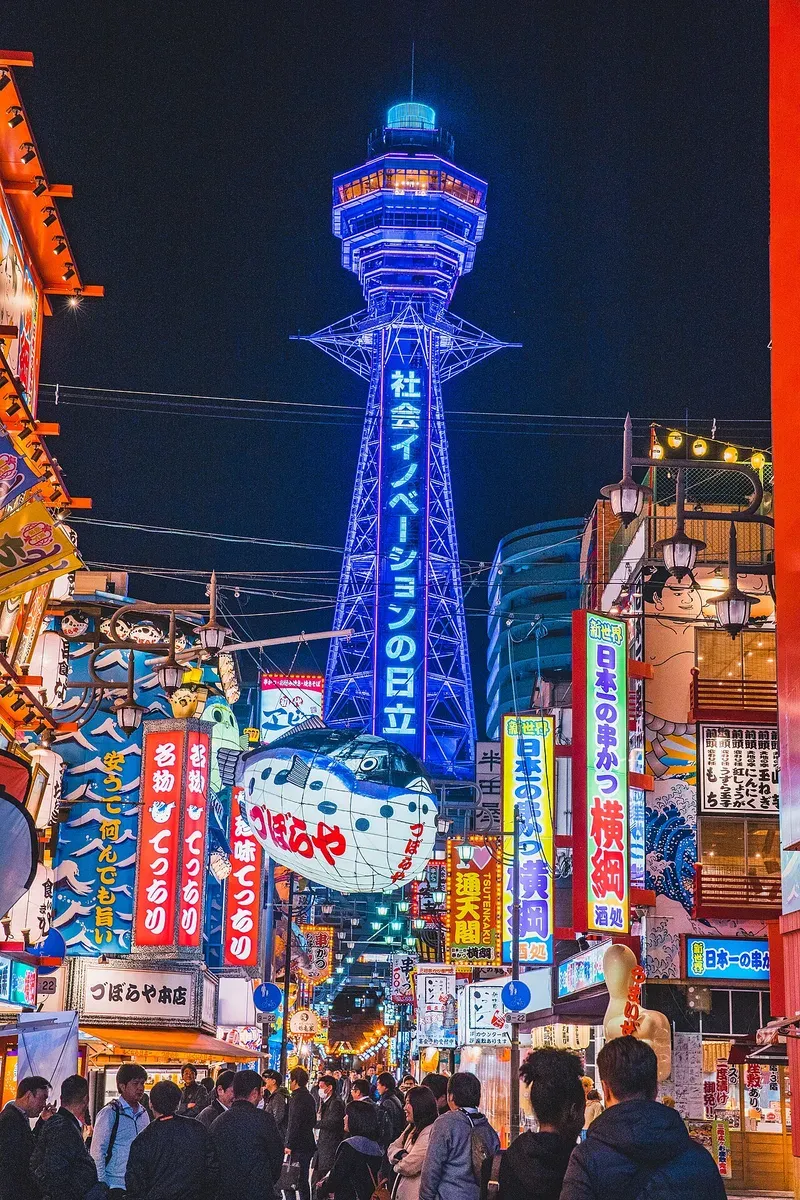
- Namba / Minami, Osaka (about 10–15 min by Nankai line) — Osaka's southern entertainment district with Dōtonbori.
- Tennōji, Osaka (about 15 min by train) — A southern Osaka hub with Abeno Harukas and Shitennōji temple.
- Kansai International Airport (about 30 min by Nankai line) — Convenient if Sakai is your last stop.
- Wakayama (about 50 min by Nankai line) — A coastal prefecture capital with its own castle.
- Mount Kōya (about 1.5–2 hr by Nankai line and cable car) — A sacred Buddhist mountain monastery complex.
- Kishiwada (about 20 min by Nankai line) — A castle town famous for its dramatic Danjiri Festival.
Nearby in Osaka
More places to explore around Sakai.
Portions adapted from Wikivoyage, CC BY-SA 4.0.

Contact Us
Get in touch with us.
Get in touch
Contact Us
Tell us where you'd like to go and how you like to travel. A real Tripcuro planner — not a bot — will craft an itinerary around you.
- Personalised, hassle-free planning end-to-end
- Transparent pricing, no hidden costs
- 24/7 support for complete peace of mind