
Otaru
Hokkaido, Japan
Why visit Otaru?
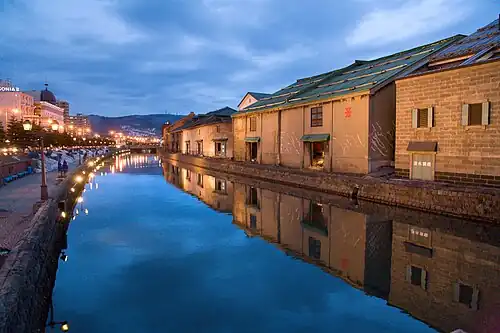
Otaru (小樽) is a port city on Hokkaido's western coast, about 30 km from Sapporo along the Sea of Japan. Compact and walkable, it draws visitors for its romantic gas-lamp-lit canal, its handsomely preserved Meiji-era architecture, its glassware and music boxes, and some of the finest sushi in Japan.
The city's original Ainu name, "Otarunai" or "Ota-or-nai", means "river flowing through sand". Otaru's modern story began in 1871, when Japan's Meiji government opened a colonisation office in Sapporo; rapid growth followed, especially after Hokkaido's first railway was built between Otaru and Sapporo in 1880. As a banking and trading hub it amassed grand stone warehouses and bank buildings, many of which survive today. Otaru remains a working port, but tourism is now a major industry.
Winters here are milder than in most of Hokkaido — the yearly average is around 8.6°C — though snow and ice still blanket the streets, and the Otaru Snow Light Festival in February makes the most of it. Most attractions cluster in the compact centre around the harbour and along Sakaimachi Street. Summer and the February festival period are the most rewarding times to visit; underfoot conditions in winter can be treacherous.
Planning Otaru? Tell us your dates and we’ll tailor the trip.
Ask on WhatsAppHow do you get there?
By Plane
The nearest airport is Sapporo's New Chitose Airport (CTS). JR's Airport Rapid train runs directly from the airport to Otaru Station in about 70 minutes, making a transfer or onward bus unnecessary for most travellers.
By Train
Otaru has three stations. Otaru Station, closest to downtown, is a major stop on the JR Hakodate Line and the terminus of most services from Sapporo and Niseko. All Sapporo trains also call at Minami-Otaru Station and Otaruchikko Station. Trains from Sapporo are frequent — roughly every 20 minutes — with the fastest Airport Rapid taking 30 minutes. From Niseko there are only about eight local services daily (around 2 hours, all stopping). In September the limited express Niseko runs one daily trip from Sapporo to Otaru, with mandatory seat reservations.
By Car / Road
Otaru is about 25 minutes from Sapporo by car. Chuo Bus also runs intercity services; most buses use the central bus station immediately to the right of Otaru Station's exit.
Otaru is best explored on foot — its canal, warehouses, restaurants and shops all lie within easy walking distance. A pleasant self-guided route runs from the Otaru Music Box Museum along Sakaimachi Street, across a small canal, up to the Bank of Japan museum, then along the widening canal. For attractions further afield, Chuo Bus runs services from the central bus station beside the train station. There are no autorickshaws or notable scams; this is a relaxed, low-key city.
What are the things to do?
Canal and historic district
- Otaru Canal (小樽運河) — Completed in 1923 and now a landscaped walkway lit at night by gas lamps; the city's signature image. Free; a 10-minute walk from Otaru Station.
- Steam Clock — A steam-powered clock at the "Meruhen" intersection, a gift from Vancouver, chiming every 15 minutes. Free.
Museums
- Otaru Music Box Museum (小樽オルゴール堂) — At 1-2-3 Irifune, with displays on the history of music boxes and a large shop; visitors can build their own for a fee. Open 09:00–19:00; admission free.
- The Bank of Japan Otaru Museum (日本銀行旧小樽支店) — A 1912 building by architect Kingo Tatsuno, with displays on banking and the city's development; English audioguides available. Roughly 09:30–17:00 (10:00–17:00 Dec–Mar), closed Wednesdays; admission free. 1-11-16 Ironai.
- Stained Glass Museum — Part of the Otaru Art Base in the former Takahashi Warehouse, displaying English church glass of the late 19th and early 20th centuries. May–Oct 09:30–17:00, Nov–Apr 10:00–17:00; adults ¥1,200. 1 Chome-2-17 Ironai.
- Otaru City Museum — A railway museum with historic Hokkaido snowplows and, May–Oct, a short steam-train ride three times daily at no extra charge. 09:30–17:00, closed Tuesdays; adults ¥400. 1 Chome-3-6 Temiya.
Viewpoint
Mount Tengu (天狗山) — Reached by the Tenguyama Ropeway (¥840 one-way, ¥1,400 return), with one of Hokkaido's celebrated night views, plus a free Tengu Museum, a Ski Museum and hiking trails.
Otaru Snow Light Festival (小樽雪あかりの路) — Held annually in early-to-mid February, with paths lit by ice lanterns, most beautifully along the canal and the disused railway nearby.
Build your own music box — A hands-on activity at the Music Box Museum.
Walk the canal at dusk — When the gas lamps come on, the canal is at its most atmospheric.
Planning Otaru? Want these on a customised itinerary?
Ask on WhatsAppWhere to eat?
Otaru is widely considered the best town in Hokkaido for sushi, and ranks highly nationally; it is also known for cheesecake. Sushi restaurants near Kitaichi tend to be expensive, while those toward the canal offer good value.
- Waraku Kaiten Sushi (回転寿し 和楽) — A very popular conveyor-belt sushi spot worth the queue; 3-1 Sakaimachi, open 11:00–22:00. Budget to mid-range.
- Toppii Sushi (とっぴー) — A large kaiten sushi restaurant with good quality and reasonable prices. Budget to mid-range.
- LeTAO (ルタオ) — One of Japan's most famous cheesecake makers, known for its Double Fromage; 7-16 Sakaimachi. Budget.
- Kitaichi Hall — In an old warehouse next to the Kitaichi glass shop, a grand wood-decorated hall serving local meals (no sushi) at reasonable prices. Mid-range.
- Andiamo (アンディアモ) — Authentic Italian pizza for a break from seafood; 2 Chome-16-11 Inaho, ¥2,000–3,000, English-speaking staff. Closed Mondays. Mid-range.
Most fixtures are seafood-based; vegetarian, halal and gluten-free travellers should check menus, with Italian and Western options offering alternatives.
Where to drink?
Otaru Beer (小樽ビール) by the canal at 港町5-4 is a medieval-themed beer hall serving its own brews. Cafes are common along Sakaimachi Street, often paired with sweets shops. Tap water is safe to drink.
Planning Otaru? We’ll book the stays and dining for you.
Ask on WhatsAppWhere to stay?
- Budget: Otarunai Backpackers' Hostel MorinoKi, 10 minutes' walk from Minami-Otaru Station, is a well-regarded hostel from around ¥3,600. Otaru Emina Backpackers at 1 Chome-14-5 Midori is a cosy English-speaking hostel from around ¥3,000 per night.
- Mid-range: Hotel Dormy Inn Premium Otaru, directly across from Otaru Station, offers clean, well-serviced rooms with a free night-time ramen service, from around ¥6,000 for a twin.
- Upscale / heritage: Grand Park Otaru at 11-3 Chikko is a large bay-view hotel near Otaruchikko Station, from around ¥8,000 per night.
A practical winter tip: footpaths ice over heavily, so wear shoes with grippy soles, or buy metal-studded shoe bands (around ¥1,700) from roadside shops.
What should you buy?
Otaru is famous for music boxes, glassware and antiques. Shops dedicated to music boxes are especially numerous; the hand-cranked, punched-card variety are a charming buy. The city's hand-made crystal is among Japan's best — Kitaichi Glass (北一硝子) at 堺町7-26 (09:00–18:00) is the landmark glassware shop. Antique dealers near the canal district sell kimono; bargaining is uncommon in Japan, but some antique sellers will negotiate, and a foreign buyer may be expected to haggle for kimono.
Where to go next?
- Sapporo (about 30 minutes by Airport Rapid train) — Hokkaido's lively capital.
- Niseko (about 2 hours by local train via Kutchan) — Japan's premier powder ski resort.
- New Chitose Airport / Chitose (about 70 minutes by Airport Rapid) — Hokkaido's main air gateway.
- Shakotan Peninsula (about 1–2 hours by bus) — Dramatic blue-water coastline north of Otaru.
- Niigata or Maizuru (overnight ferry) — Shin-Nihonkai Ferry sails from Otaru to these Honshu ports.
Nearby in Hokkaido
More places to explore around Otaru.

Guide content as of May 2026. Portions adapted from Wikivoyage, CC BY-SA 4.0.

Contact Us
Get in touch with us.
Get in touch
Contact Us
Tell us where you'd like to go and how you like to travel. A real Tripcuro planner — not a bot — will craft an itinerary around you.
- Personalised, hassle-free planning end-to-end
- Transparent pricing, no hidden costs
- 24/7 support for complete peace of mind