
Lucknow
Uttar Pradesh, India
Why visit Lucknow?
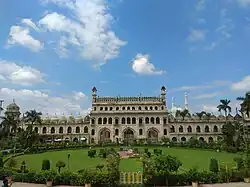
Lucknow, the capital of Uttar Pradesh, sits along the Gomti river and is one of the largest cities in northern India, home to roughly 3.4 million people. Known as the "City of the Nawabs", it was for centuries the cultural heart of Awadh and a byword for refined manners — its famous adab and tehzeeb (etiquette and courtesy). The city flourished under the Nawabs of Awadh, who left behind a skyline of imambaras, gateways and palaces, and it was a major theatre of the 1857 uprising, remembered by the British as the Siege of Lucknow.
Lucknow's reputation rests on three pillars: Awadhi cuisine of slow-cooked kebabs and biryanis, chikankaari shadow-work embroidery on fine muslin, and Urdu poetry, with the mushaira (poetry recitation) still a living tradition. The old city around Hussainabad is dense, layered and historic; Hazratganj is the colonial-era commercial heart; and Gomti Nagar is the modern district of malls, riverfront promenades and newer hotels.
The best months to visit are October to March, when days are mild and pleasant — December and January can be foggy but cool. April to June is fiercely hot, often above 40°C, and the monsoon from July to September brings heavy rain and humidity. Aim for the winter window for comfortable sightseeing.
Planning Lucknow? Tell us your dates and we’ll tailor the trip.
Ask on WhatsAppHow do you get there?
By Plane
Chaudhary Charan Singh International Airport (IATA: LKO), formerly Amausi Airport, lies southwest of the city centre. It has daily domestic flights from Delhi, Mumbai, Kolkata, Patna and Bangalore, and direct international connections including Sharjah, Jeddah and Muscat. The Red Line of the Lucknow Metro links the airport directly to Charbagh railway station, making it the cheapest and most reliable way into town; prepaid taxis and app cabs are also available at the terminal.
By Train
Lucknow lies on the Delhi–Gorakhpur railway line and is exceptionally well connected. The principal station is Charbagh (station code LKO), an architectural landmark in its own right and an interchange with the Metro. Other major stations include Lucknow Junction (LJN), Lucknow City (LC) and Gomti Nagar (GTNR). Premium services from Delhi include the Swarn Shatabdi Express, Tejas Express, Lucknow Mail and the Rajdhani Express; the Pushpak and Gorakhpur expresses connect Mumbai. Book reserved-class tickets well in advance through IRCTC, especially in the winter season.
By Car / Road
Lucknow is connected by road to all major cities of the region. Approximate distances: Kanpur 79 km, Ayodhya 135 km, Prayagraj 210 km, Varanasi 280 km, Agra 363 km, Delhi 497 km. The Agra–Lucknow Expressway gives a fast run to Agra. Long-distance and state buses use terminals at Alambagh (Inter State Bus Terminal, ☏ +91 522-2458096), Kaisar Bagh and Polytechnic. A luxury air-conditioned bus to Delhi (Anand Vihar ISBT) departs from the Kaisar Bagh bus station.
Lucknow's sights are spread over a wide area, so plan on using motorised transport rather than walking between districts. The Lucknow Metro runs a single line north–south, linking the airport, Charbagh station and the city centre — fast, cheap and air-conditioned. CNG autorickshaws and shared tempos cover most routes; cycle rickshaws are good for short hops in the old city and pollute far less. App-based cabs (Ola, Uber) operate across the city and remove the need to negotiate. Taxi and rickshaw drivers can be insistent and few speak much English, so agree a fare before setting off or insist on the meter.
What are the things to do?
Hussainabad Complex
- Bara Imambara — a vast tomb complex of 1783, famous for the Bhool Bhulaiya, a labyrinth of interconnecting passages where it is easy to lose your way; couples are not permitted into the labyrinth without a guide. The combined ticket (around ₹500 for foreigners) also covers the Chhota Imambara, clock tower and picture gallery. Shoes must be left outside.
- Chota Imambara — an ornate mausoleum built by the third Nawab of Awadh in 1837, glittering with chandeliers and gilt decoration.
- Rumi Darwaza — an imposing gateway raised by Nawab Asaf-ud-Daula in 1784, modelled on a historic gate in Constantinople (Istanbul); one of Lucknow's enduring emblems.
- Asfi Mosque and Naubat Khana — within the same complex, alongside the Bara Imambara.
- Husainabad Clock Tower (Ghanta Ghar) — a tall British-era tower set in a park with a lake and picture gallery; a fine spot at sunset.
Qaisar Bagh & central Lucknow
- The Residency — the ruined Raj-era compound at the heart of the 1857 siege, its walls still pocked with cannon-ball marks; a peaceful garden today with a museum in the basement.
- Chatar Manzil — the riverside palace of the Nawabs of Awadh.
- Lal Baradari — a red pavilion used for Nawabi coronations and durbars.
- Shah Najaf Imambara — a domed imambara holding the tombs of the later Nawabs.
Cantonment & elsewhere
- Dilkusha Kothi — the shelled remains of an 18th-century English-baroque hunting lodge, set in extensive gardens popular in winter.
- Bibiapur Kothi — a neoclassical country retreat of Nawab Asaf-ud-Daula.
- La Martiniere College — an extravagant colonial-era school building (exterior views; it is a working school).
- Kukrail Reserve Forest — a gharial and crocodile breeding centre on the city's edge, good for a half-day with children.
- Marine Drive — a Gomti riverside promenade near Gomti Nagar, best around 4–6PM for the sunset.
Lucknow rewards slow exploration. Take a heritage walk through the old city around Chowk and Hussainabad, weaving past kebab stalls, sweet shops dating to the 1850s and crumbling havelis. Watch — or commission — chikankaari embroidery at workshops in the old city, where artisans hand-stitch shadow-work on muslin. If you can find a mushaira (Urdu poetry recitation), it is the city's classic evening entertainment, sometimes running into the small hours. Kathak, the courtly dance form nurtured here, is occasionally performed at cultural centres. The Gomti riverfront and Janeshwar Mishra Park in Gomti Nagar are good for a relaxed evening stroll. Deva Shariff, around 30 km away, is a Sufi shrine drawing pilgrims of all faiths.
Planning Lucknow? Want these on a customised itinerary?
Ask on WhatsAppWhere to eat?
Lucknow is one of India's great food cities, the home of Awadhi cuisine — slow-cooked, fragrant and famously rich. Signature dishes include the melt-in-the-mouth galouti kebab, tunde ke kebab, Awadhi (dum) biryani, nihari-kulcha eaten for breakfast, and a long tradition of sweets such as malai and kulfi.
- Tunday Kababi (Chowk and Aminabad) — legendary for its impossibly soft galouti kebabs; a Lucknow institution and inexpensive.
- Idris Biryani (old city) — a much-loved hole-in-the-wall famous for its slow-cooked mutton biryani.
- Dastarkhwan — a reliable mid-range Awadhi restaurant with kebabs, biryani and kormas across several outlets.
- Sharma Ji ki Chai / old-city sweet shops — for makhan-malai in winter and traditional milk sweets.
- Royal Café, Hazratganj — mid-range, known for its basket chaat, a Lucknawi street-food classic.
- Hotel restaurants in Gomti Nagar offer upscale Awadhi thalis and fine dining for those wanting a quieter setting.
Vegetarians are well catered for — Awadhi cooking has a strong vegetarian repertoire — and most kebab houses are halal.
Where to drink?
Lucknow is not a drinking city in the bar sense, but it is a tea-and-sweets city. Masala chai from old-city stalls, thandai (a chilled spiced milk drink, especially around festivals), lassi, and fresh seasonal juices are everywhere. Makhan-malai, a frothy winter milk dessert, is almost a drink in itself. Cafés and lounges cluster in Hazratganj and the Gomti Nagar malls; licensed bars are mostly attached to mid-range and upscale hotels. Stick to bottled or filtered water and avoid ice from unknown sources.
Planning Lucknow? We’ll book the stays and dining for you.
Ask on WhatsAppWhere to stay?
- Budget: Charbagh and Hazratganj have numerous guesthouses and budget hotels near the railway station, with rooms roughly ₹800–1,500; book a clean, well-reviewed property rather than walking in cold.
- Mid-range: Reliable chain and business hotels such as Lemon Tree Hotel, Lucknow and Hotel Clarks Avadh (a long-running landmark on the riverside) offer rooms broadly in the ₹4,000–7,000 range.
- Upscale / heritage: Taj Mahal Lucknow and Hyatt Regency Lucknow in Gomti Nagar provide full-service luxury, typically ₹9,000 and upward, with excellent Awadhi dining on site.
What should you buy?
Lucknow's signature buy is chikankaari — delicate white-on-white shadow embroidery on cotton and muslin, made into kurtas, saris and dupattas. The lanes of Chowk and the Aminabad market are the traditional shopping grounds, dense with embroidery shops, attar (perfume) sellers and bangle stalls; Hazratganj offers more organised showrooms and brand stores. Look also for zardozi metallic embroidery, attar, and Lucknawi ittar perfumes. The city's old sweet shops sell boxed sweets worth taking home. Bargaining is expected and effective in the old-city bazaars; fixed-price showrooms in Hazratganj less so.
Where to go next?
- Kanpur (79 km, ~1.5 hr) — a large industrial city on the Ganges, useful as a transport hub.
- Ayodhya (135 km, ~3 hr) — a major Hindu pilgrimage city on the Sarayu river.
- Prayagraj (210 km, ~4 hr) — the sangam confluence of the Ganges and Yamuna, and host of the Kumbh Mela.
- Varanasi (280 km, ~6 hr) — India's spiritual heart, with its riverside ghats and evening aarti.
- Agra (363 km, ~4–5 hr via expressway) — home of the Taj Mahal.
- Dudhwa National Park (~230 km) — tiger and swamp-deer reserve in the Terai for wildlife lovers.
Nearby in Uttar Pradesh
More places to explore around Lucknow.
Guide content as of May 2026. Portions adapted from Wikivoyage, CC BY-SA 4.0.

Contact Us
Get in touch with us.
Get in touch
Contact Us
Tell us where you'd like to go and how you like to travel. A real Tripcuro planner — not a bot — will craft an itinerary around you.
- Personalised, hassle-free planning end-to-end
- Transparent pricing, no hidden costs
- 24/7 support for complete peace of mind