
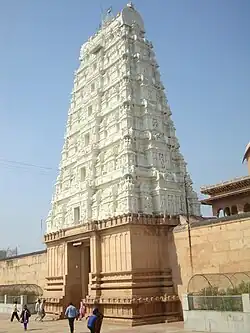
Mathura
Uttar Pradesh, India
Why visit Mathura?
Mathura, on the banks of the Yamuna in the Braj region of Uttar Pradesh, is revered by Hindus across the world as the birthplace of Lord Krishna. Together with its neighbouring temple town of Vrindavan, where Krishna is said to have spent his childhood, it forms the spiritual heart of Braj Bhumi — a landscape of temples, ghats and pilgrimage circuits steeped in Krishna devotion. The city is ancient: its Government Museum holds celebrated sculpture from the Kushan and Gupta periods, when Mathura was a major centre of art and Buddhism as well as Hinduism.
Mathura's appeal is overwhelmingly devotional. Pilgrims come to the Krishna Janmabhoomi complex, bathe at the riverside ghats, and join the parikramas (circumambulations) that thread through Braj. The atmosphere peaks at Janmashtami, Krishna's birthday in August–September, and at Holi, which Braj celebrates with a famous, colour-drenched intensity. Conveniently, Mathura sits almost exactly halfway between Delhi and Agra, making it an easy and rewarding stop on the Golden Triangle route.
Visit between October and March, when the weather is cool and pleasant — and time your trip for Janmashtami or the run-up to Holi if you want the full festival experience, though crowds are then immense. April to June is very hot, often above 40°C, and the monsoon (July–September) is humid. The Janmabhoomi temple and the old city around Holi Gate, Chowk Bazaar and the ghats form the religious core; Vrindavan lies about 10 km to the northeast.
Planning Mathura? Tell us your dates and we’ll tailor the trip.
Ask on WhatsAppHow do you get there?
By Plane
The nearest airport is Agra Airport (IATA: AGR), around 50 km away, though it has limited flights. Most travellers fly into Indira Gandhi International Airport, Delhi (IATA: DEL), about 150 km north, which has the widest connections; from there, continue to Mathura by train, bus or taxi along NH 44 or the Yamuna Expressway. The new Noida International Airport at Jewar, reachable via the expressway, will offer a closer option once fully operational.
By Train
Mathura Junction is a major station on the Delhi–Agra line, and most trains between the two cities stop here. The journey from Delhi takes 2–3 hours depending on the train, and from Agra about one hour. Many south- and west-bound trains also call at Mathura. Note that Vande Bharat services generally do not stop here, so check the timetable. Book reserved seats through IRCTC, especially around Janmashtami and Holi.
By Car / Road
Mathura sits on NH 44 between Delhi (about 150 km north) and Agra (about 50 km south), with the Yamuna Expressway running just east of the city — a fast, well-surfaced route. Drive times are roughly 3 hours from Delhi and 1–1.5 hours from Agra. State transport buses run frequently through Mathura, and there are ISBT services from Delhi's Sarai Kale Khan terminal at intervals of around 25 minutes. Taxis are easily hired for the Delhi–Mathura–Agra run.
The old city and the ghats are best explored on foot, though the lanes are narrow, crowded and can be congested with pilgrims, especially on festival days. Cycle rickshaws and e-rickshaws are the workhorses for short hops between the Janmabhoomi complex, Holi Gate and the river; autorickshaws and shared tempos cover longer distances and the run to Vrindavan. Autos have no meters, so negotiate the fare before boarding. App-based cabs operate but have limited coverage in the old core. For visiting the wider Braj circuit — Vrindavan, Govardhan, Gokul — a hired car or auto for the day is the most practical choice.
What are the things to do?
Krishna pilgrimage sites
- Krishna Janmabhoomi — the most sacred site in the city, marking Krishna's birthplace; the complex includes the prison cell where his parents Vasudeva and Devaki were held, alongside a large temple with idols of Krishna and Radha and walls painted with scenes from his life.
- Dwarkadheesh Temple — built in 1814, the principal temple of the town, splendidly decorated during Holi, Janmashtami and Diwali.
- Vishram Ghat — the riverside ghat where Krishna is said to have rested after slaying the tyrant Kansa; the centre of the evening Yamuna Aarti, with huge turtles in the water below.
- Bankey Bihari Temple — in Vrindavan, the most famous and most visited temple of the Braj region.
Other sights
- Government Museum (Museum Road, Dampier Nagar) — one of Asia's richest collections of Mathura and Gandhara sculpture, with rare pieces from the Kushan and Gupta periods. Open Tu–Sa 10:30AM–4:30PM, closed public holidays; entry around ₹5 for adults, ₹25 for foreigners, camera fee ₹20.
- Jama Masjid — a mosque of 1661 with four lofty minarets and surviving panels of coloured plaster mosaic.
- Kans Quila (Old Fort) — a riverside fort near Swami Ghat, historically built to protect the city from the Yamuna's floods.
- Jain temples — Mathura's Jain chaurasi on the highway includes a large seated statue of Jambu Swami carved from a single block of stone.
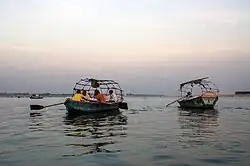
Mathura's experiences are bound up with Krishna devotion. Take a boat ride on the Yamuna from Vishram Ghat — drift across to the Durvasa Rishi Temple and the red-stone Hansiya Rani Ghat, and watch the evening aarti from the water. Join a parikrama of the Braj sites; the Govardhan parikrama around Govardhan Hill is a classic circuit, walked by many pilgrims while chanting Krishna's name. If you visit at the right season, the festivals are the headline events: Janmashtami (August–September) fills the city with celebration, and Braj's Holi — particularly the lathmar Holi in nearby Barsana and Nandgaon — is among the most spectacular in India. In September–October, Ram Leela stage plays, including the lively Ram Barat procession with mock sword-fighting, are performed.
Planning Mathura? Want these on a customised itinerary?
Ask on WhatsAppWhere to eat?
Mathura's food culture revolves around milk — sweets made from milk and sugar are the city's pride, above all peda, the soft fudge-like confection. The everyday breakfast is kachori with aloo subzi and jalebi, eaten fresh and hot from morning crowds at the snack shops.
- Brijwasi Mithai Wala — the famous name for peda and a huge range of sweets and namkeen, with several outlets including Holi Gate, Chowk Bazaar and opposite Janmabhoomi.
- Oma Pahalwan Kachori Wala (near Holi Gate, opposite Brijwasi) — the most famous spot for breakfast kachori and jalebi; open roughly 8AM–2PM.
- Shankar Mithai Wala (Tilak Dwar, Holi Gate area) — a sweet shop also renowned for puri, kachori and chole bhature, with chilled lassi served in clay pots; open roughly 6:30AM–11PM.
- Canteen of Sri Krishna Janmabhoomi Temple — clean, inexpensive thalis in limited and unlimited versions, run by the temple trust.
- Agrawal Dhaba (on the highway) — a reliable, well-regarded place for a full meal.
- For chaat, especially gol-gappey (pani-puri), street vendors line the stretch from Holi Gate to Chowk Bazaar.
Mathura is overwhelmingly vegetarian — many temples and eateries serve satvik food, and meat is largely absent from the religious core.
Where to drink?
Mathura is a devotional city, and the drinks to enjoy are local and non-alcoholic. Lassi served in a clay glass is a Mathura classic, alongside milk badam (chilled milk blended with almonds and dry fruit), sweetened hot milk in clay cups, thandai (especially around Holi) and jaljeera, a tangy digestive drink. Fresh fruit juices and masala chai are everywhere. Alcohol is not part of the experience here and is best not sought out near the temples. Drink only bottled or filtered water, and treat the Yamuna as a ritual river, not a source of drinking water.
Planning Mathura? We’ll book the stays and dining for you.
Ask on WhatsAppWhere to stay?
- Budget: Numerous dharamshalas and pilgrim guesthouses cluster near Krishna Janmabhoomi, with simple rooms from roughly ₹500–1,200; the International Guest House at Krishna Janmabhoomi is a reliable, well-located budget choice.
- Mid-range: Hotels along NH-2 and the Agra–Delhi highway, such as Hotel Goverdhan Palace (a 3-star property in landscaped grounds, rooms around ₹2,000) and Hotel Brijwasi Royal, offer comfortable air-conditioned rooms broadly in the ₹2,000–4,500 range.
- Upscale / heritage: Shri Radha Brij Vasundhara Resort on Parikrama Marg offers detached garden cottages in a peaceful setting, typically the city's most comfortable option; newer resorts on the highway provide similar upscale comfort.
What should you buy?
Mathura's shopping is centred on devotion and dairy. Pilgrims buy brass and copper pooja articles, idols, prayer beads, religious books and framed images, with stalls dense around Holi Gate, Chowk Bazaar and the Janmabhoomi approach. The city's signature edible souvenir is its milk sweets — boxes of peda travel home with almost every visitor. Mathura is also a place to pick up leather shoes from factory outlets along the highway toward Agra. Mild bargaining is normal in the bazaar stalls; sweet shops and book outlets are generally fixed-price.
Where to go next?
- Vrindavan (10 km, ~30 min) — the temple town of Krishna's childhood, including Bankey Bihari Temple.
- Gokul (10 km east, ~30 min) — where Krishna is said to have spent his infancy.
- Govardhan (20 km west, ~45 min) — site of Govardhan Hill and its famous parikrama.
- Barsana & Nandgaon (~45 km, ~1.5 hr) — the villages of Radha and Krishna, renowned for lathmar Holi.
- Agra (50 km, ~1.5 hr) — home of the Taj Mahal.
- Bharatpur (Keoladeo National Park) (~35 km west, ~1 hr) — a celebrated bird sanctuary and UNESCO site.
Nearby in Uttar Pradesh
More places to explore around Mathura.
Guide content as of May 2026. Portions adapted from Wikivoyage, CC BY-SA 4.0.

Contact Us
Get in touch with us.
Get in touch
Contact Us
Tell us where you'd like to go and how you like to travel. A real Tripcuro planner — not a bot — will craft an itinerary around you.
- Personalised, hassle-free planning end-to-end
- Transparent pricing, no hidden costs
- 24/7 support for complete peace of mind