
Prayagraj
Uttar Pradesh, India
Why visit Prayagraj?
Prayagraj — known as Allahabad from Mughal times until the 2018 official renaming — is one of Hinduism's holiest cities, sprawling across the plains of Uttar Pradesh at the confluence of the Ganges and Yamuna rivers. A third, mythical river, the Saraswati, is believed to join them underground, and the meeting point is revered as the Sangam or Triveni. Hindu tradition calls the city Tirth Raj, the "king of pilgrimage sites," and pilgrims have bathed at this confluence for millennia.
The city's grandest expression of faith is the Kumbh Mela, the largest peaceful gathering on earth, drawing hundreds of millions of pilgrims when the full Kumbh falls roughly every 12 years; an Ardh (half) Kumbh comes between, and the smaller annual Magh Mela unfolds each January–February in the sandy floodplains around the Sangam. Beyond pilgrimage, Prayagraj carries a heavyweight intellectual and political legacy: Emperor Akbar built a great riverside fort here in the 1580s, the British made it the capital of the United Provinces, and the University of Allahabad was once the country's leading seat of learning. The Nehru family's ancestral home, Anand Bhawan, sits in the city, and it remains rich in faded colonial architecture.
The best time to visit is November to February, when days are mild and the Magh Mela is in season; summers (April–June) are brutally hot, often above 40°C, and the monsoon (July–September) brings heavy rain that can swell the rivers. Pilgrimage sites and the Civil Lines area form the city's two poles — one devotional and crowded, the other a leafy grid of colonial bungalows, cafés and shops.
Planning Prayagraj? Tell us your dates and we’ll tailor the trip.
Ask on WhatsAppHow do you get there?
By Plane
Prayagraj Airport (IXD) at Bamrauli, about 12–15 km west of the city centre, is a small civil enclave attached to an air-force base. It has limited but useful connections — domestic flights link Prayagraj with Delhi, and other metros are served seasonally, with the schedule expanding around major Mela years. Because of the military setting, baggage is sometimes hand-delivered after arrival, so wait inside the terminal for checked luggage. Prepaid taxis and autorickshaws run into town for roughly ₹400–700. Many international visitors instead fly into Delhi and take a train onward.
By Train
Prayagraj is a major junction on the trunk routes from Delhi to Kolkata and Mumbai to Kolkata, so train service is excellent. Prayagraj Junction is the principal station and handles most long-distance trains; Prayag Junction, Prayagraj Rambagh and the festival-only Prayagraj Sangam terminal share the load, the last opening mainly during big religious gatherings. The overnight Prayagraj Express from New Delhi (departs evening, arrives early morning) is the classic choice; Rajdhani, Duronto and Vande Bharat services also call here. Book well ahead during Mela periods, when trains fill weeks in advance.
By Car / Road
National highways radiate from the city: NH 19 links Delhi and Kolkata, while other routes connect Lucknow (about 200 km, 4–5 hours), Varanasi (about 120 km, 3 hours) and central India. Roads to Lucknow and Varanasi are largely good multi-lane highways. State and private buses run frequently from these and other regional towns; expect crowded conditions and slow going during festival season.
Cycle rickshaws are the cheapest and most characterful way to move around, ideal for short hops through the older quarters — agree the fare before setting off, as nothing is metered. Autorickshaws (three-wheelers, shared or private) cover longer distances cheaply; shared autos run fixed routes for a few rupees a seat. E-rickshaws have become widespread and are handy near the stations and ghats. App-based cabs operate but coverage is thinner than in big metros. The Civil Lines area is pleasant to explore on foot. During the Magh Mela and Kumbh, vehicle access near the Sangam is heavily restricted and you should expect long walks; always confirm prices first and avoid drivers who steer you to commission-paying shops.
What are the things to do?
Riverside and pilgrimage sites
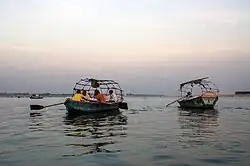
- Triveni Sangam — the sacred confluence of the Ganges and Yamuna, the city's spiritual heart. Pilgrims hire boats to row out to the meeting point and bathe. Boat hire is negotiable; the experience is most atmospheric at sunrise.
- Allahabad Fort — Akbar's massive fort, begun in 1583 at the river junction. Much of it remains an army cantonment, but visitors can usually access the Patalpuri Temple and the venerated Akshayavat (immortal banyan tree) within. Hours and access vary, so check locally.
- Hanuman Mandir (Bade Hanuman) — near the Sangam, famous for a large reclining image of Hanuman, said to be partly submerged when the river floods.
Colonial-era and historic sites
Khusro Bagh — a walled Mughal garden just south of Prayagraj Junction, containing the early-17th-century tombs of Prince Khusro Mirza, his mother Shah Begum and his sister, set among lawns famous for Allahabadi guavas. Open roughly 08:00–20:00; entry free.
Anand Bhawan — the elegant Nehru family mansion, now a museum on India's freedom struggle, with a planetarium alongside (modest entry fee).
Chandrashekhar Azad Park (Company Bagh / Alfred Park) — the city's largest park, laid out in 1870, where revolutionary Chandrashekhar Azad died in 1931; a memorial marks the spot. A nominal entry ticket applies.
All Saints' Cathedral — a striking Gothic-revival Anglican church in Civil Lines, one of the finest colonial churches in northern India.
Allahabad Museum — within Chandrashekhar Azad Park, with sculpture, paintings and freedom-movement collections.
Thornhill Mayne Memorial (Public Library) and Victoria Memorial canopy — handsome colonial monuments inside the same park.
Bathe or take a boat at the Sangam — even outside festival season, a dawn rowboat to the confluence is the quintessential Prayagraj experience.
Visit during a Mela — if your trip coincides with the Magh Mela (January–February) or a Kumbh year, the tent city on the floodplains is an extraordinary, once-in-a-lifetime spectacle of faith.
Walk colonial Civil Lines — stroll the broad avenues of bungalows, cafés and bookshops, a calmer counterpoint to the pilgrimage districts.
Explore literary Prayagraj — the city produced poets such as Harivansh Rai Bachchan and Mahadevi Verma; the University of Allahabad campus and old bookshops reward a wander.
Day trips — Varanasi, Sarnath, Chitrakoot and Kaushambi are all within reach for excursions.
Planning Prayagraj? Want these on a customised itinerary?
Ask on WhatsAppWhere to eat?
Prayagraj's food is hearty North Indian — overwhelmingly vegetarian in the pilgrimage districts, with rich street food and famous sweets. Winter brings seasonal treats; the city is well known for its guavas and for a strong tea-and-snack culture.
- Hot Stuff (Civil Lines) — a long-running casual spot popular with students for burgers, sandwiches and quick bites.
- El Chico (Civil Lines) — an old-school multi-cuisine restaurant, a Prayagraj institution for a sit-down meal.
- Loknath area — the legendary cluster of lanes for street food: try kachori-sabzi, chaat, dahi-bara and local sweets at long-established stalls.
- Netram / traditional sweet shops — for classic North Indian sweets and savoury breakfasts.
- Pilgrimage-area eateries near the Sangam serve simple, inexpensive pure-vegetarian thalis suitable for travellers seeking sattvic food.
Strict vegetarian food is everywhere; halal meat is available in the older Muslim-majority quarters around Khuldabad and Atala.
Where to drink?
Prayagraj runs on chai — sweet, milky tea sold from countless roadside stalls, often paired with fried snacks. Fresh lassi, sugarcane juice and seasonal fruit juices are widely available and refreshing in the heat. Coffee culture is concentrated in Civil Lines, where cafés cater to students and families. As a major Hindu pilgrimage city, Prayagraj is fairly conservative about alcohol; licensed bars exist mainly in mid-range and upscale hotels in Civil Lines rather than as a standalone scene. Drink only bottled or properly filtered water, and be cautious with ice and untreated juice.
Planning Prayagraj? We’ll book the stays and dining for you.
Ask on WhatsAppWhere to stay?
- Budget: Numerous dharamshalas and guesthouses cluster near Prayagraj Junction and the Sangam, with simple rooms from roughly ₹600–1,200; basic retiring rooms are also available at the railway station for transit travellers.
- Mid-range: Hotel Kanha Shyam and Hotel Yatrik in Civil Lines are reliable, well-located choices, typically in the ₹2,500–5,000 range, with restaurants on site.
- Upscale: The Legend Hotel and other Civil Lines business hotels offer the city's most comfortable rooms, generally ₹5,000–9,000. During Kumbh and Magh Mela years, organised luxury tented camps spring up near the Sangam, ranging from comfortable to premium — book far in advance, as rates spike sharply.
What should you buy?
Prayagraj is best known for its Allahabadi guavas (amrood), especially the prized fruit grown around Khusro Bagh — buy them fresh in winter. Look also for religious items, brassware, beads and puja goods in the markets near the Sangam and the older bazaars. Civil Lines has the city's modern shopping, with branded stores, books and cafés; Katra, Chowk and Loknath are the lively traditional market areas for cloth, sweets and everyday goods. Bargaining is expected in the bazaars but not in fixed-price Civil Lines shops.
Where to go next?
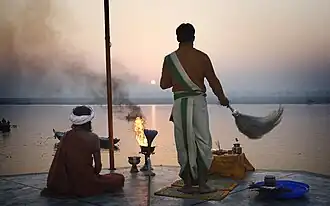
- Varanasi (~120 km, ~3 hours) — the holiest Hindu city on the Ganges, with its famous ghats and evening aarti.
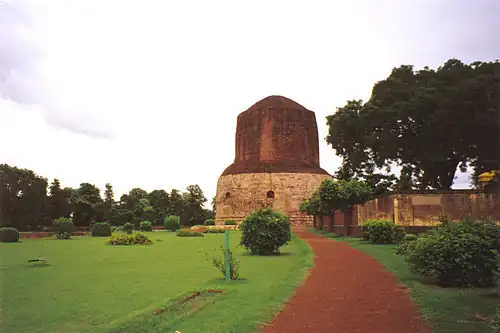
- Sarnath (~130 km, ~3.5 hours) — the deer park where the Buddha gave his first sermon, near Varanasi.
- Chitrakoot (~130 km, ~3 hours) — a tranquil pilgrimage town linked to the Ramayana, straddling the Uttar Pradesh–Madhya Pradesh border.
- Kaushambi (~60 km, ~1.5 hours) — ancient Buddhist and archaeological site with the remains of an Ashokan pillar.
- Lucknow (~200 km, ~4–5 hours) — the elegant capital of Uttar Pradesh, known for Nawabi monuments and cuisine.
- Vindhyachal (~85 km, ~2 hours) — a revered Shakti Peeth temple town near Mirzapur.
Nearby in Uttar Pradesh
More places to explore around Prayagraj.

Guide content as of May 2026. Portions adapted from Wikivoyage, CC BY-SA 4.0.

Contact Us
Get in touch with us.
Get in touch
Contact Us
Tell us where you'd like to go and how you like to travel. A real Tripcuro planner — not a bot — will craft an itinerary around you.
- Personalised, hassle-free planning end-to-end
- Transparent pricing, no hidden costs
- 24/7 support for complete peace of mind