
Sarnath
Uttar Pradesh, India
Why visit Sarnath?
Sarnath is a small, green and unusually peaceful town in Uttar Pradesh, about 13 km north-east of Varanasi. It is one of the four most important pilgrimage sites in Buddhism, for it was here, in the Deer Park (Isipatana / Mrigadava), that Gautama Buddha delivered his first sermon after attaining enlightenment — setting in motion the Dharmachakra, the "wheel of the law" — and where the original Sangha, the monastic community, was formed. Along with Lumbini (his birth), Bodh Gaya (his enlightenment) and Kushinagar (his death), Sarnath completes the great Buddhist Circuit.
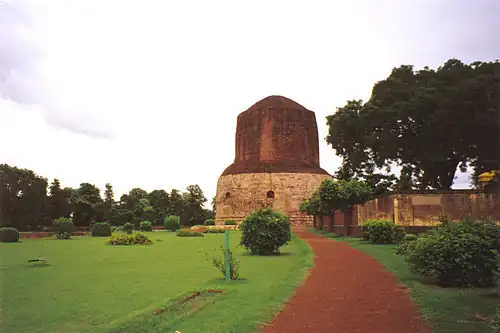
The town's heart is its archaeological complex, where monuments raised between the 3rd century BCE and the 11th century CE still stand among excavated ruins. The most imposing is the great Dhamekh Stupa, traditionally linked to Emperor Ashoka, marking the spot where the first sermon was given; nearby stand the remains of Ashoka's pillar — whose magnificent Lion Capital became the national emblem of India and is now displayed in the site museum. Over the centuries Buddhist nations have built temples here, so today Sarnath also holds Chinese, Japanese, Thai, Tibetan and Burmese temples, giving it a quietly international, contemplative atmosphere.
Sarnath makes an excellent half-day or full-day trip from Varanasi, and many travellers choose to stay overnight here instead of in Varanasi for a calmer, greener base away from the intensity of the holy city. The best time to visit is October to March, when the weather is mild and pleasant; summers (April–June) are very hot, often above 40°C, and the monsoon (July–September) brings heavy rain. The sites are compact and walkable, clustered along and around Dharmapala Road.
Planning Sarnath? Tell us your dates and we’ll tailor the trip.
Ask on WhatsAppHow do you get there?
By Plane
The nearest airport is Lal Bahadur Shastri Airport (VNS) at Babatpur, serving Varanasi, about 24 km from Sarnath. It has domestic connections to major Indian cities and some international flights. From the airport, hire a prepaid taxi or autorickshaw direct to Sarnath, or route via Varanasi.
By Train
The nearest major station is Varanasi Junction (also called Cantt), about 6 km away and connected to most major Indian cities — most visitors arrive here and continue by road. Sarnath has its own small railway station with local trains from Varanasi roughly every 2–3 hours and a few express stops, though many local services run to Varanasi City station rather than the Junction. For convenience, book to Varanasi and take an auto or taxi onward.
By Car / Road
Sarnath is reached most easily by road from Varanasi, only about 10–13 km away — roughly an hour from the ghats through now almost continuously built-up, busy streets. Approximate fares from the Varanasi ghat area: an autorickshaw costs around ₹400 one way or about ₹700 return with an hour's waiting time; a taxi runs over ₹1,500 for a return trip with waiting. Local bus No. 107E departs from near Varanasi Cantt station and costs around ₹25. Taxis can also be hired for the day from Varanasi.
Sarnath's attractions are spread over a small, walkable area, and exploring on foot is by far the best way to experience the town — the archaeological complex, museum and major temples are all within an easy stroll, much of it along the pleasant brick pedestrian stretch of Dharmapala Road with its stalls. For those who prefer not to walk, autorickshaws are available, but they have no fixed fares or routes, so confirm the destination and price before getting in, and expect to bargain hard. There is no metro or organised local bus network within the town itself. If arriving by train at Varanasi, do not commit to a taxi driver on the platform — negotiate outside the station, where autorickshaw rates are better; choose a taxi only if you have heavy luggage.
What are the things to do?
Historical sites — A single ticket (around ₹300 for foreign visitors; lower for Indians) covers the main archaeological complex housing the Dhamekh Stupa, the Ashoka pillar base and the stupa ruins; the ticket office is by the main gate.
- Dhamekh Stupa — the towering cylindrical stupa marking the spot where the Buddha gave his first sermon, the centrepiece of Sarnath and a place of circumambulation for pilgrims.
- Ashoka Pillar — only the base survives, protected under glass; the famous Lion Capital that crowned it is in the site museum.
- Mulagandhakuti (ancient) — the ruins of the temple traditionally said to mark where the Buddha spent his first rainy-season retreat.
- Dharmarajika Stupa — an Ashokan-era stupa, now reduced to its base, within the main complex.
- Chaukhandi Stupa (Rishipattan Road) — a Gupta-period stupa marking where the Buddha met the five ascetics, topped by an octagonal Mughal-era turret commissioned by Akbar.
Active temples and modern monuments
- Mulagandha Kuti Vihara — a beautiful early-20th-century temple with vivid murals of the Buddha's life, a bodhi tree, prayer wheels and daily sutta recitation (around 6 am and 6:30 pm); set in a park with fine views of the Dhamekh Stupa.
- Thai Buddhist Temple — its complex features a tall standing Buddha statue, dozens of metres high.
- Tibetan, Chinese, Japanese and Burmese temples — temples built and maintained by Buddhist communities from across Asia, each in its own national style.
- Vishwa Shanti Stupa — a "world peace" stupa near the Japanese temple.
- Sri Digamber Jain Temple (Dharmapala Road) — a Jain temple near the Dhamekh Stupa, marking Sarnath's significance in the Jain tradition.
Museum
Sarnath Archaeological Museum (Dharmapala Road) — a small but outstanding collection of sculpture and artefacts excavated from the site, including the celebrated Lion Capital of Ashoka. Open roughly 9 am–5 pm, closed Fridays.
Walk the Buddhist Circuit sites — a slow, contemplative tour of the Deer Park ruins, stupas and museum, ideally combined with the international temples.
Attend sutta recitation — join the morning or evening chanting at the Mulagandha Kuti Vihara for an authentic devotional experience.
Quiet reflection and meditation — Sarnath's calm makes it a natural place for meditation; some temples and centres welcome visitors.
Temple-hopping — compare the distinctive architecture of the Thai, Tibetan, Japanese, Chinese and Burmese temples within a short walk.
Day trip from Varanasi — for many, Sarnath is itself the day excursion; pair it with Varanasi's ghats for contrast.
Planning Sarnath? Want these on a customised itinerary?
Ask on WhatsAppWhere to eat?
Sarnath is a small town with limited dining — only a handful of restaurants — so do not expect a wide food scene. Cuisine is standard North Indian, predominantly vegetarian, in keeping with the town's Buddhist and pilgrim character. A few restaurants along the main road, including ones opposite the Mahabodhi temple area, serve good, reasonably priced Indian meals, though opening hours can be limited and they may close for holidays or events. Several temples and guesthouses offer simple meals to their guests, and some Tibetan-run temple kitchens serve inexpensive Tibetan and Indian food. Pure vegetarian food is the norm and easy to find; for greater variety, dine in Varanasi.
Where to drink?
Sarnath is a quiet, devout town with no real bar or nightlife scene — alcohol is best not assumed to be available, in keeping with the sacred character of the place. Expect chai, bottled soft drinks, packaged juices and lassi at the small eateries and stalls. As elsewhere in the region, drink only sealed bottled or properly filtered water, avoid tap water, and be cautious with ice and untreated juice. Cafés are few; for coffee culture and bars, head to Varanasi.
Planning Sarnath? We’ll book the stays and dining for you.
Ask on WhatsAppWhere to stay?
Sarnath offers a peaceful overnight alternative to Varanasi, with options heavily geared towards pilgrims.
- Budget: Several temple dharamshalas — including those run by the Mahabodhi, Thai, Burmese and Chinese temples — offer very cheap, spartan but clean rooms, often a few hundred rupees per bed. The Tara Temple complex has tidy rooms (roughly ₹600–1,000 depending on beds and bathroom) with inexpensive Tibetan/Indian meals. The government-run UPSTDC Rahi Tourist Bungalow is plain but conveniently located.
- Mid-range: The Golden Buddha Hotel in Sarangnath Colony is among the better hotels in town, within walking distance of the main temples, with a restaurant, garden and the option of airport or station pick-up; rates are moderate.
- Upscale: The Fern Residency Sarnath is the town's more comfortable, modern hotel choice for travellers wanting upscale amenities.
What should you buy?
Sarnath's signature craft is the stone-carved Buddha — locally made statues and sculptures of the Buddha in various sizes, sold at stalls near the entrance to the Deer Park and along Dharmapala Road. You will also find prayer beads, Buddhist flags, incense, thangka-style prints and other devotional items aimed at pilgrims. Bargaining is normal and expected at the stalls, so negotiate calmly and compare a few sellers before buying. For a wider range of shopping — including Banarasi silk — visit nearby Varanasi.
Where to go next?
- Varanasi (~10–13 km, ~1 hour) — the holiest Hindu city on the Ganges, with its famous ghats and evening aarti (auto around ₹350–400, taxi around ₹750 one way).
- Bodh Gaya (~250 km, ~6–7 hours) — the site of the Buddha's enlightenment, the most important Buddhist pilgrimage centre, in Bihar.
- Kushinagar (~230 km, ~5–6 hours) — where the Buddha attained parinirvana, completing the Buddhist Circuit in India.
- Prayagraj (~120 km, ~3 hours) — the holy city at the Ganges–Yamuna confluence and site of the Kumbh Mela.
- Chunar (~50 km, ~1.5–2 hours) — a historic riverside fort town near Varanasi.
- Vindhyachal (~80 km, ~2 hours) — a revered Shakti Peeth temple town near Mirzapur.
Nearby in Uttar Pradesh
More places to explore around Sarnath.


Guide content as of May 2026. Portions adapted from Wikivoyage, CC BY-SA 4.0.

Contact Us
Get in touch with us.
Get in touch
Contact Us
Tell us where you'd like to go and how you like to travel. A real Tripcuro planner — not a bot — will craft an itinerary around you.
- Personalised, hassle-free planning end-to-end
- Transparent pricing, no hidden costs
- 24/7 support for complete peace of mind