
Lijiang
Yunnan Sheng, China
Why visit Lijiang?
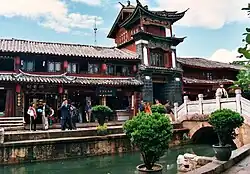
Lijiang (丽江) is a small city tucked into the foothills of the eastern Himalayas in northwestern Yunnan, famous for an exquisitely preserved Old Town (Dayan) that has been a UNESCO World Heritage Site since 1997. Sitting at roughly 2,400 m elevation where the Jade River braids into the canals that thread its cobblestone lanes, Lijiang has been the cultural heart of the Naxi people for centuries. The Mu clan ruled here for some 500 years under imperial appointment from the Yuan dynasty onward, and the town's wooden courtyard architecture, hieroglyphic Dongba script, and Naxi orchestral music are all legacies of that long autonomy. A devastating earthquake in 1996 flattened much of the modern town but spared many traditional timber buildings; the reconstruction that followed turned Lijiang into one of China's most-visited domestic tourism destinations.
The city has two old quarters worth knowing about — Dayan, the famous walled maze of canals, bridges and guesthouses where most visitors stay, and Shuhe, a quieter, less commercialised old town about 4 km northwest. Beyond them sprawls the modern New Town, which is where you'll find the train station, hospitals, supermarkets and bus terminals. The surrounding Yulong County contains Jade Dragon Snow Mountain, Tiger Leaping Gorge, and the Naxi heartland villages of Baisha and Yuhu.
Best months are April–June and September–October, when skies are clear, temperatures sit at 15–22 °C, and the mountain is visible. July–August is the rainy season — green and lush, but the peaks often hide in cloud. Winters are cold and dry; nights drop below freezing, but daytime sun is strong and crowds thin out. Because of the altitude, expect breathlessness and possibly a headache on day one — drink water, take it slowly, and if you've flown in from sea level, consider stopping in Kunming (1,900 m) or Dali (2,000 m) first.
Planning Lijiang? Tell us your dates and we’ll tailor the trip.
Ask on WhatsAppHow do you get there?
By Plane
Lijiang Sanyi International Airport (LJG) sits about 28 km south of the Old Town, roughly a 40-minute drive away. There are frequent flights from Kunming throughout the day, plus direct services from several major Chinese cities; many routes from farther afield connect via Kunming.
- Taxi: a fixed official fare applies to the Old Town gates.
- Airport shuttle bus: a low-cost shuttle drops within a short taxi ride of the Old Town.
Allow about an hour at the airport for departures.
By Train
Lijiang Railway Station sits roughly 7 km south of the Old Town. The Kunming–Lijiang high-speed line covers the distance in a little over 3 hours with several daily trains.
From Dali, the train is the easiest option, taking around 2 hours and beating the bus comfortably. A through bullet-train service between Dali and Lijiang runs on the same line.
To reach the Old Town from the station, take a local bus or taxi; small share-vans cruising outside the station are an alternative.
By Car / Road
Lijiang Bus Station in Gucheng District is the main long-distance terminal, just south of the Old Town.
- From Dali: minibus, bus, or express coach, departures every 30–60 min, about 3 hours on the expressway.
- From Shangri-La: regular daytime services, roughly 4 hours.
- From Kunming: overnight buses (~8–9 hours) terminate here.
- From Chengdu: a long overland journey best broken into stages via Panzhihua.
Self-driving from Kunming via the expressway takes around 5–6 hours over good road; from Dali it's about 2.5 hours.
Inside the Old Town, walking is the only option — taxis are banned beyond the gates, and most lanes are too narrow and stepped for vehicles anyway. If you arrive with luggage, either be ready to carry it across cobblestones or call your guesthouse to send a porter with a cart.
Outside the Old Town, metered taxis are the easiest way around. Drivers don't always know specific addresses — have the Chinese name of your destination written down or shown on your phone (Baidu Maps or Amap work far better than Google Maps in Lijiang). DiDi (the Chinese ride-hailing app) operates in the city and avoids the meter-refusal problem at the train station and tourist sites.
Public and minibuses are cheap but start from scattered points around the modern town rather than the Old Town gates; they're best for budget travellers heading to Shuhe, Baisha or Yuhu. Bikes can be rented near the North Gate and are a good way to reach Shuhe along the bike path. For a day trip combining several sights (Jade Dragon Snow Mountain, Baisha, Shuhe), hiring a taxi or van for the day is usually the most efficient option.
Watch your step on the cobblestones — they're slippery when wet, and many bridges and canal-side walkways have no handrails. Twisted ankles and fractures are the most common visitor injury here.
What are the things to do?
Old Town & historic core
- Old Town of Lijiang (Dayan Ancient Town, 丽江古城) — The reason most people come. A labyrinth of canals, willow-shaded bridges, Naxi courtyard houses, teahouses and shops radiating from Sifang Jie (四方街), the central square. Best experienced at dawn before tour groups arrive, or after 22:00 when the crowds thin and the lanes turn lantern-lit. Entry to the town itself is free, though individual attractions inside charge separately.
- Mu Palace (木府) — Seat of the Mu clan who ruled Lijiang for over 400 years. A sprawling complex stepping up Lion Hill with halls, gardens and side courtyards; allow at least two hours. Most original paintings and carvings were destroyed during the Cultural Revolution, but the rebuilt complex still gives a strong sense of scale and ritual.
- Lion Hill & Wangu Pavilion — Rises directly behind Mu Palace. Climb for the classic rooftop panorama over the Old Town's grey-tiled sea of houses, with Jade Dragon Snow Mountain behind on clear days.
- Black Dragon Pool (黑龙潭) — Spring-fed pool with an iconic five-arch pavilion reflecting Jade Dragon Snow Mountain on a still morning — the postcard shot of Lijiang. About 1 km north of Sifang Jie; the Dongba Culture Museum sits on the grounds.
Outside the Old Town
Shuhe Old Town — A smaller, slower, less-restored old town 4 km northwest of Dayan. Same Naxi architecture, half the crowds, better cafés.
Baisha Old Town — 12 km north, the original Naxi capital dating back many centuries. Quiet village atmosphere; the Baisha murals in Dabaoji Palace are Ming-era Buddhist-Daoist-Tibetan syncretic frescoes worth the trip.
Jade Dragon Snow Mountain (玉龙雪山) — A roughly 5,600 m massif 25 km north of the city. Cable cars run to Glacier Park (the highest station), Yak Meadow and Spruce Meadow. ID and oxygen canisters are strongly recommended for the highest cable car. At the foot is the Impression Lijiang outdoor performance directed by Zhang Yimou.
Tiger Leaping Gorge (虎跳峡) — One of the world's deepest river gorges, where the Jinsha (upper Yangtze) crashes between Jade Dragon and Haba mountains. Day trip from Lijiang or, much better, an overnight two-day hike along the High Trail.
Lugu Lake (泸沽湖) — A long drive north on the Yunnan-Sichuan border; home of the matrilineal Mosuo people. Usually done as a multi-day trip from Lijiang.
Watch the Naxi Orchestra — a long-running Naxi ensemble performs Taoist and Tang-dynasty ceremonial music on antique instruments most evenings in the Old Town.
Dawn walk through the Old Town — be in the lanes around Sifang Jie early, before the shops open, when the street-cleaners flood the canals and the only other people about are old Naxi women heading to market.
Hike Tiger Leaping Gorge — the two-day, roughly 22 km trek along the High Trail from Qiaotou to the gorge's far end; moderate difficulty with a famous steep climb partway. Guesthouses along the trail offer overnight stops with views straight down to the river.
Day hike or pony ride at Wenhai Lake — a seasonal alpine lake above Yuhu village; classic high-meadow scenery with Naxi shepherds.
Bike to Shuhe and Baisha — an easy mostly-flat route along the bike path; combines two old towns and the Baisha murals in one day.
Dongba script workshop — several studios in the Old Town offer short calligraphy sessions in the Naxi pictographic script.
Joseph Rock's house at Yuhu — the Austrian-American botanist who introduced Lijiang to the West lived in this Naxi village for decades; his small museum-house is a quiet, atmospheric stop.
Planning Lijiang? Want these on a customised itinerary?
Ask on WhatsAppWhere to eat?
Naxi cuisine borrows freely from Han Chinese, Tibetan and Bai traditions but has distinctive dishes of its own — baba (a chewy flatbread, sweet or savoury), chicken stewed with bamboo shoots and gingko, fried Naxi cheese (rushan), jidou cold jelly drizzled with chilli and Sichuan pepper, and yak hotpot. Wild mushrooms — including matsutake and porcini — are a summer delicacy. Vegetarian options are easier here than in many Chinese cities. Halal restaurants cluster around the Hui Muslim quarter near Xiangshan Market.
- Budget: Naxi snack shops near the Old Town serve baba, fried cheese and stir-fries at low prices.
- Budget: stalls along Zhongyi Market just outside the Old Town's south side — rice noodles, grilled tofu, and the local breakfast of barley pancakes.
- Mid-range: Sichuan-Yunnan restaurants around the Old Town serve reliable hot dishes for a whole-table dinner.
- Mid-range: Western-and-Naxi cafés near Sifang Jie offer yak burgers, pizzas and good coffee.
- Upscale: courtyard restaurants in the Old Town serve elegant Tibetan-Naxi fusion menus.
- Upscale: the dining rooms of the area's boutique resort hotels (Shuhe and beyond) run the city's reference fine-dining tasting menus.
Where to drink?
Lijiang's drinking scene splits sharply between Bar Street, along the canal in the Old Town — loud, neon-lit, with live bands playing across the water at each other until late — and the dozens of quieter courtyard teahouses and Western-style cafés tucked into side lanes. Bar Street is a one-time-novelty for many travellers; the courtyards are where you'll actually want to spend a slow afternoon.
Local drinks to try:
- Mulaoye jiu — a fragrant grain-based local liquor, sometimes available to taste near Mu Palace.
- Yinjiu — Naxi rice wine, often served warm and honeyed.
- Su you cha (酥油茶) — Tibetan butter tea, available at Tibetan-run cafés.
- Pu'er tea — best drunk slowly in a Shuhe teahouse where the owner brews multiple infusions and explains what you're drinking.
Long-running travellers' cafés near Sifang Jie and on the lanes around Cuiwen still pull a good espresso.
Water safety: Don't drink tap water in Lijiang. Bottled water is universally available; better hotels supply free bottles per room per day. Boiled water in flasks is standard in guesthouses. Hot drinks made with boiled water (tea, coffee) are safe.
Planning Lijiang? We’ll book the stays and dining for you.
Ask on WhatsAppWhere to stay?
The Old Town has hundreds of small Naxi-courtyard guesthouses; Shuhe has a quieter, slightly higher-end version of the same; the New Town has chain business hotels for those who want elevators and reliable Wi-Fi but lose all the atmosphere.
Budget
- Long-running backpacker guesthouses in the Old Town offer dorm beds and basic doubles, with chaotic but friendly, family-style dinners.
- Small Naxi courtyard guesthouses offer simple twin rooms with traditional wood interiors.
Mid-range
- Boutique courtyard hotels with several locations in the Old Town offer design-led Naxi interiors and small spas.
- International-chain properties on the edge of the Old Town offer full service with mountain-view rooms.
Upscale / Heritage
- Banyan Tree Lijiang — in Shuhe rather than Dayan; freestanding villas with private courtyards, plunge pools and uninterrupted views of Jade Dragon Snow Mountain.
- Amandayan — Aman's Lijiang property on Lion Hill, directly above Mu Palace, with suites in Naxi-style pavilions and a private rooftop view over the Old Town.
What should you buy?
The Old Town's main lanes are wall-to-wall souvenir shops — much of what's on offer is mass-produced and not from Lijiang at all. Look for these genuine local specialties:
- Naxi embroidery and Dongba paintings — the Naxi are famous embroiderers; look for hand-stitched pieces with Dongba pictographs rather than the printed-and-framed tourist versions. Better workshops cluster in Shuhe.
- Yak products — wool scarves, blankets and jerky from the high pastures.
- Pu'er tea — Yunnan's most famous export; the tea-horse caravan routes ran through Lijiang. Shuhe has a few reputable tea shops where you can sample before buying.
- Silver jewellery — Bai and Naxi silver work, often sold by weight; check for hallmarks.
- Pressed flowers and herbal medicines — Lijiang's old apothecaries sell wild-harvested mountain herbs and rose-based preserves.
Bargaining is expected in tourist shops and silver/jewellery stalls — start at about 40% of the asking price. Fixed-price tea houses, supermarkets and most restaurants don't bargain.
Where to go next?
- Shangri-La (Zhongdian) — 180 km north, several hours by bus or shared van. Tibetan plateau town at 3,200 m with Songzanlin Monastery, the largest Tibetan Buddhist monastery in Yunnan.
- Tiger Leaping Gorge — 100 km north; the classic two-day High Trail hike is the single best trek in southwest China.
- Dali — 150 km south, about 2 hours by high-speed train; another Bai/Naxi old town on the shore of Erhai Lake — gentler, lower, often paired with Lijiang as the two anchors of a Yunnan trip.
- Lugu Lake — 200 km north on the Sichuan border, several hours by road. Pristine alpine lake and the matrilineal Mosuo culture; 2–3 days minimum.
- Kunming — 500 km south, reached in around 3.5 hours by high-speed train. Yunnan's provincial capital and the gateway in/out for most visitors; the Stone Forest is the standard side trip.
- Yubeng — well north past Shangri-La; a remote Tibetan trekking village under Meili Snow Mountain, for travellers with more time who want to push deeper into the Kham region.
Nearby in Yunnan Sheng
More places to explore around Lijiang.

Guide content as of July 2026. Portions adapted from Wikivoyage, CC BY-SA 4.0.

Contact Us
Get in touch with us.
Get in touch
Contact Us
Tell us where you'd like to go and how you like to travel. A real Tripcuro planner — not a bot — will craft an itinerary around you.
- Personalised, hassle-free planning end-to-end
- Transparent pricing, no hidden costs
- 24/7 support for complete peace of mind