
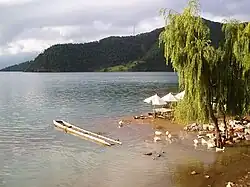
Lugu Lake
Yunnan Sheng, China
Why visit Lugu Lake?
Lugu Lake (泸沽湖, Lúgū Hú) sits at around 2,690 metres in the mountains straddling the Yunnan–Sichuan border, an alpine lake famous for exceptionally clear water and a shoreline of islands and peninsulas. The lake is the homeland of the Mosuo, an ethnic minority that has preserved a matrilineal social structure and a "walking marriage" tradition in which partners maintain separate households under their respective mothers. Combined with the lake's protected, low-development character, this gives Lugu a distinct atmosphere — slower, quieter and more culturally intact than the heavily touristed Lijiang to the south.
Most visitors come for two reasons: the scenery (mirror-flat water, terraced villages, the sacred bulk of Gemu Mountain rising on the western shore) and the cultural encounter with Mosuo life via villages, a small folk museum, and lakeside guesthouses run by Mosuo families. The lake is split administratively: the Yunnan side (in Ninglang County, Lijiang Prefecture) holds the larger tourist villages of Luoshui and Lige; the Sichuan side (in Yanyuan County, Liangshan Prefecture) is quieter and dominated by Wuzhiluo and the Caohai wetlands. A single ring road of roughly 70 km loops the lake and crosses the provincial border twice.
The best months are April–June and September–early November: dry, clear and mild. July–August brings the summer rains and the highest domestic tourist crowds during school holidays. December–February is cold (overnight lows below freezing) but skies are often blazingly clear and the lake at its emptiest; pack serious layers and expect frost. Altitude is moderate but real — go easy on the first day, especially if you've come up directly from low-elevation cities.
Planning Lugu Lake? Tell us your dates and we’ll tailor the trip.
Ask on WhatsAppHow do you get there?
A scenic-area entry fee is charged at the gate when you enter the lake basin.
By Plane
The two practical airports are Ninglang Luguhu Airport (NLH), a small regional airport perched on a ridge southwest of the lake, and Lijiang Sanyi International Airport (LJG), considerably farther south. Ninglang Luguhu has limited, largely seasonal service; when it runs, it cuts the journey to under an hour by shared van or chartered taxi down to Luoshui. Lijiang has far more connections and is the standard entry point: from LJG, take the airport shuttle or a taxi into Lijiang, then continue overland.
Further options: Xichang Qingshan Airport (XIC) in Sichuan is a viable approach from the Sichuan side via Yanyuan; Kunming Changshui (KMG) is the main regional hub but is too far for direct overland transfer — combine it with a domestic flight or train.
By Train
There is no railway to Lugu Lake. Combine a flight or bus to Lijiang or Xichang with an overland connection.
By Car / Road
The standard approach is from Lijiang, roughly 230 km north. The road was substantially improved in recent years, cutting drive time to around 4–5 hours by minivan; expect twisting mountain roads, a couple of high passes, and occasional construction-related closures. Shared minivans and tourist buses leave Lijiang in the morning from the Lijiang bus station and from many Old Town guesthouses. Private chartered cars are also available.
From Xichang (Sichuan), it's about 200 km and 5–6 hours via Yanyuan, arriving on the Sichuan (Wuzhiluo) side of the lake. From Chengdu, allow two days overland via Xichang, or fly to Lijiang/Ninglang.
Night driving on the Lijiang–Lugu road is not advised — long stretches are subject to scheduled construction closures and the road is open only at certain hours; you can be turned back and forced to overnight in a village.
The lake is ringed by a single road of roughly 70 km — getting around means traversing some piece of it.
- Walking: fine within Luoshui or Lige village, useless for circling the lake.
- Bicycle: rental shops in Luoshui and Lige offer basic bikes, more for e-bikes. A full loop takes around 8 hours; note that sections on the Yunnan side can be rough or unpaved in patches.
- Electric / petrol scooter: the most popular option. A scooter loop takes about 3 hours of riding plus stops — figure on a full day with viewpoint stops.
- Chartered minivan / car: arranged through any guesthouse to circle the lake with stops. Useful in winter or rain.
- Shared minivans between villages: connect Luoshui and Lige; the wetlands pier is also reachable by boat.
- Ride-hailing: Didi coverage is patchy and unreliable around the lake — don't count on it. Guesthouses arrange transport.
Scams and annoyances are mild but real: confirm the price before you set off on any boat, scooter rental or photo op, and check scooter batteries and brakes before you ride out. ATM access is extremely limited — bring cash, or top up a WeChat Pay / Alipay wallet linked to a Chinese account before arriving, as foreign Visa/Mastercard cards generally do not work at the lake's rural bank branch.
What are the things to do?
Mosuo Folk Museum, Daluoshui Village — a primer on Mosuo history, matrilineal kinship and walking-marriage customs, set in a restored Mosuo courtyard compound.
Gemu Goddess Mountain — the sacred peak of the Mosuo, reached by cable car from the base station near Lige. Spectacular views over the lake and, near the top, resident macaques.
Lige Peninsula viewpoint — a roadside lookout above Lige village with the postcard view of the curved peninsula reaching into the lake — go at sunrise for mirror-flat water.
Caohai Wetlands and the Walking Marriage Bridge, Sichuan side — a long wooden footbridge through reed beds that historically connected Mosuo villages on opposite sides of the wetlands and acquired its name from courting couples who used it to visit partners.
Lion Mountain, western shore — the forested peak whose silhouette is said to resemble a sleeping Mosuo goddess.
Lake islands by canoe: the largest holds a small Tibetan Buddhist temple and is the standard destination for a traditional dugout-canoe trip from the Luoshui pier.
Yongning Monastery, in Yongning town some way from Luoshui — the largest Gelugpa monastery in the region, with active Tibetan Buddhist practice.
Daluoshui, Lige and Wuzhiluo villages themselves are worth wandering for Mosuo wood-and-stone architecture, courtyards and small lakeside shrines.
Loop the lake by scooter or bike. The defining Lugu activity. Stop at the Walking Marriage Bridge, the Sichuan-side viewpoints near Wuzhiluo, and any of the small lakeside shrines that catch your eye.
Traditional dugout canoe ride. Mosuo boatmen and women pole flat-bottomed canoes out to the temple island and back; private charters are negotiable.
Sunrise at Lige Peninsula or sunset from the Luoshui pier — both are short walks from the respective village centres and reliably extraordinary in clear weather.
Mosuo cultural evening / bonfire dance. Held nightly in season in Luoshui's main square; expect circle dances, antiphonal singing and audience participation.
Hike Gemu Mountain. Several marked trails ascend from the cable-car base; allow 4–6 hours up and down for the full hike, or take the cable car up and walk down.
Cooking and weaving demonstrations at family-run Mosuo guesthouses in Lige and Daluoshui — usually arranged ad hoc; ask your host.
Day trip to Yongning and the monastery, combining the monastery with nearby hot springs, by chartered car from the lake.
Planning Lugu Lake? Want these on a customised itinerary?
Ask on WhatsAppWhere to eat?
The lake's food blends Mosuo, Yi, Naxi and Sichuan influences. Lake fish feature in many menus; preserved pork (the Mosuo's famous "pig-fat preserved pork") is a specialty served sliced cold or stir-fried; sulima grain wine accompanies most family meals. Tibetan-style butter tea, baba flatbreads, and Sichuan-spiced hot pots round out a typical local table. Vegetarian options are workable but limited — mountain mushroom hot pots, stir-fried wild greens, and tofu dishes are the safest bets; ask for no meat and expect occasional pork stock in soups.
- Budget: small noodle and rice shops along Luoshui's lakefront strip serve crossing-the-bridge noodles and stir-fries.
- Mid-range Mosuo family meal: most guesthouses in Lige and Luoshui offer set dinners of preserved pork, lake fish, mountain greens and rice, often with sulima wine included — arrange in the afternoon for evening.
- Lakefront grilled fish restaurants in Luoshui — pick a fish, choose Sichuan-style spicy or a milder garlic broth.
- Tibetan / yak hotpot houses in Lige serve yak meat, mushroom and butter-tea menus.
- Cafés in Lige along the peninsula road do Western breakfasts, pizza and coffee for the long-stay backpacker crowd.
Where to drink?
Lugu drinking culture revolves around sulima wine (a low-strength fermented grain wine, slightly sour and cloudy) and yak butter tea, both typically poured at family dinners. Mosuo hosts often sing a short welcome song as the first cup is raised — drink it back. Bottled local beers are everywhere; imported beers and wine are scarce and pricey.
A handful of small bars near the Luoshui canoe pier and along Lige's peninsula lane offer live acoustic music in season — wander and pick whichever has the crowd you like. Bonfire squares in Luoshui and Lige are alcohol-friendly during the nightly dances.
Water safety: do not drink tap water. Bottled water is universally available; most guesthouses provide a thermos of boiled water free of charge. Boiled water is fine for tea and noodles.
Planning Lugu Lake? We’ll book the stays and dining for you.
Ask on WhatsAppWhere to stay?
Lodging clusters in three villages: Luoshui (the largest, on the southern Yunnan shore, lively and the easiest base), Lige (smaller and more scenic on the north shore, the backpacker and view-seeker favourite), and Wuzhiluo (on the quieter Sichuan side). In low season (winter, excluding Spring Festival), bargain — rates often drop 30–50% from posted prices.
Budget
- Mosuo family guesthouses along Luoshui's lakefront offer clean doubles with attached bathroom, hot water, and often a balcony or lake view.
- Backpacker hostels in Lige run dorm-style beds and basic doubles.
Mid-range
- Lakeview guesthouses on the Lige peninsula offer private balconies over the water in small 8–20 room lodges.
Upscale / heritage
- Peninsula-tip resort properties in Lige offer the most dramatic water-on-three-sides settings.
- Mosuo-style courtyard boutique hotels in Daluoshui and on the Sichuan side mix carved-wood traditional architecture with modern bathrooms and underfloor heating.
Camping
Officially not authorised inside the scenic area, though informal lakeside camping does happen. If you go this route, pack out everything and avoid pitching near villages or shrines.
What should you buy?
Lugu's shopping is small-scale and dominated by Mosuo handicrafts. Look for:
- Handwoven Mosuo textiles — scarves, belts and shoulder bags in distinctive striped patterns, sold in village shops in Luoshui and Lige.
- Silver jewellery in Mosuo and Tibetan styles, especially headpieces and earrings. Quality and silver content vary; bargain hard and assume sterling claims need verification.
- Sulima wine — the Mosuo's home-brewed grain wine, sold in bottles and gourds along the lakefront streets.
- Yak butter tea bricks, walnuts and dried mushrooms from the surrounding mountains — pine mushrooms in late summer are a regional specialty.
- Tibetan Buddhist devotional items — prayer flags, beads, small thangkas — particularly around Yongning.
Bargaining is expected in market stalls and street shops; start at about 50% of the asking price. Fixed-price shops are uncommon outside upscale hotels.
Where to go next?
- Lijiang — roughly 230 km / 4–5 hours by minivan. The obvious next stop: the UNESCO-listed Naxi old town, Jade Dragon Snow Mountain and Tiger Leaping Gorge are all within easy reach.
- Shangri-La (Zhongdian) — about 400 km / 8–9 hours from Lugu via Lijiang. Tibetan plateau scenery, Songzanlin Monastery and Pudacuo National Park.
- Yongning and the monastery — a short chartered-car ride from the lake, combining Yunnan's largest Gelugpa monastery with nearby hot springs.
- Xichang — about 200 km / 5–6 hours northeast (Sichuan side). Yi-minority heartland, Qionghai Lake, and access to the Liangshan mountains; also a viable airport exit (XIC).
- Dali — about 400 km / ~7 hours via Lijiang. Erhai Lake, the Bai-minority old town and the Three Pagodas; pairs naturally with Lijiang on a Yunnan loop.
- Panzhihua and onward to Chengdu — long-haul via Xichang for travellers heading north into Sichuan rather than back south into Yunnan; best broken into two days with an overnight in Xichang.
Nearby in Yunnan Sheng
More places to explore around Lugu Lake.

Guide content as of July 2026. Portions adapted from Wikivoyage, CC BY-SA 4.0.

Contact Us
Get in touch with us.
Get in touch
Contact Us
Tell us where you'd like to go and how you like to travel. A real Tripcuro planner — not a bot — will craft an itinerary around you.
- Personalised, hassle-free planning end-to-end
- Transparent pricing, no hidden costs
- 24/7 support for complete peace of mind