
Wuhai
Nei Mongol Zizhiqu, China
Why visit Wuhai?
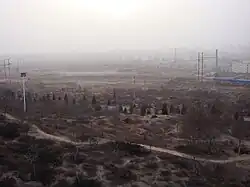
Wuhai (乌海) is a small prefecture-level city on the Yellow River in the far southwest of Inner Mongolia, wedged between the Gobi and Ordos desert margins. It is a young administrative creation, formed in the 1970s by merging several mining districts, and its economy has long been built on coal, coking, and chemicals. What makes it worth a stop is the contrast this produces: an industrial city sitting beside a broad reservoir on the Yellow River, with sand dunes visible from the water's edge, and a nascent desert wine industry that has grown up on the surrounding sandy plains in recent years.
The city is split by the river into three districts: Haibowan, the main urban core on the east bank with the museum, transport hubs, and most hotels; Wuda, on the west bank, where the reservoir known locally as Wuhai Lake sits; and Hainan, to the south, where the main highway bridge crosses the river. Most of what a visitor is likely to want is in or near Haibowan.
The climate is dry continental: hot summers with daytime highs regularly above 30°C, and cold, dry winters with lows well below freezing. Spring can bring dust storms off the surrounding deserts. Spring and autumn (May and September–October) are the most comfortable seasons for outdoor sightseeing.
Planning Wuhai? Tell us your dates and we’ll tailor the trip.
Ask on WhatsAppHow do you get there?
By Plane
Wuhai Airport (WUA) is a small regional airport in Haibowan District with scheduled domestic service to a number of Chinese cities, including Beijing, Hohhot, and several regional hubs. Airport shuttle buses and taxis connect the airport to central Haibowan; confirm current routes and fares locally, as schedules for a small regional airport like this change frequently.
By Train
Wuhai Railway Station, in Haibowan District, sits on a rail corridor connecting toward Baotou and, in the other direction, toward Yinchuan in Ningxia. A second, newer station serves the western side of the city. Book tickets through the official China Railway 12306 platform; a passport is required to purchase and board.
By Car / Road
Wuhai sits on the G6 Beijing–Tibet Expressway, which crosses the Yellow River on a highway bridge in Hainan District and provides the main long-distance road link. Yinchuan, the capital of neighbouring Ningxia, is a couple of hours away by road along the expressway and is sometimes a more convenient air gateway than Wuhai's own small airport. Long-distance buses connect Wuhai to destinations across western Inner Mongolia and into Ningxia.
Wuhai is compact enough that city buses cover most practical needs within Haibowan, though routes and schedules should be confirmed locally rather than assumed. Ride-hailing (Didi) is reliable and generally the easiest way to get around, particularly for crossing between the three districts, which are separated by the river and several kilometres of bridge approaches — street-hail taxis are relatively scarce outside the centre. Walking works well within Haibowan's core but is not practical for moving between districts.
What are the things to do?
Wuhai Museum, Haibowan District — a city museum covering the region's geology, history, and folk culture; a reasonable first stop for context on an otherwise young and industrial city. Confirm current hours before visiting, as small municipal museums in China often close one day a week.
Wuhai Lake, Wuda District — a large reservoir on the upper Yellow River, with the Ulan Buh desert visible to the west and a riverside greenway on the east bank. The combination of open water and dunes is the signature Wuhai landscape and a good spot for sunset.
A wetland park on the Yellow River near Haibowan functions as a stop on the East Asia–Australasian migratory bird flyway and is worth a visit for birdwatchers during spring and autumn migration.
Sandstone canyon scenery in the desert margins northwest of the city, where wind and water erosion have carved distinctive shapes into red-purple rock; most easily visited with a hired car or driver.
The Yellow River highway bridge linking the districts across the river is itself a notable feature of the cityscape.
Walk or cycle the riverside greenway on the east bank of Wuhai Lake, particularly at sunset when the light on the water and dunes is best.
Take a half-day or full-day trip out to the surrounding desert dunes and canyon country with a hired driver.
Visit during the local grape and wine festival, generally held in late summer or early autumn, if your dates align — check current dates locally, as these vary from year to year.
Planning Wuhai? Want these on a customised itinerary?
Ask on WhatsAppWhere to eat?
Wuhai's food culture sits at the meeting point of three traditions: Mongolian pastoral cooking (roast and boiled mutton, milk tea, dairy snacks), Hui Muslim noodle and beef cuisine carried over from neighbouring Ningxia, and northern Han Chinese staples such as knife-cut noodles and dumplings. Yellow River carp appears on some menus despite the desert setting. Halal (清真) restaurants are common and clearly signed, reflecting the significant local Hui population.
Vegetarian options outside dedicated vegetarian or Buddhist restaurants are limited; noodle shops will generally accommodate a request for a meat-free dish, though broths are frequently made with meat stock.
Where to drink?
Desert wine from vineyards on the sandy fringe of the city is the most distinctive local drink and the basis for an annual festival; bottles are stocked at supermarkets across town. Salty Mongolian milk tea is the everyday hot drink, and fermented mare's-milk spirits appear at Mongolian-themed venues in the wider region.
Standalone bars and cafés exist in central Haibowan but nightlife is generally low-key; as elsewhere in China, tap water is not safe to drink and bottled water is cheap and universally available.
Planning Wuhai? We’ll book the stays and dining for you.
Ask on WhatsAppWhere to stay?
Budget travellers should expect the usual pattern found in mid-sized Chinese cities: guesthouses and national budget chain hotels clustered near the railway station in Haibowan District. Mid-range business hotels are available in the same area and near the airport-shuttle corridor. Wuhai does not have international luxury hotel brands; the top local tier consists of higher-end domestic hotels in central Haibowan.
What should you buy?
Wuhai is not a shopping destination in its own right; Haibowan's central commercial streets and a shopping mall cover everyday needs and mainstream chain retail. For souvenirs, local desert wine from vineyards on the sandy margins around the city is a genuine regional specialty, best bought at a supermarket or during the local wine festival. Mongolian dairy products such as dried milk curd and milk skin, and small Mongolian crafts, are also available, though much of this craft trade is centred further north and east in Inner Mongolia rather than in Wuhai specifically. Bargaining is customary at street markets; fixed prices apply in chain shops and malls.
Where to go next?
- Yinchuan, Ningxia — a couple of hours southwest by road, the provincial capital with the Western Xia imperial tombs, Helan Mountain rock art, and a deeper Hui food scene.
- Shizuishan, Ningxia — directly across the Yellow River corridor to the south, with its own reservoir and dune scenery.
- Alxa Left Banner (Bayanhot) — west of Wuhai, gateway to canyon country and the Helan Mountains' western flank.
- Ordos — to the northeast, known for the Genghis Khan Mausoleum and the planned new city of Kangbashi.
- Baotou — further northeast, an industrial hub and gateway to the steppe grasslands.
- Ejin Banner — far western Inner Mongolia, known for its populus euphratica (desert poplar) forests, which turn a striking gold in early-to-mid autumn.
Nearby in Nei Mongol Zizhiqu
More places to explore around Wuhai.

Guide content as of July 2026. Portions adapted from Wikivoyage, CC BY-SA 4.0.

Contact Us
Get in touch with us.
Get in touch
Contact Us
Tell us where you'd like to go and how you like to travel. A real Tripcuro planner — not a bot — will craft an itinerary around you.
- Personalised, hassle-free planning end-to-end
- Transparent pricing, no hidden costs
- 24/7 support for complete peace of mind