
Erlian
Nei Mongol Zizhiqu, China
Why visit Erlian?
Erlian (二连), known officially as Erenhot (Erlianhaote, 二连浩特) and as Ereen in Mongolian, is a small but strategically vital border city in the central-northern stretch of Inner Mongolia, sitting directly across the frontier from Zamiin-Uud in Mongolia. For most travellers it is a transit town — a stop on the Trans-Mongolian rail corridor between Beijing, Ulaanbaatar and Moscow, and the cheapest land crossing into Mongolia from China. Erlian has also carved out a distinctive identity beyond the border-post bustle: it sits in some of the world's richest dinosaur-fossil country, and the city has leaned hard into the theme, with dinosaur sculptures around its central plaza and a serious palaeontology museum out on the steppe.
The town is compact, dusty and bilingual in feel — Mongolian script appears alongside Chinese on most signage, and the cuisine, hotels and shops cater heavily to cross-border commerce. Climate is harsh continental: bitterly cold and windy from November through March, short and pleasant in May–June and September, and hot and dry in July–August. Spring brings sandstorms blowing off the Gobi. The most comfortable window for a visit is late May to mid-September.
Layout is straightforward: the train station sits on the eastern edge of town, and a main road runs west into the centre, crossing a north–south road near a large dinosaur sculpture that marks the effective centre of town. Most hotels, restaurants and the bus station cluster within a few blocks of these axes. The border crossing lies a short taxi ride north of town, and the Dinosaur Museum is a few kilometres out on the grassland to the northeast.
Best time to visit: late May to mid-June or September, when temperatures are comfortable and the steppe is at its greenest. Avoid spring (April–early May), when Gobi sandstorms are frequent.
Planning Erlian? Tell us your dates and we’ll tailor the trip.
Ask on WhatsAppHow do you get there?
By Plane
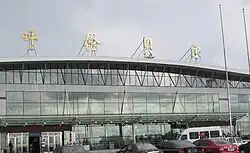
Erenhot Saiwusu International Airport (ERL) lies a short distance from the city centre. There are domestic flights to Beijing and a short hop to Hohhot; confirm current routes and fares before booking, as regional air service in Inner Mongolia changes often.
By Train
The Erlian Railway Station on the eastern edge of town is the main reason most travellers come here. It sits on the international line connecting Beijing, Erlian, Zamiin-Uud, Ulaanbaatar and Moscow — the Trans-Mongolian route. A domestic overnight service links Beijing to Erlian directly. Tickets can be purchased at the station in advance or through travel agents. Critical visa-run tip: Beijing-bound trains do not run daily, and return tickets are not always readily purchasable from Beijing — check the schedule before you travel up so you don't get stranded. Trans-border trains stop here for several hours while bogies are changed to the wider Mongolian/Russian gauge.
By Car / Road
The most reliable road approach is from Hohhot: long-distance buses make the run in roughly half a day. Sleeper buses from Beijing also run the route. The long-distance bus station is a short walk from the train station.
For onward travel into Mongolia, options run from the international bus station to Zamiin-Uud: scheduled buses (requiring passengers to disembark and reboard at each border post), or shared jeeps driven by Mongolian traders, departing from the Mongolian goods market. Jeeps can be crowded. An exit tax applies, and you cannot walk between the Chinese and Mongolian posts. Plan around 1½ hours for the full crossing, and note that the border closes on certain holidays.
Erlian is small enough to walk most of the centre. Taxis charge a low flat fare around town and to the border. Pedicabs and rickshaws are cheaper for short hops. A local bus runs from town out to the border for a nominal fare. Out to the Dinosaur Museum (a few kilometres northeast), expect a modest taxi fare one-way, or arrange for the driver to wait and bring you back. Ride-hailing via Didi works in the city but coverage on outlying routes is patchy. Almost no one outside hotels speaks English — basic Mandarin or a translation app is genuinely useful.
What are the things to do?
Erenhot Dinosaur Museum — northeast of the centre, near Konglongmudi. The serious sight in town and well worth the trip. Set in an outdoor sculpture park dotted with life-sized dinosaur replicas striding across the steppe, the museum holds fossils excavated from the surrounding Gobi basin, one of the richest dinosaur fossil sites in the world. Allow 2–4 hours.
Dinosaur Sculpture (main intersection) — a giant dinosaur sculpture marks the crossroads where the east–west road from the train station meets the main north–south road, the city's de facto centre and a useful navigation landmark.
Dinosaur Plaza — the themed central plaza, surrounded by shopping, with street barbecue stalls firing up on summer evenings just to the south.
The "Approaching Dinosaurs" Gate — on the road in from the north, two enormous sauropod sculptures arch over the highway, their necks meeting overhead — the city's signature image and worth a stop for a photograph.
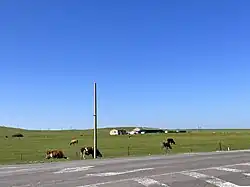
Grassland tour loops. Erlian is a common starting point for excursions across the Gobi-edge steppe. Local travel agents in town and several hotels can arrange jeep-and-driver day or multi-day excursions.
Dinosaur fossil sites on the grassland. The countryside around town is studded with active and historical excavation areas; some are accessible via the museum's outdoor grounds, and operators in town can arrange grassland-and-fossil day trips.
Cross-border people-watching at the international bus station and goods market. A genuinely interesting slice of frontier commerce: Mongolian traders loading jeeps with Chinese-manufactured goods, money changers working out of the market entrance, languages and currencies switching mid-sentence.
Summer night barbecue scene — outdoor grills set up from early evening in the warm months, with beer and mutton skewers.
Planning Erlian? Want these on a customised itinerary?
Ask on WhatsAppWhere to eat?
Food in Erlian reflects the city's frontier mix: Mongolian (mutton-heavy, dumplings, milk tea), Han Chinese (northern noodle and dumpling traditions), and a strong Hui Muslim presence with halal restaurants serving lamb and hand-pulled noodles. Signature local plates worth trying include shoubarou (手把肉) — boiled mutton on the bone eaten by hand — Mongolian milk tea, buuz (steamed mutton dumplings), and grilled lamb skewers. Vegetarian options are limited; halal is easy to find.
- A Mongolian restaurant inside the bus station complex serves authentic, low-priced food with a picture menu — a common pattern at Chinese long-distance bus stations.
- Hui Muslim noodle and lamb houses are scattered through the centre — look for halal (清真) signage.
- Outdoor barbecue stalls set up in the evening in warm months for grilled skewers and cold beer.
- Hotpot restaurants near Dinosaur Plaza serve Mongolian-style mutton hotpot, an obvious order in cold weather.
Where to drink?
Mongolian-style salted milk tea is the regional staple, served in canteens and Mongolian restaurants throughout town. Local Chinese beer (Snow/雪花 and similar brands) is everywhere and cheap; baijiu turns up at every Mongolian dinner table, often homemade and strong. Mongolian traders bring Mongolian spirits across the border, which turn up in shops near the market.
Café culture is thin compared with bigger Chinese cities, but a few teahouses and basic coffee shops cluster around Dinosaur Plaza and the main shopping strip. Tap water is not drinkable — stick to bottled or boiled water, which hotels provide in a thermos.
Planning Erlian? We’ll book the stays and dining for you.
Ask on WhatsAppWhere to stay?
Budget
A cluster of basic guesthouses around the train station offers simple doubles — clean enough, with heat in winter and basic en-suite bathrooms. Useful if you arrive late on an overnight train or are catching an early border bus.
Mid-range
Limited Information available
Upscale
The largest hotels in Erlian offer full business-hotel facilities, restaurants and reliable hot water and Wi-Fi, catering mostly to cross-border traders and officials.
What should you buy?
The central market, near Dinosaur Plaza, is the main shopping anchor — a large indoor hall of small stalls selling clothes, hardware, household goods and Mongolian imports, with money changers offering rates for Mongolian tögrög. Several larger shopping centres sit nearby.
For souvenirs, alleys in the older shopping streets are full of gift shops selling curios of varying vintage, Mongolian-style trinkets, dinosaur-themed knickknacks and Inner Mongolian crafts. Bargaining is expected — start at roughly half the asking price. Authentic Mongolian goods (felt, leather, snuff bottles) are also worth looking for, brought across by traders.
Where to go next?
- Zamiin-Uud, Mongolia — the Mongolian side of the frontier and the gateway to onward train travel into the rest of Mongolia.
- Ulaanbaatar, Mongolia — the Mongolian capital, reached by Trans-Mongolian sleeper from Zamiin-Uud or directly through-routed from Beijing.
- Xilinhot (Xilin Gol) — a scenic, bone-shaking drive over dirt grassland roads to a steppe city, the heart of the Xilin Gol grasslands.
- Hohhot — Inner Mongolia's capital, with serious museums, the old Tibetan-Buddhist temple quarter, and far more comfortable infrastructure.
- Jining (集宁) — a practical onward stop continuing south from Xilinhot, and an inexpensive way to round out a self-guided grasslands loop back toward Hohhot.
- Beijing — the standard southbound exit, reachable by overnight train or direct flight.
Nearby in Nei Mongol Zizhiqu
More places to explore around Erlian.
Guide content as of July 2026. Portions adapted from Wikivoyage, CC BY-SA 4.0.

Contact Us
Get in touch with us.
Get in touch
Contact Us
Tell us where you'd like to go and how you like to travel. A real Tripcuro planner — not a bot — will craft an itinerary around you.
- Personalised, hassle-free planning end-to-end
- Transparent pricing, no hidden costs
- 24/7 support for complete peace of mind