
Manzhouli
Nei Mongol Zizhiqu, China
Why visit Manzhouli?
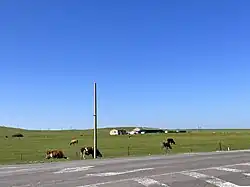
Manzhouli (满洲里) is a county-level city in the far northeast of Inner Mongolia, pressed up against the Russian border and a short hop from Mongolia. Administratively part of Hulunbuir, it is in practice defined by its role as China's largest land port — a place built around the Trans-Siberian-era railway crossing rather than any deep historical core. The result is a planned border town with wide avenues, Russian-influenced facades, bilingual Chinese-Russian (and occasionally Mongolian) signage, and a tourism economy that leans heavily into cross-cultural theming: onion domes, matryoshka dolls, and Gothic spires set against the open Hulunbuir grasslands.
The city's character changes dramatically with the seasons. Winters are brutal — late October through March brings temperatures regularly below −20°C with cutting wind off the steppe — and while snow-and-ice tourism has grown, most travellers come in the short, mild summer (June–August), when the surrounding grasslands turn green. Late May and early September are arguably the sweet spot: clear skies, fewer crowds, and lower prices than summer peak.
Layout is straightforward. The compact city centre runs along the main street and the parallel grid of numbered streets — this is where most hotels, restaurants and shops sit. The National Gate Scenic Area lies a few kilometres west, on the border itself. A themed tourist district with Matryoshka Square sits between the centre and the gate. The grasslands and Lake Hulun (Dalai Lake) lie south and southeast of the city, reached by car or tour.
Best time to visit: late May through mid-June or September — warm enough for the grasslands, far fewer tourists, and the best value for accommodation. Avoid January–February unless you are specifically drawn to ice tourism or passing through on the rail link.
Planning Manzhouli? Tell us your dates and we’ll tailor the trip.
Ask on WhatsAppHow do you get there?
By Plane
Manzhouli Xijiao Airport (NZH) sits southwest of downtown. It's a small regional airport with scheduled flights to Beijing, Harbin and Hohhot, plus a seasonal international route to Choibalsan in eastern Mongolia. There is no metro or dedicated airport bus; a taxi to the city centre takes around 15 minutes.
By Train
Manzhouli Railway Station, in the southern part of the urban area, is the headline arrival point and an experience in itself — this is the Chinese terminus of the Trans-Siberian corridor. Domestic services connect frequently to Hailar, with longer overnight services to Harbin and onward to Beijing. International trains run to Zabaykalsk (Russia) and onward to Irkutsk and Moscow, but these are subject to current border and visa rules — check status before relying on them, as schedules have shifted repeatedly in recent years. Book domestic tickets on the 12306 app; for the international Russia leg, book through a specialist agency well in advance, as tickets are not sold on 12306.
By Car / Road
Manzhouli is connected by the G10 Suifenhe–Manzhouli Expressway and the G301 national highway. The most common road approach is from Hailar (a couple of hours on the expressway), which is itself the regional transport hub. Driving from Harbin is a long haul; most travellers prefer to fly or take an overnight train. Long-distance buses run from Hailar to Manzhouli's bus station several times daily.
The city centre is small, flat and walkable — most hotels, restaurants and shops along the main street are within 10–15 minutes of each other on foot. Local city buses cover the main corridors for a flat, low fare; one route is the most useful for tourists, linking the railway station, downtown, and the Matryoshka Square tourist district. Route information is signposted mostly in Chinese, so screenshots from a maps app help.
Taxis are cheap and plentiful; drivers rarely speak English — have your destination written in Chinese or pin it on a map. Didi (滴滴) ride-hailing works in the city and is the easiest option if you have the app set up with a working payment method.
For the National Gate, Matryoshka Square, and especially the grasslands and Lake Hulun, a chartered car or a half-day tour is by far the most practical. Negotiate a flat rate in advance, and confirm whether scenic-area entrance fees are included — they usually are not.
No major scams to flag, but as anywhere in China, insist on the meter or a pre-agreed price and avoid unmarked "taxis" loitering at the station.
What are the things to do?
Manzhouli National Gate Scenic Area (满洲里国门景区) — the signature sight: a massive border gate topped with the national emblem, standing directly on the China–Russia frontier a few kilometres west of the city. Inside the complex you'll find a border marker, a small park of retired steam locomotives from the original China Eastern Railway, and a border defence museum. Best on a clear day.
Matryoshka Square (Taowa Scenic Area, 套娃景区) — home to one of the world's largest matryoshka-doll buildings, surrounded by dozens of giant painted dolls themed on Chinese, Russian and Mongolian motifs. Comes alive after dark when the whole site is illuminated.
Sino-Russian pedestrian street (中俄步行街) — the most atmospheric stretch of downtown, lined with Russian-style facades, souvenir shops, restaurants and bars. Free to wander; best at dusk when the building lights come on.
Lake Hulun (Dalai Lake / 呼伦湖) — one of China's largest freshwater lakes, south of the city. A vast, flat expanse of grassland-fringed water, popular for boat trips, sunset photography and fish-restaurant lunches in the summer months. Day-trip from Manzhouli by chartered car.
Cross-border people-watching. Wander the Sino-Russian pedestrian street and the main downtown street in the evening. The mix of Chinese, Russian and Mongolian shoppers and traders — and the trilingual shop signs — is the experience here, more than any single sight.
Hulunbuir grassland excursion. Half-day or full-day trips from Manzhouli take you onto the open steppe with Mongolian-style yurt camps, horseback rides, and (in season) traditional wrestling, archery and music performances. Arrange through your hotel or a local agency.
See a Russian-style variety show. Several venues in the tourist quarter run evening shows blending Russian song-and-dance, acrobatics and Mongolian throat singing. Quality varies — ask your hotel for a current recommendation.
Matryoshka Square after dark. Worth treating as a separate evening activity from a daytime visit — the illuminated dolls and fountain area are the photographic highlight.
Snow-and-ice tourism (December–February). If you're prepared for the cold, the city hosts winter ice sculpture displays and the surrounding grasslands offer dog-sledding and snowmobile tours.
Day trip to Lake Hulun. Combine with a lakeside fish lunch — Hulun whitefish (白鱼) is the regional specialty.
Planning Manzhouli? Want these on a customised itinerary?
Ask on WhatsAppWhere to eat?
Manzhouli's food scene mirrors the city itself: a three-way mix of Northeast Chinese (Dongbei), Inner Mongolian (mutton, dairy, hand-pulled bread, milk tea), and Russian (borscht, blini, smoked fish, beef stroganoff, dark bread). Vegetarian options exist but are limited — pure vegetarians should plan around tofu and noodle dishes at Chinese restaurants. Halal options are reasonable thanks to the regional Mongolian and Hui presence; look for the 清真 sign.
Signature things to try: mutton hotpot (涮羊肉) with grassland-raised lamb, roast leg of lamb (烤羊腿), Hulun whitefish, Russian-style borscht and bread, and salted milk tea (奶茶).
- Russian restaurants in the tourist quarter, some of the longest-running in town, offer borscht, beef stroganoff and blini, often with live music.
- Inner Mongolian restaurants known for whole roast leg of lamb (book ahead) and hand-pulled mutton.
- Mongolian hotpot joints around the central streets are cheap and reliable for a full mutton hotpot meal.
- Russian grocery-store bakeries are a good budget option: dark rye, smoked sausage, pickles for a picnic lunch.
Where to drink?
The signature local drinks are Russian-style kvass (a mildly fermented bread drink, sold cold in bottles in summer), Russian vodka in countless varieties, and Mongolian milk tea — salted, buttery, and often served with fried millet or cheese curds. Harbin beer and Snow (雪花) are the standard local lagers; Russian Baltika is also widely available.
The bar scene clusters along the Sino-Russian pedestrian street and the side lanes off the main street. Several Russian-themed restaurant-bars have live music nightly in summer — these double as the city's de facto nightlife, since standalone late-night bars are limited. Karaoke (KTV) venues are abundant if you want to keep going. A small but growing café scene has appeared around the central streets.
Water safety: tap water is not potable. Stick to bottled water or boiled water from the in-room kettle, standard in Chinese hotels.
Planning Manzhouli? We’ll book the stays and dining for you.
Ask on WhatsAppWhere to stay?
Manzhouli has a deep range of accommodation for a city its size, driven by border trade and summer tourism. Rates climb sharply in July–August and drop significantly November–March.
Budget — a youth hostel and several chain economy hotels (7 Days Inn and similar) operate in the central district, bookable via Trip.com or Ctrip.
Mid-range — Russian-themed hotels in the tourist quarter and chain hotels (Vienna International and similar) near the city centre offer solid mid-range comfort.
Upscale — an international chain hotel (Shangri-La) near Matryoshka Square is the clear top-end option; a long-established Chinese four-star hotel with Russian-influenced styling is popular with tour groups.
What should you buy?
Manzhouli is, above all, a border-trade town, and shopping reflects that. The main districts are the central street and the Russian goods markets clustered around the pedestrian street and near the railway station.
What to look for:
- Russian souvenirs — matryoshka dolls, lacquered boxes, amber jewellery, military-surplus hats and badges. Quality varies wildly; inspect carefully.
- Russian groceries — chocolate, vodka, smoked sausage, pickled goods, dark rye bread, sunflower oil. The Russian supermarket chains in town are reliable.
- Mongolian and Inner Mongolian crafts — silver jewellery, leather goods, milk-tea sets, dried dairy snacks.
- Fur and leather — a traditional border-market staple, though prices for genuine Russian sable are not bargains and authenticity is hard to verify.
Bargaining is expected in the tourist markets — start at roughly 40–50% of the asking price. In Russian-branded supermarkets and chain stores, prices are fixed.
Where to go next?
- Hailar (海拉尔) — the administrative and transport hub of Hulunbuir; gateway to the wider grassland region and a useful base for longer steppe trips.
- Lake Hulun (Dalai Lake) — China's fifth-largest freshwater lake; an easy half-day or full-day trip directly from Manzhouli for grassland scenery and lakeside fish lunches.
- Hulunbuir Grasslands (Ewenki and Chen Barag banners) — the classic Inner Mongolian steppe experience — yurt stays, horseback riding, Mongolian wrestling festivals (Naadam in summer).
- Erguna and the Russian villages of Shiwei (额尔古纳 / 室韦) — a river-border region of ethnic Russian villages with timber houses and a distinct Russian-Chinese culture, plus the Erguna Wetlands.
- Zabaykalsk and onward to Chita / Irkutsk, Russia — across the border by international train (subject to current visa and border regulations).
- Choibalsan, Mongolia — a seasonal flight from NZH; the gateway to eastern Mongolia for travellers combining a China–Mongolia itinerary.
Nearby in Nei Mongol Zizhiqu
More places to explore around Manzhouli.
Guide content as of July 2026. Portions adapted from Wikivoyage, CC BY-SA 4.0.

Contact Us
Get in touch with us.
Get in touch
Contact Us
Tell us where you'd like to go and how you like to travel. A real Tripcuro planner — not a bot — will craft an itinerary around you.
- Personalised, hassle-free planning end-to-end
- Transparent pricing, no hidden costs
- 24/7 support for complete peace of mind