
Dalai Lake
Nei Mongol Zizhiqu, China
Why visit Dalai Lake?
Dalai Lake (达赉湖), known in Mongolian as Hulun Nur and often labelled Hulun Lake on Chinese maps, is one of the largest lakes in China and the largest in Inner Mongolia — a vast, shallow, slightly brackish sheet of water sprawling across the Hulunbuir grasslands in the far northeast of the autonomous region. "Dalai" is a Mongolian word meaning "sea," and on a still morning when the horizon dissolves into haze, the comparison feels earned. The lake sits within the Hulun Lake National Nature Reserve, a UNESCO Man and the Biosphere site protecting wetlands and a migratory corridor for cranes, swans, and geese moving between Siberia and the Yellow Sea.
The lake's appeal is elemental rather than architectural — there are no ancient temples or walled old towns on its shores. Visitors come for the grassland-meets-water landscape, nomadic Mongol culture in the surrounding banners (counties), and the easy pairing with Manzhouli, China's largest land port with Russia, an hour or so to the west. Most travellers approach Dalai Lake as a day or overnight trip from either Manzhouli or Hailar, the prefectural seat of Hulunbuir.
Climate is severe continental. Summer (mid-June to late August) is the only practical window for most travellers: comfortable daytime temperatures, long daylight, wildflowers across the steppe, and lake water warm enough to wade in. Spring is short and dusty; autumn (September) is brief and golden. Winter brings temperatures well below −20°C and the lake freezes thick enough to drive on — a draw for ice-fishing festivals but punishing for unprepared visitors.
Best time to visit: late June through August, timed to catch Naadam if possible; September for solitude and autumn colour. Avoid November through March unless prepared for extreme cold.
Planning Dalai Lake? Tell us your dates and we’ll tailor the trip.
Ask on WhatsAppHow do you get there?
By Plane
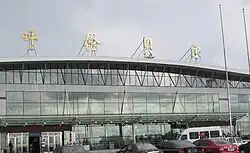
The nearest airport is Hulunbuir Hailar Dongshan International Airport (HLD), near Hailar city centre and roughly 180 km from the eastern shore of Dalai Lake. It has domestic flights to Beijing, Hohhot, Shanghai, Harbin, and seasonal connections elsewhere.
A closer option for the lake's western/northern shore is Manzhouli Xijiao Airport (NZH), southwest of Manzhouli and closer to the lake, with limited domestic service.
By Train
Hailar Railway Station and Manzhouli Railway Station are both on the Binzhou Railway linking Harbin with the Russian border. The Manzhouli line is also the Chinese segment of the Trans-Manchurian Railway, so the station handles a steady trickle of cross-border traffic. Book Chinese-domestic tickets via 12306 or Trip.com; sleeper berths sell out fast in July–August and around Naadam.
By Car / Road
From Hailar to the eastern shore of Dalai Lake is a couple of hours' drive on the G10 Suiman Expressway and provincial roads. From Manzhouli, the lake's western and northern shores are closer, on local roads. Long-distance buses run between Hailar and Manzhouli several times daily but do not stop at the lake itself — a taxi, hired car, or organized tour is needed to reach the shoreline scenic areas.
The lake is huge and there is no public transport along its shores. Practical options:
- Chartered car with driver is the standard approach, arranged through your hotel in Hailar or Manzhouli.
- Tour packages from Manzhouli combine the lake with the Hulunbuir grasslands, the China-Russia border gate, and a Mongol yurt lunch.
- Taxis within Manzhouli and Hailar use meters; Didi Chuxing (滴滴) works in both cities.
- Walking is fine inside the scenic area gates but distances between viewpoints are deceptively long — bring water and sun protection.
Scams to watch: unmetered taxis at the train stations quoting flat rates (insist on the meter or use Didi), and "free" yurt visits that pivot into hard-sell souvenirs or "blessing" fees. Agree on prices in advance.
What are the things to do?
Dalai Lake Scenic Area (达赉湖景区) — the main eastern-shore access point with a beach, boat pier, and viewing platforms. The best light is early morning before tour buses arrive.
Hulun Lake National Nature Reserve wetlands — birdwatching hides and reed-fringed shallows on the northern shore. Spring and autumn migrations bring cranes, swan geese, and gulls; check access rules locally as some zones are closed to casual visitors.
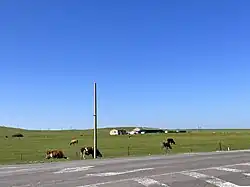
Hulunbuir Grasslands — not a single site but the rolling steppe surrounding the lake, most photogenic around Chenbarhu Banner and Ergun, dotted with horses, sheep, and seasonal yurt camps.
Manzhouli's Russian-style buildings and Matryoshka Square — about an hour west of the lake. A square of giant matryoshka dolls, onion-domed pavilions, and a small theme park.
China-Russia Border Gate at Manzhouli — the formal arch over the Trans-Manchurian railway, with a small museum on Sino-Soviet history. Bring your passport.
Horseback riding on the steppe — the signature Hulunbuir activity. Half-day rides from camps near the lake or in Chenbarhu Banner are commonly arranged through hotels; wear long trousers, as saddles are Mongol-style and unforgiving.
Boat trips on the lake — pleasure cruisers leave from the main pier in the scenic area in summer. Windier afternoons can mean cancellations.
Stay in a yurt (蒙古包) — many camps along the eastern shore and on the grasslands offer overnight stays with dinner, a bonfire, and morning milk tea. Standards range from rustic shared yurts to glamping-grade ones with en-suite bathrooms.
Ice fishing (December–March) — the annual winter fishing festival features the traditional Mongol method of drawing a single enormous net under the ice. Extreme cold gear is non-negotiable.
Cross-border day trip to Zabaykalsk, Russia — possible from Manzhouli for travellers with a Russian visa; tour operators handle the formalities.
Stargazing — light pollution is minimal once you're well away from Manzhouli or Hailar. Bring a jacket even in July; nights drop fast.
Planning Dalai Lake? Want these on a customised itinerary?
Ask on WhatsAppWhere to eat?
The food here is Mongol-Han fusion with strong dairy and mutton accents. Signature dishes include shoubarou (手把肉) — boiled mutton on the bone eaten with a knife and your hands; kaoquanyang (烤全羊) — whole roast lamb, usually a pre-ordered banquet dish; salted milk tea (奶茶, suutei tsai); pressed milk curd (奶豆腐); and Russian-influenced heavy round bread (大列巴), popular in Manzhouli. Freshwater fish from the lake, particularly whitefish (白鱼), is the local catch, often served whole-braised.
- Mongol-style milk tea houses in Hailar serve a classic breakfast set of milk tea, fried millet, butter, dried curd, and cold cuts of mutton.
- Yurt-restaurants on the grasslands offer hand-grabbed mutton and a song-and-airag routine — touristy but the right setting for it.
- Russian restaurants in Manzhouli serve borscht, beef stroganoff, and pelmeni, often with a long vodka list and live music.
- Small family-run restaurants near the lake's scenic-area gate serve whole-lake-fish stews.
- Fish-head hotpot is a Hailar speciality using lake fish.
Dietary notes: Vegetarian options are limited and largely confined to cold vegetable dishes, tofu, and noodles — make clear that mutton broth is not acceptable if you are strict. Halal restaurants (清真) are common given the local Hui minority presence. Gluten-free is difficult outside of grilled meats and rice.
Where to drink?
- Suutei tsai (salty milk tea) is the all-day drink of the grasslands.
- Airag / kumis (马奶酒) — fermented mare's milk, mildly alcoholic, sour. Common at yurt dinners.
- Baijiu — the standard Chinese spirit; regional brands include strong sorghum spirits from the grasslands.
- Russian vodka — widely available and cheap in Manzhouli, often imported across the border.
- Beer — Snow (雪花) and Harbin dominate; some Russian beers appear near the border.
Manzhouli's central shopping district has bars staying open late, several with Russian-themed entertainment — energetic but rough at the margins. Hailar nightlife centres on karaoke (KTV) and a handful of cafés and lounges. Teahouses are scarce compared to inland China — milk-tea houses fill that social role here.
Water safety: do not drink tap water. Bottled water is universal. Hot water dispensers are standard in hotels — use them to refill thermos flasks.
Planning Dalai Lake? We’ll book the stays and dining for you.
Ask on WhatsAppWhere to stay?
Budget — Hailar has youth hostels and inns around the railway station; Manzhouli has budget guesthouses in the central district, walkable to restaurants and the Russian goods street.
Mid-range — Chain business hotels (Hanting, Atour, JinJiang Inn and similar) operate in Hailar; comparable mid-tier properties cluster near the centre of Manzhouli.
Upscale / yurt experience — An international chain hotel serves as Hailar's flagship property. Yurt camps on the eastern lakeshore and on the grasslands near Chenbarhu offer glamping-style stays with en-suite bathrooms, often including dinner and breakfast; quality is inconsistent, so book through a reputable Hulunbuir operator rather than walk-ins.
What should you buy?
Hulunbuir is a place to buy Mongol-themed souvenirs rather than serious craft: silver-trimmed knife sets, felt yurt miniatures, embroidered slippers, painted snuff bottles, and Mongolian milk tea bricks. Russian goods — matryoshka dolls, amber, chocolate, vodka — flood the markets in Manzhouli, much of it genuinely imported and some of it locally made. Quality varies wildly.
Good places to browse: the Russian goods district in central Manzhouli, and the pedestrian shopping area in Hailar for souvenir stalls and dried-meat shops. Local supermarkets sell air-dried beef and dried curd as edible gifts.
Bargaining is expected in market stalls (start at 40–50% of the asking price); fixed-price stores and supermarkets are non-negotiable. Carry cash for small vendors, though WeChat Pay and Alipay are accepted almost everywhere.
Where to go next?
- Manzhouli (满洲里) — Russian-themed border city, Matryoshka Square, and the China-Russia border gate. Half-day to full day.
- Hailar (海拉尔) — Hulunbuir's prefectural capital, the practical hub for onward travel and the WWII-era Hailar Fortress ruins.
- Ergun (额尔古纳) and Shiwei (室韦) — rolling grasslands, the Ergun River wetlands, and a small Russian-ethnic village across the river from Russia. Best as a 2-day side trip.
- Arxan (阿尔山) — volcanic lakes, hot springs, and a national forest park; best in autumn for larch colours.
- Genhe (根河) — the coldest inhabited county in China, gateway to the Aoluguya Ewenki reindeer-herding community.
- Harbin (哈尔滨) — Russian-influenced architecture and, in January, the famous Ice and Snow Festival.
Nearby in Nei Mongol Zizhiqu
More places to explore around Dalai Lake.
Guide content as of July 2026. Portions adapted from Wikivoyage, CC BY-SA 4.0.

Contact Us
Get in touch with us.
Get in touch
Contact Us
Tell us where you'd like to go and how you like to travel. A real Tripcuro planner — not a bot — will craft an itinerary around you.
- Personalised, hassle-free planning end-to-end
- Transparent pricing, no hidden costs
- 24/7 support for complete peace of mind