
Temotu
Solomon Islands · Province · 9 destinations with guides
Photography coming soonOverview
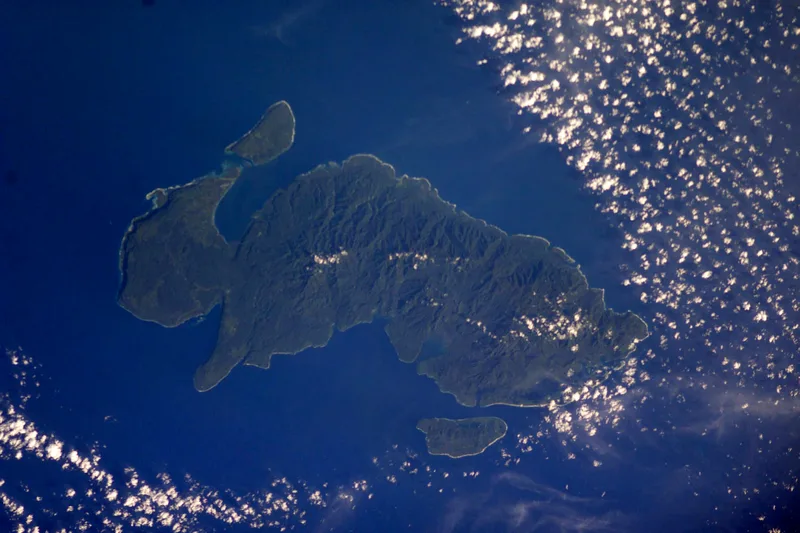
Temotu is the easternmost and most remote province of Solomon Islands, a scattered archipelago of small volcanic and raised-coral islands flung across roughly 1,000 km of open Pacific between the main Solomons and Vanuatu. The provincial capital, Lata, sits on Nendö (also called Santa Cruz), the largest island; the rest of the province includes the Reef Islands, the Duff Islands, the active volcanic island of Tinakula, and the famous Polynesian outliers of Tikopia and Anuta at the far southeastern edge.
What makes Temotu unlike anywhere else in Melanesia is its cultural mosaic. Most of the province is Melanesian, but Tikopia, Anuta, and parts of the Reef and Duff groups are Polynesian outliers — communities that drifted east-to-west centuries ago and preserved language, chiefly systems, and dance traditions you'd otherwise associate with Samoa or Tonga. Add to this the still-circulating red feather money (tevau) of Nendö, the ongoing search for relics of the wrecked La Pérouse expedition off Vanikoro, and Tinakula smoking on the horizon, and the province punches far above its size for travellers willing to put in the time.
This is genuinely off-grid travel. Roads are minimal, electricity is patchy, and weeks can pass between supply ships. Visitors come for living traditional culture, world-class but undived reefs, and the sense — increasingly rare in the Pacific — of arriving somewhere that has not been packaged for tourism.
When to Visit
The dry season, roughly May to October, is the practical window: lower humidity, calmer seas for inter-island travel, and far better odds that the weekly Solomon Airlines flight to Lata actually operates. June through September are the most reliable months.
Avoid November through April unless you have flexibility to be stranded. This is South Pacific cyclone season, and Temotu sits in an active corridor — Cyclone Zoe's 2002 strike on Tikopia and Anuta is still a reference point locally. Even without a named cyclone, heavy rain and rough seas routinely cancel small-boat transfers between islands for days at a stretch.
A quirk worth noting: Temotu observes UTC+11, one hour ahead of Honiara and the rest of Solomon Islands, reflecting its position closer to Vanuatu. Confirm flight times in the correct zone.
Confirm current dates of provincial Second Appointed Day celebrations and any annual custom-dance festivals on Nendö.
Tell us your dates and we'll shape a Temotu route around them.
WhatsAppGetting Around
Solomon Airlines operates the only scheduled air link, a small turboprop from Honiara to Santa Cruz/Lata airfield (SCZ) at Luova, roughly 1–2 times per week depending on the season. Flights are frequently rescheduled; build slack into any itinerary.
Within Nendö, a short sealed/gravel road connects the airfield, Luova, and Lata town (about 8 km); shared trucks and the occasional taxi cover it for a small fare in Solomon Islands dollars (SBD). Beyond that, Nendö's road network is limited and walking or hired outboard banana boats are how you actually move.
Inter-island travel within Temotu is by outboard dinghy for nearby groups (Reef Islands, Tinakula viewing, Vanikoro) and by MV Southern Cross or other government/mission supply ships for the long runs to the Duffs, Tikopia, and Anuta. Ship schedules to the outliers are irregular — sometimes monthly, sometimes longer — and a Tikopia or Anuta visit realistically means committing several weeks. Charter dinghies from Lata to Vanikoro or the Reefs should be arranged through your guesthouse and priced before departure; fuel is the dominant cost and is expensive this far from Honiara.
Verify current Solomon Airlines SCZ schedule and indicative one-way fare from Honiara.
Top Destinations
No destinations have been curated for Temotu yet. Strong candidates worth adding to the destinations list:
- Lata — the provincial capital on Nendö; gateway, market, and the only town with guesthouse infrastructure.
- Nendö (Santa Cruz Island) — main island; custom villages, red feather money traditions, and forest walks.
- Tinakula — small, near-perfect cone of an active volcano; viewed (cautiously) from boats off Nendö.
- Reef Islands (Nifiloli, Pileni, Fenualoa) — low coral atolls north of Nendö with Polynesian-outlier villages and superb lagoons.
- Vanikoro — high, jungle-clad island south of Nendö; site of the 1788 La Pérouse shipwrecks and associated dive sites.
- Utupua — neighbour to Vanikoro; quiet, traditional, rarely visited.
- Duff Islands (Taumako) — remote Polynesian-outlier group famous for revived traditional tepuke voyaging canoes.
- Tikopia — iconic Polynesian outlier; chiefly society documented by Raymond Firth, extraordinarily hard to reach.
- Anuta — even smaller and more remote than Tikopia; one of the most isolated permanently inhabited islands on earth.
Want the scenic legs and stays booked for you? Just ask.
WhatsAppCuisine
Temotu food is root-crop and reef-based, with strong Polynesian touches in the outliers. Expect daily rotations of taro, swamp taro (via), yam, sweet potato, and breadfruit, almost always cooked with coconut cream and paired with reef fish, tuna when boats run, or occasionally pork or chicken on feast days. Seasonal ngali nut (canarium) is a regional treasure — eaten fresh, smoked, or pounded into pastes — and Temotu is one of the better places in Solomon Islands to try it.
Specifically Polynesian preparations survive in Tikopia, Anuta, and the Reef/Duff outliers: earth-oven cooking of taro and pig for ceremonial occasions, and fermented breadfruit (masi-style) as a lean-season staple. On Nendö, look for motu-style stone-oven feasts at custom-village visits arranged through your guesthouse.
There is essentially no restaurant scene. Lata market (busiest mid-week and Saturday mornings) is where you'll see the freshest produce, fish, and ngali nut. Guesthouses in Lata cook full board on request — flag dietary needs in advance because vegetarian options outside root crops and greens are limited, and imported goods are scarce and pricey.
Confirm current operating guesthouses in Lata and indicative full-board nightly rates in SBD.
Culture & Festivals
Temotu's defining cultural marker is tevau, red feather money — coils of tiny scarlet honeyeater feathers bound to fibre, historically used for bride-price and major exchanges on Nendö and still produced and ceremonially exchanged today. A few elder makers remain; respectful village visits arranged through local hosts are the way to see the craft.
Dance and song traditions split along the Melanesian/Polynesian line. On Nendö and the Reefs you'll encounter nelo and other panpipe-and-stamping dances; in Tikopia and Anuta, sung-poetry traditions and seated mako dances are still core to community life. The Taumako (Duff Islands) community is internationally known for its revival of traditional Polynesian voyaging under the late Te Aliki Koloso Kahia Kaveia, including the building and sailing of tepuke outrigger canoes navigated by stars and swells.
Annual fixtures include Solomon Islands Independence Day (7 July), marked with parades, custom dance, and feasts in Lata, and Temotu Province Second Appointed Day, the provincial holiday. Christmas and New Year are major communal events across all islands, with church services, feasting, and dancing that often stretch over a week.
Confirm exact date of Temotu's Second Appointed Day and any current annual cultural festival held in Lata.
Travelling during a festival? We'll plan around the crowds.
WhatsAppNotable Experiences
Diving the La Pérouse wrecks at Vanikoro. In 1788 the French explorer Jean-François de La Pérouse's two ships, L'Astrolabe and La Boussole, were wrecked on Vanikoro's reefs; the mystery wasn't solved until decades later. Today the wreck sites and a small memorial near Paiou village make Vanikoro one of the most historically charged dive destinations in the Pacific — best arranged by charter from Lata.
Watching Tinakula erupt from the sea. Tinakula is a near-textbook stratovolcano cone rising straight from the ocean north of Nendö, and it is intermittently active. A chartered dinghy day-trip from Lata gets you close enough to see steam, ash plumes, or glowing rockfalls at dusk — landings are not advised and depend entirely on current activity.
A custom-village visit on Nendö to see red feather money made. Arranged through guesthouses in Lata, these visits typically include a walk through gardens, a demonstration of tevau-making, panpipe dance, and a shared meal. It is one of the few places in the Pacific where a still-living traditional currency can be seen in production.
Voyaging-canoe culture in the Duff Islands (Taumako). For travellers with time and a tolerance for irregular shipping, a stay at Taumako offers the chance to see tepuke canoes sailed and to learn from navigators trained in non-instrument wayfinding — a tradition that nearly vanished and was deliberately rebuilt here.
Reaching Tikopia or Anuta. Not an experience so much as an undertaking: weeks of waiting, a multi-day open-sea passage on a supply ship, and arrival at a chiefly Polynesian society of a few hundred people living much as Raymond Firth described in the 1920s. For the right traveller, it is among the most extraordinary journeys still possible in the South Pacific.
Top Destinations
Every destination in Temotu with a guide — tap a place for the full guide.
Lata
Lata is the small administrative capital of Temotu Province, the east…
Anuta
Anuta is a small, remote volcanic island in Temotu Province, Solomon…
Nendo
Nendo (also known as Nendö, Santa Cruz Island, or Ndende) is the larg…
Pigeon Island
Pigeon Island is a small coral island in the Reef Islands group of Te…
Reef Islands
The Reef Islands are a cluster of low coral islands in Temotu Provinc…
Santa Cruz Islands
The Santa Cruz Islands are the main island group of Temotu Province,…
Tikopia
Tikopia is a tiny, remote Polynesian-outlier island in Temotu Provinc…
Utupua
Utupua is a volcanic island in the Santa Cruz group of Temotu Provinc…
Vanikoro
Vanikoro is a remote, mountainous island in the southern part of Temo…
Pair the highlights of Temotu into one easy trip — we'll plan the route.
WhatsApp
Contact Us
Get in touch with us.
Get in touch
Contact Us
Tell us where you'd like to go and how you like to travel. A real Tripcuro planner — not a bot — will craft an itinerary around you.
- Personalised, hassle-free planning end-to-end
- Transparent pricing, no hidden costs
- 24/7 support for complete peace of mind