
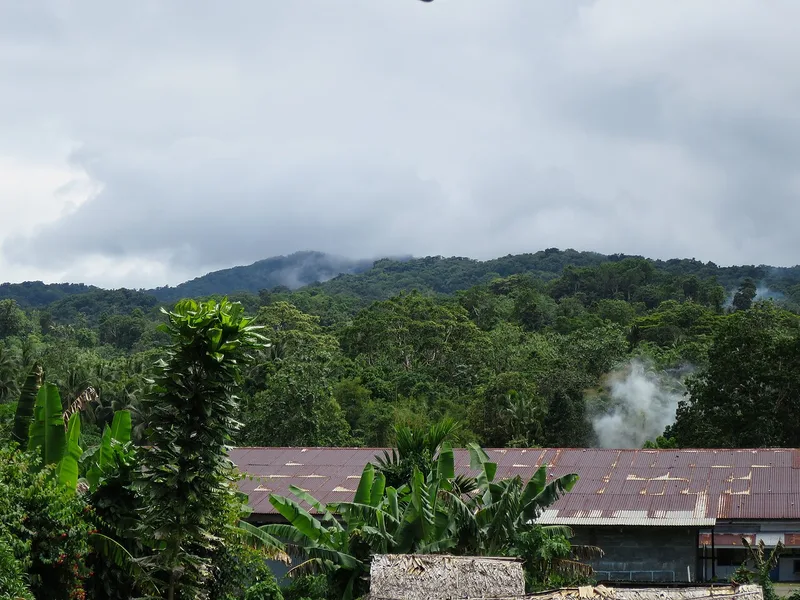
Kirakira
Makira-Ulawa, Solomon Islands
Why visit Kirakira?
Kirakira's name comes from the local Arosi word for the small migratory seabirds that wheel above the headland at dusk. The settlement grew up around an Anglican mission station in the late 19th century and was later used as a forward base during the Solomon Islands campaign of World War II; faint earthworks and the occasional rusted Quonset frame can still be picked out in the bush behind town. After independence in 1978 it became the administrative seat of Makira-Ulawa Province, but it remains tiny — a few thousand residents, one main road, a handful of trade stores, a hospital, the provincial assembly, and a grass airstrip.
The appeal is precisely that smallness. Kirakira is a base for reaching some of the least-touristed reefs, rainforests, and traditional villages in the Pacific. Makira is renowned among ornithologists for its high level of endemism (the Makira honeyeater, Makira flycatcher, and the elusive San Cristobal moorhen all occur here and nowhere else), and the surrounding waters are part of the Coral Triangle. Culturally, the province is famous for fine pandanus mats, shell-money strings, and the dance traditions of the Arosi, Bauro, and Kahua language groups.
The climate is hot, humid, and wet year-round, with daytime temperatures sitting between 26–32 °C. The drier, more reliable travel window runs June to October; December to March brings the wet season, heavier surf on the north coast, and the cyclone risk that closes light-aircraft schedules without warning. Layout is simple: a single seafront road links the wharf, the market, the provincial office, the hospital, and the airstrip, with residential wards (Ngorangora, Hauta, and Maro'u) climbing the hills behind.
Planning Kirakira? Tell us your dates and we’ll tailor the trip.
Ask on WhatsAppHow do you get there?
By Plane
Ngorangora Airport (IATA: IRA) sits about 2 km west of the town centre on a grass-and-coral strip right by the sea. Solomon Airlines operates the only scheduled service, with Twin Otter or Dash 8 flights from Honiara (HIR) several times a week (flight time roughly 1 hour). Fares are typically SBD 1,800–2,500 one-way; book through Solomon Airlines offices in Honiara or online, and reconfirm 24 hours before departure as weather cancellations are common.
There is no airport bus or taxi rank. Most guesthouses will collect guests if notified in advance (expect to pay SBD 50–100 for the lift). Otherwise it is a flat, walkable 25 minutes into town along the coast road.
By Train
No rail anywhere in the Solomon Islands.
By Car / Road
Makira has no road link to other islands; within Makira itself, an unsealed coastal track runs east and west from Kirakira, traversable by 4WD ute in dry weather only.
By Boat
Inter-island passenger and cargo ships connect Kirakira's wharf with Honiara on Guadalcanal, usually once or twice weekly depending on the operator and the season. The crossing takes roughly 18–24 hours overnight and costs around SBD 350–500 in deck class. Schedules slip frequently; ask at the wharf or at Honiara's Point Cruz the day before you intend to travel rather than relying on printed timetables.
The town itself is comfortably walkable end to end in 20 minutes. For trips along the coast to outlying villages, shared trucks (PMVs) run when full, charging SBD 5–20 depending on distance; flag them down on the main road. There are no metered taxis, no ride-hailing apps, and no rental cars in any conventional sense — a few guesthouses can arrange a vehicle with driver for around SBD 500–800 per day. For reaching coastal villages and outer reefs, hiring a fibreglass dinghy with outboard through your guesthouse is the standard option (roughly SBD 800–1,500 per half-day plus fuel, which is the larger cost).
Cash is essential: there is a single BSP bank branch in town with one ATM that is unreliable, so bring sufficient Solomon Islands dollars from Honiara. Mobile coverage (Our Telekom and bmobile) is patchy but present in town.
What are the things to do?
- Kirakira Market — The social heart of town, busiest on Friday and Saturday mornings. Stalls of reef fish, taro, slippery cabbage, betel nut, and bundles of ngali (canarium) nuts. Free; mornings only.
- Ngorangora Beach — The long arc of dark sand west of the airstrip, good for sunset walks and watching outriggers come in. No facilities; free.
- Provincial Headquarters & WWII relics — Behind the provincial office, ask permission and a local will point out coral-overgrown Japanese and American war debris in the bush. Free; donation appreciated to your guide.
- St Stephen's Anglican Church — The mother church of the Diocese of Hanuato'o, a simple timber building that anchors the town's strong Anglican identity. Visitors welcome at Sunday services (singing is extraordinary).
Confirm current opening hours and any ticket fees for cultural sites — most are free with informal village protocols rather than gates.
Day-trip sights from Kirakira
Star Harbour (far eastern tip of Makira) — A constellation of small islands and traditional Arosi villages reached by dinghy or charter; famous for shell-money manufacture and custom dances.
Three Sisters Islands (Olu Malau) — A trio of uplifted coral islets off the north coast with superb hard-coral reefs and turtle nesting beaches.
Ulawa Island — Reached by inter-island boat; known for pandanus weaving and a strong traditional dance repertoire.
Reef snorkelling and diving — The fringing reefs immediately offshore are healthy and uncrowded, with reef sharks, turtles, and excellent hard-coral cover. There is no dedicated dive shop in town; serious divers usually arrive with their own gear or arrange a live-aboard from Honiara. Snorkelling can be organised through any guesthouse.
Birdwatching — Hire a local guide through your guesthouse and walk the forest tracks behind Hauta or Maro'u at dawn for the Makira honeyeater, chestnut-bellied monarch, Makira flycatcher, and (with luck and patience) the Makira moorhen.
Village visits and custom dances — With prior arrangement, villages around Star Harbour and the Bauro coast will host visitors for kastom performances; a contribution of SBD 500–1,500 to the village is the norm.
Surfing — A handful of right-hand reef breaks work on the north coast during the November–March wet-season swell window. Crowds are zero; experience and self-sufficiency are mandatory.
WWII bush-walking — Guided walks to inland war relics and former mission sites.
Sunday singing — Attend an Anglican service for the harmonised four-part hymn singing the Solomons are justly famous for.
Planning Kirakira? Want these on a customised itinerary?
Ask on WhatsAppWhere to eat?
Food in Kirakira is unpretentious, fresh, and overwhelmingly local. Staples are taro, sweet potato (kumara), cassava, and rice, paired with grilled or boiled reef fish, tinned tuna, slippery cabbage (aibika), and coconut. Signature regional dishes include poi (fermented taro paste), motu (food cooked in an earth oven), and the ubiquitous fish-and-rice plate sold at the market.
- Kirakira Market food stalls (budget) — Hot plates of fish, rice, and greens for SBD 30–50; freshly grated coconut, drinking coconuts, and bundles of ngali nuts. Mornings into early afternoon.
- Guesthouse dining — Most travellers eat where they sleep. The kitchens at Ngorangora Beach Guesthouse and Kirakira Lodge put out simple set dinners (fish, chicken, or pork with starch and greens) for SBD 80–150 per head; arrange in the morning.
- Trade-store provisioning — For self-caterers and day trips: tinned fish, crackers, biscuits, instant noodles, and bottled water. Don't expect fresh vegetables outside market days.
Vegetarians can eat well on root crops, greens, beans, and coconut, though "no fish at all" is sometimes hard to communicate; halal and gluten-free options are not formally catered for but the staples (taro, kumara, rice, grilled fish) are naturally gluten-free.
Confirm whether any standalone restaurants are currently operating in town — provision tends to come and go.
Where to drink?
The Solomons' national lager, SolBrew, is sold in trade stores and at guesthouses (SBD 20–30 a bottle). Spirits are limited and expensive. Kava is consumed but is far less central here than in Vanuatu or Fiji.
Far more important is the local social ritual of betel nut (buai) — chewed with lime and mustard-leaf stem, it stains lips and pavements bright red. It is not for everyone, but accepting a nut is a friendly gesture.
Non-alcoholic options revolve around fresh drinking coconuts (kulau) sold at the market for SBD 5–10, instant coffee at guesthouses, and bottled soft drinks in trade stores.
Water safety: do not drink tap or well water. Stick to bottled, boiled, or properly filtered water; refill bottles at your guesthouse where possible to cut plastic waste.
Planning Kirakira? We’ll book the stays and dining for you.
Ask on WhatsAppWhere to stay?
Accommodation is limited to a handful of guesthouses; book ahead by phone or through Solomon Islands Visitors Bureau contacts in Honiara, as walk-ins can find everything full when government meetings are in session.
Budget
- Kirakira Lodge — Simple rooms with shared facilities, fan-cooled, mosquito nets supplied. Roughly SBD 250–400 per night.
- Village homestays (arranged informally through guesthouses) — Sleeping on a mat in a leaf-house in an outlying village, meals included, for around SBD 200–350 per night plus a respectful gift.
Mid-range
- Ngorangora Beach Guesthouse — A short walk from the airstrip, en-suite rooms, generator power in the evenings, beachfront setting. Roughly SBD 600–900 per night including breakfast.
Upscale / heritage
What should you buy?
There is no shopping district in any tourist sense. The Kirakira Market and a handful of Chinese-run trade stores along the main road cover food, fuel, kerosene, basic hardware, and SIM top-ups. For souvenirs, ask at your guesthouse to be put in touch with weavers and carvers in nearby villages — typical buys include:
- Pandanus mats and baskets — Makira and Ulawa weaving is among the finest in the Solomons; expect SBD 200–800 depending on size and pattern.
- Shell-money strings (tafuliae) — Genuine pieces are heirlooms and not always for sale; smaller decorative strings start around SBD 300.
- Carved nguzunguzu and bowls — More associated with the Western Province, but pieces by Makira carvers do appear.
Bargaining is light and respectful — a small downward adjustment is acceptable; aggressive haggling is not. Cash only.
Where to go next?
- Star Harbour (eastern Makira, ~4–6 hours by dinghy along the coast) — Traditional Arosi villages, shell-money makers, and protected lagoons.
- Three Sisters Islands / Olu Malau (~30 km north of Makira, ~2 hours by dinghy in good weather) — Pristine reef diving and snorkelling.
- Ulawa Island (~80 km north, served by inter-island boat) — Weaving traditions and dance.
- Honiara, Guadalcanal (1 hour by air or overnight by ship) — The capital, WWII battlefields, and the country's main air gateway.
- Santa Ana (Owaraha) and Santa Catalina (Owariki) (eastern tip of Makira-Ulawa, accessed via Star Harbour) — Famous for shark-calling and elaborate custom dances.
- Marau Sound (southeastern Guadalcanal, accessible via Honiara) — Lagoon villages and reef diving en route back to the capital.
Nearby in Makira-Ulawa
More places to explore around Kirakira.
Guide content as of May 2026. Portions adapted from Wikivoyage, CC BY-SA 4.0.

Contact Us
Get in touch with us.
Get in touch
Contact Us
Tell us where you'd like to go and how you like to travel. A real Tripcuro planner — not a bot — will craft an itinerary around you.
- Personalised, hassle-free planning end-to-end
- Transparent pricing, no hidden costs
- 24/7 support for complete peace of mind