
Balochistan
Pakistan · Province · 20 destinations with guides
Photography coming soonOverview
Balochistan is Pakistan's largest province by area and by far its emptiest — a vast, arid expanse of plateau, desert and mountain that covers nearly half the country yet holds only a small fraction of its people. It is a land of stark, elemental beauty: the rugged ranges around Quetta, the juniper forests of Ziarat, the strange wind-carved formations of the Makran coast, and the long Arabian Sea shoreline running down to Gwadar.
The province sits at an ancient crossroads between South Asia, the Iranian plateau and Central Asia, and that position shaped its history — the Bolan Pass was a corridor for armies and caravans for millennia. Balochistan is also home to the Hingol National Park, Pakistan's largest, where the mud volcanoes, the dramatic "Princess of Hope" rock pinnacle and a desert coastline meet.
It must be said plainly: much of Balochistan is currently subject to serious travel restrictions and security advisories, and large parts are not accessible to independent tourists. The province's landscapes are extraordinary, but realistic, up-to-date safety planning is essential.
When to Visit
Balochistan's climate is one of extremes, and timing is important. The province is generally a cool-season destination: October to March brings comfortable, even cold weather across the plateau, and is the most pleasant period for the Quetta region and the coast. Winters at altitude around Quetta and Ziarat can be genuinely cold, with snow.
Summer (May to August) is intensely hot across the lowlands and the Makran coast, with temperatures that make daytime travel uncomfortable. The hill station of Ziarat, set among ancient juniper forests, is the traditional summer escape, cool and green when the plains bake. The brief, weak monsoon brings little rain but can trigger flash flooding in the dry watercourses. Always check current access and security conditions before planning any visit.
Tell us your dates and we'll shape a Balochistan route around them.
WhatsAppGetting Around
Quetta, the provincial capital, is the hub for what travel is possible: it has an airport with flights to Karachi, Islamabad and Lahore, and is the node of the province's road and rail links. The historic railway line through the Bolan Pass — an engineering feat of tunnels and bridges — connects Quetta with the Indus plains and is one of the most dramatic rail journeys in the country.
Road travel across Balochistan involves enormous distances on long, lonely highways, including the coastal Makran Coastal Highway linking Karachi with Gwadar past Hingol National Park. Internal checkpoints are frequent, travel permits or No Objection Certificates are required for many areas, and a police escort may be assigned to or required of foreign travellers. Because of the security situation, independent overland travel through much of the province is not advisable; visitors should rely on current official guidance and, where access is possible, reputable local operators.
Top Destinations
- Quetta — the provincial capital, ringed by mountains and known for its orchards and dry-fruit bazaars.
- Ziarat — a hill station set in one of the world's oldest juniper forests, with the Quaid-e-Azam Residency.
- Hingol National Park — Pakistan's largest national park, with mud volcanoes, the Princess of Hope and a wild coastline.
- Gwadar — a deep-water port town on the Arabian Sea, with the distinctive Hammerhead promontory.
- Bolan Pass — a historic mountain corridor and the route of a spectacular railway.
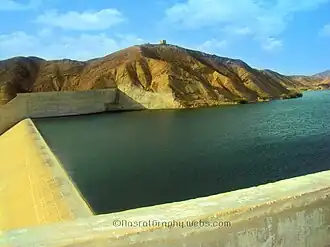
- Hanna Lake — a scenic reservoir near Quetta, a popular local outing.
- Makran Coast — a dramatic, sparsely populated shoreline of cliffs, beaches and rock formations.
Want the scenic legs and stays booked for you? Just ask.
WhatsAppCuisine
Balochi cuisine is among the most distinctive in Pakistan, built around meat, simplicity and slow cooking over open fire. The signature dish is sajji — a whole lamb or chicken, marinated simply and roasted upright beside a fire of wood embers until tender — a dish that has spread from Balochistan across the country. Landhi (whole dried meat, preserved for winter) and khaddi kabab, meat cooked in a sealed earth pit, reflect a pastoral, nomadic food heritage.
Bread is central: kaak, a hard bread baked against hot stones, accompanies the meat. The province's orchards around Quetta and the highlands are famous for apples, grapes, peaches, almonds and pistachios, and dried fruits are a regional specialty sold in the bazaars. Green tea, often without milk, is the everyday drink, and meals tend toward the robust and meat-forward rather than the elaborate curries of the plains.
Culture & Festivals
Balochistan is home to the Baloch people, with a strong presence of Pashtun communities in the north around Quetta, and the Brahui-speaking population of the central highlands. Baloch society is traditionally tribal, with a deep heritage of oral poetry, epic ballads and music — the Baloch are renowned for their poetic tradition, and instruments such as the suroz (a bowed lute) and the benju accompany storytelling and celebration.
Craft traditions are notable, above all Balochi embroidery — intricate, geometric needlework with mirror inlay, used on dresses and prized across Pakistan. The province observes the Islamic festivals of Eid-ul-Fitr and Eid-ul-Azha as the main celebrations of the year, with feasting and family gatherings. Weddings and tribal occasions are marked by the chaap, a traditional Baloch group dance. Hospitality toward guests is a powerful cultural value throughout the province.
Travelling during a festival? We'll plan around the crowds.
WhatsAppNotable Experiences
- Travel the Bolan Pass railway — a historic line of tunnels and gradients climbing from the plains to Quetta.
- Explore Hingol National Park — mud volcanoes, the towering Princess of Hope rock and the desert-meets-sea coastline.
- Taste authentic sajji in Quetta — the province's signature fire-roasted meat at its source.
- Visit Ziarat's juniper forest — walk among trees that are among the oldest living things in the region.
- Browse Quetta's dry-fruit bazaars — almonds, pistachios and dried apricots from the surrounding orchards.
Top Destinations
Every destination in Balochistan with a guide — tap a place for the full guide.
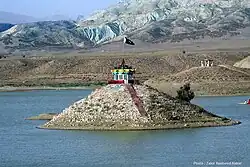
Hingol National Park
> WARNING: Balochistan is subject to serious travel restrictions and…
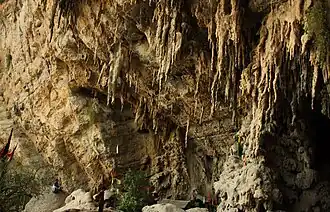
Khuzdar
Khuzdar is a city and the capital of Khuzdar District in the Balochis…
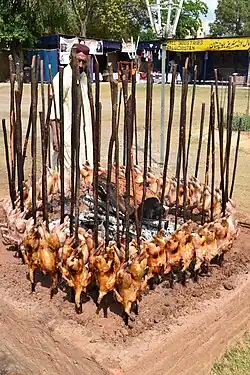
Mehrgarh
Mehrgarh (Urdu: مہرگڑ) is a Neolithic archaeological site located at…
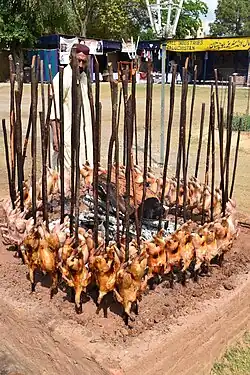
Quetta
Quetta is the capital of Balochistan and by far the largest city in t…
Turbat
Turbat is a city in the southwestern Balochistan province of Pakistan…
Chaman railway tunnel
> WARNING: Balochistan is subject to serious travel restrictions and…
Gadani beaches
Gadani is a small coastal town in Lasbela District, Balochistan, Paki…
Gwadar
Gwadar lies on the Arabian Sea coast of Balochistan Province in south…
Kalat
Kalat is a historic city and the capital of Kalat District in Balochi…
Las Bela
Lasbela (also written Las Bela) is a historical region and district i…
Lasbela
Lasbela is a district in the southern part of Balochistan province, P…
Loralai
Loralai is a city and the capital of Loralai District in the northeas…
Makran
Makran is a coastal region in southern Balochistan, Pakistan, stretch…
Naseerabad
Naseerabad (also known as Dera Murad Jamali) is a district headquarte…
Pishin
Pishin is a small town in Pishin District, in the highland country of…
Rakhshan
Rakhshan is not a single town but an administrative division of Baloc…
Sibi
Sibi is a historic town in eastern Balochistan, sitting on the plains…
Taftan
Taftan is a town in far western Balochistan, set in stark desert coun…
Zhob
Zhob is a town in the far north of Balochistan, close to where the pr…
Ziarat
Ziarat is a small hill town and holiday resort in northeastern Baloch…
Pair the highlights of Balochistan into one easy trip — we'll plan the route.
WhatsApp
Contact Us
Get in touch with us.
Get in touch
Contact Us
Tell us where you'd like to go and how you like to travel. A real Tripcuro planner — not a bot — will craft an itinerary around you.
- Personalised, hassle-free planning end-to-end
- Transparent pricing, no hidden costs
- 24/7 support for complete peace of mind