
Phyeongannamto
North Korea · Province · 5 destinations with guides
Photography coming soonWhy visit?
Phyeongannamto (South Pyongan Province) lies in the west-central part of North Korea, wrapping around the capital region and stretching from the Yellow Sea coast inland to the mountainous interior. It is one of the country's most populous and economically important provinces, encompassing a swathe of fertile lowland farming country, major industrial and mining cities, and the lower reaches of significant rivers such as the Taedong and Chongchon. The provincial capital is Pyongsong, a planned city built in the 1960s a short distance northeast of Pyongyang.
The province's character is shaped by its role as North Korea's industrial and agricultural heartland. It contains coal-mining centres, chemical and textile plants, and extensive farmland, and several of its cities — Anju, Kaechon, Tokchon — grew up around heavy industry and mining. Pyongsong, by contrast, was developed as a science and education hub, home to research institutes and the State Academy of Sciences, and is sometimes described as the country's centre of learning.
For travellers, South Pyongan is not a primary tourist destination in the way Pyongyang or Kaesong are, and its cities are infrequently included on standard itineraries. Its appeal lies in specific sights — most notably the cave systems near Kaechon — and in the chance to see industrial and provincial North Korea away from the capital's showcase. As everywhere in the country, all visits must be arranged through an authorised tour operator and accompanied by guides.
When is the best time to visit?
The most comfortable seasons in South Pyongan are spring (late April to June) and autumn (September to October), when the weather is mild and dry and the agricultural countryside is at its most attractive — green and planted in spring, golden at harvest. These shoulder seasons are best for any sightseeing that involves walking, including the caves around Kaechon.
Summer (July and August) is hot and humid, with the monsoon concentrating heavy rain into a few weeks that can cause flooding in the river lowlands and disrupt road and rail travel. Winter (December to February) is cold and dry; the province's continental climate brings hard frosts inland, and outdoor visits are bracing though feasible.
Tell us your dates and we'll shape a Phyeongannamto route around them.
WhatsAppHow do you get around?
Within South Pyongan, all tourist movement is arranged by the tour operator using a chartered vehicle accompanied by guides; independent travel is not possible. The province is well served by railways, as the main northern trunk lines from Pyongyang toward Sinuiju and the northeast pass through it, with stations at Pyongsong, Anju, Kaechon, and other towns. Tourists, however, generally travel by road rather than booking trains independently.
Distances are modest. Pyongsong lies only about 30 km northeast of Pyongyang, roughly a 45-minute drive. Anju is around 70 km northwest of Pyongyang near the coast; Kaechon sits a similar distance to the north; and Tokchon and Songchon lie further inland to the northeast. Road quality on the main routes is variable, and journeys can be slow once off the principal highways.
Where should you go?
- Pyongsong — The provincial capital and a planned science and education city, gateway to the rest of the province.
- Anju — A coal-mining and industrial city near the Yellow Sea coast on the Chongchon River.
- Tokchon — An industrial and mining centre in the mountainous northeast of the province.
- Songchon — A smaller inland town in a hilly farming district, with traditional rural character.
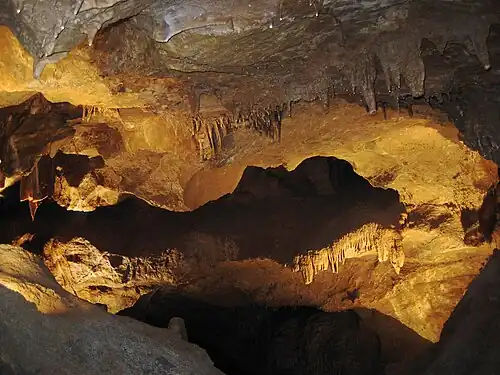
- Kaechon — A large industrial city north of Pyongyang, best known for the multi-chambered Songam Cavern.
Want the scenic legs and stays booked for you? Just ask.
WhatsAppWhat should you eat?
South Pyongan shares the food culture of the wider Pyongan region, in which the capital's Pyongyang-style cooking is the dominant influence. The signature dish of the region is naengmyeon — cold buckwheat noodles in a chilled broth — and Pyongan cooking generally favours mild, restrained seasoning compared with the spicier dishes of the south. Plain, hearty fare built around rice, buckwheat, maize, and seasonal vegetables is typical of the provincial countryside.
The fertile farmland of the province supplies grains, vegetables, and pulses, and the coastal districts around Anju add fish and shellfish from the Yellow Sea to the table. Meals for visitors are generally taken at designated restaurants and hotels with multi-course set menus; outside Pyongyang, choice is limited. Vegetarian and other dietary requirements are difficult to accommodate and should be communicated to the tour operator well in advance.
What is the culture like?
The cultural calendar of South Pyongan, as throughout North Korea, is dominated by national political anniversaries rather than distinct provincial festivals. The Day of the Sun (15 April) and the Day of the Shining Star (16 February) are marked here as elsewhere with public gatherings, decorations, and floral displays.
Pyongsong's identity as a centre of science and education gives the province a particular institutional culture, with academies and research institutes rather than folk-arts traditions defining its profile. The rural districts maintain the broad Korean heritage of seasonal agricultural customs, traditional crafts, and folk music common to the region.
Travelling during a festival? We'll plan around the crowds.
WhatsAppWhat are the standout experiences?
- Exploring Songam Cavern near Kaechon — Touring the celebrated multi-chambered limestone cave system, one of the province's standout natural attractions and a recognised domestic tourist site.
- Seeing a North Korean science city — Visiting Pyongsong, a planned city built around research institutes and the State Academy of Sciences, for a glimpse of the country's centre of learning.
- Travelling the western trunk railway corridor — Passing through the province's industrial towns along the main rail line that links Pyongyang with the northwest.
- Touring industrial and mining North Korea — Seeing the coal-mining and heavy-industry cities of Anju, Kaechon, and Tokchon, away from the capital's curated showcase.
Top Destinations
Every destination in Phyeongannamto with a guide — tap a place for the full guide.
Kaechon
Kaechon is a large city in South Pyongan Province, lying north of the…
Anju
Anju is an industrial city in the northwest of South Pyongan…
Pyongsong
Pyongsong is the capital of South Pyongan Province, lying about 30 km…
Songchon
Songchon (Sŏngch'ŏn) is an inland county seat in South Pyongan…
Tokchon
Tokchon is a city in the mountainous northeast of South Pyongan…
Pair the highlights of Phyeongannamto into one easy trip — we'll plan the route.
WhatsApp
Contact Us
Get in touch with us.
Get in touch
Contact Us
Tell us where you'd like to go and how you like to travel. A real Tripcuro planner — not a bot — will craft an itinerary around you.
- Personalised, hassle-free planning end-to-end
- Transparent pricing, no hidden costs
- 24/7 support for complete peace of mind