
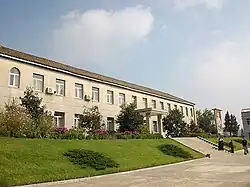
Sinchon
Hwanghainamto, North Korea
Why visit Sinchon?
Sinchon (신천군, Sinch'ŏn) is a county town in South Hwanghae Province, situated in the western lowlands of North Korea. Though modest in size and largely unknown to international travellers, Sinchon carries significant historical weight. It is the site of the Sinchon Museum of American War Atrocities, a memorial and museum that documents the mass killing of civilians during the Korean War — an event the North Korean government attributes entirely to American forces, while outside historians offer more complex explanations involving various factions of the conflict. The museum is one of the most frequently visited sites by foreign tourists in North Korea and is a key stop on the standard southern tour route.
Beyond the museum, Sinchon is notable for the Chahyesa Buddhist temple, founded in 1572 during the Chosŏn dynasty, and for its proximity to hot springs at Sinch'ŏn and Kŭlloja. The surrounding countryside is flat, intensively farmed and characteristic of the Hwanghae plain — rice paddies, low hills and scattered villages. The climate follows the western Korean continental pattern: hot, humid summers (June–August) with temperatures around 28–32 °C; cold, dry winters (December–February) often below −10 °C; and mild, pleasant springs and autumns that are the best times to visit.
Sinchon should not be confused with the Sinchon district (신촌) in Seoul's Seodaemun-gu, a bustling university neighbourhood. This is a quiet, rural North Korean county town with a population of roughly 30,000–50,000 in the wider county. The town layout is simple — a central administrative area, the railway line and surrounding residential and agricultural zones.
Planning Sinchon? Tell us your dates and we’ll tailor the trip.
Ask on WhatsAppHow do you get there?
By Plane
The nearest airport is Pyongyang Sunan International Airport (IATA: FNJ), approximately 130 km to the northeast. There is no airport in Sinchon. From Pyongyang, onward travel is by road (see By Car / Road).
By Train
Sinchon does not sit on a major mainline rail route. The nearest significant railway station is Sariwon Chongnyon Station on the Pyongbu Line, approximately 50 km to the north. From Sariwon, onward travel to Sinchon is by road. There may be a local branch or spur line serving the county, but this is not a practical option for foreign visitors.
By Car / Road
Sinchon is reached by road from Sariwon (approximately 50 km south, ~1 hour) or from Pyongyang (approximately 130 km, ~2–2.5 hours) via the Pyongyang–Kaesŏng Motorway turning off at or near Sariwon and continuing south on provincial roads. Road quality on the provincial routes is variable — paved but often rough with potholes. From Kaesŏng, Sinchon is roughly 80 km north, around 1.5–2 hours by car. Foreign visitors travel with a government-approved guide and driver; the museum visit is typically incorporated into a broader itinerary covering Sariwon, Kaesŏng or other southern destinations.
Sinchon is a small county town best explored on foot. The key sites — the museum, the central market and the town centre — are within walking distance of each other. There is no public transit system useful to visitors. Taxis are rare. Your tour vehicle will typically drive you to each site and wait. Walking the town centre takes 15–20 minutes end to end. The hot springs at Sinch'ŏn and Kŭlloja require separate road transfers arranged by your guide.
What are the things to do?
Sinchon Museum of American War Atrocities (신천박물관) — The primary reason most foreign visitors come to Sinchon. The museum documents the mass killing of civilians in the Sinchon area during the Korean War in late 1950. The exhibits include photographs, artefacts, reconstructed scenes and mass grave sites. The North Korean government presents the events as entirely the work of American forces; historians outside North Korea generally attribute the killings to a complex mix of pro-communist and anti-communist vigilantes and retreating forces. Visitors should expect a highly one-sided narrative. The museum is typically open during daylight hours for arranged tours; no formal admission charge for foreign visitors on official itineraries.
Chahyesa Buddhist Temple (자혜사) — A Buddhist temple founded in 1572, located in the countryside near Sinchon. The temple is one of the older surviving religious sites in the Hwanghae region, though it has been damaged and restored multiple times over the centuries. The setting is rural and peaceful. Access is typically arranged through your guide.
Goguryeo Tombs — North Korea's first UNESCO World Heritage Site, the Complex of Koguryŏ Tombs includes sites spread across several locations in the Hwanghae and Pyongyang regions. Some tombs associated with this designation are in or near Sinchon county, including historical tombs linked to the early Koguryŏ period. The most famous individual tomb — that of King Tongmyŏng, founder of the Koguryŏ dynasty (died 19 BCE) — is located near Pyongyang rather than at Sinchon itself, but the broader UNESCO site designation encompasses tombs across a wide area. Verify with your guide which specific tombs are accessible from Sinchon.
Visit the Sinchon Museum — The main activity. Allow 1–2 hours for a thorough visit including the outdoor memorial areas and mass grave sites. Your guide will provide commentary; expect the official North Korean interpretation of events.
Soak in the Hot Springs — The Sinch'ŏn and Kŭlloja hot springs are in the wider Sinchon county area. These natural thermal springs have been developed as modest spa facilities. Visits can be arranged through your tour operator, typically as a half-day excursion from the town centre.
Explore Chahyesa Temple Grounds — A quieter alternative to the museum. The temple visit combines light walking in a rural setting with an introduction to the region's Buddhist heritage.
Walk the Town Centre — Sinchon is small enough to walk end to end in 20 minutes. The central market area and the residential streets give a sense of daily life in a small North Korean county town, far from the monumental architecture of Pyongyang.
Planning Sinchon? Want these on a customised itinerary?
Ask on WhatsAppWhere to eat?
Food options in Sinchon are limited and depend almost entirely on arrangements made by your tour operator. A state-run restaurant or guesthouse dining room will typically serve traditional Korean fare: rice, kimchi, simple stews (된장찌개, soybean paste stew; 김치찌개, kimchi stew), cold noodles (냉면) and seasonal vegetable side dishes. The agricultural region produces fresh rice and vegetables, so ingredients are locally sourced. Meals at state facilities cost approximately ₩3,000–₩8,000. There is no independent dining scene, no international restaurants and no café culture in Sinchon. Vegetarian options can be requested in advance through your guide; halal and gluten-free dining are not available.
Where to drink?
Bottled water is essential; do not drink tap water. Korean teas (roasted barley tea, chrysanthemum tea) are served at meals and rest stops. Taedonggang beer and soju may be available at the dining facilities. There are no bars, cafés or nightlife venues in Sinchon. The town is quiet after dark. Hot spring facilities may offer simple refreshments on-site.
Planning Sinchon? We’ll book the stays and dining for you.
Ask on WhatsAppWhere to stay?
Budget: There is limited accommodation for foreign visitors in Sinchon. A basic provincial guesthouse may be available with simple rooms at approximately ₩15,000–₩25,000 per night, but overnight stays are uncommon for foreign tourists, who typically visit Sinchon as a day stop.
Mid-range: There is no formal mid-range hotel in Sinchon catering to foreign visitors. The nearest mid-range accommodation is the Sariwon 3.8 Hotel (approximately 50 km north, ~1 hour by car) or hotels in Haeju to the south.
Upscale / Heritage: There is no upscale accommodation in Sinchon. Visitors requiring higher standards should base themselves in Pyongyang (130 km, ~2–2.5 hours) or continue to Kaesŏng.
What should you buy?
Sinchon has a central market (Sinchon Central Market) where local produce, dried goods, basic clothing and household items are available. This is a functioning local market rather than a tourist shopping destination. Foreign visitors may browse with their guide but should not expect souvenirs or handicrafts. Purchasing items requires North Korean won; your guide can advise on currency exchange. There are no state-run souvenir shops, duty-free outlets or internationally branded stores in Sinchon.
Where to go next?
- Sariwon (50 km north, ~1 hour by car) — Provincial capital of North Hwanghae, known for the Sariwon Folklore Street and Songbulsa Temple with its five-story pagoda.
- Haeju (70 km south, ~1.5 hours by car) — Capital of South Hwanghae Province with historical pavilions, a folk museum and the regional speciality Haeju bibimbap.
- Kaesŏng (80 km south, ~1.5–2 hours by car) — Historic Koryŏ dynasty capital and gateway to the DMZ. Home to the Kaesŏng Namdae Gate and the Tomb of King Kongmin.
- Mount Kuwol (100 km southwest, ~2 hours by car) — A scenic mountain in South Hwanghae known for autumn foliage, Buddhist temples and hiking trails.
- Pyongyang (130 km northeast, ~2–2.5 hours by car) — The national capital with Kim Il-sung Square, the Juche Tower, the Pyongyang Metro and the Arch of Triumph.
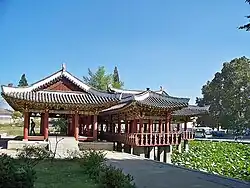
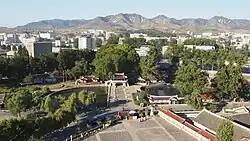
Nearby in Hwanghainamto
More places to explore around Sinchon.
Guide content as of June 2026. Portions adapted from Wikivoyage, CC BY-SA 4.0.

Contact Us
Get in touch with us.
Get in touch
Contact Us
Tell us where you'd like to go and how you like to travel. A real Tripcuro planner — not a bot — will craft an itinerary around you.
- Personalised, hassle-free planning end-to-end
- Transparent pricing, no hidden costs
- 24/7 support for complete peace of mind