
Hwanghainamto
North Korea · Province · 4 destinations with guides
Photography coming soonOverview
Hwanghainamto, or South Hwanghae Province, occupies the southwestern corner of North Korea, bordered by the Yellow Sea (West Sea) to the west and south. It is one of the country's most agriculturally productive regions, a vast expanse of rice paddies, orchards, and tidal flats that stretches from the provincial capital Haeju in the north to the Ongjin Peninsula in the south. The province takes its name from the Hwanghae — the "Yellow Sea" — and its landscape is defined by the meeting of low-lying coastal plains with gentle hills inland.
The province has deep historical roots. Haeju, the capital, is one of the oldest cities on the Korean Peninsula, with records dating to the Goguryeo period. The region was a centre of Confucian learning during the Joseon Dynasty and retains scattered traces of that heritage, though much was destroyed during the Korean War. The Ongjin Peninsula, jutting south into the Yellow Sea, was the site of fierce naval and ground fighting during the conflict, and the western offshore islands remain among the most militarily sensitive zones in the country.
For travellers, Hwanghainamto offers a quieter, more agricultural portrait of North Korea than the industrial north or the monumental capital. The flat coastal scenery, the orchards around Yonan, and the modest provincial character of Haeju provide a counterpoint to Pyongyang's grandeur. Access is limited and tightly controlled, but the region rewards those interested in the rural and historical dimensions of the country.
When to Visit
The best time to visit Hwanghainamto is from late April through June and again in September through October. Spring brings warm temperatures and the blossoming of the province's extensive apple and pear orchards, particularly around Yonan. Autumn offers clear skies, harvest activity across the rice paddies, and comfortable temperatures averaging 15–20°C.
Summers (July–August) are hot and humid, with the monsoon bringing heavy rainfall that can flood the low-lying agricultural plains. Winter (November–March) is cold but drier, with temperatures dropping below freezing and occasional snow. The Yellow Sea coast is windy year-round, and the offshore islands are frequently fog-bound in spring and early summer.
There are no internationally accessible festivals specific to the province, though national holidays are observed locally. The annual fruit harvest season (September–October) is a period of heightened activity in the orchard districts.
Tell us your dates and we'll shape a Hwanghainamto route around them.
WhatsAppGetting Around
Haeju is the provincial transport hub, connected to Pyongyang by rail (approximately 3–4 hours) and by road (roughly 130 km, 3 hours). A rail line runs south from Haeju toward Ongjin, and branch lines connect to smaller towns across the province. The road network is functional but modest — paved two-lane roads link the major towns, with unpaved tracks to more remote areas.
Within the province, movement between cities relies on rail, bus, and private vehicle. For foreign visitors, all transport is by assigned vehicle with a driver and guide. Distances between towns are relatively short by North Korean standards: Haeju to Sariwon is approximately 40 km; Haeju to Yonan is around 30 km; and the Ongjin Peninsula is roughly 80 km south of Haeju by road. The offshore islands are accessible only by boat from Ongjin.
Top Destinations
- Haeju — the provincial capital, a historically significant city with Confucian heritage, the Haeju Sokbingo (stone arrow repository), and a modest city centre with public squares and monuments.
- Ongjin — a port town on the southern coast, gateway to the Ongjin Peninsula and the West Sea islands, with a history tied to Korean War naval engagements.
- Kangryong — a coastal county south of Haeju, with tidal flats and agricultural lowlands along the Yellow Sea.
- Yonan — a county east of Haeju known for its extensive apple and pear orchards, one of the province's agricultural showpieces.
- Paechon — an inland county with rice paddies and gentle hills, typical of the province's rural character.
- Anak — a county northeast of Haeju, notable for the Anak Tomb Complex, a set of Goguryeo-era tombs with significant wall paintings.
- Unchon — a rural county with farmland and low hills in the province's interior.
- Samchon — a small county in the southern interior, surrounded by agricultural land.
- Sinchon — an inland county with historical sites and access to the surrounding countryside.
- Chaeryong — a county centred on the Chaeryong River valley, with rice cultivation and small towns.
- Songhwa — a small coastal county on the Yellow Sea.
- Sinwon — a county in the province's interior with agricultural lowlands.
- Mount Kuwol — a mountain in the southern part of the province, known for its autumn foliage and hiking trails. It is one of the few natural scenic attractions in the southwest.
- Sariwon — the capital of North Hwanghae Province (bordering to the north), but often visited as part of a Hwanghainamto itinerary; a regional city with a folk street and recreation area.
Want the scenic legs and stays booked for you? Just ask.
WhatsAppCuisine
Hwanghainamto's cuisine is shaped by its coastal location and agricultural abundance. Seafood from the Yellow Sea — crab, shrimp, clams, and various fish — features prominently in coastal towns such as Haeju and Ongjin. The province is also known for its fruit, particularly apples and pears from the orchards around Yonan, which are among the finest in the country.
Rice is the primary staple, supplemented by corn and potatoes in the upland areas. Regional dishes include various kimchi preparations using local cabbage and radish, seafood soups and stews, and simple grilled fish. Haeju is known for a local style of naengmyeon (cold noodles) that differs slightly from the Pyongyang version. For visitors, meals are taken at state-run guesthouses and restaurants, with food that is plain but reflective of local produce. Fresh fruit from the orchards is a seasonal highlight.
Culture & Festivals
Hwanghainamto's cultural identity is rooted in its agricultural traditions and its Confucian heritage. Haeju was historically a centre of scholarly culture during the Joseon Dynasty, and though most physical traces were destroyed in the Korean War, the legacy persists in the region's emphasis on education and propriety. The Anak Tomb Complex, with its Goguryeo-era wall paintings, is the province's most significant cultural asset — a window into the artistic traditions of one of Korea's ancient kingdoms.
There are no internationally accessible festivals. National holidays — the Day of the Sun (April 15), the Day of the Shining Star (February 16), and Chuseok (autumn harvest festival) — are the main cultural observances. Local agricultural fairs and harvest celebrations may occur but are not open to foreign visitors.
Travelling during a festival? We'll plan around the crowds.
WhatsAppNotable Experiences
- Anak Tomb Complex — a set of ancient Goguryeo-era tombs (4th–5th century) with remarkable wall paintings depicting daily life, processions, and celestial scenes. The most famous tomb, No. 3, contains some of the finest surviving murals from the Goguryeo period and is a nationally significant archaeological site.
- Haeju historical circuit — a walking tour of the provincial capital's historical sites, including the Sokbingo (stone arrow repository), the remains of the old fortress walls, and the city's Confucian-era landmarks.
- Orchard country around Yonan — a drive through the province's apple and pear orchards, particularly striking in spring blossom season and autumn harvest. The orchards are a showcase of the country's agricultural programme.
- Mount Kuwol autumn hike — a trek through the mountain's forested slopes during the October foliage season, with views across the southern Yellow Sea coast. The mountain is accessible by road from Haeju.
- West Sea coast and tidal flats — the Yellow Sea coastline of Hwanghainamto is characterised by vast tidal flats that extend far offshore at low tide, creating a distinctive landscape of mudflats, salt pans, and wading birds.
Top Destinations
Every destination in Hwanghainamto with a guide — tap a place for the full guide.
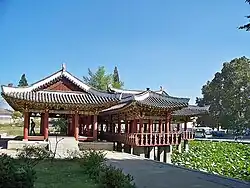
Haeju
Haeju is the capital of South Hwanghae Province (Hwanghainamto), situ…

Sariwon
Sariwon (사리원시, Sariwŏn) is the capital of North Hwanghae Province, a…
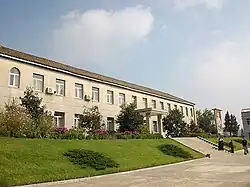
Sinchon
Sinchon (신천군, Sinch'ŏn) is a county town in South Hwanghae Province,…
Mount Kuwol
Mount Kuwol (구월산, Kuwŏlsan) is a 954-metre mountain rising above the…
Pair the highlights of Hwanghainamto into one easy trip — we'll plan the route.
WhatsApp
Contact Us
Get in touch with us.
Get in touch
Contact Us
Tell us where you'd like to go and how you like to travel. A real Tripcuro planner — not a bot — will craft an itinerary around you.
- Personalised, hassle-free planning end-to-end
- Transparent pricing, no hidden costs
- 24/7 support for complete peace of mind