
Mount Kuwol
Hwanghainamto, North Korea
Why visit Mount Kuwol?
Mount Kuwol (구월산, Kuwŏlsan) is a 954-metre mountain rising above the plains of South Hwanghae Province in western North Korea. Revered since antiquity as one of the country's celebrated peaks, it forms the centrepiece of the Kuwolsan Nature Reserve, a pocket of dense deciduous forest, granite crags and hidden Buddhist relics that feels far removed from the agricultural lowlands surrounding it. The name translates roughly as "September Mountain," a reference to its reputation for reaching peak beauty in early autumn when the slopes blaze with red and gold foliage.
The mountain has been a place of pilgrimage and quiet retreat for centuries. Several small Buddhist temples and hermitages survive in its valleys, some dating to the Koryŏ dynasty (10th–14th centuries). After the Korean War the area was incorporated into the state park system and modest visitor infrastructure was added, but Mount Kuwol remains far less visited than the more famous Myohyang or Kumgang mountains. That low profile is part of its appeal: trails are uncrowded, the forests are undisturbed and the atmosphere is genuinely tranquil.
Climate follows the continental pattern of the Korean west coast. Summers (June–August) are hot and humid with frequent afternoon thunderstorms; winters (December–February) are cold and dry, with temperatures occasionally dipping below −15 °C and snow cover on the upper slopes. The best seasons are spring (April–May), when azaleas and rhododendrons bloom along the ridgelines, and autumn (late September–October), when the maple and ginkgo forests turn vivid colours — this is the classic season the mountain is named for.
Planning Mount Kuwol? Tell us your dates and we’ll tailor the trip.
Ask on WhatsAppHow do you get there?
By Plane
The nearest airport is Pyongyang Sunan International Airport (IATA: FNJ), approximately 150 km to the northeast. From Pyongyang, onward travel to the Mount Kuwol area is by road (see By Car / Road below). There is no commercial airport closer to the mountain.
By Train
The nearest rail connection is at Haeju, the provincial capital of South Hwanghae, roughly 40 km south of the mountain. Haeju station sits on the Hwanghae Line linking Pyongyang to the western ports. Journey time from Pyongyang is around 3–4 hours by ordinary train. From Haeju, onward transport to the park entrance is by road.
By Car / Road
The drive from Pyongyang takes approximately 2.5–3 hours (around 150 km) via the Pyongyang–Kaesong Motorway (AH1) turning south at Sariwon and continuing through the rural roads of South Hwanghae. Road surfaces are paved but variable in quality outside the motorway. Public long-distance buses connect Pyongyang and Haeju; local buses or arranged transport from Haeju town are needed for the final stretch to the park gate. Foreign visitors typically travel with a government-approved guide and driver, making the road transfer straightforward.
The park itself is explored on foot along a network of marked hiking trails radiating from the main entrance area. Trail distances range from short 2–3 km loops to full-day ridge circuits of 12–15 km. There is no internal shuttle, rental-car service or ride-hailing app inside the reserve. Most visitors are dropped at the park entrance by their vehicle and collected at a pre-arranged time. Within Haeju or the nearby county town, local buses and taxis operate; a short taxi ride within town costs roughly ₩500–₩1,000 (North Korean won). Walking is the primary and often only mode of transport once inside the park.
What are the things to do?
Wŏljŏng Temple (월정사) — A small Buddhist temple nestled in a forested valley on the mountain's southern approach. Parts of the main hall date to the Koryŏ period, though much was restored after wartime damage. The setting, surrounded by ancient nut pine trees, is particularly photogenic in autumn. Open during daylight hours; no formal admission charge.
Kuwolsan Fortress Walls — Remnants of a mountain fortress (sanseong) that once guarded the approaches to the Hwanghae plain. Stone wall fragments stretch along a ridgeline and offer panoramic views over the surrounding farmland. Best reached via the eastern trail.
Nine-Valley Scenic Area — A series of pools, small cascades and moss-covered rock formations in the mountain's main gorge. The name references the traditional count of scenic pools along the stream. A popular destination for the short loop hike from the park entrance.
Chŏngung Pavilion — A reconstructed viewing pavilion perched on a rocky outcrop with wide views westward toward the Yellow Sea coast. A pleasant rest stop on the longer ridge trail.
Autumn Foliage Corridor — The central valley between roughly 400 m and 700 m elevation, where dense stands of maple, ginkgo and elm create a canopy of reds and golds in late September through mid-October. Not a single site but the defining scenic experience of the mountain in its signature season.
Hiking the Main Ridge Trail — The signature activity. The full ridge circuit is approximately 12–15 km and takes 5–7 hours at a moderate pace, ascending through mixed forest to open granite summits with 360-degree views. Allow a full day and carry water; there are no shops on the trail.
Temple Visits and Meditation — Wŏljŏng Temple and smaller hermitages in the foothills welcome quiet visitors. Local guides can arrange brief introductions to monastic life. This is not a tourist performance — behave respectfully, speak softly and ask before photographing.
Birdwatching — The forest reserve supports populations of Korean woodpecker, various tits, thrushes and, in spring and autumn, migrating raptors along the ridgeline. Early morning along the stream valleys is most productive.
Autumn Photography Excursions — From late September the mountain draws amateur and professional photographers. The combination of granite rock, forest colour and temple architecture is the main subject. Morning light in the eastern valleys is especially rewarding.
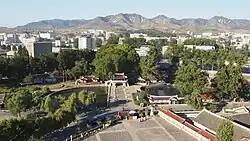
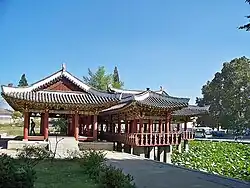
Day Trip to Haeju — Combine the mountain visit with a half-day in Haeju (40 km south), which has its own historical sites including Haeju Folk Museum and the Puyong Pavilion, a classic Korean garden pavilion beside a lotus pond.
Planning Mount Kuwol? Want these on a customised itinerary?
Ask on WhatsAppWhere to eat?
Food options are modest and largely limited to what your arranged guide and driver provide or what is available at a small state-run restaurant near the park entrance. Expect simple Korean fare: rice, kimchi, bean-paste soup (된장찌개), and seasonal mountain vegetables (나물, namul) such as fernbrake and bellflower root. In Haeju, the Haeju Bibimbap (해주비빔밥) is a regional speciality — a variation on the classic mixed-rice dish using local soybean paste instead of the usual gochujang, giving it a distinctive savoury flavour without the heat. Meals in state restaurants cost approximately ₩3,000–₩8,000. Vegetarian options are limited but can be requested in advance through your guide. Halal and gluten-free dining is not available; travellers with strict dietary requirements should bring supplementary provisions.
Where to drink?
Tap water in North Korea should not be drunk by visitors without treatment. Boiled or bottled water is the standard; your guide will typically provide bottled water. Korean tea (보리차, roasted barley tea, or 국화차, chrysanthemum tea) is offered at temple rest areas and restaurants. Locally produced beer and soju are available in Haeju restaurants; the Taedonggang brand beer brewed in Pyongyang is the most common premium option. There are no bars, cafés or nightlife venues near the mountain. The park experience is firmly daytime and outdoors.
Planning Mount Kuwol? We’ll book the stays and dining for you.
Ask on WhatsAppWhere to stay?
Budget: The park has a small state-run guesthouse (Kuwolsan Hotel) near the entrance with basic rooms. Expect firm beds, shared or simple en-suite facilities and no Wi-Fi. Rates are approximately ₩15,000–₩25,000 per night, typically arranged as part of a tour package.
Mid-range: In Haeju, the Haesu Hotel is the standard option for foreign visitors, offering private rooms with hot water and basic amenities. Rates run approximately ₩40,000–₩70,000 per night. The hotel can arrange meals on-site.
Upscale / Heritage: There is no upscale or heritage-branded accommodation in the immediate Mount Kuwol area. Visitors seeking higher standards of comfort typically base themselves in Pyongyang (150 km, 2.5–3 hours by road) and make a long day-trip, or stay overnight in Kaesŏng's Janamsan Hotel (roughly 90 km south), which offers somewhat better facilities than Haeju.
What should you buy?
Shopping options at the mountain are minimal. A small kiosk near the park entrance sometimes sells postcards, locally produced pine-nut snacks and simple hiking supplies. In Haeju, the local market (jangmadang) offers North Korean produce, dried goods and basic sundries. There are no specialist craft workshops or souvenir shops in the immediate park area. Visitors interested in local goods should look for pine nuts (잣, jat), a regional speciality of the Hwanghae forests, available at markets in Haeju and Sariwon.
Where to go next?
- Haeju (40 km south, ~45 min by car) — Provincial capital of South Hwanghae with historical pavilions, a folk museum and the regional speciality Haeju bibimbap.
- Sariwon (70 km northeast, ~1.5 hours) — A city known for the Kyongnam Folk Customs Street, a reconstructed traditional Korean village, and the Sariwon Sweet Food Factory.
- Kaesŏng (90 km south, ~2 hours) — Historic capital of the Koryŏ dynasty and gateway to the Demilitarised Zone (DMZ). Home to the Kaesŏng Namdae Gate and the Tomb of King Kongmin.
- Pyongyang (150 km northeast, ~2.5 hours) — The national capital, with the full range of North Korean monumental architecture: the Juche Tower, Kim Il-sung Square, the Arch of Triumph and the Pyongyang Metro.
- Nampo (130 km northwest, ~2.5 hours) — A port city on the Yellow Sea coast, gateway to the West Sea Barrage and a base for excursions to the scenic Taean Peninsula.
Nearby in Hwanghainamto
More places to explore around Mount Kuwol.
Guide content as of June 2026.

Contact Us
Get in touch with us.
Get in touch
Contact Us
Tell us where you'd like to go and how you like to travel. A real Tripcuro planner — not a bot — will craft an itinerary around you.
- Personalised, hassle-free planning end-to-end
- Transparent pricing, no hidden costs
- 24/7 support for complete peace of mind