
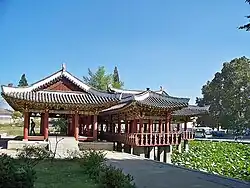
Haeju
Hwanghainamto, North Korea
Why visit Haeju?
Haeju is the capital of South Hwanghae Province (Hwanghainamto), situated on the western coast of North Korea facing the Yellow Sea. With a population of roughly 200,000, it is a mid-sized provincial city and one of the oldest urban centres on the Korean Peninsula, with records of settlement dating back to the Goguryeo period. The city's name (Korean: 해주시) derives from its coastal location — "hae" meaning sea. It sits at the head of a shallow bay, backed by low hills and surrounded by agricultural lowlands.
Haeju's historical significance lies in its role as a regional administrative and cultural centre during the Joseon Dynasty. The city was home to prominent Confucian scholars and retains scattered traces of that heritage, most notably the Haeju Sokbingo, a stone arrow repository built in the 18th century. The Korean War devastated much of the city, and postwar reconstruction gave it the characteristic concrete-block architecture of North Korean urban centres. Today Haeju functions primarily as a provincial capital and agricultural hub, serving the rice paddies and orchards that define the surrounding countryside.
The city is notable for its proximity to South Korea — Incheon is only 110 km across the Yellow Sea — making it one of the closest North Korean cities to the South Korean capital region. This geographic fact has fuelled occasional speculation about future inter-Korean transport links, though as of now the sea crossing remains politically impossible. The climate is temperate continental, with cold dry winters (January averages around −4°C) and warm humid summers (August highs around 27°C). The coastal location moderates temperatures slightly compared to inland areas.
Planning Haeju? Tell us your dates and we’ll tailor the trip.
Ask on WhatsAppHow do you get there?
By Plane
Haeju Airport has domestic flights connecting to Pyongyang, Wonsan, and Chongjin, though these services are not typically available to foreign tourists. The airport is located near the city centre. For foreign visitors, arrival by air to Haeju is uncommon — most travel overland from Pyongyang as part of a state-organised itinerary. Air Koryo is the national carrier, but flight schedules to provincial airports are irregular and subject to change without notice.
By Train
Haeju Station is on the Haeju rail line, which connects to Sariwon to the northeast. Sariwon in turn links to the Pyongyang–Kaesong main line, making Haeju reachable from the capital by rail. The journey from Pyongyang takes approximately 4–5 hours, depending on the service. The station is modest, with basic waiting facilities. Foreign tourists do not book trains independently; rail travel is arranged through the state travel authority as part of a guided tour.
By Car / Road
Haeju is connected to Pyongyang by road (approximately 130 km, 3 hours) via Sariwon. The road is paved and generally passable, though conditions deteriorate after the rainy season. Southward, roads connect to Ongjin (approximately 80 km) and the rest of the province. Bus services operate between cities for local residents but are not available to foreign tourists. All road travel for foreigners is by assigned vehicle with driver and guide.
Haeju is a compact city, and its central areas — the main square, the market district, the waterfront, and the key historical sites — are all within walking distance of each other. There is no metro or formal public transit system for visitors. Local buses run on a few routes but are not used by tourists. Foreign visitors are transported by their assigned vehicle, though walking tours of the city centre are the most practical way to see the main sights. The city's layout follows a rough grid, with wider boulevards near the central square and narrower streets in the older residential areas.
What are the things to do?
Haeju Sokbingo (Stone Arrow Repository) — a well-preserved 18th-century military storage facility built during the Joseon Dynasty to store arrows and other weapons. It is one of the few surviving historical structures in the city and a nationally designated cultural property.
Haeju Central Square — the main public space, featuring a large monument and surrounded by administrative buildings. It is the focal point for official ceremonies and public gatherings.
Haeju Folk Street — a reconstructed area near the city centre showcasing traditional Korean architecture, including hanok-style buildings and workshops. It provides a glimpse of the prewar cityscape that was largely destroyed during the Korean War.
Haeju Revolutionary Museum — a local museum documenting the city's revolutionary history, the Korean War, and the postwar reconstruction. Exhibits are ideological in focus but provide context for the city's modern identity.
Coastal waterfront — the area along Haeju Bay offers views of the Yellow Sea and the tidal flats that characterise the western coast. The harbour area has a small fishing fleet and modest port infrastructure.
City centre murals and monuments — as with all North Korean cities, large-scale propaganda murals, mosaic panels, and leader portraits line the main streets.
Walking tour of historical Haeju — a guided walk through the city centre, visiting the Sokbingo, the folk street, and the main square. This is the primary activity for visitors and provides a compact introduction to the city's history and character.
Coastal walk along Haeju Bay — a stroll along the waterfront, with views of the Yellow Sea tidal flats. The bay is shallow and the tidal range is significant, exposing vast mudflats at low tide.
Day trip to the orchards of Yonan — a short drive east to the apple and pear orchards that are a showpiece of the province's agricultural programme. Best visited in spring (blossom season) or autumn (harvest).
Excursion to Mount Kuwol — a day trip to the mountain south of Haeju, known for its autumn foliage and hiking trails. The drive takes approximately 1–1.5 hours.
Planning Haeju? Want these on a customised itinerary?
Ask on WhatsAppWhere to eat?
Meals for foreign visitors are taken at designated state-run facilities, typically the Haeju Hotel or a designated restaurant. The cuisine reflects the coastal and agricultural setting: seafood from the Yellow Sea (crab, shrimp, clams, fish) features prominently, alongside rice, kimchi, and seasonal vegetables from the surrounding farmland. Haeju is known for a local style of naengmyeon (cold noodles) that differs slightly from the Pyongyang version. Corn-based dishes and simple soups are also common. Fresh fruit from the Yonan orchards is a seasonal highlight. There are no private restaurants or street food options for tourists. Dietary restrictions should be communicated in advance.
Where to drink?
Soju is the standard alcoholic drink, as throughout North Korea. Taedonggang beer (brewed in Pyongyang) is the most common beer available. Tea is less prevalent than in East Asian neighbours — hot water and barley tea are typical warm beverages. For foreign visitors, drinks are served at the guesthouse or designated restaurants. There are no bars or cafés accessible to tourists. Tap water is not reliably safe; use bottled water.
Planning Haeju? We’ll book the stays and dining for you.
Ask on WhatsAppWhere to stay?
- Budget: There is no tourist budget accommodation in Haeju. All lodging for foreign visitors is state-arranged.
- Mid-range: Haeju Hotel — the standard accommodation for visiting delegations and tourists. It is a state-run facility with basic rooms, a dining hall, and limited amenities. Rates are included in the tour package and not quoted separately to tourists. (Updated Sep 2015)
- Upscale / heritage: There is no upscale accommodation in Haeju. The nearest option with greater comfort would be in Pyongyang (approximately 3 hours by road).
What should you buy?
There is very little for tourists to purchase in Haeju. A small state-run shop near the city centre sells basic goods — snacks, beverages, stamps, and postcards. North Korean souvenirs such as pins, stamps, and propaganda items may be available through your guides. A modest local market serves residents with basic provisions but is not typically open to foreign visitors. There are no shopping districts of note. The nearest more substantial tourist shopping is in Pyongyang (approximately 3 hours by road).
Where to go next?
- Sariwon (approximately 40 km northeast, 1 hour by road) — the capital of North Hwanghae Province, with a folk street, recreation area, and connections to the Pyongyang–Kaesong rail line.
- Pyongyang (approximately 130 km northeast, 3 hours by road) — the national capital, with the full range of monuments, museums, and cultural sites that define North Korea's showcase city.
- Ongjin (approximately 80 km south, 2 hours by road) — a port town on the southern coast, gateway to the Ongjin Peninsula and the West Sea islands.
- Mount Kuwol (approximately 60 km south, 1–1.5 hours) — a scenic mountain known for its autumn foliage and hiking trails.
- Kaesong (approximately 170 km northeast, 4 hours by road via Sariwon) — the historic capital of the Goryeo Dynasty and site of the Demilitarised Zone, accessible from Haeju via the Pyongyang corridor.
Nearby in Hwanghainamto
More places to explore around Haeju.
Guide content as of June 2026. Portions adapted from Wikivoyage, CC BY-SA 4.0.

Contact Us
Get in touch with us.
Get in touch
Contact Us
Tell us where you'd like to go and how you like to travel. A real Tripcuro planner — not a bot — will craft an itinerary around you.
- Personalised, hassle-free planning end-to-end
- Transparent pricing, no hidden costs
- 24/7 support for complete peace of mind