
Odaiba
Tokyo, Japan
Why visit Odaiba?
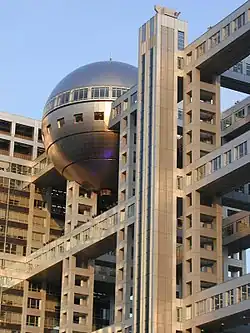
Odaiba (お台場) is a large artificial island in Tokyo Bay, a sprawl of hypermodern and frankly strange architecture that has been memorably described as the result of an acid-soaked pre-schooler's design class. Administratively split among the Minato, Kōtō and Shinagawa wards, it is one of the city's most popular shopping and entertainment destinations and one of the few places in Tokyo with a genuine waterfront and bay views.
The island has a layered history. In 1853 the Tokugawa shogunate built a chain of six fortresses — daiba, meaning gun batteries — in Tokyo Bay to defend the city against Commodore Perry's Black Ships; the honorific prefix gives "Odaiba". Modern development began after Expo '85, conceived as a futuristic showcase, but the bursting of the bubble economy in 1991 left the area a near-empty wasteland. Rezoning in 1996 to allow commercial and entertainment uses brought it back to life, and hotels, malls and company headquarters followed. A fresh wave of redevelopment from 2022 closed the huge Palette Town complex and several landmark attractions; replacement shopping and attractions have been unveiled across 2025–26, but the island has been quieter than usual in the interim.
Odaiba shares Tokyo's humid subtropical climate: mild winters, hot and humid summers, a June–early July rainy season, and a September typhoon risk. Spring and autumn are most comfortable. The bay setting makes it pleasant at sunset.
Planning Odaiba? Tell us your dates and we’ll tailor the trip.
Ask on WhatsAppHow do you get there?
By Plane
From Narita Airport (NRT), take the Keisei Skyliner to Ueno, the Ginza subway line to Shimbashi, and the Yurikamome to Odaiba (about 1 hour 45 minutes to Daiba station, around ¥2,390); JR Pass holders can take the Narita Express to Tokyo Station, a Yokosuka Line local to Shimbashi, then the Yurikamome (paying only the ¥310 Yurikamome fare). Infrequent Airport Limousine buses (about six per day) run directly from Narita to Odaiba's major hotels (70–75 minutes, ¥2,700). From Haneda Airport (HND), take the Tokyo Monorail to Tennōzu Isle and change to the Rinkai Line (about 25 minutes to Kokusai-Tenjijō, ¥660); Airport Limousine buses run roughly hourly to Odaiba hotels (15–20 minutes, ¥500–600).
By Train
Most visitors arrive via the automated Yurikamome "new transit system", a driverless elevated line from Shimbashi (on the Yamanote line) that crosses the Rainbow Bridge with a 270-degree loop for great bay views — an attraction in itself. Shimbashi to Daiba is ¥330 (farther stations ¥390), or buy a one-day pass for ¥820. The alternative is the Rinkai Line (Tokyo Waterfront Area Rapid Transit) from Ōsaki or Shin-Kiba, with through services to Shinjuku, Shibuya and Ikebukuro via the Saikyō Line — slightly faster but mostly underground, with little to see.
By Car / Road
Odaiba is linked to mainland Tokyo by several bridges and tunnels, including the scenic Rainbow Bridge, and is reachable by car via the expressway network. Toei city buses provide cheaper if slower access (¥210 per ride). You can also cross the Rainbow Bridge on foot for free in about 30 minutes — the pedestrian walkway is open roughly 09:00–20:30 (shorter hours in winter, closed the 3rd Monday of each month and 29–31 December); cyclists must walk their bikes across.
Odaiba's central areas are easily covered on foot or by local bus, and the Yurikamome and Rinkai lines loop through the island with several stations. The Yurikamome's Odaiba-Ariake Kaiyū one-day pass covers eight stations in the Odaiba and Ariake areas for ¥500. Walking between the malls and waterfront sights is pleasant in good weather. There are no tuk-tuks and no significant tourist scams.
What are the things to do?
Giant Gundam robot — In front of the DiverCity Tokyo Plaza mall, an impressive life-size (1:1 scale) robot from the Gundam anime series. Free.
Fuji TV Building — 2-4 Daiba. An Odaiba landmark that looks built from tinkertoys; the second-highest floor offers free views, and the spherical observatory typically costs ¥500.
Miraikan (日本科学未来館) — 2-41 Aomi, by Telecom Center station. Japan's National Museum of Emerging Science and Innovation, with robots, space exhibits and hands-on demonstrations. ¥600, open 10:00–17:00.
Odaiba Statue of Liberty — 1-4 Daiba. A small-scale replica given to Japan to mark ties with France, photogenically set against the Rainbow Bridge and Tokyo Tower. Free, 24 hours.
Museum of Maritime Science (船の科学館) — 3-1 Higashi-Yashio. Once a ship-shaped museum; only the polar explorer ship Sōya can now be seen. Free, 10:00–17:00.
Rainbow Bridge — The scenic suspension bridge linking Odaiba to the mainland, beautifully lit at night.
Walk or photograph the Rainbow Bridge — Cross on foot for free, or simply enjoy the bay views, best around sunset.
Joypolis — At Decks Tokyo Beach, a large indoor amusement arcade and game centre run by Sega.
Immersive Fort Tokyo — At 1-3-15 Aomi, billed as the world's first theme park built on immersive experiences, opened in March 2024.
Relax at Odaiba Marine Park — A bayside park with a beach (swimming not permitted) and a boardwalk considered one of Tokyo's most romantic walks.
Barbecue at Shiokaze Park — The largest park in the area has a popular barbecue spot in the warmer months, with equipment and ingredients available for rent.
Planning Odaiba? Want these on a customised itinerary?
Ask on WhatsAppWhere to eat?
Odaiba's dining is concentrated in its malls, which hold extensive restaurant floors and food courts spanning Japanese and international cuisine — Decks Tokyo Beach and Aqua City in particular have many options, some with restaurants open until 23:00. The bay-view tables are part of the appeal.
Where to drink?
The malls' upper floors hold bars and cafés with views over Tokyo Bay and the Rainbow Bridge, and some venues at Aqua City stay open into the early morning. The waterfront is a pleasant place for a sunset drink. Tap water across Tokyo is safe to drink.
Planning Odaiba? We’ll book the stays and dining for you.
Ask on WhatsAppWhere to stay?
Odaiba has a cluster of large bayside hotels, several of them resort-style with views over the water.
- Budget — Budget options are limited on the island itself; mainland hostels are a short train ride away.
- Mid-range — Bayside business and resort hotels, typically ¥15,000–25,000 per night.
- Upscale — Hilton Tokyo Odaiba and Grand Nikko Tokyo Daiba are landmark waterfront luxury hotels, generally from ¥30,000 upward.
What should you buy?
Odaiba is an unabashed celebration of shopping, with more malls than you can count, though prices run a little higher than on the mainland. DiverCity Tokyo Plaza is a major mall, fronted by the Gundam statue; Decks Tokyo Beach combines shops with the Joypolis arcade and a retro-themed section; Aqua City Odaiba offers fashion, goods and restaurants with bay views. A large redevelopment from 2022 closed the famous VenusFort mall, with successor attractions unveiled across 2025–26. Prices are fixed; bargaining is not customary.
Where to go next?
- Shimbashi — The mainland end of the Yurikamome, a lively business and izakaya district.
- Ginza — A short ride via connecting lines, the luxury shopping district.
- Toyosu — Nearby, home to the Toyosu fish market that succeeded Tsukiji.
- Asakusa — Reachable by Sumida River cruise, home to Sensō-ji temple.
- Shinagawa — Across the bay, a major transport hub with an aquarium.
- Tokyo Disney Resort — Reachable via boat connections toward Kasai Rinkai Park, just over the prefecture line in Urayasu.
Nearby in Tokyo
More places to explore around Odaiba.
Guide content as of May 2026. Portions adapted from Wikivoyage, CC BY-SA 4.0.

Contact Us
Get in touch with us.
Get in touch
Contact Us
Tell us where you'd like to go and how you like to travel. A real Tripcuro planner — not a bot — will craft an itinerary around you.
- Personalised, hassle-free planning end-to-end
- Transparent pricing, no hidden costs
- 24/7 support for complete peace of mind