
Ginza
Tokyo, Japan
Why visit Ginza?
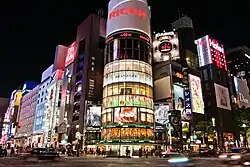
Ginza (銀座) — literally "Silver Mint" — is the district of Tokyo in the central Chūō ward that the city considers its high-fashion heart. The name dates from the Edo period, when a silver coin mint stood here; today the area is synonymous with luxury, holding many of Japan's oldest and most prestigious department stores, the global flagships of the world's leading fashion houses, and a dense concentration of upscale restaurants and exclusive dining rooms.
The district is laid out on an orderly grid. Its heart is the intersection of Chūō-dōri and Harumi-dōri, traditionally marked by the landmark clock tower of the Wakō department store. The side streets are full of art galleries showing painting, photography and graphic design, and the whole quarter has a polished, unhurried elegance unusual for central Tokyo. Adjacent Yūrakuchō, just to the west, offers a more affordable contrast.
Ginza shares Tokyo's humid subtropical climate: mild winters, hot and humid summers, a June–early July rainy season, and a typhoon risk in September. Spring and autumn are most comfortable. Around Christmas the streets are beautifully illuminated, with thousands of light bulbs decorating the trees of Ginza Namiki and Hanatsubaki streets from mid-November.
Planning Ginza? Tell us your dates and we’ll tailor the trip.
Ask on WhatsAppHow do you get there?
By Plane
From Narita Airport (NRT), take the Keisei line to Ueno and change to the Ginza subway line (¥2,080 and about 80 minutes via the reserved Skyliner, or ¥1,160 and about 100 minutes via a limited express commuter service); or take JR's Narita Express to Tokyo Station and change to the Marunouchi subway (¥2,900, about 80 minutes). From Haneda Airport (HND), Keikyu trains run directly to the Asakusa line's Higashi-Ginza station (¥650, about 30 minutes). Airport limousine buses serve major Ginza hotels, taking 80–90 minutes for ¥3,000.
By Train
Ginza is exceptionally well connected. Ginza Station, in the heart of the area, links the Tokyo Metro Marunouchi, Ginza and Hibiya subway lines. You can also reach the district on foot from JR Shimbashi or Yūrakuchō stations, or via Higashi-Ginza station (Toei Asakusa line) and Ginza-Itchōme station (Yūrakuchō line). Trains from across Tokyo are frequent.
By Car / Road
Ginza is reached via Tokyo's expressway network, but driving in is impractical given congestion and the cost of parking. Airport limousine buses are the main long-distance road option.
Ginza is flat, compact and made for walking — the grid layout is easy to navigate and the pleasure of the district is in strolling its avenues and side streets. The surrounding subway stations cover longer trips, with fares from about ¥180; IC cards (Suica, PASMO) are simplest. Taxis are plentiful but expensive. On weekend afternoons, Chūō-dōri becomes a "Pedestrians' Paradise" (歩行者天国), closed to traffic so shoppers can walk freely down the middle of the street. There are no tuk-tuks and no significant scams.
What are the things to do?
Wakō clock tower — The grand art-deco building on Ginza's main intersection, its clock tower a defining district landmark.
Kabukiza Theatre (歌舞伎座) — 4-12-15 Ginza, near the Showa-dōri/Harumi-dōri corner, with an underground passage from Higashi-Ginza station. The home of kabuki theatre; see a single act (hitomaku-mi, lasting one to two hours) from around ¥800 with fourth-floor seating, or a full play with tickets from ¥4,000 to ¥20,000. The current building opened in 2013.
Art galleries — Ginza's side streets are full of galleries; the Nichidō Garō near the Ginza line's B9 exit is among the most famous.
Sukiyabashi area — The lively crossing at the western edge of the district, long associated with Ginza's commercial life.
Stroll the Pedestrians' Paradise — On weekend afternoons Chūō-dōri closes to cars; expect street music, performers and crowds.
See kabuki — A single act at the Kabukiza Theatre, with an English audio guide (around ¥700), is one of Tokyo's most accessible cultural experiences.
Catch a film — Movie theatres are plentiful in the Ginza–Yūrakuchō area, many of them old and spacious.
Window-shop the flagships — Even without buying, the architecture and displays of the luxury flagships are a free spectacle, especially along Namiki street.
Planning Ginza? Want these on a customised itinerary?
Ask on WhatsAppWhere to eat?
Melon-pan — a fluffy sweet bun with a cookie-like cross-hatched crust — was invented at the nearby Imperial Hotel and is a Ginza icon. Dining spans every tier:
- Budget — Yoshinoya, the nationwide rice-bowl chain, has an outlet on Chūō-dōri just north of the Apple Store. Cheap curry and ramen shops (¥350–900) hide in the alleys northwest of the Ginza Yon-chōme intersection — look for the little curtains and the sound of cooking.
- Mid-range — The basement food halls of Mitsukoshi and Matsuya Ginza offer good-value bentō, bakery items and sandwiches. Nair's (Ginza 4-10-7) is the oldest Indian restaurant in Japan, founded in 1949. Nataraj is an excellent Indian vegetarian restaurant with a lunch buffet around ¥1,050 — a good choice for vegetarians.
- Splurge — Ginza hosts many of Japan's most exclusive ryōtei. More accessible high-end options include Chikuyōtei (Ginza 8-14-7), the original branch of a famous unagi eel restaurant serving since 1876, with a basic unadon around ¥2,625 and full courses from ¥7,350; the Ginza Shiseido Parlour for Japanese-style Western food; and Sushi Kanesaka (8-10-3 Ginza), a two-Michelin-star sushi counter (lunch around ¥5,000, dinner around ¥20,000, reservations essential).
Where to drink?
Ginza's drinking scene is upscale and discreet — small, high-end cocktail bars and members'-club-style lounges tucked into the upper floors of buildings, alongside elegant cafés and teahouses. Department-store cafés and the basement food halls are good for a relaxed coffee or tea. Tap water across Tokyo is safe to drink.
Planning Ginza? We’ll book the stays and dining for you.
Ask on WhatsAppWhere to stay?
Ginza's accommodation skews mid-range to luxury, reflecting the district's character.
- Budget — Budget options are limited within Ginza itself; nearby Shimbashi and Higashi-Ginza have business hotels, with rooms from roughly ¥10,000.
- Mid-range — Numerous business and boutique hotels around Ginza and Yūrakuchō, typically ¥18,000–30,000 per night.
- Upscale — Ginza and the adjacent Marunouchi/Hibiya area hold landmark luxury hotels; expect rates from ¥50,000 upward.
What should you buy?
Ginza is Tokyo's premier shopping district. Wakō (4-5-11) is Japan's most exclusive luxury department store, rooted in watches and jewellery; Mitsukoshi and Matsuya are grand prestige department stores nearby. International luxury brands — Louis Vuitton, Dior, Chanel, Prada and more — line the avenues, with a cluster of name brands on Namiki street. For something distinctively Japanese, Tōkyō Kyūkyodō sells traditional paper, fans, calligraphy brushes and incense, while Itōya is a nine-floor temple to stationery. The Apple Store Ginza stands at the corner of Chūō-dōri and Matsuya-dōri, Mikimoto (inventor of the cultured pearl) has its inaugural shop here, and Hakuhinkan Toy Park (Ginza 8-8-11) is one of Japan's oldest toy stores. Nearby Yūrakuchō has discount electronics stores Bic Camera and Sofmap. Prices are fixed; bargaining is not customary.
Where to go next?
- Tsukiji — A short walk southeast, the historic market area still rich with seafood eateries.
- Yūrakuchō — Adjacent to the west, with cheap izakaya under the railway arches.
- Marunouchi — Just west, the polished business district by Tokyo Station.
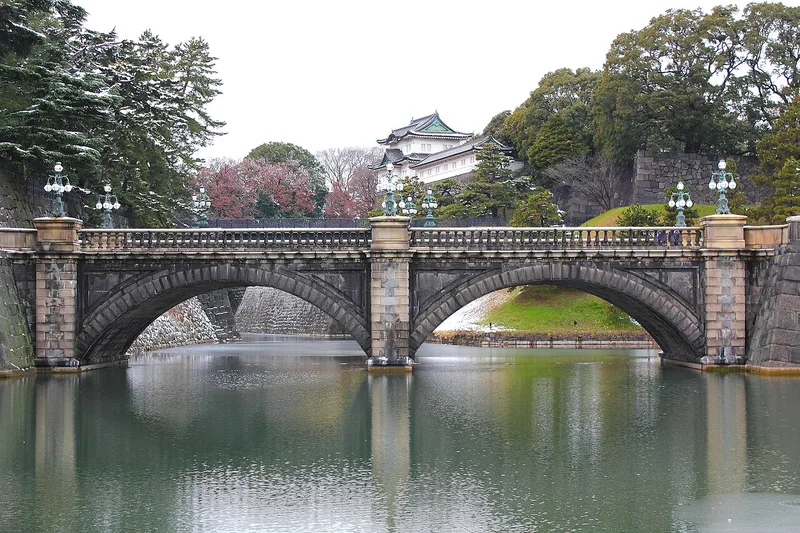
- Imperial Palace — A short distance northwest, with its gardens and moats.
- Asakusa — A subway ride away on the Asakusa line, home to Sensō-ji temple.
- Odaiba — Reachable via connecting lines, a waterfront entertainment island.
Nearby in Tokyo
More places to explore around Ginza.
Guide content as of May 2026. Portions adapted from Wikivoyage, CC BY-SA 4.0.

Contact Us
Get in touch with us.
Get in touch
Contact Us
Tell us where you'd like to go and how you like to travel. A real Tripcuro planner — not a bot — will craft an itinerary around you.
- Personalised, hassle-free planning end-to-end
- Transparent pricing, no hidden costs
- 24/7 support for complete peace of mind