
Jigokudani Monkey Park
Nagano, Japan
About Jigokudani Monkey Park
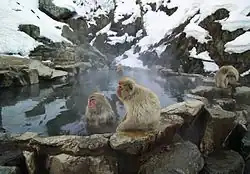
Jigokudani Monkey Park (地獄谷野猿公苑, Jigokudani Yaenkōen) is a world-famous wildlife park in the mountains of Yamanouchi town, Nagano Prefecture, where wild Japanese macaques (Macaca fuscata) — the world's most northerly non-human primates — bathe in natural hot-spring pools. The park was established in 1964 when the monkeys, originally attracted by the warm waters of an onsen hotel, were given their own dedicated bathing area. Today it draws hundreds of thousands of visitors annually, especially in winter when the sight of snow-blanketed monkeys soaking in steaming water has become one of Japan's most iconic images.
The park sits in the Yokoyu River valley, a geothermally active gorge where volcanic steam rises from cracks in the rocky terrain — the name "Jigokudani" means "Hell Valley." The area is part of the Joshinetsu Kogen National Park and is surrounded by dense forest of Japanese beech and elm. Winters are harsh and snowy, with temperatures regularly dropping below −10°C, which is precisely what draws the monkeys down from the forests to warm themselves in the pools. The park is relatively small and intimate; viewing is from a low fence along the pool's edge, allowing close but respectful encounters.
Yamanouchi town itself is a traditional hot-spring resort area with the atmospheric Shibu Onsen and Yudanaka Onsen districts nearby, making it easy to combine a monkey visit with an overnight stay in a centuries-old ryokan.
Planning Jigokudani Monkey Park? Tell us your dates and we’ll tailor the trip.
Ask on WhatsAppHow to reach
By Plane
The nearest major airport is Tokyo Narita (NRT) or Tokyo Haneda (HND), both approximately 3.5–4 hours away by train. For a closer domestic option, Matsumoto Airport (MMJ) is about 90 minutes by car but has limited international connections.
By Train
From Tokyo Station, take the Hokuriku Shinkansen (Asama service) to Nagano Station — approximately 80–110 minutes, ¥8,200 for a reserved seat. From Nagano, transfer to the Nagano Electric Railway (Nagaden) to Yudanaka Station, about 45 minutes, ¥1,210 one way. The Nagaden Limited Express is recommended for fewer stops and more comfortable seating (extra ¥100). From Yudanaka Station, local buses or a taxi take you to the trailhead at Kanbayashi Onsen or the park minibus stop.
By Car / Road
From central Nagano, drive north on Route 292 toward Shiga Kogen/Yamanouchi — approximately 40 minutes to Yudanaka, then follow signs to Kanbayashi Onsen (the trailhead parking area). From Tokyo, the Kan-Etsu Expressway to Joshinetsu Expressway exit at Shinshu-Nakano or Toyota-Iiyama takes about 3.5–4 hours. Note that winter roads can be icy and snow chains may be required.
The park itself is accessed entirely on foot via a 1.6 km forest trail from the Kanbayashi Onsen parking area — a pleasant 25–30 minute walk that can be muddy or icy in winter. Boot rentals (¥500) are available at the trailhead information centre. From Yudanaka Station, a public bus runs to Kanbayashi Onsen for ¥1,300 one way, connecting with Shiga Kogen services. A dedicated minibus to the park runs seven times daily in winter from Yamanouchi town for ¥1,500 round trip including park admission. Taxis from Yudanaka Station cost around ¥3,000–4,000. Walking back from the park to Yudanaka takes about 90 minutes through the charming Shibu Onsen and Yudanaka Onsen districts.
Things to do
Jigokudani Monkey Park (地獄谷野猿公苑) — The main attraction. Open daily, April–October 08:30–17:00, November–March 09:00–16:00. Admission ¥500 adults, ¥250 children. The best viewing is in winter (December–March) when snow forces the monkeys into the hot-spring pools, though they visit year-round. Early morning visits offer the most intimate experience with fewer crowds.
Shibu Onsen (渋温泉) — A traditional hot-spring village just below Yudanaka with narrow stone-paved lanes, wooden ryokan, and nine public bathhouses. The town retains a deeply atmospheric Edo-period feel and is especially beautiful at night when lanterns light the streets.
Yudanaka Onsen — The larger, more modern hot-spring town near the station, serving as the area's transport hub with accommodation ranging from budget guesthouses to heritage ryokan.
Jigokudani Valley — The volcanic gorge itself, where sulphurous steam vents and bubbling mud pools give the area its "Hell Valley" name. The walk through the gorge to the monkey park is scenic in its own right.
Photograph the snow monkeys — Winter photography from the poolside viewing area is the park's signature experience. Bring a telephoto lens and waterproof gear; the steam from the pools creates dramatic atmospheric conditions.
Soak in Shibu Onsen — Stay overnight in a ryokan and use the traditional wooden bathhouse tokens to visit the village's nine public baths. The baths are small, intimate, and rarely crowded in the evenings.
Ski at Shiga Kogen — The vast Shiga Kogen ski area, one of the largest and highest on Honshu, is a short bus ride from Yamanouchi and offers 19 interconnected resorts with excellent powder snow.
Walk the Nakasendo trail — Day trips from Yamanouchi to the Kiso Valley post towns of Narai and Tsumago are feasible by train, offering a different side of Nagano's heritage.
Visit Zenkō-ji Temple — The great temple in Nagano city is about 45 minutes south by train and makes an easy day trip combining spiritual pilgrimage with the monkey park.
Planning Jigokudani Monkey Park? Want these on a customised itinerary?
Ask on WhatsAppFood & Dining
The Yamanouchi area specialises in hearty mountain fare. Shinshu soba (buckwheat noodles) is available at nearly every restaurant, served cold on bamboo trays or hot in broth. Oyaki — grilled dumplings stuffed with vegetables, mushrooms, or sweet bean paste — are a ubiquitous snack. For a sit-down meal, try Takinoyu in Shibu Onsen for traditional kaiseki served in your ryokan, or the casual Bakery & Café Tamaki near Yudanaka Station for fresh bread and light meals. Local mountain vegetables (sansai) feature prominently in spring menus, while grilled river fish appears at riverside restaurants in warmer months. Vegetarian options are available at most ryokan if requested in advance.
Cafes & Nightlife
The Yudanaka–Shibu Onsen area is home to Shiga Kogen Brewery, a microbrewery operating within a 200-year-old sake brewery. They produce excellent locally made beers alongside traditional sake, with free tastings on site. Yudanaka Station has a few casual izakaya and small bars. Most visitors enjoy drinks as part of their ryokan dinner experience — local sake from Nagano Prefecture (one of Japan's top sake-producing regions) is the natural accompaniment to an evening meal. Tap water in the area is safe to drink and comes from mountain springs.
Planning Jigokudani Monkey Park? We’ll book the stays and dining for you.
Ask on WhatsAppPlaces to Stay
- Budget: Shimaya (島屋), a simple guesthouse near Yudanaka Station with Japanese-style private and dormitory rooms from ¥3,500. The owner will drive guests to the monkey park and local onsen for free. Limited English spoken.
- Mid-range: Minshuku Korakukan (後楽館), located directly within the Monkey Park grounds across the river from the entrance, ¥10,000–14,000 including meals. Its own private hot-spring bath, not shared with monkeys. Check-in 15:00.
- Upscale / heritage: Kokuya (古久屋) in Shibu Onsen, a 16-generation heritage ryokan run by the same family for approximately 400 years. Ten rooms with open-air hot-spring baths, eight additional outdoor and indoor baths. Suites ¥16,000–36,900 per person. Five minutes from the monkey park. English spoken.
What to buy
Local specialties include onsen manjū — soft steamed buns filled with sweet bean paste, sold at shops in Yudanaka and Shibu Onsen. Shichimi tōgarashi (seven-spice blend) from the Yawataya Isogorō shop in Nagano city (a 280-year-old institution) makes an excellent souvenir. Hand-carved wooden crafts and small monkey-themed gifts are available at the park's gift shop and along the Shibu Onsen shopping street. The area is also known for locally brewed sake — Shiga Kogen Brewery in Yudanaka offers free tastings and sells distinctive craft beers alongside traditional rice wine.
Go next
- Nagano — 45 minutes south by train; the prefectural capital with Zenkō-ji temple, the 1998 Olympic sites, and excellent soba restaurants.
- Obuse — 30 minutes south by train; a charming town dedicated to ukiyo-e master Hokusai, famous for chestnut sweets and art museums.
- Shiga Kogen — 30 minutes by bus uphill; a vast highland plateau with skiing, hiking, and summer wildflower meadows at over 1,500 m elevation.
- Nozawaonsen — 40 minutes by bus and train; a traditional hot-spring village with 13 free public baths and the spectacular Dosojin fire festival on 15 January.
- Kiso Valley (Narai & Tsumago) — 90 minutes by train south; beautifully preserved Edo-era post towns on the historic Nakasendo highway.
Nearby in Nagano
More places to explore around Jigokudani Monkey Park.
Portions adapted from Wikivoyage, CC BY-SA 4.0.

Contact Us
Get in touch with us.
Get in touch
Contact Us
Tell us where you'd like to go and how you like to travel. A real Tripcuro planner — not a bot — will craft an itinerary around you.
- Personalised, hassle-free planning end-to-end
- Transparent pricing, no hidden costs
- 24/7 support for complete peace of mind