
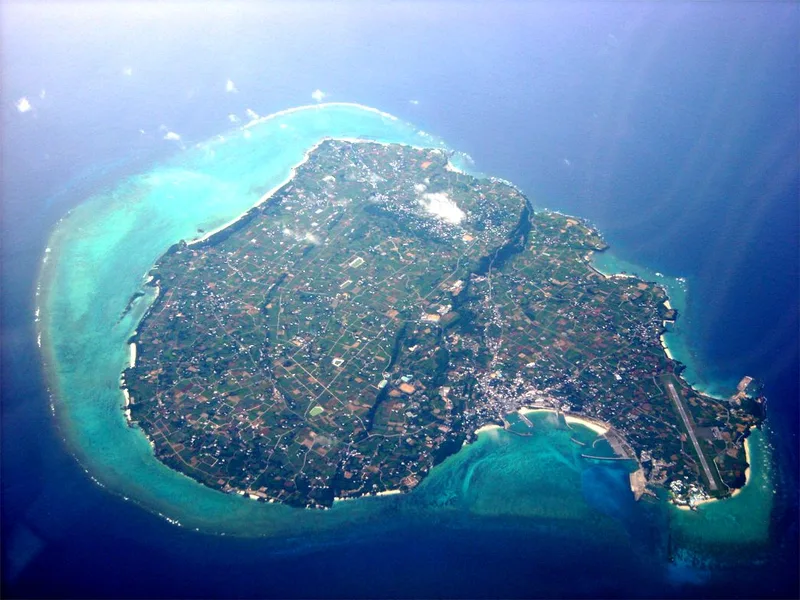
Yoronjima
Kagoshima, Japan
Why visit Yoronjima?
Yoronjima is a small, picturesque island located at the southern tip of Kagoshima Prefecture, Japan, situated roughly 23 km north of Okinawa's main island. With a population of around 5,000 residents and a circumference of approximately 23.5 km, Yoronjima offers an intimate island experience distinct from the bustling tourist centres of Okinawa. The island is known for its crystal-clear waters, white sand beaches, and a relaxed atmosphere that reflects traditional Ryukyuan culture blended with Kagoshima's southern Kyushu heritage.
The island's character is shaped by its subtropical climate, sugar cane cultivation, and a proud local identity that bridges the Kagoshima and Okinawan cultural spheres. Yoronjima is particularly famous for Yurigahama, a phantom sandbar that appears only at low tide, creating a surreal white-sand island in the middle of turquoise waters. The island also maintains traditional festivals, craft traditions, and a cuisine influenced by both Japanese and Ryukyuan culinary traditions.
The climate is subtropical with mild winters (rarely below 15°C) and hot, humid summers. The best time to visit is from April to June and September to November, when temperatures are pleasant and rainfall is moderate. July and August bring typhoon risk and intense heat, while December through February can be cool and windy, though still mild by mainland standards.
Planning Yoronjima? Tell us your dates and we’ll tailor the trip.
Ask on WhatsAppHow do you get there?
By Plane
Yoron Airport (IATA: RNJ) is located in the northern part of the island, approximately 4 km from the main settlement of Chabana. The airport is served by flights from:
- Kagoshima Airport (KOJ): Approximately 1 hour 10 minutes flight time
- Naha Airport (OKA): Approximately 40 minutes flight time
- Amami Airport (ASJ): Approximately 30 minutes flight time
Airlines serving Yoron include Japan Air Commuter (JAC) and Ryukyu Air Commuter (RAC). Taxis from the airport to Chabana cost around ¥1,500-2,000 and take about 10 minutes. There is no airport bus service; car rental or taxi is recommended.
By Car / Road
Yoronjima is accessible only by sea or air. Ferry services connect the island to:
- Kagoshima Port: Approximately 18 hours by ferry (Nansei Shipyards)
- Naha Port (Okinawa): Approximately 4-5 hours by ferry
- Amami Oshima: Approximately 4-6 hours by ferry
The main ferry terminal is located in Chabana on the eastern coast. The island's road network is well-maintained and suitable for rental cars, with the main road circling the island in approximately 45 minutes.
The most practical way to explore Yoronjima is by rental car or motorcycle. Several rental agencies operate near the ferry terminal and airport. Rental cars typically cost ¥4,000-6,000 per day. There is no public bus system, though a limited community bus service operates on some routes.
Bicycle rental is popular for shorter distances, available for around ¥1,000-1,500 per day. The island is walkable for short distances, but the terrain and distances between attractions make walking impractical for full exploration. Ride-hailing apps are not available; taxis can be booked by phone but are limited in number.
What are the things to do?
Beaches and Natural Attractions
- Yurigahama: The island's most famous attraction — a phantom sandbar that appears only at low tide, approximately 1.5 km offshore from Oganeku Beach. Accessible by glass-bottom boat tours (¥2,500-3,500 per person). Best visited during spring tides when the sandbar is largest.
- Chabana Beach (Chabana Kaigan): A long, white sand beach near the main settlement with calm waters suitable for swimming and snorkeling. Free access, open year-round.
- Yoron Tropical Garden: A botanical garden showcasing tropical flora including hibiscus, bougainvillea, and native species. Entry ¥500, open 9:00-17:00.
Cultural and Historical Sites
- Habu Ruins (Habu Iseki): A significant archaeological site containing remains of a medieval settlement dating to the 13th-15th centuries. Free admission, accessible via marked paths.
- Yoron Minzoku Mura (Yoron Folk Village): A reconstructed traditional village demonstrating historical Ryukyuan architecture and lifestyle. Entry ¥300, open 9:00-17:00.
- Nishi-no-Tou (Western Tower): A traditional stone lighthouse offering panoramic views of the island and surrounding seas. Free access.
Water Activities
- Glass-bottom boat tours to Yurigahama sandbar (departs from Oganeku Beach, multiple departures daily during low tide periods)
- Snorkeling and diving: The island's clear waters offer excellent visibility (20-30 meters) with coral reefs and tropical fish. Dive shops offer introductory dives for ¥8,000-12,000 and certification courses.
- Sea kayaking: Guided tours available around the island's coastline (¥3,000-5,000 for half-day tours)
Cultural Experiences
- Traditional Yoron-jofu weaving workshops: Learn the island's traditional textile craft (¥2,000-3,000 for introductory sessions)
- Local cooking classes: Prepare traditional island dishes using local ingredients (¥3,000-4,500)
- Star gazing: The island's minimal light pollution makes it excellent for astronomy, particularly during winter months
Planning Yoronjima? Want these on a customised itinerary?
Ask on WhatsAppWhere to eat?
Food Culture Yoronjima's cuisine blends Japanese and Ryukyuan traditions, emphasizing fresh seafood, tropical vegetables, and local pork. The island is known for its soba noodles (distinct from mainland Japanese soba), goya chanpuru (bitter melon stir-fry), and fresh sashimi.
Restaurant Recommendations
- Shokudo Chabana: A local favorite serving traditional island set meals including fresh sashimi and soba (¥800-1,500). Open 11:00-14:00, 17:00-21:00.
- Uminchu no Ie: Seafood restaurant near the harbor specializing in fresh catch of the day (¥1,200-2,500). Open 11:30-14:00, 17:30-21:00.
- Yoron Soba-ya: Famous for traditional island soba noodles with pork broth (¥700-1,000). Open 11:00-15:00.
Dietary Notes: Vegetarian options are limited; communicate dietary needs in advance. Halal options are not readily available. Fresh tropical fruits provide excellent gluten-free alternatives.
Where to drink?
Local Beverages
- Awamori: The traditional Okinawan rice spirit, available in various ages and flavors (¥300-800 per glass at restaurants)
- Sanpin-cha: Jasmine tea, the traditional Okinawan beverage, served hot or cold
- Local beer: Orion Beer from Okinawa is widely available (¥400-600 per bottle)
- Tropical fruit juices: Fresh mango, passion fruit, and guava juices available at cafés
Drinking Establishments
- Bar Umi: A small local bar in Chabana serving awamori and local beers (open evenings)
- Café Nami: A daytime café offering tropical fruit juices and light snacks
Water from the tap is safe to drink but has a slightly different mineral taste than mainland Japan; bottled water is readily available.
Planning Yoronjima? We’ll book the stays and dining for you.
Ask on WhatsAppWhere to stay?
Budget
- Guesthouse Yoron: Simple Japanese-style guesthouse with shared facilities. ¥3,500-5,000 per night. Located in Chabana, 5-minute walk from ferry terminal.
- Yoron Youth Hostel: Basic accommodation with dormitory-style rooms. ¥3,000-4,000 per night.
Mid-range
- Hotel Yoron: Comfortable hotel with sea views and modern amenities. ¥8,000-12,000 per night. Includes breakfast. Located near Chabana Beach.
- Resort Inn Minshuku: Family-run inn with traditional hospitality and home-cooked meals. ¥7,000-10,000 per night including dinner and breakfast.
Upscale / Heritage
- Yoron Island Resort: The island's premier accommodation with private beach access, pool, and spa facilities. ¥15,000-25,000 per night. Located on the southern coast.
- Ryokan Hoshizora: Traditional Japanese inn with hot spring baths and kaiseki cuisine. ¥12,000-20,000 per night.
What should you buy?
Local Specialties
- Yoron-jofu: Traditional hand-woven textiles using banana fibers, available at the Folk Village and local craft shops (¥5,000-30,000 depending on size and complexity)
- Brown sugar (kurozato): Locally produced from the island's sugar cane fields, available at markets and specialty shops (¥300-800 per package)
- Awamori: Okinawan rice spirit, available in local liquor stores (¥1,500-3,000 per bottle)
- Tropical fruit preserves: Made from local mangoes, pineapples, and passion fruit (¥500-1,200)
Shopping is concentrated in Chabana, with a few shops near the ferry terminal. Most shops close by 18:00.
Where to go next?
Nearby Islands and Destinations
- Amami Oshima (approximately 4-6 hours by ferry): Larger island with more developed tourist infrastructure, mangrove forests, and traditional textile arts.
- Okinawa Main Island (approximately 4-5 hours by ferry or 40 minutes by air): Major tourist destination with historical sites, shopping, and entertainment.
- Tokunoshima (approximately 2-3 hours by ferry): Known for traditional bullfighting and pristine beaches.
- Kikaijima (approximately 3 hours by ferry): Quiet island with traditional agriculture and excellent diving spots.
- Kagoshima City (approximately 18 hours by ferry or 1 hour 10 minutes by air): Prefectural capital with Sakurajima volcano, historical sites, and urban amenities.
Nearby in Kagoshima
More places to explore around Yoronjima.

Guide content as of June 2026.

Contact Us
Get in touch with us.
Get in touch
Contact Us
Tell us where you'd like to go and how you like to travel. A real Tripcuro planner — not a bot — will craft an itinerary around you.
- Personalised, hassle-free planning end-to-end
- Transparent pricing, no hidden costs
- 24/7 support for complete peace of mind