
Ogimachi
Gifu, Japan
About Ogimachi
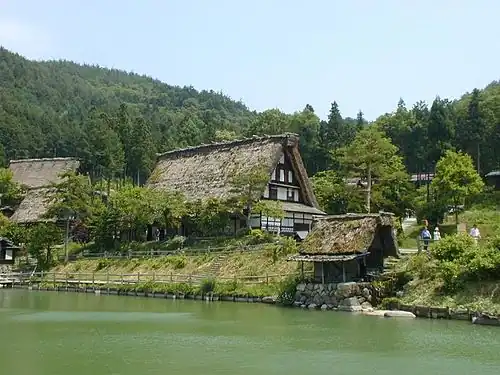
Ogimachi (荻町) is the central and largest village of Shirakawa-go (Shirakawa-mura) in Gifu Prefecture, and the heart of the area inscribed as a UNESCO World Heritage Site in 1995. For most visitors to Shirakawa-go, Ogimachi is the destination — the cluster of thatched farmhouses, rice fields and mountain backdrop that appears in countless photographs of the region.
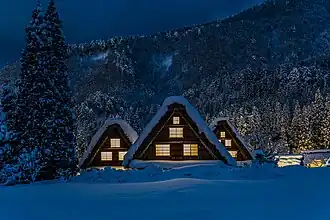
The village is famous for its gassho-zukuri farmhouses — built in a style whose name means "hands together," referring to the steep, hand-like roofs designed to shed the area's heavy winter snow. The spacious attics beneath those roofs were historically used for raising silkworms. Many of the houses are still lived in, so Ogimachi is a working village as well as an open-air museum.
Ogimachi is scenic year-round — fresh green in spring, lush in summer, golden in autumn — but it is most iconic under deep winter snow, when the village's nighttime Light-Up event produces one of Japan's most celebrated winter scenes. The village is largely day-tourist oriented and grows quiet after sunset.
Planning Ogimachi? Tell us your dates and we’ll tailor the trip.
Ask on WhatsAppHow to reach
By Plane
By Train
There is no railway station in Ogimachi or Shirakawa-go. The usual approach is by train to Takayama (via Nagoya) and then a bus; see By Car / Road below. > TODO: Confirm the most practical rail-and-bus routing.
By Car / Road
Ogimachi is reached by highway bus from Takayama, Kanazawa, Toyama and Nagoya; buses arrive at the Shirakawa-go Bus Terminal beside the village. For drivers, renting a car in Takayama and driving via expressway takes about an hour; note that many mountain roads in the wider area close in winter due to snow. > TODO: Confirm bus journey times and fares.
Ogimachi is compact and easy to explore entirely on foot, with the farmhouses, museums and viewpoint all within walking distance. A car is not needed within the village itself.
Things to do
Historic farmhouses
- Wada House (和田家) — The largest of the gassho farmhouses in Ogimachi, containing period artifacts. Open daily 09:00–17:00; ¥300.
- Kanda House (神田家) — A well-preserved farmhouse that keeps its hearth fire lit; the upper floors reveal the inner construction and offer views over the village. Open daily 09:00–17:00; ¥300.
- Nagase House (長瀬家) — Known for its 11-metre length, built around 250 years ago when the Nagase family worked as doctors. Open daily 09:00–17:00; ¥300.
- Gassho-zukuri Minkaen (合掌造り民家園), 2499 Ogimachi — An open-air collection of historic farmhouses relocated for preservation, some from the 18th century. ¥600.
Viewpoint and museum
- Shiroyama Viewpoint — The hillside lookout above the village, giving the classic panoramic view over Ogimachi's thatched roofs; the centrepiece of the winter Light-Up.
- Jin Homura Art Museum (焔仁美術館) — Modern art displayed inside a traditional farmhouse. Open daily 09:30–16:00; ¥300.
The main thing to do in Ogimachi is to wander the village, admiring the gassho farmhouses and the surrounding fields and mountains, and to climb to the Shiroyama Viewpoint for the panoramic view. To relax, soak at Shirakawa-go no Yu (白川郷の湯), a hot spring conveniently within the historic area (¥700, open 07:00–21:30).
The signature event is the Shirakawa-go Light-Up, held on a few Sunday nights in January and February, when the snow-covered village is illuminated. It is extremely popular and requires reserved tickets; access to the Shiroyama Viewpoint must be booked separately via a qualifying bus tour or by staying in a gassho-zukuri accommodation, with timed entry slots.
Planning Ogimachi? Want these on a customised itinerary?
Ask on WhatsAppFood & Dining
Ogimachi has a handful of places to eat — look for ramen, soba and Hida beef dishes — but they generally open only during daylight hours, as the day-tourist-oriented village quietens after sunset.
- Soba Wakimoto, 2476 Ogimachi — Soba noodles made and served the same day; also serves grade 4 and 5 Hida beef.
Cafes & Nightlife
The Hachiman Shrine at Shirakawa-go produces its own brand of sake, sold through the shrine and local tourist shops. Tap water across Japan is safe to drink.
Planning Ogimachi? We’ll book the stays and dining for you.
Ask on WhatsAppPlaces to Stay
Ogimachi offers ryokan-style inns, many set in the gassho farmhouses themselves, with dinner and breakfast typically included — traditional Japanese dishes, with futon bedding on tatami.
- Budget: Yoshiro House, 474 Ogimachi — One of the gassho houses operating as a minshuku. Check-in 14:00, check-out 09:00. > TODO: Confirm nightly rates.
- Mid-range: > TODO: Confirm a named mid-range inn with rates.
- Upscale / heritage: Magoemon, 360 Ogimachi — A 300-year-old gassho-zukuri building with an authentic irori hearth and a river view. Check-in 15:00, check-out 09:30. > TODO: Confirm nightly rates.
What to buy
Ogimachi has numerous souvenir shops. A signature local item is the sarubobo doll, a faceless red monkey amulet. Bargaining is not customary in Japan; prices are fixed.
Go next
- Takayama — Historic castle town with a famed old quarter, about an hour by bus.
- Kanazawa — Castle city on the Sea of Japan, known for Kenrokuen garden, reachable by highway bus.
- Toyama — Prefectural capital to the north, reachable by highway bus.
- Gokayama — Sister UNESCO village of gassho-zukuri farmhouses, just over the border in Toyama.
- Gifu — Prefectural capital, known for cormorant fishing, reachable via Takayama.
TODO: Confirm one or two further nearby destinations with travel times.
Nearby in Gifu
More places to explore around Ogimachi.
Portions adapted from Wikivoyage, CC BY-SA 4.0.

Contact Us
Get in touch with us.
Get in touch
Contact Us
Tell us where you'd like to go and how you like to travel. A real Tripcuro planner — not a bot — will craft an itinerary around you.
- Personalised, hassle-free planning end-to-end
- Transparent pricing, no hidden costs
- 24/7 support for complete peace of mind