
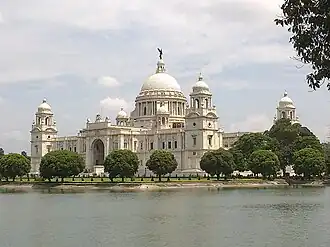
Kolkata
West Bengal, India
About Kolkata
Kolkata (formerly Calcutta) is the capital of West Bengal and the cultural capital of India. Spread along the eastern bank of the Hooghly River, it was the administrative centre of the British Raj until 1911, governing a territory that once stretched from Pakistan to Myanmar — for a time "the second city of the British Empire after London". Today it is an "in your face" city that shocks and charms in equal measure: equal parts decaying colonial grandeur, fervent intellectual life, and street-corner energy. Home to the Bengali Renaissance and a steady output of poets, writers, film directors and Nobel laureates, it earned its enduring sobriquet, the "City of Joy".
The city is loosely divided into four regions. Central Kolkata, historically the "White Town", holds the great colonial set pieces around B. B. D. Bagh and the Maidan. North Kolkata — old "Black Town", or "khas Kolkata" to locals — is a warren of narrow lanes and century-old zamindar mansions, with Kumartuli's idol-makers and the College Street book bazaar. South Kolkata is posh and leafy, full of malls, museums and old-money neighbourhoods like Ballygunge. East Kolkata, the planned townships of Salt Lake and New Town, is the rapidly growing modern face of the metropolis.
The best time to visit is the cool, dry winter from late October to February, when daytime temperatures are pleasant and the festival calendar — Durga Puja, Christmas on Park Street, the Kolkata Book Fair — is at its peak. Summers (April–June) are brutally hot and humid; the monsoon (June–September) brings heavy rain and waterlogged streets.
Planning Kolkata? Tell us your dates and we’ll tailor the trip.
Ask on WhatsAppHow to reach
By Plane
Netaji Subhas Chandra Bose International Airport (CCU), at Dum Dum about 17 km northeast of the city centre, is eastern India's main air gateway, with flights to all major Indian cities and a range of international destinations. Prepaid and app-based taxis (Uber, Ola) into the centre typically cost ₹350–600 depending on destination and traffic. Air-conditioned airport buses and the metro Orange Line (which serves the airport) offer cheaper alternatives.
By Train
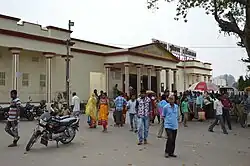
Kolkata has two major terminals. Howrah Junction, across the river, is one of India's busiest stations, with connections nationwide. Sealdah, in the city's east, handles trains to North Bengal and the suburbs. Kolkata station (Chitpur) serves some long-distance trains, including services towards Bangladesh. Book reserved long-distance tickets well in advance via IRCTC, especially in winter.
By Car / Road
Kolkata is connected by national highways in all directions: NH 19 (the Durgapur Expressway / Grand Trunk Road) runs west towards Bardhaman and Durgapur (around 160 km), NH 16 heads southwest. Long-distance and inter-city buses, including AC Volvo coaches run by SBSTC, WBTC and private operators, depart from Esplanade and Karunamoyee.
The Kolkata Metro is the easiest way to cover long distances; the original Blue Line runs north–south, with newer lines extending towards Salt Lake, New Town and Howrah under the river. Yellow-and-black Ambassador taxis are iconic but increasingly replaced by app-based cabs (Uber, Ola) — insist on the meter or fix the fare first. Autorickshaws run fixed shared routes for a few rupees. Hand-pulled and cycle rickshaws still operate in parts of North Kolkata, and the city retains Asia's oldest operating tram network, now mostly a heritage curiosity. Walking is rewarding in the colonial core and College Street, though traffic and crowds grind to a halt during rush hour.
Things to do
Colonial landmarks
- Victoria Memorial, Maidan — a vast white-marble monument to Queen Victoria set in formal gardens, now a museum of the Raj era. Gardens open early morning to evening; the museum has a separate ticket.
- Writers' Building, B. B. D. Bagh — the long red colonial pile that was the epicentre of the British Raj administration in Bengal, still housing state government offices.
- Howrah Bridge (Rabindra Setu) — the cantilever bridge over the Hooghly, one of the city's defining sights, best seen from the riverfront.
- St. Paul's Cathedral, near Victoria Memorial — a Gothic-revival Anglican cathedral.
Temples and religious sites
- Kalighat Kali Temple, Bhowanipore-Kalighat — one of the holiest Kali temples and a Shakti Pitha, intensely atmospheric and crowded.
- Dakshineswar Kali Temple — a riverside temple complex associated with the saint Ramakrishna, just north of the city.
- Belur Math — the serene headquarters of the Ramakrishna Mission, on the Howrah bank.
Museums
- Indian Museum, Chowringhee — the oldest and largest museum in India, with archaeology, natural history and art collections.
- Jorasanko Thakur Bari, Burrabazar-Jorasanko — Rabindranath Tagore's ancestral home, now a museum dedicated to the poet.
Stroll College Street and dip into the Indian Coffee House, a legendary haunt of intellectuals. Wander the lanes of Kumartuli in North Kolkata to watch artisans sculpt clay idols, especially busy in the run-up to Durga Puja. Take a heritage walk through the colonial quarter around B. B. D. Bagh, or join a food walk through the Burrabazar markets. Catch a Bengali play in a North Kolkata theatre, or an art-house film. If your visit coincides with Durga Puja (around September–October), the city transforms into an open-air gallery of elaborate pandals — an unmissable experience. The Kolkata Book Fair at Salt Lake (winter) and Christmas–New Year on Park Street are other peak-season highlights. A sunset boat ride on the Hooghly offers a fine view of the skyline.
Planning Kolkata? Want these on a customised itinerary?
Ask on WhatsAppFood & Dining
Bengali cuisine is built around rice, fish and a refined balance of sweet and savoury. Signature dishes include macher jhol (fish curry), shorshe ilish (hilsa in mustard), kosha mangsho (slow-cooked mutton), luchi-aloor dom, and the city's beloved street snacks — phuchka, kathi rolls and jhalmuri.
- Budget: kathi rolls from Nizam's or roadside stalls near Park Street; phuchka at Vivekananda Park or Gariahat.
- Mid-range: 6 Ballygunge Place for classic home-style Bengali thalis; Bhojohori Manna, a reliable chain serving Bengali staples.
- Upscale: Oh! Calcutta for refined Bengali fine dining; the colonial-era Flury's on Park Street for tea and confectionery.
Halal options are plentiful around Park Circus and Zakaria Street (the latter spectacular during Ramadan); vegetarians are well served by Bengali, Marwari and South Indian eateries.
Cafes & Nightlife
Tea is the city's lifeblood — served strong and milky in clay cups (bhar) at every street corner. Sweet lassi and green-coconut water are popular in the heat. Park Street is the historic heart of the city's nightlife, with old-school bars and lounges; Olypub is a famous, unpretentious institution. The Indian Coffee House on College Street is more an intellectual ritual than a café. Tap water is not safe to drink — stick to bottled or filtered water.
Planning Kolkata? We’ll book the stays and dining for you.
Ask on WhatsAppPlaces to Stay
- Budget: backpacker guesthouses cluster on and around Sudder Street near New Market, with simple rooms from roughly ₹600–1,500.
- Mid-range: numerous business hotels in the ₹3,000–6,000 range around Park Street, Esplanade and Salt Lake.
- Upscale / heritage: The Oberoi Grand on Chowringhee, a grand dame of Kolkata hotels; Taj Bengal in Alipore. Heritage and luxury rooms run upwards of ₹10,000.
What to buy
Kolkata is a shopper's city. New Market (Hogg Market) near Esplanade is a sprawling colonial-era market for everything from clothing to bakery goods. Gariahat in South Kolkata is the place for saris — look for Bengali handloom weaves like tant, jamdani and the prized Baluchari. College Street, the world's largest second-hand book market, is heaven for readers. For handicrafts, terracotta and Bengali artisanal goods, try the state emporiums (Biswa Bangla, Manjusha). Bargaining is expected in street markets and at Gariahat, less so in malls and emporiums.
Go next
- Chandannagar — about 40 km north; a former French settlement with a riverside promenade and colonial architecture.
- Santiniketan — around 160 km; Tagore's university town, peaceful and arty.
- Sundarbans — roughly 100 km southeast; the world's largest mangrove forest and tiger reserve.
- Bishnupur — about 140 km; famed for terracotta temples and Baluchari saris.
- Digha — around 180 km; West Bengal's most popular beach resort.
- Murshidabad — around 200 km north; the old Nawabi capital with palaces and mosques.
Nearby in West Bengal
More places to explore around Kolkata.
Portions adapted from Wikivoyage, CC BY-SA 4.0.

Contact Us
Get in touch with us.
Get in touch
Contact Us
Tell us where you'd like to go and how you like to travel. A real Tripcuro planner — not a bot — will craft an itinerary around you.
- Personalised, hassle-free planning end-to-end
- Transparent pricing, no hidden costs
- 24/7 support for complete peace of mind