
Porompat
Manipur, India
Why visit Porompat?
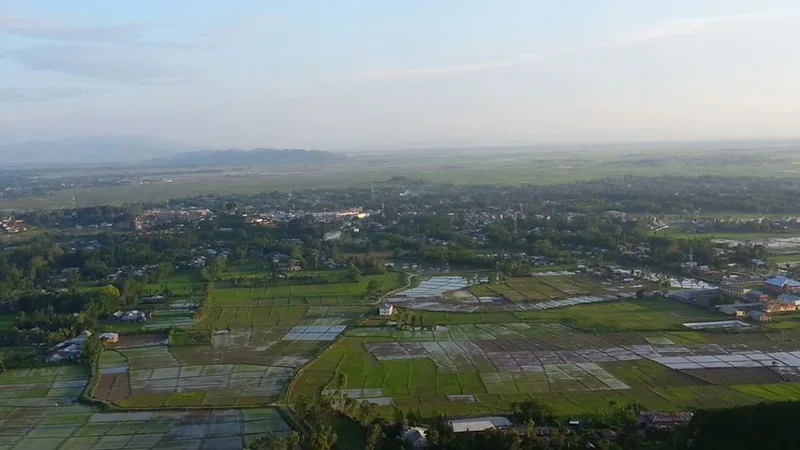
Porompat is a town and administrative locality on the eastern side of Imphal, the capital of Manipur. Today it functions largely as an extended part of the Imphal urban area — the seat of a sub-division and home to government offices, hospitals, residential colonies and one of the city's larger medical institutions. For travellers, Porompat is less a separate sightseeing destination than a workaday district that rewards visitors interested in Manipur's living religious landscape, with a notable cluster of Sanamahi and Hindu temples tucked among its streets.
The area's character is defined by that quiet coexistence of faiths. Sanamahism — the indigenous Meitei religion — is strongly present here, with shrines dedicated to deities such as Wangbren, the god of water, sitting close to Hindu temples honouring an array of gods, alongside the small art and cultural spaces that dot the eastern suburbs. Porompat's flat valley setting, dense residential lanes and proximity to central Imphal make it easy to fold into a city visit.
Manipur has a humid subtropical climate. The best time to come is October to April, when the valley is cool, dry and clear — comfortable for temple visits and exploring on foot. May tends to be hot, and the June–September monsoon brings heavy rain and waterlogging to low-lying valley areas. Stick to the dry season for the easiest travel.
Planning Porompat? Tell us your dates and we’ll tailor the trip.
Ask on WhatsAppHow do you get there?
By Plane
The nearest airport is Bir Tikendrajit International Airport (IATA: IMF) at Tulihal, around 12–15 km southwest of Porompat. It has flights to Kolkata, Delhi, Guwahati and other regional hubs. Prepaid taxis and app-based cabs operate from the terminal; a one-way trip to Porompat typically costs in the region of ₹400–700, with shared transport cheaper. There is no airport rail or metro.
By Car / Road
Porompat is reached from central Imphal in 15–25 minutes by road. From outside the state, the principal highway approaches are NH-2 from Dimapur in Nagaland (about 215 km, 6–8 hours through hill country) and NH-37 from Silchar via Jiribam. Roads are slower and weather-affected during the monsoon. Inter-state buses and shared sumos terminate in Imphal, from where local transport completes the short trip to Porompat.
Porompat sits within the Imphal urban grid, so getting around is straightforward. Shared autorickshaws and "tata magic"-style shared vans run along the main roads and are the cheapest option, with short hops costing roughly ₹15–40 per seat. Private autorickshaws and local taxis are available for direct trips, and app-based cabs operate across the Imphal area. The residential lanes are walkable for short distances between temples, but hire transport for anything farther afield. Agree on fares before boarding hired autos, as meters are rarely used.
What are the things to do?
Temples — Sanamahi
- Khana Chaopa Wangpurel Khuman Temple, near Porompat Water Supply, Mamang Lampak. Open 24 hours. A Sanamahi temple dedicated to Wangbren (also called Wangpurel or Wangpulel), the god of water — a good introduction to indigenous Meitei worship.
- Yangoi Ningthou Lai Temple (Yangoi Ningthou Laishang). A Sanamahi shrine dedicated to the god Yangoi Ningthou.
Temples — Hindu
- Sijagurumayum Temple. A Hindu temple housing idols of many deities, reflecting the strong Vaishnav and broader Hindu presence in the Imphal Valley.
- Satya Sai Baba Temple. A temple dedicated to Sai Baba, popular with local devotees.
Art and culture
Yumnam Gunindro Art Gallery. A gallery displaying visual art across a range of artistic disciplines — a small but worthwhile stop for those interested in Manipuri art.
Make a temple circuit. Porompat's Sanamahi and Hindu shrines can be linked into an easy half-day walk-and-ride itinerary that offers a clear window into Manipur's layered religious life.
Visit the art gallery. The Yumnam Gunindro Art Gallery is a good pause for anyone curious about contemporary and traditional Manipuri visual art.
Use Porompat as an Imphal base. Its location on the city's eastern side makes it a practical springboard for the central Imphal sights — Kangla Fort, Ima Keithel and the war memorials — as well as day trips into the valley.
Catch a temple festival. Sanamahi shrines host periodic ritual gatherings with traditional dance and song; ask locally about timing if your visit coincides with one.
Planning Porompat? Want these on a customised itinerary?
Ask on WhatsAppWhere to eat?
Manipuri Meitei cuisine centres on rice, freshwater fish, leafy greens and fermented ingredients, generally light on oil and full of flavour. In Porompat, eating means small local canteens and neighbourhood eateries; for greater variety, central Imphal is a short trip away.
- Local Meitei canteens (budget). Neighbourhood eateries serve a rice plate with fish, iromba (a pungent mash of vegetables, fermented fish and chili) and seasonal greens at modest prices.
- Singju stalls (budget). Singju, the spicy Manipuri salad of shredded vegetables, herbs and chili, is a popular street snack.
- Imphal restaurants (mid-range). For a broader menu — Meitei thalis alongside North Indian and Chinese dishes — head into central Imphal. Vegetarian thalis are widely available; mention dietary needs in advance, as fermented fish is common in local cooking.
Where to drink?
Tea — black or sweet milk tea — and fresh seasonal fruit juices are the everyday drinks. Manipur has long had restrictions on alcohol, so licensed bars are limited, and traditional rice beer (yu) belongs more to ceremonial Meitei culture than to a casual bar scene; check current rules and treat it respectfully. Cafés are clustered in central Imphal rather than Porompat. Tap water is not reliably safe — use bottled or properly filtered water and be cautious with ice from unknown sources.
Planning Porompat? We’ll book the stays and dining for you.
Ask on WhatsAppWhere to stay?
- Budget. Simple guesthouses and lodges in the eastern Imphal area offer basic rooms, typically in the ₹600–1,200 range.
- Mid-range. Most mid-range hotels are in central Imphal, a short drive away, with rooms generally in the ₹1,500–3,500 range.
- **Upscale / heritage.
What should you buy?
Porompat is mostly residential and administrative, so shopping is best done a short ride away in central Imphal. The standout experience there is Ima Keithel ("Mother's Market"), the famous all-women's market where thousands of women traders sell handloom textiles, fresh produce, fish and household goods. Look for Manipuri handloom — phanek (wrap skirts), shawls and the distinctive striped fabrics — along with bamboo and cane crafts. Bargaining is gentle and good-natured; handloom prices are often close to fixed, so haggle lightly rather than hard.
Where to go next?
- Central Imphal (about 4–6 km, 15–20 minutes) — Kangla Fort, Ima Keithel and the city's museums and war memorials.
- Kangla Fort, Imphal (about 5 km) — the historic seat of Manipur's kings, with shrines, moats and royal buildings.
- Andro (about 25 km, 1 hour) — a craft village known for pottery, traditional houses and a cultural complex.
- Moirang (about 45 km, 1–1.5 hours) — the INA Museum, WWII history and the gateway to Loktak Lake.
- Loktak Lake & Keibul Lamjao National Park (about 50 km, 1.5 hours) — the famous floating lake and the only floating national park, home of the Sangai.
- Ukhrul (about 80 km, 3 hours) — a scenic hill town and base for the Tangkhul Naga countryside.
Nearby in Manipur
More places to explore around Porompat.
Guide content as of May 2026. Portions adapted from Wikivoyage, CC BY-SA 4.0.

Contact Us
Get in touch with us.
Get in touch
Contact Us
Tell us where you'd like to go and how you like to travel. A real Tripcuro planner — not a bot — will craft an itinerary around you.
- Personalised, hassle-free planning end-to-end
- Transparent pricing, no hidden costs
- 24/7 support for complete peace of mind