
Thanga
Manipur, India
Why visit Thanga?
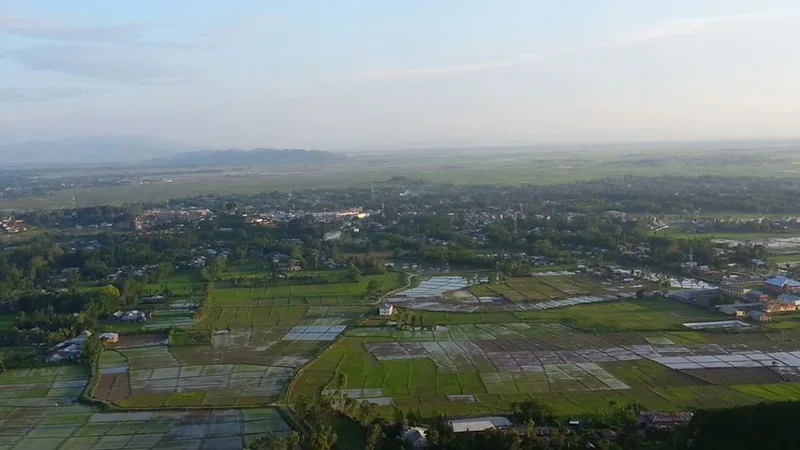
Thanga is the largest island in Loktak Lake, the great freshwater lake of central Manipur, and the main island of a small archipelago that also includes Sendra and Karang. Politically the island village extends onto a strip of adjoining mainland. Life here is shaped entirely by the lake: families fish its waters, build homes near its shore, and live alongside the phumdi — natural floating islands of matted reeds and vegetation that drift across the lake's surface. With its temples, lemon gardens, lakeside viewpoints and floating homestays, Thanga offers one of the most atmospheric and authentic ways to experience Loktak.
The island is deeply tied to Sanamahism, the traditional Meitei religion, and is studded with shrines to local deities — patron gods of the island, dragon-lion figures and lake spirits. The annual Lai Haraoba festival fills the temple grounds with ritual dance and music for weeks at a time. Thanga sits right beside Keibul Lamjao National Park, the world's only floating national park and home of the endangered Sangai deer, making it a natural base for lake-and-park exploring.
The climate is temperate: hot and humid in summer (April–June), cool to cold on winter nights (November–January). The dry, mild winter is the best time to visit — comfortable for boating, walking and birdwatching — while the monsoon (June–September) raises the lake and brings heavy rain.
Planning Thanga? Tell us your dates and we’ll tailor the trip.
Ask on WhatsAppHow do you get there?
By Plane
The nearest airport is Imphal International Airport (IATA: IMF), roughly 45–50 km north of Thanga. Imphal is connected by regular flights to Kolkata, Delhi, Guwahati, Agartala and Aizawl. From the airport, hire a taxi or take a shared cab south toward Moirang and on to Thanga; allow around 1.5–2 hours by road.
By Car / Road
Thanga's main island is connected to the mainland and reached by road from the south of Imphal, passing the lakeside town of Moirang nearby. The valley route from Imphal is reasonably maintained. Shared taxis and minivans run from Imphal toward Moirang and the Loktak shore; from there a local taxi or short boat hop reaches the island. To explore the smaller islands of the archipelago, you switch to boats.
On the water, the way to get around is by boat — motorboats, rowing boats and canoes ferry people between Thanga, Karang Island and Sendra, and out among the phumdi. On the main island, the village and its temples are best explored on foot, with local taxis or hired vehicles useful for the mainland stretch. There are no autorickshaws, metro or ride-hailing apps; arrange boats and transport locally, and agree the fare before setting off. Floating homestays and floating restaurants are part of the experience here.
What are the things to do?
- Keibul Lamjao National Park (Keibul Lamjao Leipakki Lampak) — the world's only floating national park and the last natural home of the dancing deer, Sangai (Cervus eldi eldi); boating, hiking, camping and birdwatching opportunities.
- Sendra (Sendra Ithat), a hillock island south of Imphal, open 24/7 — its hilltop watchpoint gives a sweeping bird's-eye view over most of Loktak Lake; there are holiday resorts on the heights.
- Loktak Folklore Museum, Thanga Tongbram Leikai, Panathabam Leirak, on the northern shoreline of the main island (☏ +91 9436444845). Open 8:30AM–6PM (including Sunday); displays artistic, cultural and historical artefacts of the island people. Entry ₹10 (Indian adult), ₹5 (Indian child), ₹50 (foreigner).
- Karang Island (Karang Ithat), north of Thanga main island, open 24 hours — many temples of the god Khuman Pokpa of Sanamahism; reached by motorboat, rowboat or canoe. Entry free apart from transport charges.
- Lai Nongshaba Temple (Lainingthou Nongshaba Laishang), Thanga Oinam Leikai, southern shoreline, 24/7, free — a temple of the dragon-lion Nongshaba; the Lai Haraoba festival fills it with dance and music for a month.
- Chingningthou Laiphamlen Temple, southern shoreline, 24/7, free — dedicated to Ching Ningthou, patron deity of Thanga island.
- Khwairakpam Lairembi Temple (southern shoreline) and the two Ibudhou Cheirenlakpa/Cheirelakpa Khubham temples (one on the eastern shoreline, open 24/7; one on the northern shoreline, open 5AM–5PM) — all Sanamahi shrines, free to enter; note the two similarly named Cheirenlakpa/Cheirelakpa temples are distinct.
- Lemon Tea Garden (Champra Chaa Heikol Leikol), Thanga Heisnam Leikai, open 8AM–6PM — a lemon garden serving lemon tea and light refreshments.
- Pukham Chingdon Tower Eagle House, 24/7, free — a hiking area with backpacking, camping and hillwalking trails.
Thanga is an outdoors and water destination. Boating by motor, rowing boat or canoe, kayaking and fishing are central to island life and easy to arrange. On land, hiking, backpacking and trekking trails — including the Pukham Chingdon Tower area — climb to lake viewpoints, and the island rewards nature photography, picnics and quiet rambling. Many visitors also come for religious pilgrimage to the Sanamahi temples, especially during the Lai Haraoba festival, and combine the island with boat trips into neighbouring Keibul Lamjao National Park.
Planning Thanga? Want these on a customised itinerary?
Ask on WhatsAppWhere to eat?
Food on Thanga is built around the lake — traditional fish dishes of every kind, from light curries to fermented preparations, served with rice. Santa Hotel (open 9AM–5PM) is a known spot, serving local specialities including the day's fresh lake fish. Floating restaurants on Loktak offer the most memorable setting for a meal, and homestay kitchens cook simple, hearty Meitei fare. Vegetarian travellers can usually arrange rice with vegetable dishes, but fish and fermented fish are near-universal — state dietary needs clearly when ordering.
Where to drink?
The everyday drink is hot tea — and the Lemon Tea Garden at Thanga Heisnam Leikai is a pleasant stop for lemon tea and light refreshments. Locally made brews, the traditional rice beer of the lake communities, are available informally; Manipur restricts alcohol sales, so drink discreetly and respectfully. Treat lake and tap water as unsafe to drink — carry sealed bottled water or boiled and filtered water.
Planning Thanga? We’ll book the stays and dining for you.
Ask on WhatsAppWhere to stay?
- Budget: Simple homestays in Thanga village offer the most authentic and affordable stays; ask locally on arrival.
- Mid-range: Floating homestays on Loktak Lake are Thanga's signature accommodation — basic but unforgettable, set out on the water. Lakeside lodges around the island and shore offer similar mid-range comfort.
- Upscale / heritage: The nearby Sendra Island hilltop has holiday resorts with lake views, the closest thing to an upscale stay in the area; for full higher-tier hotels, Imphal is about 45–50 km away.
What should you buy?
Thanga's market reflects its lake economy. The things to buy are varieties of fresh fish straight from Loktak, and traditional fishing nets — a distinctive and practical local craft. Buying happens informally at the village and along the shore rather than in a formal market complex; light bargaining is acceptable. Carry essentials with you, as shops are small and scattered.
Where to go next?
- Sendra Island (a short boat or road hop) — hilltop watchpoint with panoramic Loktak views and holiday resorts.
- Keibul Lamjao National Park (adjacent) — the world's only floating national park and home of the Sangai deer.
- Karang Island (north of Thanga) — temple island of the god Khuman Pokpa, reached by boat.
- Moirang (near the Loktak shore) — historic town with the INA memorial complex and museum.
- Imphal (~45–50 km, ~1.5–2 hr) — the state capital, with Kangla fort and the Ima Keithel market.
Nearby in Manipur
More places to explore around Thanga.

Guide content as of May 2026. Portions adapted from Wikivoyage, CC BY-SA 4.0.

Contact Us
Get in touch with us.
Get in touch
Contact Us
Tell us where you'd like to go and how you like to travel. A real Tripcuro planner — not a bot — will craft an itinerary around you.
- Personalised, hassle-free planning end-to-end
- Transparent pricing, no hidden costs
- 24/7 support for complete peace of mind