
Pachmarhi
Madhya Pradesh, India
Why visit Pachmarhi?
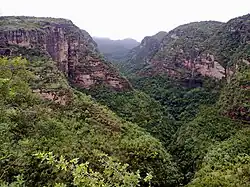
Pachmarhi is the only hill station in central India — a leafy plateau in the Satpura range at roughly 1,100 m (3,500 ft) above sea level, set among streams, waterfalls, sandstone ravines and dense forest. Locals call it Satpura ki Rani, the Queen of Satpura. The town sits inside the Pachmarhi Biosphere Reserve, created in 1999, which knits together two forest reserves and Satpura National Park into a single conservation landscape. Nearby Dhupgarh is the highest point in central India.
The hill station owes its modern form to Captain James Forsyth of the British army, who reached the plateau in 1857; alongside him was Subhedar Major Nathooramji Powar, later made Kothwal of Pachmarhi. The British turned it into a sanatorium and military retreat for the Central Provinces, and it served as a summer capital. That legacy survives in colonial bungalows, a cantonment that still occupies much of the plateau, and three handsome churches with stained glass imported from Europe. Pachmarhi is also dotted with ancient rock-shelter cave paintings, some thought to be thousands of years old, and several sandstone caves tied to the Pandava legend that gives the town its name.
The best months are roughly October to April, when days are crisp and clear. The monsoon (June to September) makes the waterfalls thunderous and the forest vivid green but can wash out trails and roads. Summers are mild compared with the plains below — exactly why the British came — though midday can warm up. The town is compact: a small bazaar near the bus stand, the cantonment area, and viewpoints and falls scattered within a 5–8 km radius.
Planning Pachmarhi? Tell us your dates and we’ll tailor the trip.
Ask on WhatsAppHow do you get there?
By Train
The nearest railhead is Pipariya, about 47 km away on the Mumbai–Howrah main line, with good connections to Bhopal, Jabalpur, Nagpur and beyond. From Pipariya station, taxis and shared jeeps run up the ghat road to Pachmarhi (roughly 1.5 hours). Book onward seats early during peak holiday season.
By Car / Road
Pachmarhi is reached by a winding ghat road that climbs onto the plateau. By road it is about 210 km from Bhopal and around 244 km from Jabalpur; Itarsi and Pipariya are the usual approach towns. State-run and private buses serve Pachmarhi from Bhopal, Itarsi, Pipariya and Jabalpur, and there are services from Nagpur — Maharashtra State Road Transport has run 2x2 luxury buses that take around 8 hours. The final climb is scenic but slow; allow extra time.
Sights are spread within a 5–8 km radius, so the practical way to get around is a hired four-wheeler — the Maruti Gypsy is the standard Pachmarhi vehicle, suited to forest and trail roads. Gypsies can be hired in the open market or arranged through your hotel with local operators. A more economical option is a shared Gypsy tour: operators assemble groups by preference (families and couples kept separate from large groups of young men), but you will have to ask around, since most operators push full-vehicle hire. The small bazaar area is walkable, and many viewpoints involve short walks or treks from the road head; a few sights lie inside Satpura National Park and require park permits and guides.
What are the things to do?
Waterfalls and pools
- Apsara Vihar (Fairy Pool) — Easily reached from Jai Stambh; a shallow picnic pool that deepens toward the base of the fall, good for families with young children.
- Rajat Prapat (Silver Fall) — Pachmarhi's "big fall", reached by a roughly ten-minute scramble over rocks and boulders from Apsara Vihar.
- Jamuna Prapat (Bee Fall) — A spectacular fall on the stream that supplies Pachmarhi's drinking water; the bathing pools above it are very popular.
- Jalawataran (Duchess Falls) — A strenuous trek of about 4 km with a steep descent to the base of the first cascade.
- Chhota Mahadeo — A narrow point in the valley where rocks overhang a stream and a spring cascades down; revered as a sacred spot.
Viewpoints
- Dhupgarh — The highest point in the Satpura range and in central India, famous for sweeping sunset views over the surrounding ranges.
- Handi Khoh — Pachmarhi's most dramatic ravine, with a precipice some 300 feet high and steep sides.
- Priyadarshini (Forsyth Point) — The vantage point from which Captain Forsyth is said to have first seen Pachmarhi in 1857.
Caves, shrines and heritage
- Pandav Caves — Five ancient dwellings cut into a low sandstone hill; legend ties them to the five Pandava brothers, and they give the town its name. Now protected monuments.
- Jata Shankar — A sacred cave beneath loose boulders, source of the Jambu Dwip stream; a rock formation resembling Shiva's matted locks gives it its name.
- Mahadeo — A long-revered hill shrine with an idol of Shiva and a large Shivlinga; an East-side cave shelter has fine paintings.
- Chauragarh — About 4 km from Mahadeo, a prominent Satpura summit crowned with emblems of Shiva worship; a steep pilgrim climb.
- Bison Lodge — Built in 1862, the oldest house in Pachmarhi, now a museum on the area's flora and fauna.
- Christ Church — Built in 1875; a pillarless nave, a domed sanctum with angel-faced ribs, European stained glass and an old brass baptismal font.
- Catholic Church — Built in 1892, blending French and Irish styles, with Belgian stained glass and a cemetery whose graves date from 1859 and the two World Wars.
The cave shelters — Prehistoric rock-shelter paintings ring the plateau: Dhuandhar (off the Apsara Vihar path) with archers in Gond style; Bharat Neer (Dorothy Deep) with animal paintings; Asthachal (Monte Rosa); Harper's Cave, named for a figure playing a harp near Jata Shankar; and shelters along Jambu Dwip valley with a detailed battle scene.
Satpura National Park — Established in 1981 and covering some 524 sq km of sal, teak and bamboo forest, the park shelters tiger, leopard, bear, gaur, four-horned deer (chousingha), blue bull (nilgai) and abundant birdlife. Safaris run on jeep, on foot and by boat on the Tawa reservoir; entry requires park permits and guides.
- Chase the waterfalls — Bring a change of clothes; nobody leaves the falls undrenched.
- Trek to Chauragarh or Dhupgarh — Carry plenty of water and food on the Chauragarh climb in particular, and start early.
- Wildlife safari in Satpura National Park — Walking safaris and boat safaris on the Tawa reservoir make Satpura distinctive among Indian tiger reserves.
- Hunt for rock art — Several cave shelters with prehistoric paintings can be reached on foot from the main trails.
- Sunset at Dhupgarh — The classic end to a Pachmarhi day; arrive with time to spare as crowds gather.
Planning Pachmarhi? Want these on a customised itinerary?
Ask on WhatsAppWhere to eat?
Food in Pachmarhi is straightforward and reliable — you will not struggle to find a meal, and the town is a good place for vegetarian, Jain, Gujarati and Maharashtrian fare. Chunmun Cottage, near Bee (B) Fall and the lake, is a long-standing favourite and well placed for covering nearby viewpoints after lunch. Beyond that, simple dhabas and hotel dining rooms around the bazaar serve North Indian thalis, snacks and South Indian breakfasts.
Where to drink?
There are open liquor shops and bars around the town for those who want a drink. For non-alcoholic options, expect chai stalls, fresh-lime sodas and local honey-based offerings. As anywhere in the region, stick to bottled or properly filtered water.
Planning Pachmarhi? We’ll book the stays and dining for you.
Ask on WhatsAppWhere to stay?
- Budget — The Youth Hostel is a good cheap option for students and pilgrim travellers. Good-value rooms can also be found about 2 km from the bus stand in quiet locations. Nandan Van Cottages (☏ +91 7578 252018), run by the Special Area Development Authority (SADA), is economical and well regarded, from around ₹550; check-in and check-out at noon.
- Mid-range — Hotel Utkarsh, Subhash Rd ([email protected], ☏ +91 7578252162), in the heart of town, has economy and executive AC rooms and a family hall, roughly ₹800–4,000; off-season discounts and group rates available; check-in and check-out at noon.
- Upscale / heritage — Madhya Pradesh Tourism (MPT) runs several properties on the plateau, and private cottages such as Chunmun Cottage suit leisure travellers. Verify current MPT property names and rates at booking.
What should you buy?
Pachmarhi is best known for its forest honey — do not leave without a jar. The plateau is also associated with Ayurvedic herbs and medicines, gathered from the surrounding biosphere. The small bazaar near the bus stand has the usual hill-station stalls; bargaining is normal at open stalls but not at fixed-price shops.
Where to go next?
- Bhopal (~210 km) — Madhya Pradesh's capital, a mix of old and new with mosques, temples and lakes; the rock-shelter site of Bhimbetka lies nearby.
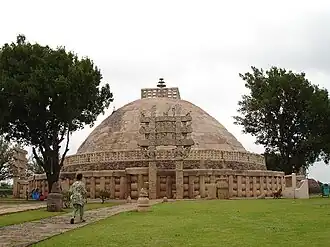
- Sanchi (~241 km) — The great Buddhist stupa complex, a UNESCO World Heritage Site.
- Jabalpur (~244 km) — Gateway to the Marble Rocks gorge and Dhuandhar Falls on the Narmada.
- Bhimbetka — UNESCO-listed prehistoric rock shelters, reachable via Bhopal.
- Nagpur — Major Maharashtra city famous for its oranges, with onward connections.
Nearby in Madhya Pradesh
More places to explore around Pachmarhi.
Guide content as of May 2026. Portions adapted from Wikivoyage, CC BY-SA 4.0.

Contact Us
Get in touch with us.
Get in touch
Contact Us
Tell us where you'd like to go and how you like to travel. A real Tripcuro planner — not a bot — will craft an itinerary around you.
- Personalised, hassle-free planning end-to-end
- Transparent pricing, no hidden costs
- 24/7 support for complete peace of mind