
Gwalior
Madhya Pradesh, India
About Gwalior
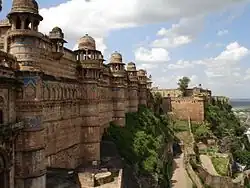
Gwalior (ग्वालियर) is a historic city in northern Madhya Pradesh, dominated by one of India's most magnificent hill forts. The fort crowns a long, sheer sandstone plateau rising above the city, and its battlements, palaces, temples and rock-cut sculptures have witnessed waves of rulers — Pratiharas, Tomars, Mughals, Marathas and the Scindias, who made Gwalior their princely capital. The Scindia legacy is visible everywhere, from the opulent Jai Vilas Palace to the Italianate gardens of Phool Bagh.
Beyond its forts and palaces, Gwalior holds a special place in Indian culture as a cradle of Hindustani classical music. The legendary singer Tansen, one of the nine jewels of Akbar's court, is buried here, and his memory is honoured each winter at the Tansen Music Festival. The city's character blends this artistic refinement with the workaday bustle of a regional commercial hub; the older quarters of Lashkar and Kampoo hum with bazaars, while the City Centre district holds newer malls and hotels.
Gwalior has an extreme climate. Winters can dip near 1°C on the coldest nights but typically range a comfortable 6–21°C, while summer days can soar toward 45–48°C. The monsoon arrives in the third week of June and tails off by late September. The best months to visit are September to November and February to March; April to August is uncomfortably hot and sightseeing is inadvisable.
Planning Gwalior? Tell us your dates and we’ll tailor the trip.
Ask on WhatsAppHow to reach
By Plane
Gwalior Airport (IATA: GWL), which shares its site with an Indian Air Force base, has scheduled domestic flights connecting cities such as Delhi, Mumbai, Ahmedabad, Bengaluru, Kolkata, Hyderabad and Indore. The airport is a short drive from the city; taxis and auto-rickshaws are available — agree the fare before setting off.
By Train
Gwalior Junction is exceptionally well connected, lying on the busy north–south trunk route. New Delhi is reachable in under three hours aboard the Vande Bharat Express, India's fastest train, and there are direct services to Jammu, Chandigarh, Amritsar, Dehradun, Ahmedabad, Nagpur, Mumbai, Bengaluru, Hyderabad, Chennai, Patna and Kolkata, among others. Reservations can be made at the station or online at irctc.co.in. From the station, auto-rickshaws and shared tempos run to all parts of the city around the clock; use the prepaid auto booth, or negotiate the fare before hiring.
By Car / Road
Gwalior sits on the north–south corridor of NH 44, and the Agra–Mumbai highway links it to Delhi, Agra, Indore and Mumbai. Approximate distances: Agra about 120 km, Jhansi about 100 km, Orchha about 120 km. State road transport corporations of Madhya Pradesh, Rajasthan and Uttar Pradesh run frequent buses, and private operators offer luxury coaches on selected routes; the main bus stand is near the railway station.
Around the fort, auto-rickshaws and cycle-rickshaws are the easiest way to get about, and walking is viable if you have time and energy for the climb. Tempos (shared auto-rickshaws) are the cheapest option for moving across the city but you will share the ride with other passengers on fixed routes. Auto-rickshaws are pricier but convenient for reaching interior neighbourhoods — note that they do not have fare meters, so always negotiate before you set off. City and intercity buses depart from the stand near the railway station.
Things to do
Gwalior Fort
- Gwalior Fort — the city's crowning sight, a vast hilltop citadel reached by a steep approach lined with monumental Jain rock-cut sculptures (the Siddhachal Caves and Gopachal). Its highlight is the Man Singh Palace, a 15th-century palace famous for its turquoise-tiled facade and atmospheric underground chambers.
- Teli Ka Mandir — the tallest structure in the fort, an unusual temple blending North and South Indian architectural styles.
- Sas Bahu Temples — a pair of intricately carved 11th-century temples within the fort, celebrated for their dense sculptural ornament.
- Gujari Mahal Archaeological Museum — set in a palace at the foot of the fort, displaying terracotta, bronze and stone sculptures, paintings, inscriptions and weapons from the Sunga, Gupta and Pratihara periods. Entry ₹10 for Indians, ₹100 for foreigners; children under 15 free.
- Gurudwara Data Bandi Chhod — a major Sikh shrine within the fort, marking the imprisonment and release of Guru Hargobind Sahib.
- Other fort structures worth a look include Jahangir Mahal, Karan Mahal and Vikram Mahal.
Palaces, memorials and museums
- Jai Vilas Mahal — the lavish 19th-century Scindia palace, now a museum, famed for housing among the world's largest chandeliers and a vast collection of antiques, art and curiosities. Entry ₹140 for Indians, ₹800 for foreigners, plus ₹100 for a camera.
- Tomb of Tansen — the resting place of the legendary musician, set in a peaceful garden beside the Tomb of Muhammad Ghaus, a fine example of early Mughal architecture.
- Chhatris of the Scindia Dynasty — elegant domed memorial pavilions, built from 1817 onward in memory of the Scindia rulers.
- Moti Mahal — a former Scindia palace, now used as government offices, near the Italian Garden and Phool Bagh.
Temples
- Sun Temple (Surya Mandir) — a striking modern temple in red sandstone and white marble, built in 1988 by industrialist G.D. Birla and modelled on the Sun Temple at Konark.
- Gopachal — on the fort approach, home to a colossal seated statue of the Jain Tirthankara Parshvanath, said to be the largest of its kind.
Gardens and parks
Italian Garden — a family picnic spot near Gwalior Zoo in the Phool Bagh area, with Italian-style fountains, lawns and boating at the adjoining Baiji Ki Tal; open roughly 6AM–6PM.
Gwalior Zoo — a compact zoological park whose residents include a white tiger, golden pheasants, sambar and bison.
Climb the fort at golden hour — explore the palaces, temples and rock-cut sculptures, and stay for the evening light-and-sound show that narrates Gwalior's long history.
Attend the Tansen Music Festival — a renowned winter celebration of Hindustani classical music held near the Tomb of Tansen, drawing leading vocalists and instrumentalists.
Visit the Gwalior Trade Fair — the biggest fair in Madhya Pradesh, a colourful spectacle that runs from the second week of January into February, full of shopping, rides and entertainment.
Boating at Tighra Dam — a popular outing spot on the city's edge, with boating and water activities.
Day-trip to Orchha or Datia — easy excursions to nearby temple-and-palace towns.
Planning Gwalior? Want these on a customised itinerary?
Ask on WhatsAppFood & Dining
Gwalior's food culture leans toward hearty North Indian fare, and locals take breakfast seriously — kachoris and samosas served with spiced potato curry and chutney, followed by sweets such as jalebi and rabri. A signature winter treat is gajak, a brittle sweet made of jaggery and sesame seeds. Achar accompanies most thali meals.
- SS Kachoriwala (Naya Bazar Road, Kampoo, Lashkar) — a Gwalior institution for over 60 years; the kachoris, samosas and jalebis are not to be missed, especially the potato-stuffed bedai kachori. Budget.
- Bahdura Sweets (Lohiya Bazaar Road) — famed for ladoos and gulab jamun, all made in pure ghee. Budget.
- Double Hatth Ras (Gandhi Road, Thatipur) — a popular multi-cuisine restaurant. Mid-range.
- Kwality (Captain Upmanyu Singh Marg, City Centre) — a long-established multi-cuisine restaurant. Mid-range.
- Volga (Jayendraganj, Shinde Ki Chhawani) — a well-known restaurant in the heart of the old city. Mid-range.
- For a calmer meal, the restaurant at The Usha Kiran Palace offers refined dining in heritage surroundings. Upscale.
Vegetarian food is abundant and easy to find throughout the city.
Cafes & Nightlife
Masala chai, lassi and fresh seasonal juices are the everyday drinks, sold at stalls across the bazaars. For coffee, the Indian Coffee House in the Kampoo area is a dependable old-style spot, and there are café chains in the malls and at Usha Kiran Palace. Nightlife is limited — D'N'D, on the second floor of Dindayal City Mall on MLB Road, has long been the city's main discotheque-bar. Tap water is not safe to drink; stick to sealed bottled water.
Planning Gwalior? We’ll book the stays and dining for you.
Ask on WhatsAppPlaces to Stay
Budget
- Hotel Surbhi (Naya Bazar, Lashkar) — a simple hotel with deluxe, AC and executive rooms; rates roughly ₹1,000–2,000 per night.
- Tansen Residency (Gandhi Road) — a government tourist lodge offering reliable, modestly priced rooms.
Mid-range
- The Central Park (Madhav Rao Scindia Marg, City Centre) — a comfortable 3-star deluxe hotel in a central location; rates around ₹5,000–6,000 per night.
- Landmark (Manik Vilas Colony, Jhansi Road) — a convenient mid-range hotel near the railway station; rates around ₹4,000 per night.
Upscale / heritage
- The Usha Kiran Palace (Jayendraganj, Lashkar) — Gwalior's flagship heritage hotel, a former Scindia residence beside the Jai Vilas Palace; rates from around ₹10,000 per night.
What to buy
Handicrafts and stone art are Gwalior's local specialities, reflecting the carving traditions visible on the fort's monuments. The bazaars of Lashkar — including Naya Bazar and Lohiya Bazaar — are good for textiles, lacquerware, leather goods and everyday shopping, with bargaining the norm. For a modern, fixed-price experience, DD Mall on MLB Road is a large complex with brand-name stores, a multiplex and familiar food chains.
Go next
- Agra (about 120 km) — home of the Taj Mahal, Agra Fort and Fatehpur Sikri.
- Orchha (about 120 km) — a romantic riverside town of Bundela palaces, cenotaphs and temples.
- Datia (about 75 km) — known for its towering seven-storey Bir Singh Palace and Pitambara Peeth temple.
- Jhansi (about 100 km) — historic fort city associated with Rani Lakshmibai.
- Shivpuri (about 120 km) — a former Scindia summer capital with marble chhatris and Madhav National Park.
- Bhind (about 64 km) — set in the rugged Chambal ravine country, with the chhatri of Malhar Rao Holkar.
Nearby in Madhya Pradesh
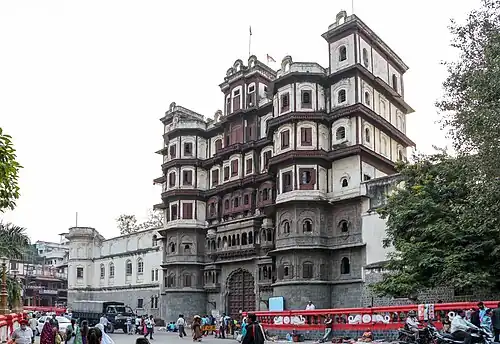
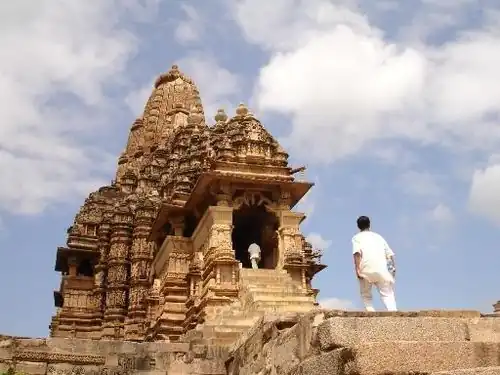
More places to explore around Gwalior.


Portions adapted from Wikivoyage, CC BY-SA 4.0.

Contact Us
Get in touch with us.
Get in touch
Contact Us
Tell us where you'd like to go and how you like to travel. A real Tripcuro planner — not a bot — will craft an itinerary around you.
- Personalised, hassle-free planning end-to-end
- Transparent pricing, no hidden costs
- 24/7 support for complete peace of mind