
Srinagar
Jammu and Kashmir, India
About Srinagar
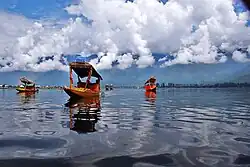
Srinagar, the summer capital of the Indian union territory of Jammu and Kashmir and the largest city of the Kashmir Valley, is one of South Asia's most distinctive cities — a place defined by water. Built along the banks of the Jhelum River and around the great expanse of Dal Lake, it is famous for its shikara boats, ornate houseboats, Mughal pleasure gardens and the wooden architecture of its old quarter. The name, a compound of Kashmiri words, means either the "city of Lakshmi" or the "city of the Sun".
The city's appeal lies in the slow, water-bound rhythm of life: floating vegetable markets at dawn, gardens climbing the Zabarwan foothills, and the soft light over the lake at dusk. Srinagar is also a centre of Kashmiri craft — papier-mâché, walnut woodcarving, pashmina and carpets — and of a refined cuisine built around the multi-course wazwan feast. The old city around the Jhelum, with its shrines, mosques and timber houses, contrasts with the lakeside Boulevard and the leafy civil-lines areas.
Most visitors come in summer (roughly May to September), when days are cool to pleasant and the gardens are in bloom; light layers handle the occasional cool evening. Winters are cold, with snow and limited hot water in cheaper lodgings — bring full winter gear. Travellers should note that Srinagar has, at times, seen periods of unrest and heightened security; check current travel advisories before planning, register on arrival as required for foreign nationals, and expect a visible security presence at the airport and on city streets.
Planning Srinagar? Tell us your dates and we’ll tailor the trip.
Ask on WhatsAppHow to reach
By Plane
Sheikh ul-Alam International Airport (SXR), commonly called Srinagar Airport, lies about 12–15 km south of the city centre. It handles domestic flights from Delhi, Mumbai and other cities, sometimes via Jammu, plus seasonal Hajj charters. Winter flights are frequently delayed or cancelled by weather. The airport is heavily patrolled and requires a printed ticket for entry, both arriving and departing — allow about an hour to reach it from the city, as security checks slow traffic. A taxi into town runs in the region of ₹700–900; a minibus serves the Tourist Reception Centre (TRC), about 1 km from Dal Lake.
By Train
Srinagar railway station sits on the Kashmir Railway (the Jammu–Baramulla line). It is served by regular passenger trains from Banihal and express services, including a Vande Bharat Express, from Katra. Express trains from mainland India terminate at Katra or Jammu, so travellers change there to reach the Valley. The line is scenic but subject to weather disruption in winter.
By Car / Road
Srinagar connects to Jammu (about 270–300 km) via National Highway 44, a winding mountain route that can take 7–10 hours depending on conditions, landslides and convoy restrictions. Shared Tata Sumos from Jammu cost roughly ₹300–400 per person, or ₹1,900–2,700 for a private vehicle; for comfort, request a middle-row seat. JKSRTC buses from Jammu cost around ₹350 and take longer. Direct buses from Delhi run close to 24 hours. Onward roads lead to Gulmarg (~1.5 hr), Pahalgam (~2.5 hr) and Sonamarg (~80 km).
Autorickshaws are found everywhere, and private service buses run well-networked routes to major sights. Negotiate the fare before getting in — rickshaw drivers are notorious for "up to you" pricing that turns into overcharging on arrival; a passer-by can usually help translate. Taxis are available for sightseeing circuits and can be hired for the day. On Dal Lake, the shikara is the local "taxi": fix the price and route first. The old city is best explored on foot, though traffic can be dense.
Things to do
Lakes and waterways
- Dal Lake — Srinagar's signature sight, a 21 km² lake at the city's heart, best explored by shikara through floating gardens, the floating market and houseboat colonies; sub-lakes include Gagribal, Lokut Dal, Bod Dal and Nigeen.
- Nigeen Lake — A quieter, exceptionally pretty lake connected to Dal by a narrow channel, at the foot of Hari Parbat.
- Char Chinar — Two square island gardens in Dal Lake, Rupa Lank (Silver Island) and Sona Lank (Gold Island), each marked by four chinar trees at its corners.
Mughal and floral gardens
- Nishat Bagh — The "garden of bliss" on Dal's eastern bank, laid out in 1633 by Asaf Khan, with terraced lawns against the Zabarwan range.
- Shalimar Bagh — The grandest of the Mughal gardens, built by Emperor Jahangir for Nur Jahan.
- Chashme Shahi — The smallest Mughal garden, on a triple terrace fed by a natural spring, with fine lake views.
- Indira Gandhi Memorial Tulip Garden — Asia's largest tulip garden, on the Dal's eastern foothills; spectacular in April during the Tulip Festival, otherwise seasonal.
- Jawaharlal Nehru Memorial Botanical Garden (Nehru Garden), off Dal Gate — A well-kept lakeside park; adult entry around ₹10.
Shrines and the old city
- Hazratbal Shrine — A revered white-marble mosque on the western shore of Dal Lake.
- Jamia Masjid — A grand wooden mosque in the old city, supported by hundreds of deodar pillars.
- Shankaracharya Temple — An ancient Shiva temple atop a hill, with panoramic views over the city and lake.
A shikara ride across Dal Lake at sunrise or sunset is the essential Srinagar experience, drifting past floating gardens and the dawn vegetable market. Stay a night on a traditional houseboat for the full effect. Browse the floating market and carpet workshops reachable only by boat, and watch artisans at work on papier-mâché and woodcarving. Walk the old city's lanes between the Jhelum's seven historic bridges, taking in shrines and timber mansions. The city is also the springboard for day trips to the meadows of Gulmarg and the valleys around Pahalgam and Sonamarg.
Planning Srinagar? Want these on a customised itinerary?
Ask on WhatsAppFood & Dining
Kashmiri cuisine centres on the wazwan, a lavish multi-course meal of mutton dishes — rogan josh, gushtaba, rista — slow-cooked by hereditary chefs called wazas. Everyday eating runs to haakh (collard greens), rajma, nadru (lotus stem) and saffron-tinged rice. Ahdoos on Residency Road is a long-standing institution for classic Kashmiri wazwan. Mughal Darbar, also central, is another reliable name for traditional fare. Lakeside cafés and the restaurants on houseboats serve simpler meals with a view. Vegetarian options are easy to find — haakh, dum aloo and nadru dishes are valley staples — and most meat served is halal.
Cafes & Nightlife
No visit is complete without kahwa, the fragrant green tea infused with saffron, cardamom, cinnamon and crushed almonds, and noon chai (nun chai), the pink salt tea taken with bread at breakfast. Both are served everywhere, from lakeside stalls to houseboats. Alcohol is available at hotel bars and licensed outlets but is far less prominent than in many Indian cities. Tap water is not reliably safe; drink sealed bottled or properly filtered water.
Planning Srinagar? We’ll book the stays and dining for you.
Ask on WhatsAppPlaces to Stay
- Budget: Numerous guesthouses around Dal Gate and the old city, plus modest houseboats on Nigeen Lake, offer simple rooms; off-season rates can be very low, though winter lodgings may lack hot water.
- Mid-range: Houseboats on Dal and Nigeen lakes are the classic mid-range choice — carved-walnut interiors, full board and a shikara at the steps; many lakeside hotels along the Boulevard offer comparable comfort.
- Upscale / heritage: The Lalit Grand Palace Srinagar, a former Maharaja's palace set in gardens above Dal Lake, and Vivanta Dal View on the Zabarwan foothills provide heritage character and full-service luxury; premium deluxe houseboats offer an atmospheric alternative.
What to buy
Srinagar is a treasure-house of Kashmiri craft. Look for hand-knotted carpets and namda rugs, pashmina and shahtoosh-style shawls, crewel and chain-stitch embroidery, papier-mâché boxes, walnut-wood carvings, and saffron from the fields around Pampore. The floating market and lakeside hawkers sell shawls, woodwork and saffron, while the Lal Chowk area, Polo View and Residency Road hold the main land-based shops. Bargaining is firmly expected, especially on the lake; government emporiums offer fixed prices and a useful quality benchmark.
Go next
- Gulmarg (~50 km, ~1.5 hr) — High meadows, a famous gondola and India's premier ski terrain.
- Pahalgam (~90 km, ~2.5 hr) — A riverside resort town and base for treks and the Amarnath Yatra.
- Sonamarg (~80 km, ~2.5 hr) — The "meadow of gold", a glacier-fringed valley on the road to Ladakh.
- Jammu (~270–300 km, ~7–8 hr) — The winter capital and "City of Temples" in the lower hills.
- Leh (~420 km, 2 days via Kargil) — The high-desert heart of Ladakh, over dramatic mountain passes.
Nearby in Jammu and Kashmir
More places to explore around Srinagar.

Portions adapted from Wikivoyage, CC BY-SA 4.0.

Contact Us
Get in touch with us.
Get in touch
Contact Us
Tell us where you'd like to go and how you like to travel. A real Tripcuro planner — not a bot — will craft an itinerary around you.
- Personalised, hassle-free planning end-to-end
- Transparent pricing, no hidden costs
- 24/7 support for complete peace of mind