
Panaji
Goa, India
Why visit Panaji?
Panaji (also spelt Panjim) is the capital of Goa, India's smallest state, and a city that wears its mixed heritage with quiet confidence. Set on the southern bank of the Mandovi River, it is a low-rise place of red-tiled roofs, ochre-and-white Portuguese-era facades, balconied villas and shaded plazas. Goa became part of India in 1961 after more than four centuries of Portuguese rule, and Panaji became the territorial capital in 1843 when the colonial administration shifted here from the malaria-stricken Old Goa. That Latin inheritance is most concentrated in Fontainhas, the old Latin Quarter at the eastern end of town, where narrow lanes, hand-painted house numbers and tiny chapels make for some of the most atmospheric wandering in urban India.
Panaji is compact and easily grasped. The riverside boulevard runs past the Kadamba (KTC) bus stand and the casino jetties; one block inland, 18 June Road is the main shopping street; up the hill, the leafy Altinho district holds government buildings, the Bishop's Palace and grand old homes; and to the east lie Fontainhas and the Patto business area. Miramar Beach sits at the city's western edge where the Mandovi meets the sea. Increasingly the city styles itself as a creative hub, with galleries, festivals and a year-round arts calendar centred on Kala Academy.
Goa has a tropical climate with three clear seasons. The peak window is November to February, when days are warm, dry and pleasant. March to May turns hot and humid. The southwest monsoon (June to September) brings heavy rain, lush green countryside and far fewer crowds — atmospheric, but many beach shacks and boat services pause. Aim for the cooler, dry months if it's your first visit.
Planning Panaji? Tell us your dates and we’ll tailor the trip.
Ask on WhatsAppHow do you get there?
By Plane
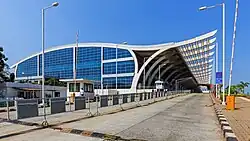
The two airports serving Panaji are Manohar Parrikar International Airport (GOX IATA, the new Mopa airport in North Goa) and the older Dabolim Airport (GOI IATA, about 35 km south near Vasco da Gama). Both have prepaid taxi counters; fixing a fare at the prepaid desk avoids haggling. App-based cabs and airport shuttle services also operate. Allow roughly an hour from either airport to central Panaji depending on traffic.
By Train
The nearest station is Karmali (station code KRMI), about 10 km east, but many express trains do not halt there. The main railhead is Madgaon Junction (Margao) on the Konkan Railway, about 45 km south, where virtually every train stops; taxis and buses connect it to Panaji. Handily, the first floor of the KTC bus stand in Panaji houses a Konkan Railway ticketing office where you can book or cancel Indian Railway tickets for a small service fee (open weekday business hours) — far easier than a trip to the station.
By Car / Road
NH-66 (the former NH-17) is the main coastal highway through Panaji, linking it with Mumbai to the north (around 590 km, a long winding drive) and Mangalore to the south (around 360 km). The road is scenic but narrow and twisting in stretches; self-driving is best left to those comfortable with Indian roads. The Kadamba (KTC) bus stand is the hub for state-run buses to Karnataka and Maharashtra, while private semi-luxury and AC Volvo coaches to Mumbai, Pune, Bangalore and Hyderabad mostly depart in the late afternoon and evening from near the Mandovi bridge. Confirm fares before buying — prices vary widely between sellers.
Central Panaji is small and very walkable; Fontainhas and the riverfront are best explored on foot. For longer hops, motorcycle taxis (locally called "pilots", riders wearing yellow-and-black) are a Goa institution — quick, cheap and good at finding obscure addresses; agree the fare first. Regular taxis (often Maruti Omni vans) and app-based cabs are available, though metered fares are rare and drivers tend to quote high, so negotiate or use a prepaid counter. Local buses run frequently to Miramar, Dona Paula, Old Goa and Mapusa from the KTC stand for very low fares. Self-drive scooters and motorcycles are widely rented; carry a licence and helmet.
What are the things to do?
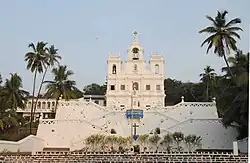
Church of Our Lady of the Immaculate Conception — Panaji's landmark, a gleaming white church with a dramatic criss-cross balustraded staircase, rising above the Municipal Garden in the city centre. Free to enter outside Mass times.
Fontainhas (Latin Quarter) — the old quarter of narrow lanes and brightly painted Portuguese-era houses, with the small Chapel of St. Sebastian at its heart. Best simply wandered, ideally in early morning light.
Altinho — the hill district above town, with heritage houses, the Bishop's Palace and the Maruti Temple on its slope; good views over the river and old quarter.
Goa State Museum, Patto (former EDC Complex) — Hindu and Jain sculptures and bronzes from the 4th–8th centuries, a Christian Art Gallery from the Portuguese period, and a printing press brought to Goa in 1556.
Mahalaxmi Temple — a centrally located Hindu temple, one of the city's older shrines.
Goa Science Centre and Planetarium, near Miramar Beach — interactive exhibits and a 3D film theatre, popular with families; modest entry fee.
Miramar Beach — a golden, palm-fringed strand where the Mandovi meets the sea, the main beach for Panaji's residents; good for a sunset stroll rather than serious swimming.
Dona Paula — a scenic headland beyond Miramar, long a favourite backdrop for Bollywood films, with views across the bay.
Kala Academy, Campal — Goa's premier cultural institution, designed by architect Charles Correa, hosting theatre, music and dance, with an open-air auditorium by the river.
Walk the Latin Quarter — set aside a morning to wander Fontainhas and Sao Tome, soaking up the Indo-Portuguese architecture, tiled house-fronts and tucked-away galleries; several operators run guided heritage walks.
Take a Mandovi River cruise — short sunset cruises with live music and folk-dance performances depart from the Santa Monica jetty near the Captain of Ports; a floating restaurant operates from the same pier.
Cross to the islands — take the free passenger ferry (vehicles pay a small fee) from Ribandar across to Chorao for fields of marsh grass, sweeping river views and deep quiet.
Visit Dr. Salim Ali Bird Sanctuary on Chorao island — mangrove birdwatching reached by causeway and ferry from Panaji.
Catch a show or film — see a play at Kala Academy's open-air theatre, or a Bollywood release at the INOX multiplex in the Old GMC heritage precinct at Campal.
Visit the Central Library — one of India's oldest public libraries, founded in 1832.
Try the casinos — floating offshore casinos on the Mandovi offer roulette, blackjack and poker; entry packages typically bundle a buffet and starter chips.
Planning Panaji? Want these on a customised itinerary?
Ask on WhatsAppWhere to eat?
Goan food is its own cuisine — a layering of Konkani, Portuguese and Catholic kitchens, big on seafood, coconut, kokum and chillies. Look for fish curry rice (the everyday staple), prawn balchao, chicken cafreal, sorpotel, the Catholic celebration meat dish vindaloo, and Hindu Saraswat dishes built around vegetables and kokum. Bakeries turn out fresh poee bread and bebinca, the layered coconut-egg dessert.
- Hotel Venite, Fontainhas — an institution on 31st January Road, with tiny wooden balconies overlooking the lane and a classic Goan menu; mid-range and atmospheric.
- Viva Panjim, Fontainhas — homely Goan cooking in a heritage-house setting down a side lane; mid-range, popular, so arrive early.
- Ritz Classic, 18 June Road area — a long-running, busy spot known for thali-style Goan fish meals at modest prices; good for a quick, authentic lunch.
- Mum's Kitchen, on the road towards Miramar — showcases regional Goan home recipes from both Hindu and Catholic traditions; mid- to upper-mid range.
- For street and snack food, the stalls around Miramar Beach do bhel puri, shawarma and Goan fast food. Vegetarian thali restaurants near the Municipal Market suit veg and Jain diets.
Where to drink?
The local spirit is feni, distilled from cashew apple or coconut sap — pungent and best tried responsibly, often with a soda or lime. Goan port-style wine and cold Kingfisher and other beers are everywhere; Goa's relaxed licensing means many cafes and restaurants serve alcohol. Non-alcoholic options worth seeking out are kokum sherbet (a tangy purple cooler), fresh coconut water, sol kadhi (a pink coconut-kokum drink, also an aid to digestion) and fresh lime soda. Panaji has a growing cafe culture, especially around Fontainhas, good for filter coffee and cake. Stick to bottled or filtered water and avoid ice from unknown sources.
Planning Panaji? We’ll book the stays and dining for you.
Ask on WhatsAppWhere to stay?
- Budget: Old Quarter Hostel in Fontainhas offers dorm beds and a sociable backpacker vibe in a heritage building, roughly ₹600–1,200 per bed. Numerous small guesthouses around Fontainhas and 18 June Road offer simple double rooms from around ₹1,200–2,000.
- Mid-range: Hotel Mandovi, the long-standing riverfront hotel on D. Bandodkar Road, has comfortable rooms with river views, typically ₹4,000–6,500. Casa Nova and other restored heritage guesthouses in Fontainhas offer characterful rooms in a similar band.
- Upscale / heritage: WelcomHotel by ITC Goa (Vivanta-style city property) and the riverside DoubleTree by Hilton Goa - Panaji on the Kadamba plateau offer full-service rooms, pools and spas, generally from ₹8,000 upwards depending on season; rates peak sharply around Christmas and New Year.
What should you buy?
Panaji's main shopping spine is 18 June Road, lined with clothing, footwear and general stores; the surrounding lanes and the Municipal Market area cover everyday needs. Good buys include Goan cashews (sold loose by grade — the larger whole nuts cost more), local spices, bottles of feni (the state's cashew or coconut spirit), port wine and Goan sweets. Fontainhas has a cluster of art galleries — Gallery Gitanjali on 31st January Road among them — for paintings, prints and azulejo-style tiles. The Saturday-night Mapusa-style markets and seasonal art fairs are worth timing a visit around. Fixed-price shops are common; bargain at market stalls and with taxi drivers, not in established stores.
Where to go next?
- Old Goa (about 9 km east) — the former colonial capital, a UNESCO World Heritage site of grand churches and convents; an easy half-day by bus.
- Mapusa (about 13 km north) — North Goa's commercial town, best on a Friday for its sprawling weekly market.
- Calangute and Baga (about 15 km north) — Goa's busiest beach belt, packed with shacks, watersports and nightlife.
- Margao (about 33 km south) — Goa's cultural and commercial second city, gateway to the South Goa beaches.
- Ponda (about 30 km southeast) — temple country, with the Mangeshi and Shanta Durga shrines and spice plantations nearby.
- Anjuna (about 18 km north) — famed for its Wednesday flea market and cliffside cafes.
Nearby in Goa
More places to explore around Panaji.
Guide content as of May 2026. Portions adapted from Wikivoyage, CC BY-SA 4.0.

Contact Us
Get in touch with us.
Get in touch
Contact Us
Tell us where you'd like to go and how you like to travel. A real Tripcuro planner — not a bot — will craft an itinerary around you.
- Personalised, hassle-free planning end-to-end
- Transparent pricing, no hidden costs
- 24/7 support for complete peace of mind