
Vasco da Gama
Goa, India
Why visit Vasco da Gama?
Vasco da Gama — known locally simply as "Vasco" — is South Goa's largest town and the workaday counterpoint to the state's beach-resort image. Named after the Portuguese navigator who first sailed the Cape Route around Africa, the town grew up around Mormugao Port, constructed in 1888 and today one of India's busiest cargo harbours, handling roughly a third of the country's ore exports. Add a major shipyard, a conspicuous Indian Navy presence and the adjacent Dabolim airport, and Vasco emerges as a dusty, commercial, distinctly un-touristy place. It was home to about 100,000 people at the 2011 census.
For travellers, Vasco is less a destination than a gateway: nearly everyone arriving by air at Goa passes within a few kilometres of it. That said, the town rewards a short stay with a few quiet corners — a hilltop garden facing the sea, a genuinely good naval museum, and easy access to a couple of near-empty beaches just past the airport. It also makes a practical, central base for exploring the rest of compact Goa.
Goa's climate is tropical. The pleasant, dry window runs roughly November to February, when days are warm and humidity is bearable. March to May turns hot and sticky, and the southwest monsoon (June to September) brings heavy rain. Vasco itself is small and easily walked: the railway station, Karma Plaza and the Municipal Garden sit at the compact heart, with Swatantra Path the main commercial spine.
Planning Vasco da Gama? Tell us your dates and we’ll tailor the trip.
Ask on WhatsAppHow do you get there?
By Plane
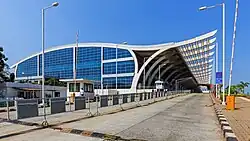
Dabolim Airport (GOI), Goa International Airport, sits on Vasco's outskirts at Dabolim, only about 4 km from the town centre — making Vasco the closest town to the airport of anywhere in Goa. It is Goa's busiest airport, served by major Indian domestic carriers and by international airlines including Qatar Airways, Kuwait Airways and SriLankan Airlines, with seasonal charter flights from Europe in winter. Prepaid taxi counters operate in the arrivals hall; the short hop into Vasco is inexpensive, and motorcycle taxis are an even cheaper option for solo travellers with light luggage.
By Train
Vasco da Gama railway station is the terminus of a branch line and has direct services to Delhi, Bengaluru, Hyderabad, Pune, Kolkata and Chennai. For Mumbai and many other destinations, change at Madgaon Junction (Margao), about 24 km away, which is Goa's principal railway hub with far more connections. Book well ahead on Indian Railways' IRCTC site or app, especially in the November–February peak season.
By Car / Road
Vasco is roughly a 30 km drive from Panaji, Goa's capital, taking around 45–60 minutes depending on traffic. The Kadamba bus stand has government and private buses to towns across Goa and longer-distance services into Karnataka and Maharashtra; major Panaji intercity routes usually have connecting services from Vasco. Roads within Goa are generally decent, though the stretch around the port can be congested with ore trucks.
Vasco's compact centre — station, Karma Plaza, Municipal Garden and Swatantra Path — is comfortably walkable. For longer hops, use buses, taxis, autorickshaws, or rent a scooter, the most flexible way to get around Goa. Distinctive yellow-and-black motorcycle taxis, whose riders are known locally as "pilots", are widely available and tend to be the cheapest option if you are travelling alone and don't mind riding pillion. App-based cabs have limited and sometimes contested coverage in Goa, so agree fares in advance and carry small change. Shops close for an afternoon siesta, so plan errands for morning or after 4PM.
What are the things to do?
- Naval Aviation Museum — On the road towards Bogmalo beach, this is Vasco's standout attraction and one of only a few naval aviation museums in Asia. The open-air park displays vintage aircraft including Sealands, Doves, Alizes, Seahawks, Vampires and Hughes helicopters, alongside newer Sea Harriers and a Super Constellation. Open Tu–Su 10AM–5PM, closed Monday.
- The "Japanese Garden", Sada — A quiet hilltop garden above the Sada area, facing the ocean. The walk up from Vasco station gives good views of ships in the Goan shipyards; at the top you can sit and watch the sea or descend a path to a small shoreside temple. Not a conventional tourist spot — calm and near-empty, best in the early morning or evening.
- Bogmalo Beach — A small, pretty cove tucked behind the airport, about 8 km from town. Pleasant for a few hours, though the water can get rough.
- Velsao Beach — A long, fine beach a little further out, often completely deserted. Not dangerous, but its emptiness can feel lonely.
- Baina Beach Sea Walk — A newer promenade along Baina beach, a relaxed stroll near the town.
Vasco is foremost a business and port town, so there is comparatively little laid on for tourists. The pleasure here is low-key: spend a few unhurried hours at the parks and beaches, walk the new sea walk at Baina, and visit the Naval Aviation Museum on the way to Bogmalo, the town's one genuine must-see. Watching cargo ships and naval vessels move in and out of Mormugao from the hilltop garden at Sada is a quietly absorbing pastime. Most travellers, though, use Vasco as a base: thanks to short distances and good connections, day trips to almost anywhere in Goa are easy. Hire a taxi or join one of the Goa Tourism Department coach tours, bookable from its Tourist Hostel.
Planning Vasco da Gama? Want these on a customised itinerary?
Ask on WhatsAppWhere to eat?
Vasco's eating scene is unpretentious and good value, strong on Goan, South Indian and "udipi"-style vegetarian fare, with the usual multi-cuisine hotels.
- Anantashram (near the Municipal Garden) — Atmospheric Goan dining under a thatched roof, with cartoons on the walls; try the handi biryani and fish dishes. Its non-AC sibling is the nearby City Shack. Mid-range.
- Annapurna (near the Municipal Market, opposite the Bata showroom) — A long-running pure-vegetarian restaurant about five minutes from the station; recommended for paneer makhanwala, biryani and fried rice, with air-conditioned family seating upstairs. Budget.
- Little Chef — A reliable spot for a Goan fish curry thali. Budget to mid-range.
- Vasco Inn (Khalap Mansion, near IOC) — An AC restaurant and bar known for Goan seafood; look for chicken cafreal, chicken vindaloo, xacuti and caldine. Mid-range.
- The Regency, Hotel La Paz Gardens (Swatantra Path, near the Municipal Garden) — Indian, continental and Goan food in an old-world hotel; the same complex houses the Chinese-only Sweet n Sour and the Harbour Bar. Mid-range to upscale.
- Coconut Creek (Bimut Vaddo, Bogmalo) — A boutique-resort restaurant by the beach, good for a more polished meal of prawn-stuffed sole or chicken cordon bleu. Upscale.
Pure-vegetarian and South Indian options are plentiful, and the beach shacks at Bogmalo cater well to Western palates.
Where to drink?
As across Goa, alcohol is cheap and easily bought — wine shops selling beer and spirits are everywhere, and most hotels have a bar (the Harbour Bar at Hotel La Paz among them). Locally, look for chilled Goan lager and feni, the state's potent cashew or coconw spirit, best sampled in small measures. For non-drinkers, fresh coconut water, sugarcane juice and South Indian filter coffee are widely sold; Temptations near the railway station is a 24-hour spot for coffee, cakes and shakes with a youthful buzz. Tap water is not safe to drink — stick to sealed bottled or filtered water.
Planning Vasco da Gama? We’ll book the stays and dining for you.
Ask on WhatsAppWhere to stay?
- Budget: Modest lodges around the station and Swatantra Path — among them Hotel Rukmini — offer simple rooms in the roughly ₹1,000–1,800 range, convenient for early flights or trains.
- Mid-range: Business-oriented hotels such as Hotel Bismark and Hotel Citadel cater to the commercial traveller, typically around ₹2,500–4,500 a night with AC and in-house dining.
- Upscale / heritage: Hotel La Paz Gardens on Swatantra Path is Vasco's best-known business hotel, an old-world property with multiple restaurants and a bar, usually ₹4,500–7,000. For a beach-side stay, the boutique resorts around Bogmalo, about 8 km away, are the more appealing choice for leisure visitors.
What should you buy?
Vasco is a practical shopping town rather than a craft destination. The Municipal Market off Swatantra Path is the place for everyday goods, fruit and fresh fish, and the streets around it have clothing stores and general shops. Karma Plaza, in the heart of town near the MMC building, is a small commercial complex with shops and fast-food outlets. For Goan souvenirs — cashews, port wine, feni, spices, tiles — selection is wider in Panaji or Margao, but liquor and packaged cashews are easy to pick up here. Prices in fixed shops are set; light bargaining is normal at market stalls.
Where to go next?
- Bogmalo (8 km) — The nearest beach, an easy escape with shacks and quiet sand.
- Margao / Madgaon (~24 km) — South Goa's commercial hub and main railway junction, with Portuguese-era streets and the Saturday night market nearby.
- Panaji (~30 km) — Goa's relaxed capital, with the Latin Quarter of Fontainhas and riverfront promenades.
- Colva and Benaulim (~25–30 km) — Long South Goa beaches with a calmer scene than the north.
- Karwar (~70 km, ~1.5 hr) — A coastal town just over the border in Karnataka, gateway to less-visited beaches.
- Hampi (~at a day's travel) — The extraordinary ruined Vijayanagara capital in Karnataka, a UNESCO World Heritage Site well worth the longer trip.
Nearby in Goa
More places to explore around Vasco da Gama.
Guide content as of May 2026. Portions adapted from Wikivoyage, CC BY-SA 4.0.

Contact Us
Get in touch with us.
Get in touch
Contact Us
Tell us where you'd like to go and how you like to travel. A real Tripcuro planner — not a bot — will craft an itinerary around you.
- Personalised, hassle-free planning end-to-end
- Transparent pricing, no hidden costs
- 24/7 support for complete peace of mind