
Ponda
Goa, India
Why visit Ponda?
Ponda (called Phonda in Konkani) sits at the green geographic heart of Goa, about 28 km south-east of the capital Panaji and 17 km north-east of Margao. Away from the crowded coast, it is a working market town surrounded by rustic, wooded villages, and the state government has dubbed it "the cultural city of Goa." It is best known for the dense cluster of Hindu temples in its taluka and for the spice plantations that have made it a hub of agro-tourism.
The town's character is rooted in history. Ponda lies in the so-called "New Conquests," the territories the Portuguese annexed late and where Catholic religious pressure was lighter. During the earlier centuries of forced conversions in Salcete and Bardez, Hindu families fleeing persecution resettled their deities here, which is why so many important temples were re-established in and around Ponda. Konkani is the everyday language, alongside Marathi, Hindi and Kannada; English works in tourist-facing places.
Ponda is best visited in the dry, cooler months from November to February. The monsoon (June to September) is heavy but turns the surrounding hills and the Dudhsagar waterfall spectacularly green, while April and May are hot and humid. The town is the gateway eastward toward Belgaum and Hubballi in Karnataka.
Planning Ponda? Tell us your dates and we’ll tailor the trip.
Ask on WhatsAppHow do you get there?
By Plane
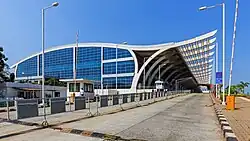
The nearest airport is Goa International Airport (Dabolim, IATA: GOI) near Vasco da Gama, roughly 35-40 km south-west, about a 1-hour drive. The newer Manohar International Airport (Mopa, IATA: GOX) in North Goa is around 50 km north. Prepaid and app-based taxis are available at both; expect roughly ₹1,000-1,500 from Dabolim by taxi.
By Train
There is no convenient mainline station in Ponda town itself. The most useful stations are Karmali (about 20 km, the closest to Panaji) and Madgaon/Margao (MAO, about 25 km), both on the Konkan Railway and South Western lines. Take a taxi or bus onward from either. Book long-distance tickets in advance via IRCTC.
By Car / Road
Ponda is well connected by road. National Highway 748 (formerly NH-4A) runs through it toward Belgaum. Panaji is about 28 km (under an hour) and Margao about 17 km. Non-stop mini-bus shuttles run between Panaji's Kadamba bus terminus and Ponda; "local" buses are slower. Margao is also linked by frequent buses.
Public transport within the taluka is limited, so it is best for hopping between main towns rather than reaching individual temples or plantations. Roads in the village areas are narrow. For temple-hopping and plantation visits, hire a taxi for the day or rent a scooter/motorbike. Autorickshaws are available in Ponda town for short trips; agree a fare before setting off, as meters are not used. App-based taxis (GoaMiles) have patchy coverage inland.
What are the things to do?
Temples — Ponda taluka has one of the densest concentrations of important temples in Goa:
- Shri Mangueshi Temple, Priol — dedicated to a form of Shiva (Manguesh); among Goa's most visited temples, on a hillock roughly midway between Panaji (22 km) and Margao.
- Shri Shantadurga Temple, Kavlem — a large white temple complex to the goddess Shantadurga, seen as a peace-bringing mediator between Vishnu and Shiva.
- Shri Mahalsa Temple, Mardol — about 1 km from Mangueshi, dedicated to Mahalsa (a form associated with Vishnu).
- Shri Ramnath Temple, Ramnathi and Shri Nagueshi Temple, Bandora — the latter noted for wood carvings depicting scenes from the Ramayana.
- Shri Mahalaxmi Temple, Bandora — holds a rare collection of wooden images of Vishnu.
- Gopal Ganapati Temple, Farmagudi — set amid greenery, built under the patronage of Goa's first chief minister, Dayanand Bandodkar.
Safa Masjid — a mosque built in 1560 by the Bijapur ruler Ibrahim Adil Shah, on the outskirts of Ponda; one of the few surviving pre-Portuguese mosques in Goa.
Butterfly Conservatory of Goa, Rajnagar, Pisgal, Priol — a butterfly park with over 100 free-flying species. Open 9:00-17:00; entry around ₹100.
Spice plantations — working farms offering guided tours and a traditional banana-leaf lunch. Notable ones include Sahakari Spice Farm (Ponda-Belgaum Road, Curti), Tropical Spice Plantation (Keri), Savoi Plantation (Savoi Verem) and Pascoal Spice Village (near Khandepar, about 8 km from Ponda town).
- Take a guided spice plantation tour — walk among pepper, cardamom, nutmeg and areca, learn about cultivation, and stay for a Goan-style lunch.
- Do a self-drive or taxi temple trail through Priol, Mardol, Kavlem, Bandora and Farmagudi.
- Visit the Bondla Wildlife Sanctuary, the smallest of Goa's sanctuaries, with a botanical garden, deer park and nature trails, reached via Ponda.
- Attend a cultural festival — Ponda is the heartland for Hindu festival celebrations and Indian classical music; the Samrat Club's annual Sangeet Sammelan (festival of song) is held at the Shantadurga Temple, Kavlem, usually in December.
- Use Ponda as a base for a day trip to the Dudhsagar Falls in Mollem, to the east.
Planning Ponda? Want these on a customised itinerary?
Ask on WhatsAppWhere to eat?
The food here is centred on Goan Hindu (Saraswat) vegetarian cooking, which is distinct from the better-known coastal Catholic cuisine — think khatkhate (a mixed-vegetable and coconut stew), tonak, sannas (steamed rice cakes) and seasonal preparations. Freshwater and estuarine fish dishes are also typical and unusual to the area. Many temples, such as the Shantadurga and Mangueshi complexes, serve simple, satvik vegetarian meals to pilgrims. The spice plantations include a hearty buffet lunch with their tours. In Ponda town itself, modest restaurants attached to hotels in the market area (such as Hotel Menino) serve good, inexpensive food. For specific high-end dining, options are limited; most visitors eat at plantations or temple canteens.
Where to drink?
Ponda is a quiet, largely temple-and-market town, so nightlife is minimal — expect small local bars rather than the beach-shack scene of the coast. Local Goan beers such as Kings and Kingfisher are widely available, as is the state's signature spirit, feni (distilled from cashew or coconut), sold in licensed shops. Fresh sugarcane juice, tender coconut water and kokum sharbat are the local non-alcoholic refreshers. Tap water is not safe to drink; stick to sealed bottled or filtered water.
Planning Ponda? We’ll book the stays and dining for you.
Ask on WhatsAppWhere to stay?
- Budget: Geetashram Lodging & Boarding (near the old bus stand) offers basic rooms; Central Tourist Home (Singbal Building, Khadpaband Road) has simple attached and non-attached rooms in the ₹150-250 range.
- Mid-range: Hotel Atish, Farmagudi — around 40 rooms (some a/c), with a multi-cuisine restaurant, bar and swimming pool; Farmagudi Hill Resort, a Goa Tourism (GTDC) property near the temple heartland, good value with rooms and dormitories.
- Upscale / heritage: Ponda has few upscale properties; most visitors seeking luxury base themselves on the coast or in Panaji and day-trip here.
What should you buy?
Ponda is a market town rather than a craft-shopping destination. The town bazaar sells everyday provisions, fresh produce and spices. Packaged local spices, cashews, kokum and natural soaps are easy to pick up at the spice plantations and at small shops near the temples, where prices are generally fixed. For larger shopping, head to Panaji or Margao.
Where to go next?
- Panaji — about 28 km (under an hour); Goa's compact, walkable capital with Portuguese-era Fontainhas.
- Old Goa — about 22 km; UNESCO-listed Portuguese churches including the Basilica of Bom Jesus.
- Bondla Wildlife Sanctuary — about 25 km; small, family-friendly sanctuary with a botanical garden.
- Mollem / Dudhsagar Falls — about 35-40 km east; jungle, the Mollem national park and Goa's tallest waterfall.
- Margao — about 17 km; South Goa's commercial hub and gateway to the southern beaches.
Nearby in Goa
More places to explore around Ponda.
Guide content as of June 2026. Portions adapted from Wikivoyage, CC BY-SA 4.0.

Contact Us
Get in touch with us.
Get in touch
Contact Us
Tell us where you'd like to go and how you like to travel. A real Tripcuro planner — not a bot — will craft an itinerary around you.
- Personalised, hassle-free planning end-to-end
- Transparent pricing, no hidden costs
- 24/7 support for complete peace of mind