
Margao
Goa, India
Why visit Margao?
Margao (Madgaon to the Indian Railways, Madgao or Modgannv in Konkani, Margão in Portuguese) is Goa's commercial and cultural heart and, after Vasco da Gama, its second-largest city by population. It is the administrative headquarters of South Goa, about 33 km south of the state capital Panaji and roughly five kilometres inland from a long ribbon of white-sand coast that an early-1970s UN study once rated among the world's ten best beaches. Crowded, hot and energetic, Margao is not a beach resort itself but the busy hub that the resort villages revolve around.
The city's name is thought to derive from "matha-grama", the village of religious maths (temple schools) — Margao was a temple town with as many as 13 temples in the mid-16th century before its principal Vaishnavi math, Jeevottam, was shifted south to Partagal. Today the Portuguese inheritance is what stands out: Margao has more grand Indo-Portuguese mansions than almost anywhere else in Goa. The Holy Spirit Church square, with its baroque church, the landscaped Praca da Alegria and the low-rise palatial houses with their balcoes and verandas, is the city's set-piece, and the lanes around Abade Faria Road, Padre Miranda Road and St. Joaquim Road towards Borda repay slow wandering.
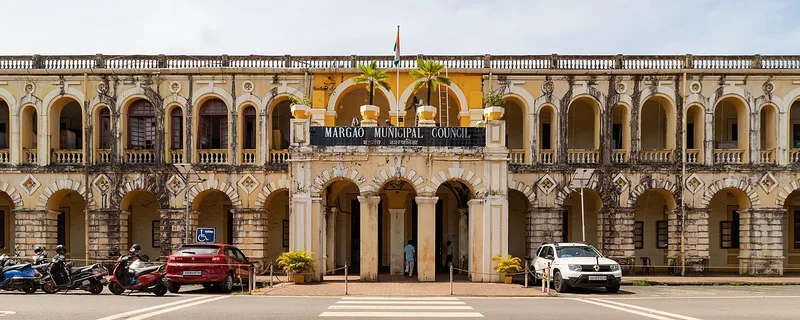
Margao centres on its Municipal Garden and the old market area, with the colonial-era municipal building (Câmara) nearby. The River Sal skirts the city. As a base, Margao puts the beaches of Colva, Benaulim, Varca, Cavelossim and Majorda within easy reach. The best time to visit is November to February (dry and warm); March to May is hot and humid; the June–September monsoon brings heavy rain and a quieter, greener city.
Planning Margao? Tell us your dates and we’ll tailor the trip.
Ask on WhatsAppHow do you get there?
By Plane
The nearest airport is Goa's Dabolim Airport (GOI IATA), about 28 km north near Vasco da Gama — convenient for South Goa. The newer Manohar Parrikar International Airport (GOX IATA, Mopa) lies much further north. Both have prepaid taxi counters; fixing the fare at the counter avoids haggling. App-based cabs also operate. Allow around 45 minutes from Dabolim to Margao depending on traffic.
By Train
Madgaon Junction (station code MAO), about 2 km east of the city centre off NH-66, is Goa's biggest and most important railway station — an intersection of the Konkan Railway and the South Western Railway and the gateway to South Goa. Almost all trains through Goa stop here, with direct services from Delhi, Mumbai, Bangalore, Mangalore, Kochi and beyond, and it is a terminus for several Konkan Railway trains. Book in advance for long-distance trains, especially in peak season. Madgaon is also a handy disembarking point for the beaches of Palolem (about 38 km south) and Colva and Benaulim (about 6–8 km).
By Car / Road
Margao sits on NH-66, which connects it by road with Mangalore, Udupi, Karwar, Ratnagiri and Mumbai to the south and north, and a separate road links it to Ponda and the interior towns. Kadamba Transport Corporation express mini-buses connect Margao with Panaji from the KTC bus stand on the city's outskirts during daytime peak hours; the Margao–Panaji route runs until about 9:30PM. Some inter-state buses to Bangalore (via Karwar) and a few to Mumbai pick up at Margao, mostly in the evening. Buses also serve Ponda, Vasco da Gama, Canacona, Karwar and the surrounding villages.
Margao's centre is compact enough to walk, though it is busy and hot, so plan around the heat of the day. Auto-rickshaws are surprisingly rare here; taxis (Maruti Omni vans, older Ambassadors and the like) are easy to find, and motorcycle taxis ("pilots") are an excellent option for solo travellers and a quick way to navigate. Renting a scooter or motorcycle is straightforward — ask any pilot stand. Private buses are cheap and efficient for short hops in and around the city, with fares of only a few rupees for a 3–5 km ride; note that Goan buses, unlike some other states, have no separate seating for men and women. From the railway junction about 2 km out, public buses run roughly 7AM–7PM and private buses until about 11PM, costing around ₹10 into the centre. Agree taxi fares before setting off, as metering is uncommon.
What are the things to do?
Churches and religious sites
- Holy Spirit Church — Margao's baroque landmark in the central church square, Salcete taluka's second-oldest church (originally built 1564–65, the grander present edifice re-built 1645); the surrounding square of low-rise mansions is a highlight in itself.
- Church of Our Lady of Grace — adjoining the municipal square.
- St. Sebastian Church (Aquem) and Rosary Church (Fatorda), near the football stadium, complete the city's four main churches.
- Monte Hill chapel — a small, scenic chapel on the "Monte" hillock with views over Margao.
- Damodar Temple (Damodar Sal) — Margao's well-known temple-hall, housed within the historic Narcinva D. Naik mansion where Swami Vivekananda is said to have stayed during an 1892 visit to Goa.
Heritage architecture and landmarks
- Praca da Alegria and the church square — landscaped square beside the Holy Spirit Church, ringed by palatial Indo-Portuguese mansions with balcoes and verandas; superb for a photo walk.
- Old Market (Mercado Velho) — the atmospheric old commercial street running parallel to the church square.
- Municipal building (Câmara) and Municipal Garden — the early 20th-century town hall and the garden in front of it; the garden's northern half holds the Aga Khan's Children's Park, developed by the Mavany family in the 1950s.
- Heritage mansions of Abade Faria Road and Padre Miranda Road — grand Indo-Portuguese houses, more concentrated here than elsewhere in Goa.
Culture and sport
Gomant Vidhya Niketan — a venerable cultural society on Abade Faria Road, founded in 1912, with a public library and an auditorium that hosts much of Goa's Konkani and Marathi stage theatre.
Ravindra Bhavan, near Fatorda — a modern performing-arts centre, South Goa's main cultural venue.
Pandit Jawaharlal Nehru Stadium (Fatorda) — Goa's largest sports stadium, host to football matches and the occasional international cricket fixture.
Take a heritage walk through the Holy Spirit Church square and the lanes off Abade Faria and Padre Miranda Roads to see the city's Indo-Portuguese mansions and baroque architecture.
Climb Monte Hill for the small chapel and panoramic views over Margao and the surrounding plain.
Catch a performance of Konkani or Marathi theatre at Gomant Vidhya Niketan or a show at Ravindra Bhavan.
See a football match at the Nehru Stadium in Fatorda, where evening fixtures draw passionate crowds in the off-monsoon months.
Shop the Old Market and municipal market area — as much an experience as an errand.
Day-trip to the South Goa beaches — Colva and Benaulim are 6–8 km away, with Varca, Cavelossim and the quieter Palolem (about 38 km) all reachable from Margao as a base.
Planning Margao? Want these on a customised itinerary?
Ask on WhatsAppWhere to eat?
Margao's food is classic Goan, with both Catholic and Hindu Saraswat traditions strongly represented — fish curry rice as the everyday staple, alongside prawn balchao, cafreal, xacuti, sorpotel, vindaloo and freshly baked Goan bread, with bebinca to finish.
- Longuinhos, near the municipal area — a long-running Margao institution serving Goan classics, beef and pork dishes, prawn rissois and tongue roast; mid-range, characterful and popular with locals.
- Café Tato — a much-loved pure-vegetarian spot known for Goan-style and South Indian vegetarian meals and thalis; cheap, busy, ideal for veg and Jain diners.
- Banana Leaf — reliable vegetarian South Indian fare; budget-friendly.
- Goan fast food and snacks are sold from stalls around the market and central streets, good for a quick, inexpensive bite.
Where to drink?
Goa's relaxed licensing means bars and restaurants serving alcohol are everywhere in Margao. Feni — the local spirit distilled from cashew apple or coconut sap — is the regional signature, usually taken with soda or lime; Goan port-style wine and cold beer are widely available. For non-alcoholic local drinks, seek out kokum sherbet, sol kadhi (a pink coconut-kokum cooler good after a spicy meal), fresh coconut water and lime soda; roadside cold-drink stalls do bright fruit syrups and milkshakes. Drink bottled or filtered water and be cautious with ice from informal stalls.
Planning Margao? We’ll book the stays and dining for you.
Ask on WhatsAppWhere to stay?
- Budget: Simple lodges and guesthouses cluster around the railway junction and the bus stand, with basic rooms from roughly ₹800–1,800; convenient for early trains.
- Mid-range: Hotel Nanutel Margao, a long-established city hotel near the centre, offers comfortable air-conditioned rooms, typically around ₹3,500–6,000 depending on season.
- Upscale / heritage: Margao itself is light on luxury stock; for upscale and heritage stays the South Goa beach belt is close at hand — properties around Benaulim, Varca and Cavelossim (within 10–20 km) range from heritage-style hotels to five-star beach resorts. Rates rise sharply around Christmas and New Year.
What should you buy?
Margao is Goa's busiest shopping town, and the commercial area around the Municipal Garden and the old bus stand is the place to browse. The Old Market (Mercado Velho) sells produce, spices, Goan sweets and everyday goods, while the streets around it carry clothing, footwear and household stores. Good buys include Goan cashews (priced by grade — whole large nuts cost most), spices, feni and port wine, bakery items and Goan sweets such as bebinca. Bargaining is normal at market stalls; established shops are largely fixed-price.
Where to go next?
- Colva (about 6 km west) — the nearest beach, a long sandy strand and a longtime visitor favourite.
- Benaulim (about 7 km southwest) — a quieter beach village close to Margao.
- Palolem (about 38 km south) — a scenic crescent bay in Canacona, one of Goa's most photogenic beaches.
- Ponda (about 28 km northeast) — temple country, with the Mangeshi and Shanta Durga shrines and spice plantations.
- Panaji (about 33 km north) — the state capital, with its Latin Quarter and riverfront.
- Chandor (about 13 km east) — a village famed for its grand Portuguese-era mansions, including the Menezes Braganza house.
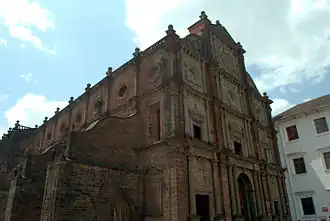
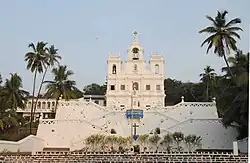
Nearby in Goa
More places to explore around Margao.
Guide content as of May 2026. Portions adapted from Wikivoyage, CC BY-SA 4.0.

Contact Us
Get in touch with us.
Get in touch
Contact Us
Tell us where you'd like to go and how you like to travel. A real Tripcuro planner — not a bot — will craft an itinerary around you.
- Personalised, hassle-free planning end-to-end
- Transparent pricing, no hidden costs
- 24/7 support for complete peace of mind