
Deqin
Yunnan Sheng, China
About Deqin
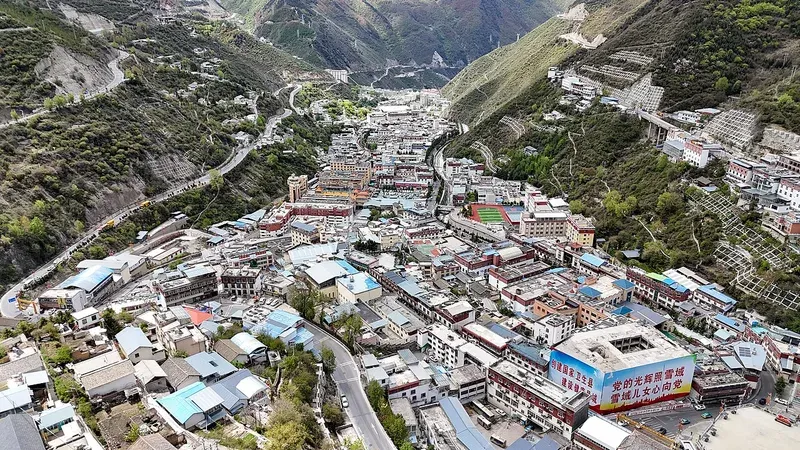
Deqin (德钦; Tibetan: བདེ་ཆེན་རྫོང་; Dêqên) is a small county seat tucked into the Hengduan Mountains at the eastern edge of the Himalayas, perched at roughly 3,550 metres above sea level in the far northwest of Yunnan. Administratively Chinese, culturally it is unmistakably Tibetan: around 80% of its ~55,000 inhabitants are Khampa Tibetans, the local dialect is Khampa Tibetan, and the surrounding valleys are dotted with monasteries, prayer flags, and white chörten. Geographically Deqin sits in Kham, a historic Tibetan region now split between Yunnan, Sichuan and the TAR, and it is the last town on the Yunnan side of the border before Tibet proper. For travellers who cannot get a Tibet Travel Permit, it offers a rare, permit-free taste of the Tibetan high country.
The town itself is unromantic — concrete blocks, white-tile facades, a single through-road winding down the mountainside — and most visitors don't come for the town at all. They come for what surrounds it: Meili Snow Mountain (Meilixue Shan) and its 6,740 m holy summit Kawa Karpo, the Mingyong Glacier, the trek into hidden Yubeng Village, and the deep gorges of the Three Parallel Rivers UNESCO area where the Salween, Mekong and Yangtze run within 75 km of each other. Counter-intuitively, the best months to visit are late autumn through winter (October–February), when skies are clearest and the Meili range stands out crisp against blue. Summer (June–August) is the rainy season with frequent cloud cover over the peaks; March is the worst month — cold enough for snow but wet enough to close passes and trails. Altitude is real here: if you've come straight from Kunming or Lijiang, plan a day or two in Shangri-La (3,200 m) first.
Layout is simple. The county seat (also called Shengping town) sits in a bowl below the highway. Most travellers do not actually sleep in Deqin town — they push 10 km further to Feilai Si (Feilai Temple), a strip of guesthouses, viewing platforms and cafés directly facing the Meili range, which is where sunrise on Kawa Karpo is best seen. From Feilai Si, transport runs down to Mingyong (glacier) and to Xidang hot springs (trailhead for Yubeng).
Planning Deqin? Tell us your dates and we’ll tailor the trip.
Ask on WhatsAppHow to reach
By Plane
The closest airport is Diqing Shangri-La Airport (DIG) in Shangri-La (Zhongdian), about 180 km south of Deqin — there is no airport in Deqin itself. DIG has daily connections to Kunming, Chengdu, and Lhasa (seasonal). From the airport you can taxi into Shangri-La town (~¥30, 15 min) and pick up a Deqin-bound bus or shared minivan the next morning. Coming the same day is tight but possible if your flight lands before 09:00.
By Train
By Car / Road
Road is the way in. The drive up from Shangri-La (Zhongdian) is one of the most spectacular in China — over the White Horse Snow Mountain Pass (Baimangxueshan, ~4,290 m), with the famous "13 Pagodas" viewpoint of the Meili range as you approach. It is roughly 180 km and takes 5–8 hours depending on roadworks, snow, and how often the driver stops for photos. The road is paved but narrow, with switchbacks and landslide-prone sections in summer.
- From Shangri-La: morning buses depart Shangri-La bus station for Deqin; the journey is about 5 hours in good conditions (8 hours when the road is being rebuilt), fare around ¥65–80. The town of Benzilan, roughly halfway, is a worthwhile lunch stop in its own right.
- Return buses to Shangri-La leave Deqin's main bus station in the early morning, typically at 07:30, 08:30, 09:30 and 10:20, with later departures only if there are enough passengers.
- Shared minivans (cheaper, faster, locals' choice) run the Deqin–Shangri-La route for around ¥80 per seat and shave 30–60 minutes off the bus time.
- To Tibet: the overland route to Lhasa via Markam (Mangkang) is officially closed to foreign passport holders — tickets will not be sold to non-Chinese citizens even with a Tibet Travel Permit. Chinese nationals can take long-distance buses from Deqin's main terminal (3–4 days, crossing several 5,000 m+ passes). Short-hop minivans to Mangkang county (~120 km, ~2 hours) sometimes carry foreigners but you should expect to be turned back at checkpoints.
- To Weixi / Lijiang: a southern route via Weixi exists and passes through some genuinely untouristed villages along the Mekong, though road quality varies; ask locally before committing.
Deqin town is small enough to walk end-to-end in 20 minutes — there is essentially one main street winding down from the highway, with the bus station near the T-junction at the lower end.
For anything outside town you'll use:
- Taxis: a taxi from Deqin town up to Feilai Si (10 km) runs around ¥30; to the Mingyong Glacier trailhead about ¥150–200 one way (negotiate, or split with others).
- Shared 4x4s / minivans: the standard way to reach Meili Snow Mountain Nature Reserve and the Xidang hot springs trailhead for Yubeng. Expect around ¥50 per person shared to the reserve entrance; ~¥150 per vehicle shared (6–7 seats) from Feilai Si to Xidang.
- Hostel-arranged transport: the easiest option. Guesthouses at Feilai Si book seats in the morning Yubeng-bound minivans and arrange Mingyong drop-offs.
- No ride-hailing: Didi coverage in Deqin is unreliable; assume cash and local arrangement.
Scams are uncommon but watch for restaurant bills on long bus journeys (check prices before ordering — ¥10–15 for veg, ¥20 for meat is fair) and for drivers quoting "private charter" rates when shared-seat options exist. Altitude affects judgement; don't hike on day one.
Things to do
Mountains & viewpoints
- Meili Snow Mountain (Meilixue Shan / 梅里雪山) — the whole reason most people come. The range's holy summit Kawa Karpo (6,740 m) is one of the most sacred mountains in Tibetan Buddhism and remains unclimbed (a 1991 attempt ended in tragedy and locals successfully petitioned to ban future climbs). Best viewed at sunrise from the Feilai Si viewing platform when alpenglow lights the peaks pink. Free to view from the public platform; ticketed scenic-area sections charge ¥60.
- Feilai Temple (飞�寺 / Fēiláisì) — small but atmospheric Tibetan Buddhist temple 10 km from Deqin town, giving the viewing strip its name. Stop in early morning when pilgrims are circumambulating with juniper-smoke offerings to Kawa Karpo. ~¥30 by taxi from Deqin.
- 13 White Stupas / Pagodas Viewpoint — roadside white chörten lined up along the highway opposite the Meili range; the classic photo stop.
Glaciers & valleys
- Mingyong Glacier (明永冰�) — one of the lowest-altitude glaciers in the Northern Hemisphere, descending the eastern flank of Kawa Karpo to around 2,700 m. Hike from Mingyong village past Taizi Temple to the glacier viewing platforms; expect 3–5 hours round trip on a paved path with steep sections. Reserve entrance fee ¥60 (verify on arrival — fees have risen in recent years).
- Yubeng Village (雨崩� / Yǔbēngcūn) — Tibetan hamlet at ~3,200 m, ringed by snow peaks, waterfalls, and multicoloured forest, accessible only on foot or by mule. The traditional approach is from Xidang Hot Springs: a one-way trek of ~9 km (6.5 km up, 2.5 km down) with ~1,280 m of vertical gain, taking 6–7 hours. Reserve entrance fee around ¥230–260 — bring your passport, you must register. Horse/mule hire is available (~¥255 to the top of Yakou pass, ~¥305 all the way). A road has reduced the walking section in recent years; verify locally which trailhead is currently used.
- Meili Snow Mountain Nature Reserve (梅里雪山景区) — the umbrella protected area covering the above. Entry station controls access to Mingyong and Yubeng sectors.
Villages & culture
Shenping — small Tibetan village close to the Three Parallel Rivers UNESCO area, on highway G214. A good stop for traditional architecture and a glimpse of valley life.
Reringkha village — Tibetan village in the hills; the former Tashi's Mountain Lodge here was a legendary backpacker stop but is now closed. The walk up is still worthwhile.
Trek to Yubeng: the headline experience. Plan at least 2–3 nights in the village so you can do the day hikes to the Sacred Waterfall (Shenpu) and the Ice Lake beneath Kawa Karpo. Basic guesthouses inside the village charge ¥20–40 for a bunk; food is pricier than the lowlands because everything is carried in.
Mingyong Glacier day hike: a less demanding alternative to Yubeng if you have only one day. From Feilai Si, drive down to Mingyong village, then 3–5 hours of hiking to the glacier viewing platforms and Taizi Temple.
Inner & Outer Kora of Kawa Karpo (内转 / 外转): serious multi-day pilgrimage circuits around the Meili range, traditionally walked by Tibetan pilgrims in the Year of the Sheep. The Outer Kora is a ~240 km, 10–14 day trek crossing into the TAR; foreigners are generally not permitted on the section that enters Tibet, so most non-Chinese trekkers do the Inner Kora or sections only. Hire a local guide — this is not a route to attempt unsupported.
Trek along the Mekong (Lancang Jiang): the river runs in a deep gorge below Deqin; lower-altitude valley walks here are doable year-round, including in winter.
Guided trekking:
- Iger Trekking — ☎ +86 887-823-0447 — specialists in Meili Snow Mountain / Kawa Karpo treks including Inner and Outer Kora.
- Nomad — ☎ +86 151-8499-0012 — Finnish researcher based in Xidang village; treks to Yubeng, Mingyong, Sinong, Adong, and the Weixi area, with equipment hire.
Sunrise vigil at Feilai Si: not technically an "activity" but worth treating as one. Be on the platform 30 minutes before dawn in winter; bring everything warm you own.
Visit a Tibetan monastery for morning prayers: Feilai Temple itself; ask hostels for current access at Dongzhulin Monastery on the road back toward Shangri-La (about 1 hour from Deqin).
Planning Deqin? Want these on a customised itinerary?
Ask on WhatsAppFood & Dining
Food in Deqin is a meeting point between Tibetan, Yunnan-Han, and a touch of Naxi influence. Expect hearty mountain fare: yak meat in stews and stir-fries, Tibetan cured pork (��腊肉), barley dishes, mushroom soups (the surrounding forests produce extraordinary matsutake in summer), potatoes and pickled greens. Yak-meat dishes typically run ¥25–35; a vegetable dish ¥10–15. Vegetarians can manage on tofu, mushrooms, potato and greens, but plain "no meat" dishes often still contain lard or yak fat — say "bu fang rou, bu fang dongwu youzhi" (no meat, no animal fat) if strict. Halal options are limited; look for qingzhen (清真) signage, usually Hui-run noodle shops.
- Main-street Tibetan canteens (Deqin town) — a row of small family-run places along Nanping Street serve the local staples: yak with green peppers, cured-pork stir-fries, hot-and-sour potatoes. Filling meals ¥30–50 per person.
- Migratory Bird Café (Feilai Si) — ☎ +86 887 689-5030. Long-running travellers' café at Feilai Temple, good for Western breakfasts, banana pancakes, and excellent ¥10 trekking maps of the Meili area. The owners are a key info source for current trail conditions.
- Once Upon a Time in Feilai Si guesthouse restaurant — sit-down meals with Meili-view windows; the English-speaking owner can advise on routes. Mains ¥30–60.
- Yubeng village guesthouses — meals included or available for ¥30–50; portions are large because everyone has just hiked 6 hours.
- Street snacks — try butter tea with tsampa (roasted barley flour mixed in), and ginger-lemon honey tea — a Deqin signature that's also a working altitude remedy.
Cafes & Nightlife
- Butter tea (酥油茶 / sū yóu chá; Tibetan: bod ja) — the daily fuel of the plateau: yak butter, brick tea and salt, churned hot. Polarising for newcomers but grows on you, especially when stirred into tsampa to make a portable meal.
- Ginger–lemon–honey tea — a Deqin specialty; warming, palatable to all, and genuinely helpful for mild altitude symptoms.
- Sweet milk tea (甜茶) — the more approachable Tibetan tea option, common in Khampa areas.
- Barley wine / qingke jiu (�稞酒) — local highland-barley spirit. Strong, served warm in winter; sip, don't shoot, especially at altitude.
- Beer: standard Chinese lagers (Dali, Tsingtao) are everywhere; alcohol hits harder at 3,550 m, so go gentle on the first night.
- Cafés: Feilai Si has a cluster of small traveller cafés with espresso machines and Meili-view terraces — Migratory Bird Café and the café at Once Upon a Time in Meili are the reliable ones.
Water: do not drink tap water. Bottled water is sold everywhere (¥2–5 per 500 ml); in Yubeng, prices rise sharply because of the trek-in. A filter bottle or SteriPen pays for itself if you're trekking for several days.
Planning Deqin? We’ll book the stays and dining for you.
Ask on WhatsAppPlaces to Stay
Most travellers prefer Feilai Si (10 km from Deqin town) for the Meili view; stay in Deqin town only if you arrive late or have an early bus to catch.
Budget
- Deqin Feilai Temple Youth Hostel (飞�寺觉色滇乡�年旅�) — the cheap classic at Feilai Si; look for the green sign near the bottom of the slope. Dorms around ¥30–40, basic private rooms with electric blankets from ¥120. Common room with stove; WiFi available but flaky; bathrooms basic. Reception staff have some English.
- Shuiyuan Gongyu (水�公寓) — Deqin town. Friendly owner reputed to speak good English. Dorm beds around ¥30, simple suite rooms around ¥80.
- Dexin Tibetan Hotel — 86 Nanping Street, about 30 m left out of Deqin bus station. Family-run, foreigner-friendly, en-suite doubles around ¥80–120.
Mid-range
- Mingzhu Hotel (明ç? 酒店) — Deqin town. Standard rooms around Â¥200; a step up in comfort from the budget options, less character.
- Once Upon a Time in Feilai Si (梅里往事 — Feilai Si branch) — popular mid-range guesthouse on the Feilai Si strip. English-speaking management who actively help with hike planning. Rooms typically ¥200–350 depending on view and season.
Upscale
- Once Upon a Time in Meili (梅里往事) — Feilai Si's most polished option, directly opposite the white-pagoda viewing platform. Standard inside-facing rooms around ¥200; Meili-view rooms around ¥480. Worth the upgrade for the sunrise from your window.
- Songtsam Meili (�赞梅里山居) — the area's boutique benchmark, part of the Songtsam circuit of Tibetan-style lodges across northwest Yunnan. Stone-and-timber rooms, all facing Kawa Karpo, with full board and guided excursions. Rates typically ¥2,000+ per night including meals; book well ahead in autumn/winter.
What to buy
Deqin is not a shopping destination, but a few things are genuinely worth picking up:
- Saffron (�红花) — cheaper here than in lowland Chinese cities, sold in small shops along the main street. Inspect for quality; ask for Tibetan/Iranian rather than dyed substitute.
- Yak products — dried yak meat, yak butter, yak-wool scarves and felt slippers.
- Tibetan handicrafts — prayer beads, singing bowls, hand-painted thangka (quality varies wildly; ask price ranges before browsing).
- Caterpillar fungus (虫� / yartsa gunbu) — a famous Tibetan medicinal product harvested in these mountains. Expensive, often adulterated, and subject to export rules; buy only if you know what you're doing.
Bargaining is expected in markets and small shops (start around 50–60% of the asking price), but fixed prices apply in supermarkets and most restaurants.
Go next
- Shangri-La (Zhongdian / é¦™æ ¼é‡Œæ‹‰) — 180 km / 5–8 hr by road south. The natural next stop: Songzanlin Monastery, Pudacuo National Park, and the gateway out by air or train.
- Benzilan (奔å?æ ?) — ~85 km / ~2.5 hr south, on the Yangtze. A pleasant Tibetan town that breaks the Shangri-La drive; visit nearby Dongzhulin Monastery.
- Cizhong (茨ä¸) — ~80 km / ~3 hr south via the Mekong valley. Famous for its 19th-century French Catholic church and the Tibetan-village vineyards that still make wine from missionary-introduced vines.
- Yubeng (雨崩) — 18 km from Feilai Si plus a half-day's walk; not strictly a separate "destination" but treat it as one — plan 2–3 nights minimum.
- Weixi (维西) → Lijiang (丽江) — the long southern route via the Mekong gorge; ~10–12 hr in stages. Untouristy villages, Lisu and Naxi culture, and a softer landing at Lijiang's old town (2,400 m).
- Markam / Mangkang (芒康), Tibet — 120 km / ~2 hr but closed to foreigners overland; mentioned only so you know not to attempt it without a TTP and an organised tour starting from Lhasa.
Nearby in Yunnan Sheng
More places to explore around Deqin.
Portions adapted from Wikivoyage, CC BY-SA 4.0.

Contact Us
Get in touch with us.
Get in touch
Contact Us
Tell us where you'd like to go and how you like to travel. A real Tripcuro planner — not a bot — will craft an itinerary around you.
- Personalised, hassle-free planning end-to-end
- Transparent pricing, no hidden costs
- 24/7 support for complete peace of mind