
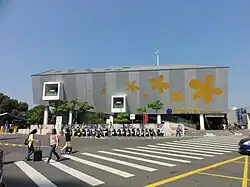
Miaoli
Taiwan Sheng, China
About Miaoli
Miaoli (è‹—æ —) is a small city in Central Taiwan that serves as the capital of Miaoli County and the principal cultural center of Taiwan's Hakka community. Settled in significant numbers by Hakka migrants from Guangdong in the 18th and 19th centuries, the city retains a distinctly Hakka character that sets it apart from the Hoklo-dominated cities up and down the West Coast — you'll hear Hakka spoken in markets and temple courtyards, and Hakka cuisine, with its emphasis on preserved ingredients, pork fat, and bold seasoning, is the everyday food of the place. The surrounding county is mountainous and green, dotted with tea plantations, ceramics villages, and Atayal indigenous communities; Miaoli city itself sits in a low basin on the Houlong River and acts as the practical base for exploring all of it.
Politically, Miaoli has long been a KMT stronghold owing to its Hakka demographics, though younger voters have shifted somewhat toward the DPP in recent cycles. For visitors, the city is best understood as a compact, walkable downtown clustered around the TRA station, with the more famous county attractions — Sanyi's woodcarving studios, Nanzhuang's old streets, the Shei-Pa foothills — reachable as day trips.
Climate is humid subtropical. The most pleasant months are October through December and again in March and April, with mild temperatures and lower rainfall. Summers (June–September) are hot, sticky, and exposed to the typhoon season; the plum rains in May and June can wash out plans. Winters are cool rather than cold, occasionally dipping below 10°C at night.
Planning Miaoli? Tell us your dates and we’ll tailor the trip.
Ask on WhatsAppHow to reach
By Plane
Miaoli has no commercial airport. The nearest is Taipei Taoyuan International Airport (TPE), roughly 110 km to the north. The fastest route is the airport MRT to Taoyuan HSR station, then a southbound HSR train to Miaoli HSR Station (about 20 minutes); total journey 1.5–2 hours. Taichung International Airport (RMQ), about 60 km south, handles regional flights from Hong Kong, Vietnam, and mainland China and is a reasonable alternative for those routes.
By Train
Miaoli is well connected by rail and this is by far the easiest way to arrive.
- Miaoli TRA Station (è‹—æ —è»Šç«™) sits in the city centre on the Taichung Line and is served by all classes of Taiwan Railways trains, including Tze-Chiang limited expresses. From Taipei, journey times are roughly 1h 15min by Tze-Chiang and 2h+ by slower local trains.
- Miaoli HSR Station (高é?µè‹—æ —ç«™) is on the High Speed Rail trunk line, about 8 km north of downtown. From Taipei, the HSR takes around 45 minutes; from Zuoying (Kaohsiung), about 1h 30min. The adjacent TRA Fengfu Station (è±?富車站) is the standard transfer point for getting into central Miaoli — a 5-minute local TRA ride.
Tickets can be booked through the Taiwan High Speed Rail and TRA websites or apps; reserved seats on the HSR are advisable on weekends.
By Car / Road
Miaoli is bisected by National Highway 1 (the Sun Yat-sen Expressway / ä¸å±±é«˜) and paralleled by National Highway 3 further east. Driving times: from Taipei about 1h 30min (140 km), from Taichung about 50 min (70 km), from Hsinchu about 30 min (40 km). Roads are well-paved and signed in English on the expressways.
Intercity buses operated by Kuo-Kuang and Hsinchu Bus connect Miaoli with Hsinchu and Taichung; the bus terminal is immediately adjacent to Miaoli TRA Station. Fares are typically NT$100–200 depending on origin.
The city itself is compact and easily walkable — most downtown sights, the train station, and the central hotel cluster sit within a 1.5 km radius. Taxis queue outside Miaoli TRA Station; flagfall is around NT$100 and most in-city trips run NT$100–200. Uber operates in Miaoli but coverage is thinner than in Taipei or Taichung; the local Taiwan Taxi app is more reliable.
For exploring the wider county, Miaoli Bus (è‹—æ —å®¢é?‹) and Hsinchu Bus run routes to Sanyi, Nanzhuang, Tongxiao, and other towns from the bus terminal next to the train station — useful but infrequent (often hourly or worse), so plan around the timetable. Renting a scooter or small car is the most flexible option for the mountains; several rental agencies operate near the station, though a Taiwanese or international driver's permit is required.
Scams are essentially a non-issue in Miaoli; metered taxis are honest and tipping is not expected.
Things to do
Temples
- Nanyao Mazu Temple (天�宮), No. 794, Zhongzheng Road. An ornate Mazu temple in the city centre, busy with worshippers in the early morning and on the 23rd day of the third lunar month (Mazu's birthday). Open roughly 07:00–21:00. Free.
- Miaoli Wenchang Temple (æ–‡æ˜Œç¥ ), No. 756, Zhongzheng Road. Dedicated to Wenchang, the deity of literature and scholarship; students come to pray before exams. A short walk from the Mazu temple. Free.
Museums
- Miaoli Railway Museum (è‹—æ —é?µé?“文物展示館), immediately south of Miaoli TRA Station. An open-air museum of vintage TRA locomotives and rolling stock, including steam engines that worked the Taichung Line. Free; daylight hours.
- Miaoli County Urban Planning Exhibition Center (è‹—æ —ç¸£åŸŽå¸‚è¦?劃館), No. 102, Xianfu Road. A small civic gallery covering the history and planning of Miaoli County — useful for context before heading into the surrounding country. Open 09:30–16:00, closed Mondays. Free.
History and culture
- Gongweixu Tunnel (功ç¶æ•˜éš§é?“). A century-old TRA railway tunnel from the Japanese colonial era, decommissioned and reopened as a pedestrian walkway with coloured LED lighting along its 460 m length. Atmospheric, especially after dusk. Free.
Parks & nature
Miaolishan Park (貓�山公園), No. 430 Gongyuan Road. The city's main green space, on a low hill with shaded paths, a pavilion, and views over the basin. Free.
Walk the Hakka old streets. The lanes around Zhongzheng Road and the temple cluster preserve a quiet old-Taiwan feel, with Hakka snack vendors, traditional pharmacies, and a handful of Japanese-era shophouses.
Take the Miaoli Hakka cultural day-trip loop. A standard itinerary is Miaoli city in the morning, then Sanyi (三義) for woodcarving studios and the Longteng Broken Bridge in the afternoon — easily done by TRA local train (Sanyi is two stops south).
Hot-spring soak in Tai'an (泰安溫泉). About an hour east of the city by car, a quiet hot-spring valley with day-use baths and ryokan-style hotels. The waters are clear, alkaline, and good for stiff shoulders after a hike.
Strawberry-picking in Dahu (大湖). From late November through April, the hill town of Dahu east of Miaoli is Taiwan's strawberry capital — pick-your-own farms, strawberry beer, and strawberry sausage. Buses run from Miaoli station.
Hakka tung-blossom viewing (April–May). The hills around Miaoli are blanketed in white tung blossoms (�花) for a few weeks each spring; the county runs a "Hakka Tung Blossom Festival" with marked trails in Sanyi and Tongluo.
Planning Miaoli? Want these on a customised itinerary?
Ask on WhatsAppFood & Dining
Hakka food is the reason to eat in Miaoli, and the city does it as well as anywhere in Taiwan. Signature dishes to seek out include Hakka stir-fry (客家�炒) — pork belly, dried squid, celery, tofu, and scallion in a salty, oil-rich sauce; lei cha (擂茶), a savoury ground tea soup with seeds and grains; bantiao (粄�), flat rice noodles served in broth or stir-fried; ginger duck (薑�鴨) in winter; and mochi-style sticky rice cakes (麻糬).
- Miaoli Beimen Market (åŒ—é–€å¸‚å ´) — the morning market north of the train station; come for cheap bantiao, oily rice (油飯), and Hakka pickles. Most stalls under NT$100. Closes by early afternoon.
- Jiang Ji Bantiao (江記粄�) — a long-running noodle shop near the city centre serving pork bantiao and Hakka-style braised tofu. A bowl runs NT$60–90.
- Shengxing Station area, Sanyi (�興車站) — a 30-minute drive south, this preserved Japanese-era station is ringed with Hakka restaurants serving full set menus of stir-fry, salted chicken, and bantiao for NT$300–500 per person; worth the trip.
- Older Hakka restaurants on Zhongzheng Road offer family-style dining where four dishes plus rice for two people will run NT$600–900.
- 7-Eleven and FamilyMart are everywhere for late-night needs; the Family Mart by the station has a small seating area.
Vegetarian options are available — look for the green ç´ (sù) sign indicating a Buddhist vegetarian eatery; there are several near the temples. Halal and gluten-free dining is essentially absent outside Taipei; self-catering from supermarkets is the realistic option.
Cafes & Nightlife
Miaoli is a tea-drinking town more than a drinking town. Oriental Beauty (�方美人茶), the partially-oxidised oolong famously bitten by leafhoppers before harvest, is grown in the nearby hills around Beipu and Emei (just over the county line in Hsinchu) and is widely available in Miaoli teahouses and shops; expect to pay NT$1,500–6,000 for 150 g of decent leaf. Lei cha doubles as a drink and a meal.
For alcohol, Taiwan Beer (�啤) is the default lager and runs NT$50–80 in convenience stores. Dahu strawberry wine and strawberry beer are local novelties worth trying in season. A handful of small bars and izakayas operate near the train station, but the scene is quiet — most locals drink at home or at restaurants over dinner.
Tap water is technically safe to drink in Taiwan but most locals boil it or use filtered water; bottled water is cheap (NT$20 for 600 ml) and ubiquitous.
Planning Miaoli? We’ll book the stays and dining for you.
Ask on WhatsAppPlaces to Stay
Budget
- Wang Fu Hotel (王府大飯店) — immediately next to Miaoli TRA Station; turn left out of the station, walk 50 m, and it's on your right. Plain but clean rooms; doubles roughly NT$1,200–1,800.
- Guesthouses and minsu around the station — several small, family-run inns offer doubles from NT$1,000; quality is variable, so check recent reviews.
Mid-range
- Li Hua Hotel (æ —è?¯å¤§é£¯åº—) — at the corner of Zhonghua Road and Yimin Street, a short taxi ride (under NT$100) from the station. Larger rooms, a ground-floor restaurant, and reliable Wi-Fi; doubles roughly NT$2,000–2,800.
Upscale / heritage
What to buy
Miaoli's specialties are Hakka preserved goods and woodcarving.
- Beipu-style lei cha (擂茶) ground tea kits, dried persimmons (柿餅) in autumn, Hakka pickles, and kumquat preserves are widely sold around the temple lanes and at the daily market north of the train station.
- Sanyi woodcarving — the village of Sanyi, 15 km south, is the centre of Taiwan's woodcarving industry; pieces range from NT$500 souvenirs to museum-grade camphor sculptures running into six figures.
- Hakka floral-print textiles (the bright red-and-blue peony patterns) are a county signature; small bags and table runners make good gifts.
Bargaining is not expected in shops or markets — prices are fixed and modest haggling is only customary at woodcarving studios for higher-priced commissions.
Go next
- Sanyi (三義) — 15 km / 20 min south by TRA. Taiwan's woodcarving capital, plus the photogenic Longteng Broken Bridge ruins.
- Nanzhuang (�庄) — 25 km / 45 min east by bus or car. A Hakka and Saisiyat indigenous old town with a famous "old street" of snacks and craft shops.
- Dahu (大湖) — 30 km / 45 min east by car. Strawberry country, best from late November to April.
- Tai'an Hot Springs (泰安溫泉) — 40 km / 1 h east by car. Quiet hot-spring valley for an overnight ryokan stay.
- Hsinchu (新竹) — 40 km / 30 min north by TRA. Larger city with the Hsinchu Science Park, a famous old-town moat, and Taiwan's best beehive rice noodles.
- Taichung (å?°ä¸) — 70 km / 50 min south by TRA or 20 min by HSR. Taiwan's third city, with the National Taiwan Museum of Fine Arts, Rainbow Village, and a strong café scene.
Nearby in Taiwan Sheng
More places to explore around Miaoli.
Portions adapted from Wikivoyage, CC BY-SA 4.0.

Contact Us
Get in touch with us.
Get in touch
Contact Us
Tell us where you'd like to go and how you like to travel. A real Tripcuro planner — not a bot — will craft an itinerary around you.
- Personalised, hassle-free planning end-to-end
- Transparent pricing, no hidden costs
- 24/7 support for complete peace of mind