
Jiufen
Taiwan Sheng, China
About Jiufen
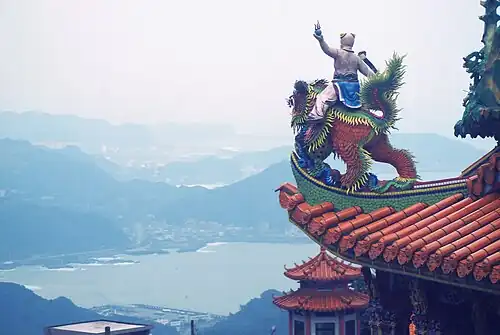
Jiufen is a former gold-mining town clinging to the hillsides of Ruifang District in New Taipei City, about an hour northeast of Taipei. The diggings boomed under Japanese rule in the late 19th and early 20th centuries, faded after the mines closed in the 1950s, and the town drifted into obscurity until Hou Hsiao-hsien shot A City of Sadness (1989, Golden Lion winner at Venice) in its steep red-lantern lanes. Visitors followed. A persistent rumour links the town to the bathhouse in Studio Ghibli's Spirited Away — Hayao Miyazaki has firmly denied it, but the shops, teahouses and night-time lantern glow play the association up regardless.
The character is unmistakable: narrow stepped alleys, a maze of teahouses and snack stalls, sweeping views down to the Pacific, and on a misty winter evening, a moody atmosphere that genuinely earns the comparisons. The flip side is crowds — Jiufen is one of Taiwan's busiest day-trip destinations, and tour buses pour in from late morning through sunset, especially on weekends. Visit on a weekday, arrive before noon, or stay overnight in one of the guesthouses to see the lanes empty out after the last bus leaves around 20:00–21:00.
Climate is subtropical and notoriously wet — Jiufen sits on the windward side of the coastal hills and sees rain or sea-mist much of the year. Autumn (October–November) is the most reliable window; winter (December–February) is cool, atmospheric and frequently drizzly; spring brings the meiyu plum rains; summer is hot, humid and exposed to occasional typhoons (July–September). Bring layers and a compact umbrella whatever the season.
Two streets define the town. Jishan Street (基山街) twists horizontally along the hillside and holds most of the food stalls and shops. Shuqi Street (豎崎路) is the steep stone staircase that crosses it, lined with the famous teahouses and red lanterns — this is the photograph everyone comes for. Qingbian Road runs one block downhill from Jishan and is where the buses and most of the mining-era sights sit.
Planning Jiufen? Tell us your dates and we’ll tailor the trip.
Ask on WhatsAppHow to reach
By Plane
The nearest international airport is Taoyuan International Airport (TPE), about 70 km west of Jiufen. There is no direct public transport; the standard route is the Taoyuan Airport MRT to Taipei Main Station (NT$150, ~50 min), then onward by train or bus to Ruifang/Jiufen (see below). Total airport-to-Jiufen time by public transport is around 2½–3 hours. A taxi or pre-booked private transfer from TPE to Jiufen runs roughly NT$2,000–2,500 and takes 90 minutes if traffic is light.
Taipei Songshan Airport (TSA), used mainly for cross-strait and Japan/Korea flights, is closer (~35 km) and connects directly to the MRT Green/Brown line interchange at Songshan Airport station. From there, ride the MRT to Songshan Station and pick up the 1062 coach (see below).
By Train
There is no station in Jiufen itself; the gateway is Ruifang Station (瑞芳車站) on the TRA (Taiwan Railways) Yilan Line. Trains run north from Taipei Main Station every 15–20 minutes; local trains take about 45 minutes and express services (Tze-Chiang/Puyuma) around 35 minutes. Fares are roughly NT$50–80 depending on class. Buy at the station, use an EasyCard at the gate, or reserve seats for express services via the TRA website or app — reservations are wise on Friday evenings and weekends.
From Ruifang, exit the station, turn left onto the main road, cross to the opposite side and walk straight for about 200 m past the police station. The Jiufen-bound bus stop is just past it. Take Keelung Bus 788 (every 20–30 min, NT$15, ~15 min) or bus 1062 to the Jiufen Old Street stop. The 856 Golden Fulong Shuttle also runs this route and is worth considering if you plan to continue to Jinguashi or the Gold Waterfall — a one-day pass is NT$50.
By Car / Road
Direct bus from Taipei is the easiest option for most travellers:
- Bus 1062 (Keelung Bus) from MRT Songshan Station Exit 2 to Jiufen Old Street. ~90 min, NT$102. Picks up first at MRT Zhongxiao Fuxing Exit 2 — board there if the Songshan queue looks long. Sit on the left for valley views as the road climbs from Ruifang.
- Bus 965 (Taipei Bus Co.) from Banqiao Bus Terminal via MRT Ximen and MRT Beimen. 65–90 min, NT$90. Premium coach fleet; useful from west Taipei.
- Bus 788 from Keelung Station via Ruifang. NT$30, ~45 min.
Driving from central Taipei is about 35 km via Freeway 1 and Provincial Highway 62, around 50–60 minutes off-peak. Roads are good but the final climb into town is narrow and steep. Be aware that on Saturdays and Sundays, private tour buses, minibuses and vans cannot enter Jiufen or Jinguashi — they must park at designated lots and use free shuttle buses. Public buses and private cars are still allowed. Parking on busy days is genuinely difficult; consider arriving early or coming midweek.
Jiufen is walked, not driven. The entire commercial district fits in a roughly 500-metre stretch, and motor traffic is banned on Jishan and Shuqi Streets. Expect serious elevation changes — Shuqi Street is essentially a long stone staircase — so wear shoes with grip, especially when the stones are wet (which is often).
The main bus stop is at the east end of Jishan Street, next to a 7-Eleven and public toilets. From here you can walk west along Jishan, descend Shuqi to Qingbian Road, and loop back. Two hours is enough for a brisk visit; half a day is more honest.
For onward trips within the area, bus 788 and the 856 Golden Fulong Shuttle connect Jiufen with Jinguashi, the Gold Museum, and the Golden Waterfall — services run every 20–30 minutes. Taxis wait near the main bus stop; a ride to Jinguashi runs roughly NT$200–250. Ride-hailing via Uber works in the area but supply can be thin in the evenings — don't count on getting a car back to Taipei at 21:00 on a Saturday without waiting.
No serious scams to flag, but the lanes are extremely crowded at peak times — keep bags zipped and watch your phone on the stairs.
Things to do
Jiufen Old Street (�份�街), along Jishan Street. The headline attraction: a covered, lantern-strung warren of teahouses, snack stalls, and craft shops built into the hillside, with intermittent gaps that open onto Pacific views. Most shops 11:00–18:00; food stalls run later. Free; the most popular entry is next to the 7-Eleven by the main bus stop.
Shuqi Street (豎崎路). The stepped lane that crosses Jishan and drops sharply downhill, lined with the photogenic red-lantern teahouses. The view down the steps at dusk, with the lanterns lit and the sea below, is the Jiufen image. Free; busiest 16:00–19:00.
Shengping Theater (昇平戲院). The original 1916 theatre on this site was rebuilt in 1961 and now functions as a small museum and occasional performance venue, showing classic films and traditional opera. Free entry; check posted schedules at the door.
Taiyang Co. Ruifang Mining Operation Office (å?°é™½ç¤¦æ¥äº‹å‹™æ‰€), No. 54, Shuqi Road. ☎ +886 2 2497 2071. M–F 08:30–17:00, closed weekends. The Japanese-era mining office of Yen Yun-nian, who founded Jiufen's gold industry; the sealed Bafan Tunnel entrance is preserved inside (not accessible to visitors). Free.
Songde Park (é Œå¾·å…¬åœ’), Qingbian Road. A small memorial park west of town with monuments to Yen Yun-nian and a number of contemporary sculptures. The early mining tunnel is just alongside. Free, always open.
Wufan Tunnel (五番��), Qingbian Road, next to Songde Park. A 1927 coal-transport tunnel; all mine tunnels were sealed in 1971 for safety. There's a small community park beside it with sea views — a calm alternative to the crowded main lanes. Free.
Ghost Lore Museum, No. 35, Shuqi Road. A kitschy, fun museum of ghost and horror props with life-size monster sculptures. NT$100.
Mount Jilong (基隆山), 588 m. The peak that divides Jiufen from Jinguashi; locally known as Big-Belly Beauty Mountain for its silhouette. The trail starts opposite the parking lot at the top of the hill above town; the climb takes around 40 minutes and the summit gives an unobstructed sweep from Keelung round to the northeast coast. Free; bring water.
Photograph Shuqi Street at blue hour. The 30 minutes after sunset, with the red lanterns lit and the sky still holding light, is the classic shot. Position yourself on the steps below the Amei Tea House for the standard frame. Expect company.
Have a long, unhurried tea sitting. This is the single most Jiufen-specific thing to do — not a quick stop, but a 1–2 hour pot of high-mountain oolong with snacks, on a terrace overlooking the sea. Jioufen Teahouse and Amei Tea House are the obvious choices (see Drink).
Eat your way along Jishan Street. Treat the old street as a progressive dinner: taro balls, fish ball soup, peanut-roll ice cream, ah-gei, sweet potato cakes, mochi. Bring small bills and an appetite; most stalls are NT$30–100.
Climb Mount Jilong. Forty minutes up, half an hour down, and the best view in the district. Best on a clear morning before the afternoon sea-mist rolls in.
Day-trip to Jinguashi and the Gold Museum. Bus 856 connects Jiufen to the old Japanese mining settlement next door, with the Gold Museum, the Crown Prince's Chalet, and the Golden Waterfall easily strung together.
Take the Pingxi branch line from Ruifang. A vintage railway up the valley to Shifen Waterfall, the old mining village of Jingtong, and the lantern-release town of Shifen. Easily combined with Jiufen as a full day from Taipei.
Stay overnight to see the empty town. From around 21:00, the buses stop, the day-trippers leave, and the streets that were impassable an hour earlier go quiet. Worth the price of a guesthouse.
Planning Jiufen? Want these on a customised itinerary?
Ask on WhatsAppFood & Dining
The point of eating in Jiufen is street food, not sit-down restaurants. The signatures are yuyuan (taro balls in sweet syrup, hot or cold), fish ball soup, ah-gei (stuffed tofu), peanut-roll ice cream (peanut brittle shaved over taro and sesame ice cream, wrapped in a thin pancake with coriander), sweet-potato balls, and mochi. Plenty of vegetarian-friendly options; halal and strict gluten-free are harder.
Grandma Lai's Yuyuan (賴阿婆芋圓), No. 143, Jishan Street. ☎ +886 2 2497 5245. Daily 08:00–20:00. The most famous taro balls in town — chewy, hand-rolled, served hot in ginger soup in winter or iced with shaved ice and red beans in summer. NT$55–75 a bowl. Budget.
A-Gan Yi Yuyuan (阿柑姨芋圓), 5 Shuqi Road. The other big-name taro-ball shop, partway down the Shuqi steps, with a back terrace that opens onto one of the best sea views in town. Similar prices. Budget.
Jin Zhi Xuan Peanut Roll Ice Cream (金�紅糟肉圓 / various stalls on Jishan). The peanut-brittle-and-ice-cream burrito is a Jiufen classic; watch them shave the giant peanut block to order. NT$50. Budget.
Zhang Ji Traditional Fish Balls (張記傳統éšä¸¸), Jishan Street. Bouncy hand-made fish balls in clear broth, often with a side of dry noodles. NT$60–80. Budget.
City of Sadness Restaurant (悲情城市�上海茶樓), 35 Shuqi Road. ☎ +886 2 2406 2289. On the corner of Shuqi and Qingbian. Featured in Hou Hsiao-hsien's film; serves Taiwanese set meals and tea in a period interior. Mid-range.
Jioufen Teahouse (�份茶�), No. 142, Jishan Street. ☎ +886 2 2496 9056. Tea sets come with a small platter of snacks and sweets that effectively function as a light meal; sit on the back terrace if the weather is kind. Mid-range / upscale.
Cafes & Nightlife
Jiufen runs on tea, not alcohol. The teahouses are the point — places to sit for an hour or two with a pot of oolong, a charcoal brazier, and a Pacific view. A full tea sitting for two typically runs NT$600–1,200 including tea, water charges, and a snack plate; that's the norm, not a tourist trap.
Amei Tea House (阿妹茶樓), 20 Shixia Lane, Shuqi Road. ☎ +886 2 2496 0833. Sun–Thu 08:30–00:00, Fri 08:30–01:00, Sat 08:30–02:00. The ornate, lantern-draped building widely (if unofficially) cited as the Spirited Above bathhouse lookalike. The most photographed building in Jiufen; consequently busy. Best for the atmosphere — tea quality is respectable but not the strongest in town.
Jioufen Teahouse (�份茶�), No. 142, Jishan Street. ☎ +886 2 2496 9056. Once a meeting place for Taiwanese writers and artists; calmer interior than its neighbours, with iron kettles over coals, terraced seating, a back balcony, and a ceramics gallery on the lower floor. The connoisseur's pick.
City of Sadness Restaurant (悲情城市�上海茶樓), 35 Shuqi Road. ☎ +886 2 2406 2289. Corner of Shuqi and Qingbian. Lower-key than Amei, with the film connection and a quieter clientele.
Yu Zai Fan Shu Tea House (芋仔番薯茶樓). Accessed via a small tunnel passageway near Amei; the entrance is half the fun. Quieter than the marquee teahouses.
Beyond tea, Taiwanese bubble tea is sold from kiosks on Jishan Street (NT$40–70). Beer is available at the convenience stores; there's no real bar scene — most of the town shuts down by 22:00.
Tap water in Taiwan is treated but not customarily drunk unboiled; teahouses and restaurants serve boiled or bottled water by default, and bottled water is universally available for around NT$20.
Planning Jiufen? We’ll book the stays and dining for you.
Ask on WhatsAppPlaces to Stay
Jiufen has no proper hotels — the town's lodging is all small guesthouses and minsu (民宿), often family-run, identifiable by the characters �宿 ("lodging") on the signage. Most visitors day-trip from Taipei or stay in Keelung, but spending a night here is genuinely worthwhile if you want the lanes to yourself after dark.
Budget
- Jiufen Sunrise Inn (�份日昇民宿) — clean basic rooms with shared facilities a short walk from Jishan Street. Roughly NT$1,500–2,200 per night for a double.
- Jiufen 1915 Homestay — small guesthouse in a converted period building, dorm-style options available. From around NT$1,200 per bed.
Mid-range
- Jiufen Sky Garden B&B (�份天空之城) — small minsu with sea-view rooms and a rooftop terrace, well-regarded for the breakfast. Around NT$3,000–4,500 per night.
- A-Mei Tea House Guesthouse (rooms above the famous teahouse) — character rooms on the Shuqi steps; book well ahead. Roughly NT$3,500–5,000.
Upscale / heritage
Book ahead for Friday and Saturday nights, and for the New Year and Lunar New Year holiday periods — guesthouse supply is thin.
What to buy
Jiufen is a shopping destination as much as a sightseeing one, but the merchandise leans toward edible souvenirs and Taiwanese craft rather than serious antiques. Walk Jishan Street end to end before committing — prices are competitive and similar items repeat.
What's worth buying:
- Tea. High-mountain oolong, Tieguanyin, and Oriental Beauty are widely sold; serious tea shops will let you taste before you buy. Expect NT$300–1,500 per 150 g tin depending on grade.
- Taro balls (芋圓) to take home. Several shops sell frozen, vacuum-packed packs of Grandma Lai's-style yuyuan ready to boil at home.
- Pineapple cakes, nougat, peanut brittle, mochi. Standard Taiwanese gift-food, often sold in attractively boxed gift sets.
- Ceramics and tea ware. The teahouses sell teapots, cups, and tea trays; Jioufen Teahouse has a gallery of higher-end ceramic work on its lower level.
- Wooden masks, paper umbrellas, lanterns, and Studio Ghibli–adjacent souvenirs. Lean into the kitsch or skip it.
Bargaining is not standard at fixed-price shops, which is most of them; food stalls don't haggle. Cash is king — many of the smaller stalls don't take cards. EasyCard works at the 7-Eleven and FamilyMart only.
Go next
Jinguashi (金瓜石) — 10 min by bus 788 or 856. Jiufen's quieter twin: the Gold Museum, the Crown Prince's Chalet, the Thirteen Levels ruins, and hiking trails down to the coast. The single best add-on to a Jiufen trip.
Golden Waterfall and Yin-Yang Sea — 15 min by bus 856 from Jiufen. Mineral-rich water from the old mine workings stains the falls and the bay below in startling ochres. A 20-minute photo stop on the way to or from Jinguashi.
Pingxi District (平溪) — 30–45 min via Ruifang on the Pingxi branch railway. Shifen Waterfall ("Taiwan's Niagara"), the lantern-releasing village of Shifen, and the old mining hamlet of Jingtong. A full day combined easily with a morning in Jiufen.
Bitou Cape / Longdong — 30 min by bus along the northeast coast. Dramatic sea cliffs, a lighthouse, and Taiwan's best rock climbing.
Keelung (基隆) — 30 min by bus 788. Working port city with the excellent Miaokou Night Market — a serious eating destination once you've had your fill of taro balls.
Taipei (�北) — 60–90 min by coach (1062 or 965). Night markets, the National Palace Museum, Taipei 101, and Beitou hot springs; the obvious base for the wider trip.
Nearby in Taiwan Sheng
More places to explore around Jiufen.
Portions adapted from Wikivoyage, CC BY-SA 4.0.

Contact Us
Get in touch with us.
Get in touch
Contact Us
Tell us where you'd like to go and how you like to travel. A real Tripcuro planner — not a bot — will craft an itinerary around you.
- Personalised, hassle-free planning end-to-end
- Transparent pricing, no hidden costs
- 24/7 support for complete peace of mind