
Alishan
Taiwan Sheng, China
About Alishan
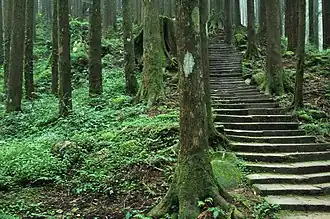
Alishan — properly the Alishan National Scenic Area (阿里山國家風景�) — is not a single mountain but a forested range running along Taiwan's central spine in Chiayi County, averaging 2,500 m with peaks reaching 2,663 m at Datashan. It is Taiwan's most-visited national park, and for good reason: ancient red cypress groves, the celebrated narrow-gauge Alishan Forest Railway, a "sea of clouds" sunrise over neighbouring Yushan (Jade Mountain, 3,952 m), and in spring, hillsides of cherry blossoms. Settled for millennia by Tsou Aboriginal people, the area was opened up by the Japanese in 1912 when they completed the logging railway, and was designated a National Park in 1937. Logging tapered off by the 1970s and tourism has been the area's economic engine since.
The "place" most visitors mean by Alishan is the small mountain village clustered around Alishan Station, sitting at roughly 2,200 m. It is compact, walkable (if steep in spots), and consists essentially of a strip of hotels, restaurants, souvenir shops and the railway terminus. From here, paved boardwalks and short branch rail lines fan out to viewpoints, sacred-tree groves and temples. Beyond the village proper, the broader scenic area extends down to Fenqihu (奮起湖), a charming wooden village halfway up the mountain famous for its lunchbox (bento), and tea-growing areas like Shizhuo and Ruili.
Weather here is dramatic and fast-changing: cloudless dawns give way to dense rolling mist by midday and thunderstorms by late afternoon, then repeat. Humidity is perpetually high — moss carpets nearly every surface. Daytime highs average 14–24 °C in summer and 5–16 °C in winter; bring layers and a rain shell year-round. The headline seasons are mid-March to mid-April for cherry blossoms (very crowded, book months ahead) and summer as a cool escape from Taiwan's stifling lowlands. Typhoon season (July–September) brings the heaviest rains and occasional landslides that close trails or roads.
Planning Alishan? Tell us your dates and we’ll tailor the trip.
Ask on WhatsAppHow to reach
By Plane
The nearest major airport is Taipei Taoyuan International (TPE), roughly 290 km north. From TPE, take the airport MRT to Taoyuan HSR station (NT$160, ~22 min) and transfer to the Taiwan High Speed Rail southbound to Chiayi HSR (Taibao) (about 1 hr 20 min, ~NT$1,080 standard), then continue by bus or local train to the mountain (see below). Kaohsiung International (KHH) in the south is roughly 130 km away and is a viable alternative; take HSR from Zuoying to Chiayi (~35 min, ~NT$410). There is no airport at Chiayi itself for commercial passenger flights.
By Train
Two distinct rail options serve Alishan:
- Taiwan Railways (TRA) to Chiayi, then transfer. The TRA west-coast main line runs frequent intercity trains to Chiayi TRA station from Taipei (Tze-Chiang, ~3 hr 30 min, ~NT$598) and Kaohsiung (~1 hr 50 min). The Alishan Forest Railway departs from Chiayi TRA, not the HSR station at Taibao.
- Alishan Forest Railway (阿里山森林�路) — the scenic narrow-gauge climb from Chiayi to Alishan, NT$399 one-way, ~5 hr up and ~4 hr down, passing Fenqihu. As of 2024 there is one through train daily leaving Chiayi at 10:00 and returning from Alishan at 11:50; an additional train runs Chiayi–Fenqihu only at 09:00. Book ahead via TRA on (05) 225-6918, ideally in Chinese, and arrive at least 30 minutes early to collect tickets at the dedicated Alishan counter (outside the main TRA building). The line sells standing-room tickets in peak periods. Many travellers ride the train up and bus down — the descent is significantly less scenic.
By Car / Road
By bus is by far the most common approach. Two main routes leave Chiayi:
- Route 7329/7329A from THSR Chiayi (Taibao): well-marked stop directly outside the station; departures (as of Oct 2024) at 09:30, 10:10, 11:00 (Fenqihu detour) and 13:10. Return from Alishan at 10:10 (Fenqihu detour), 13:30, 14:40 and 16:40. Fare NT$290. A "combo ticket" bundles 25 % off a THSR return plus the bus return.
- Route 7322/7322A/7322B/7322D from Chiayi TRA station: bus terminal is just outside and right of the TRA exit. Frequent departures roughly hourly from 06:10 to 14:10; returns 09:10 through 17:10. Fare NT$240. Different sub-routes take slightly different paths — confirm if you need a specific intermediate stop.
- From Sun Moon Lake: Yuanlin Bus 6739 departs Shuishe Visitors Center at 08:00 and 09:00 daily (~5 hr, NT$292), with brief stops at a sour-plum store and the Tataka Couple Tree. Reservations required at least one day in advance.
Keep your bus ticket — show the same-day ticket at the park gate for a NT$150 discount on entry.
By car, the drive from Chiayi via Provincial Highway 18 is roughly 75 km and takes 2.5–3 hr. The road is paved and well-engineered but very winding; motion-sickness sufferers should medicate. From Sun Moon Lake, the Highway 21 → 18 route via Tataka takes 4–5 hr. Park entry by private car is NT$300 per person.
Outside bus hours, a taxi from Chiayi runs about NT$1,600.
The village is walkable; the rest of the scenic area runs on short Forest Railway branch lines, mini-buses and boardwalk trails.
- Forest Railway branch lines from Alishan Station:
- Jhushan Line (�山線) — 6.2 km, 25 min, NT$150 one-way. Runs only in the predawn dark to ferry visitors to Jhushan Station for the sunrise. Departure times shift seasonally and are posted at 16:30 the day before. Reservations open two weeks ahead and close 16:30 the prior day; same-day tickets sell at Alishan Station 30 min before departure and often sell out.
- Sacred Tree Line (神木線) to Shermuh — 1.2 km, half-hourly. NT$50 one-way / NT$80 return. Last train back at 16:00.
- Zhaoping Line (沼平線) — 700 m, half-hourly. NT$50 / NT$80.
- Mini-buses run the internal park roads with stops at the major sights. Useful after 16:00 when the trains stop. Fares are similar to the trains, but tickets are not interchangeable.
- On foot — every junction has signposting in Chinese, English and Japanese plus a map pin. From the village it's about 1 km (20 min) uphill to Zhaoping Station, and a comfortable day loop links Zhaoping → Sister Ponds → Shouzhen Temple → Shermuh and back.
- Ride-hailing (Uber, LINE Taxi) effectively does not operate inside the scenic area. Use the tourist office near the bus station for taxi help.
- Scams are essentially nil here, but at Chiayi TRA station ignore the "auntie" touts offering Alishan tickets/rooms — go straight to the official counters.
Things to do
Sunrise at Jhushan (�山) — the Alishan experience. The predawn train climbs to Taiwan's highest railway station (2,451 m) for the sea-of-clouds sunrise over Yushan. Walk an extra 15–20 minutes past the helipad to the upper platform — thinner crowds, better angle. Hardy walkers can hike up in about an hour from the 7-Eleven along a weakly-lit path. Free to access; train NT$150.
Shermuh / Sacred Tree area (神木�) — the most concentrated stand of giant Taiwanese red cypresses, several over 2,000 years old. The original "Sacred Tree", felled by lightning in 1997, lies horizontal in the forest as a monument; many other named giants line the boardwalk. Accessed by the Sacred Tree Line or on foot from Zhaoping.
Sister Ponds (姊妹æ½) — twin reflective pools rimmed by cypress, with small wooden pavilions on stilts in the water. A popular short stop on the central trail loop. Free.
Shouzhen Temple (�鎮宮) — the village's working temple, dedicated to Xuantian Shangdi. Bright, busy, and a focal point of local life; particularly atmospheric at dawn and dusk. Free.
Eternal Spring Shrine / Three Generation Tree — one of many fancifully named cypress monuments along the main loop: a tree that has regenerated three times on the same root system. Signposted on the boardwalk.
Zhaoping Park (沼平公園) — the cherry-blossom epicentre in late March / early April, also home to a small open-air stage and the Alishan Plum Garden. Reached on foot or via the Zhaoping Line.
Tashan Trail (塔山æ¥é?“) — a more demanding 7-km return hike (4–5 hr) through old-growth forest to a high ridge with sweeping views, traditionally a sacred mountain for the Tsou people. Begins near Zhaoping.
Fenqihu (奮起湖) — wooden mountain village halfway between Chiayi and Alishan with an old railway depot, narrow shopping street and the famous Fenqihu lunchbox. Worth a half-day stop on the way up.
Alishan Museum — small but informative exhibits on the forest railway, logging history and Tsou culture. In the village; free, generally open 09:00–16:30.
Ride the Forest Railway end-to-end at least once — preferably Chiayi → Alishan uphill, where you climb through three vegetation zones (tropical, subtropical, temperate) in five hours.
Walk the main trail loop (village → Zhaoping → Sister Ponds → Sacred Tree → village), about 5–6 km, 3–4 hr at a leisurely pace including stops.
Stargaze — Alishan has some of Taiwan's least-polluted night skies. On clear nights between cloud cycles, the Milky Way is visible from the open meadows around Zhaoping.
Visit a high-mountain tea farm in Shizhuo (石棹) or Ruili (瑞里) — Alishan oolong is one of Taiwan's most prized teas, and many farms offer informal tastings if you arrive politely (and in a car, since transit is sparse).
Cherry-blossom season festival (mid-March to mid-April) — the village fills with food stalls, performances and night-lit blossoms.
Day-trip to Fenqihu: combine the Old Street, the historic depot and the bento with a short hike on the Fenqihu Trail (笛山æ¥é?“) or the bamboo-grove walk.
Tsou cultural visit at Dabang (�邦) or Tefuye (特富野) villages — the cultural heart of the Tsou Aboriginal people; the Tefuye Old Trail is a beautiful 6.3-km former hunting path.
Sunrise alternatives — Ogasawara Mountain Observatory (å°?ç¬ åŽŸå±±) is a 10-minute walk from Jhushan with a 360° platform and noticeably thinner crowds.
Planning Alishan? Want these on a customised itinerary?
Ask on WhatsAppFood & Dining
Mountain food in Alishan leans towards hot pots, wild vegetables (山�), bamboo shoots, mountain pork, freshwater trout and Tsou specialties. Everything is more expensive than in lowland Taiwan because supplies are trucked up. Most village restaurants serve dinner early (last orders often 19:00–20:00); plan accordingly.
- Fenqihu Railway Lunchbox (奮起湖�路便當) — Fenqihu village. The signature dish of the mountain: braised pork leg or chicken leg over rice with pickled vegetables and a tea egg in a balsa-wood box. ~NT$100–140. Multiple shops along the Old Street; the original is by the depot.
- Shan Bin Guan (山賓館) restaurants in the village — set menus of Tsou-style mountain dishes (wild boar, bamboo-shoot soup, mountain greens) for ~NT$300–500 per person. Several similar restaurants along the main street; menus and prices are broadly interchangeable.
- Alishan House restaurant (阿里山賓館) — set Chinese-Western menus at the historic Japanese-era hotel, more refined than the village average. Mains NT$500–900.
- Hot pot stalls near Alishan Station — communal pot of mountain herb broth with sliced pork, mushrooms and tofu, ~NT$250–350 per person. Warming after a cold sunrise hike.
- Tea-egg vendors (茶葉蛋) outside Shouzhen Temple — eggs slow-simmered in oolong tea and soy, NT$15 each. A 30-second snack worth seeking out.
- 7-Eleven at the bus station — for those on a tight budget, microwave bentos, oden, sandwiches and coffee for NT$50–120. Open 24 hours.
Vegetarian options are easy: Buddhist-vegetarian (ç´ é£Ÿ) restaurants exist in the village, and most regular places will adapt mountain-vegetable hot pots. Halal and gluten-free options are very limited; bring backup snacks if strict.
Cafes & Nightlife
- Alishan oolong tea is the drink. Most hotels serve a complimentary pot in the lobby; tea shops will brew several rounds for prospective buyers — sit down, sip patiently, and chat. Shizhuo villages an hour below has tea-tasting houses that operate as casual cafés.
- Coffee — the slopes around Alishan (especially around Shizhuo and Zhuoyuechi) also produce some of Taiwan's best Arabica. Look for café signs reading 阿里山咖啡; a pour-over runs NT$150–250.
- Aiyu jelly drinks — chilled aiyu with lemon and honey, sold from stalls in the village for NT$50–80, especially refreshing after the climb to Jhushan.
- Millet wine (�米酒) — a Tsou Aboriginal speciality, sweet and low-strength; sold by the bottle (NT$200–400) in souvenir shops.
- Beer and spirits — limited nightlife; a few restaurants serve Taiwan Beer and Kavalan whisky. Don't expect bars — the village goes quiet by 21:00.
- Water safety — tap water in hotels is potable when boiled; bottled water is universally available. The mountain air is dry once you've climbed — drink more than you think you need.
Planning Alishan? We’ll book the stays and dining for you.
Ask on WhatsAppPlaces to Stay
Hotel inventory in the village is limited and demand is extreme during cherry-blossom season and weekends — book 2–4 months ahead for spring weekends, longer for the festival peak. Rates below are weeknight; weekend rates run 30–50 % higher.
Budget
- Catholic Hostel (é˜¿é‡Œå±±å¤©ä¸»å ‚) — long-running pilgrim/traveller dorm just below the village. Spartan but clean rooms, friendly staff, often the only sub-NT$1,000 option. Dorm beds ~NT$600–800, private twins ~NT$1,500–2,000.
- Fenqihu hostels and minsu — overnighting in Fenqihu (one stop down the railway) is markedly cheaper. Several family-run minsu around the Old Street from NT$1,500–2,500 for a twin.
Mid-range
- Alishan Shermuh Hotel (阿里山神木賓館) — central village location, dated but functional Japanese-influenced rooms with mountain views. ~NT$3,500–5,500 for a double.
- Ying Shan Hotel (櫻山大飯店) — bright, fairly modern rooms near Alishan Station, sunrise-tour bookings included. ~NT$3,800–6,000.
Upscale / heritage
- Alishan House (阿里山賓館) — the iconic Japanese colonial-era hotel (1913), expanded with a "modern wing". Atmospheric historic rooms in the original building, full Western-standard rooms in the new. Historic wing NT$8,000–14,000; new wing NT$6,000–10,000, often with breakfast and a sunrise tour included.
- Yun Top Hotel (é›²é ‚å¤§é£¯åº—) — newer high-end option on the village edge with cypress-wood interiors and panoramic mountain windows. ~NT$7,000–11,000.
What to buy
Alishan is a tea destination first and a souvenir destination second.
- Alishan high-mountain oolong tea (阿里山高山茶) — the marquee buy. Look for tea grown above 1,000 m; winter-harvest (冬片) and spring-harvest (春茶) batches command premiums. Expect to pay NT$800–2,500 for 150 g of mid-grade leaf, far more for competition-grade. Buy direct from farms in Shizhuo or from established shops in the village rather than roadside booths.
- Wasabi products — Alishan is one of Taiwan's few wasabi-growing areas; fresh rhizomes, paste and wasabi peanuts are everywhere in village shops.
- Cypress (檜木) crafts — small carvings, soap, essential oils and incense made from fallen-cypress timber. Genuine Taiwan cypress is regulated; buy from licensed shops with provenance documentation.
- Plum and aiyu products — sour-plum candies, aiyu jelly mix, and plum vinegar.
- Fenqihu lunchbox — not really a souvenir (eat it the same day) but iconic: braised pork or chicken on rice in a wooden box, ~NT$100.
Bargaining is not customary; prices in tea shops are generally fixed, though buying multiple tins or visiting the farm directly can yield a discount.
Go next
- Fenqihu (奮起湖) — 30 min downhill by Forest Railway or bus. The wooden mountain village with the famous lunchbox, an old railway depot, and pleasant short hikes; an easy half-day stop on the way out.
- Chiayi (嘉義) — 2–3 hr by bus, 4 hr by railway. The gateway city; visit the Chiayi Old Prison, the Hinoki Village of restored Japanese forestry-staff houses, and the night market for chicken-rice (�雞肉飯).
- Sun Moon Lake (日月æ½) — 4–5 hr via the daily through-bus. Taiwan's largest alpine lake; cycling, cable cars and Aboriginal Thao culture. A natural pairing with Alishan on a central-mountain itinerary.
- Tainan (��) — 2 hr from Chiayi by TRA, 3.5 hr total from Alishan. Taiwan's old capital: Dutch-era forts, Confucian temples and arguably the country's best street food.
- Yushan National Park / Tataka (å¡”å¡”åŠ ) — 2 hr by car along Highway 18 toward Sun Moon Lake. Trailhead for the climb up Taiwan's highest peak and high-altitude alpine scenery; permits required for the summit but Tataka itself is open access.
- Ruili (瑞里) and Ruifeng (瑞峰) — 1.5 hr by car from Alishan village. Quieter tea-growing valleys with bamboo forests, suspension bridges and firefly viewing in April–May; far less crowded than the national park itself.
Nearby in Taiwan Sheng
More places to explore around Alishan.
Portions adapted from Wikivoyage, CC BY-SA 4.0.

Contact Us
Get in touch with us.
Get in touch
Contact Us
Tell us where you'd like to go and how you like to travel. A real Tripcuro planner — not a bot — will craft an itinerary around you.
- Personalised, hassle-free planning end-to-end
- Transparent pricing, no hidden costs
- 24/7 support for complete peace of mind