
Huashan National Park
Shaanxi Sheng, China
About Huashan National Park
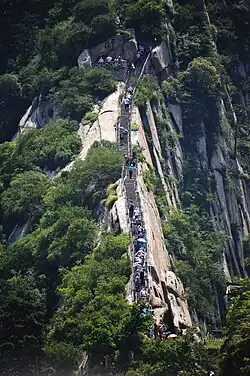
Huashan is a cluster of five granite peaks — North, South, East, West, and Central — connected by ridges, plank walks, and stone-carved stairways that thread between vertical cliff faces. The mountain has been sacred to Taoism since at least the Han dynasty, and several influential monasteries were built into its slopes. It is also one of the historic centres of traditional Chinese martial arts, and features in the wuxia literary canon as the setting of countless legendary duels. Today it draws a mixed crowd of devout pilgrims, domestic weekend hikers, and adrenaline-seekers chasing the Changkong Zhandao plank walk, often called the "most dangerous hiking trail in the world."
The climb itself requires no technical skill, but it does involve steep via ferrata sections, ladders, narrow passes, and stairways without railings. The trails are well maintained, and most of the truly hair-raising sections are now equipped with safety chains and harness rentals — but Huashan is still not a place for visitors with severe vertigo or limited mobility. Expect crowds: the cable car queue can easily exceed two hours on weekends and during national holidays.
Climate is continental: hot, humid summers (July–August averages around 25–30°C at the base, cooler at the summit), crisp autumns, and bitterly cold winters with frequent snow and ice on the upper trails. The best windows are April to June and September to early November, when skies are clearer and temperatures are manageable. Avoid the Labour Day holiday (1–5 May) and National Day Golden Week (1–7 October) unless you enjoy shuffling up the mountain in a tightly packed human chain. Even in summer, nights at the summit are very cold and the wind is strong — bring a windproof layer or rent one at the foot of the mountain.
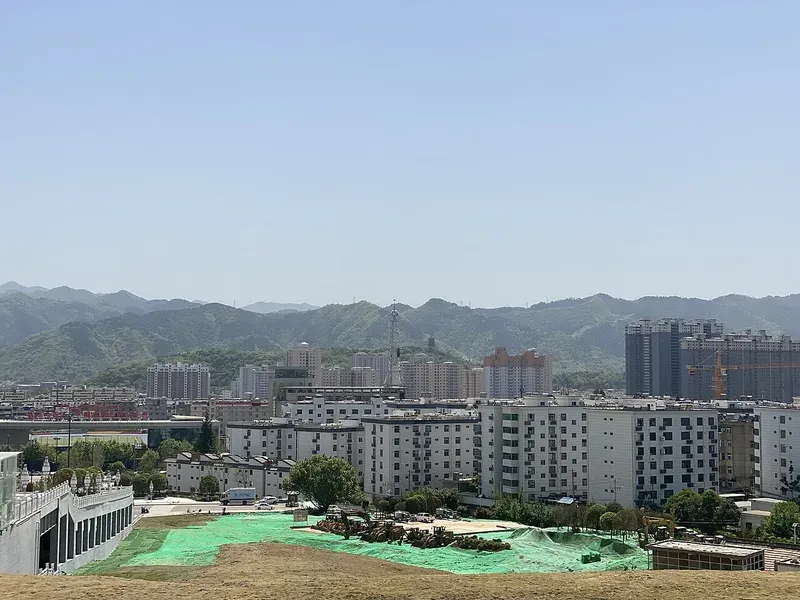
The base town is Huayin, a small city that exists largely to service the mountain. The park's main entrance is the East Gate (玉泉院 visitor centre area), where you buy tickets and board shuttle buses to the cable car stations. Trails radiate from the cable car drop-offs up to the Gold Lock Pass, where the routes branch to each of the five peaks.
Planning Huashan National Park? Tell us your dates and we’ll tailor the trip.
Ask on WhatsAppHow to reach
By Plane
The nearest major airport is Xi'an Xianyang International Airport (XIY), approximately 150 km west of Huashan. From the airport, the easiest path is the airport shuttle to Xi'an North Railway Station (西安北站) (around ¥25, 60–80 minutes), then a high-speed train direct to Huashan North. A private taxi or chartered car from XIY to Huashan typically costs ¥400–600 and takes about two hours depending on traffic.
By Train
Huayin has two stations, and which one you use depends on the train type.
- Huashan North Railway Station (�山北站) serves high-speed G and D trains from Xi'an North. The journey takes 33–45 minutes and costs ¥34.5–54.5. This is the option most visitors should pick.
- Hua Shan Railway Station (�山站), in the south of town, handles slower K and conventional trains from Xi'an Railway Station. Travel time is 1.5–2 hours, tickets cost ¥17.5–19.5 — useful only on the tightest budget.
From either station, take a taxi or minibus to the East Gate ticket office. Off-season, minibuses are unreliable and you may have to take a taxi (¥10 per car, not per passenger). Book trains a few days in advance through the official 12306 app or via Trip.com — popular departures sell out, especially on weekends.
By Car / Road
Buses from Xi'an leave from the east side of the southern parking lot at Xi'an Railway Station, mixed in with departures to the Terracotta Warriors. Buses depart when full rather than on a schedule, so pick one that's already mostly populated to avoid a long wait. Ride time is about two hours, and the fare is ¥33 one-way or ¥55 return. Be wary of scam operators charging ten times the going rate.
Driving from Xi'an takes around 1 hour 45 minutes via the G30 Lianhuo Expressway (toll road, well-paved). Most rental cars in China require a Chinese driver's licence, so self-drive isn't realistic for most international visitors — chartered cars with driver are easy to arrange through hotels in Xi'an.
Once you're dropped in the village or at one of the train stations, taxis to the East Gate are flat-rate at ¥10 per vehicle. Inside the park, shuttle buses ferry visitors from the ticket office to the foot of the cable cars or trailheads — fares are separate from the entrance ticket (typically ¥20–40 per leg). From the cable car drop-offs, the only way around the mountain is on foot, along stone stairs and ridge paths.
Two cable cars operate:
- North Peak Cable Car — from the East Gate side. ¥80 one way, ¥150 return. Queue can exceed two hours on weekends; arrive at opening or buy in advance.
- West Peak Cable Car — longer, more dramatic ride. ¥140 in summer, ¥120 in winter, plus a ¥40 shuttle bus to/from the Yuquan Road crossing.
There are no taxis, ride-hailing apps, or motorised transport on the mountain itself. Didi works in Huayin town for getting to and from train stations. Cash is increasingly rare; Alipay and WeChat Pay are accepted everywhere on the mountain, including at the noodle stalls and lock vendors. Foreign visitors can now link international cards to both apps.
Things to do
- North Peak (北峰, 1,615 m) — The first peak most visitors reach, only a 5-minute walk from the North Cable Car station. Less spectacular than the higher peaks but a useful waypoint and good for those short on time.
- South Peak (�峰, 2,154 m) — The highest of the five and the most popular daytime summit not adjacent to a cable car. Allow 2 hours from Gold Lock Pass.
- East Peak (东峰) — Site of the famous sunrise viewing platform. The classic Huashan experience is to hike or take the cable car up the previous afternoon and watch dawn break here.
- West Peak (西峰) — A 10-minute climb from the West Cable Car station, popular at sunset. The lotus-shaped rocks at the top are tied to the Chinese legend of Pilgrimage to the West.
- Central Peak (ä¸å³°) — Less dramatic than the others but the geographic centre, with views across all four directions.
- Green Dragon Ridge (è‹?é¾™å², Canglong Feng) — A narrow rock ridge with vertical drops on both sides, on the route between North Peak and Gold Lock Pass. Not for the faint-hearted.
- Changkong Zhandao (é•¿ç©ºæ ˆé?“, "Vast Sky Plank Walk") — A wooden boardwalk pinned to a sheer cliff face on the South Peak. Originally built in the 13th century, now reinforced and harnessed. Detour with safety harness rental Â¥30.
- Sparrowhawk Flips Over (鹞å?翻身) — A near-vertical descent down hand-and-foot holds carved into the rock, leading to the Chess Pavilion. Out-and-back, takes about an hour, harness Â¥30.
- Gold Lock Pass (金�关) — The junction where routes to the four upper peaks diverge. The chains here are festooned with thousands of inscribed brass padlocks left by pilgrims and couples.
- Yuquan Temple (玉泉院) — A Taoist temple at the base of the mountain, traditional starting point of the foot route. Worth a visit even if you cable-car up.
Entrance fee: ¥180 in peak season (March–November), ¥100 off-peak (December–February). Tickets are valid for two days from purchase. Cable cars, shuttle buses, and harness rentals are all additional.
- Climb the classical one-day route — Bei Shang Xi Xia (北上西下, "up the North, down the West"). Start at Yuquanyuan and follow the foot trail. After about 3–4 hours you reach the North Peak junction; from there cross to the East and South peaks before descending via the West Peak cable car. Total time: 7–10 hours.
- Night hike for sunrise. Climb overnight from the West Gate (which stays open after the East Gate closes) and time your arrival at East Peak for dawn. Bring a head torch with spare batteries, gloves, and a warm windproof layer — gear can be rented at stalls along the road to West Gate.
- Walk the Changkong Zhandao plank walk. Pay the ¥30 harness fee, clip in, and shuffle out onto the cliff. It's a there-and-back walk on planks barely a foot wide, with carved foot-holds for the final section. A bucket-list moment for anyone with a head for heights.
- Soldier's Way ascent. The alternative foot route below the cable car — about 2 hours of nothing but stairs, including an optional 80-degree section that features in most of the viral Huashan photos. Faster and quieter than the main path, but punishing on the knees.
- Hike the Sparrowhawk descent to the Chess Pavilion. Less famous than Changkong but arguably more technical. The view from the pavilion is one of the most photographed on the mountain.
- Day trip to Xi'an's Terracotta Warriors. Combine Huashan with the Terracotta Army on a two-day loop — both are reachable from Xi'an by high-speed train or coach.
Planning Huashan National Park? Want these on a customised itinerary?
Ask on WhatsAppFood & Dining
The food on the mountain itself is functional rather than memorable — noodle stalls, instant noodles, steamed buns, and tea-eggs are sold at intervals along all the major trails. Prices rise sharply with altitude: a bowl of noodles that costs ¥10 at the base can be ¥30–40 near the summit, justified by the porters who carry every ingredient up by hand. Eating a hot bowl of beef noodles on a cold ridge at dawn is genuinely one of Huashan's small pleasures.
In Huayin and back in Xi'an, the cuisine is classic Shaanxi: wheat-based, garlicky, and heavy on chilli and cumin. Signature dishes to seek out include biang biang mian (wide hand-pulled noodles in chilli oil), rou jia mo (braised pork in flatbread, often called the "Chinese hamburger"), yangrou paomo (lamb broth poured over torn flatbread), and liang pi (cold wheat noodles in vinegar and chilli).
- Budget — noodle stalls near the East Gate. Bowls of biang biang mian or beef noodle soup for ¥15–25. No English menus; point and smile.
- Budget — Yuquan Road street food, Huayin. The road leading up to the foot of the mountain is lined with small restaurants serving rou jia mo and dumplings for ¥10–20.
- Mid-range — restaurants inside Huashan-area hotels (e.g., the Wyndham Grand and Huashan Yaoguang Hotel dining rooms). Sit-down Shaanxi menus with English translations, mains ¥40–80.
- Mid-range — Lao Sun Jia (è€?å™å®¶) in Xi'an, the most famous yangrou paomo restaurant in the country. Worth a stop if you're transiting through Xi'an. Around Â¥60 per person.
- Upscale — Tang Dynasty Palace (Xi'an). Dinner-and-show banquet with traditional dance performance. Sets from ¥400 per person.
Vegetarian options are limited but possible — most noodle shops can prepare a meat-free version on request ("bù yà o ròu"). Halal food is widely available in Xi'an's Muslim Quarter; less so in Huayin. Gluten-free is very difficult given the wheat-based local cuisine.
Cafes & Nightlife
Tap water is not safe to drink anywhere in China — buy bottled water (¥2–10 depending on altitude) or bring a filter bottle. Hot water dispensers are standard in hotels and on trains.
Local drinks include Hanzhong green tea, eight-treasure tea (八�茶), and the ubiquitous Tsingtao and Snow beers. Shaanxi is not a wine region, but you'll occasionally find mijiu (rice wine) and the fiery baijiu at restaurants — a small glass goes a long way.
Nightlife on the mountain is essentially nonexistent: the summit lodges close their dining rooms by 8 or 9 PM. In Huayin, a handful of basic karaoke bars and barbecue joints stay open late. For anything resembling a bar scene, you need to be in Xi'an — try the bars around Defu Lane (德�巷) or the rooftops near the Bell Tower.
Planning Huashan National Park? We’ll book the stays and dining for you.
Ask on WhatsAppPlaces to Stay
There are two distinct sleep zones: on the mountain (rustic summit lodges, useful only if you're staying for sunrise) and in Huayin town (proper hotels, where most visitors stay before and after the climb).
Budget
- Huashan Youth Hostel (�山国际�年旅�), near the East Gate. Dorm beds from ¥60, private doubles ¥150–200. Standard backpacker fare with luggage storage and English-speaking staff.
- East Peak Hotel (东峰宾馆), on the mountain. Basic shared bunks from ¥200 in summer, climbing to ¥400+ during holidays. Cold, draughty, and almost always full — but the location is unbeatable for sunrise.
Mid-range
- Huashan Yaoguang Hotel (�山耀光酒店), Huayin. Modern rooms from ¥350–500 per night. Walking distance to the East Gate shuttle. Decent restaurant on site.
- Atour Hotel Huashan, Huayin. Reliable mid-tier chain, rooms from ¥400. Good breakfast spread.
Upscale / heritage
- Wyndham Grand Xian South, Xi'an. The most polished option in the region if you're treating Huashan as a day-trip rather than overnighting in Huayin. From ¥900 per night.
- Sofitel Legend People's Grand Hotel Xi'an. A renovated 1950s state guesthouse with art deco bones. From ¥1,400 per night.
What to buy
The classic Huashan souvenir is a golden padlock purchased at one of the lock vendors near the Gold Lock Pass or at the summit temples (¥30–80 depending on size and engraving). Couples typically buy a pair, inscribe their names, lock them to the chains, and throw the key over the cliff as a symbol of lasting commitment. Families buy single locks as a prayer for safety and prosperity.
Beyond locks, the stalls along the trails sell Huashan-branded T-shirts, walking sticks, hats, and printed scrolls. Quality is touristy and prices are negotiable — expect to pay roughly half the first quoted price after polite bargaining. In Huayin town, you'll find dried local persimmons, hawthorn snacks, and Shaanxi specialty foods that travel well.
For serious shopping, do it back in Xi'an: the Muslim Quarter for spices and snacks, Shuyuanmen street for calligraphy supplies and rubbings, and the Bell Tower area department stores for everything else.
Go next
- Xi'an — 120 km west, 35–45 minutes by high-speed rail. Former capital of thirteen dynasties; Terracotta Warriors, Ancient City Wall, Muslim Quarter.
- Terracotta Warriors (Lintong) — about 80 km west, 90 minutes by road. The most famous archaeological site in China; easily combined with Huashan as a two-day loop.
- Hancheng — 150 km north, 2 hours by train. Well-preserved Ming and Qing dynasty old town, far less touristed than the regional headliners.
- Luoyang — 220 km east, 1 hour by high-speed rail. Longmen Grottoes UNESCO site and the White Horse Temple, China's first Buddhist temple.
- Mount Song (Songshan) — 350 km east, around 2.5 hours by train plus transfer. Another of the Five Great Mountains, home to the Shaolin Monastery.
- Pingyao — 500 km north, 3 hours by high-speed rail. UNESCO-listed Ming-era walled city, a natural next stop on a Shaanxi–Shanxi loop.
Nearby in Shaanxi Sheng
More places to explore around Huashan National Park.
Portions adapted from Wikivoyage, CC BY-SA 4.0.

Contact Us
Get in touch with us.
Get in touch
Contact Us
Tell us where you'd like to go and how you like to travel. A real Tripcuro planner — not a bot — will craft an itinerary around you.
- Personalised, hassle-free planning end-to-end
- Transparent pricing, no hidden costs
- 24/7 support for complete peace of mind