
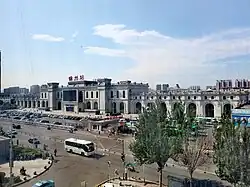
Jinzhou
Liaoning Sheng, China
About Jinzhou
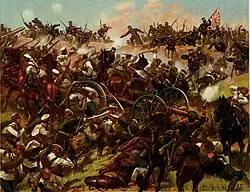
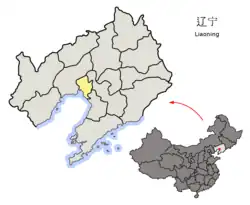
Jinzhou (锦州; JÇ?nzhÅ?u) is a port and industrial city of around 3 million people on the western shore of Liaoning Gulf, sandwiched between the Bohai Sea and the Western Liaoning hills. Its strategic position at the narrow corridor linking Northeast China to the rest of the country earned it the nickname "Liaoxi throat" (the throat of western Liaoning), and that geography has shaped its history: it was here, in the autumn of 1948, that the decisive Liaoshen Campaign turned the Chinese Civil War in the Communists' favour. Earlier still, the surrounding plains were a Liao Dynasty stronghold, and the brick pagoda at the heart of the modern city has stood for nearly a thousand years.
For travellers, Jinzhou is two cities in one. The urban core — Linghe, Guta, and Taihe districts — is a workmanlike grid of apartment blocks, broad avenues, and a handful of standout historical sites. The real draw, though, lies on the outskirts: Bijia Mountain rising offshore in the Bohai Sea, the Liao-era wooden architecture of Fengguo Temple in Yi County, and one of China's richest concentrations of Jurassic and Cretaceous fossil beds. The Yixian Formation, source of the famous feathered dinosaurs that rewrote the textbooks in the 1990s, lies an hour or so inland.
Climate is classic temperate monsoon with four sharp seasons. Summers (June–August) are hot, humid, and account for most of the year's rainfall — July and August together bring nearly 290 mm. Winters are cold and dry with average January lows of -11°C and only sporadic snow. The best windows are May–early June and September–October, when daytime temperatures sit between 17°C and 27°C and skies are usually clear. Avoid mid-July and August unless beach weather is the point, and skip January–February unless you specifically want a quiet hot-spring trip.
Planning Jinzhou? Tell us your dates and we’ll tailor the trip.
Ask on WhatsAppHow to reach
By Plane
Jinzhou Bay International Airport (JNZ) sits in Binhai New District, about 30 km southeast of the city centre. It is a small regional airport with domestic services to Beijing, Shanghai, Shenyang, and a handful of other Chinese cities — there are no scheduled international flights. A taxi to the city centre takes around 40 minutes and costs roughly ¥80–120; a shuttle bus runs to a downtown drop-off point for a few yuan.
By Train
Jinzhou Railway Station (in Linghe District) and Jinzhounan (Jinzhou South) Railway Station on the Beijing–Shenyang–Harbin high-speed corridor handle most arrivals. High-speed G-trains make Jinzhou one of the easier Northeast stops to reach:
- Beijing ↔ Jinzhou: ~3 hours by G-train
- Shenyang ↔ Jinzhou: ~1–2 hours
- Dalian ↔ Jinzhou: ~2.5 hours
- Shanghai ↔ Jinzhou: ~10–11 hours (overnight on slower services, faster connections via Beijing)
Book via the official 12306 app or platforms like Trip.com a few days in advance, especially around Spring Festival, Labour Day (1 May), and National Day (1 October), when seats sell out fast. Foreign passport holders should bring their passport both to book and to clear the station ID gate.
By Car / Road
Jinzhou sits on the G1 Beijing–Harbin Expressway (also signposted as the Jingha Expressway), which is the main artery to and from the city. Approximate drive times in light traffic:
- Shenyang → Jinzhou: ~225 km, 2.5–3 hours
- Beijing → Jinzhou: ~480 km, 5–6 hours
- Dalian → Jinzhou: ~380 km, 4–4.5 hours
- Chaoyang → Jinzhou: ~110 km, 1.5 hours
Roads are well-paved and tolled. For long-distance buses, Jinzhou Bus Terminal Station at No. 7 Lingnan West Lane (☎ +86 416 2181114) handles services to Shenyang, Dalian, Beijing, and surrounding county towns. Jinzhou Tieben Bus Station (4-171 Mingde Garden, Central North Street; ☎ +86 416 3500499) is a useful alternative for routes within Liaoning.
Jinzhou is flat and laid out on a generous grid, but distances between sights add up — most visitors will use a mix of taxis and the bus.
- Taxi: Flag-fall is around ¥7 for the first 3 km, then about ¥1.6–2 per additional km. A trip across the urban core rarely exceeds ¥25. Most drivers do not speak English, so have your destination written in Chinese characters.
- Didi (滴滴出行): The dominant ride-hailing app in China and a more reliable choice than flagging cabs. Set up before arrival with a working international phone number and a Chinese-payment-friendly card (Alipay or WeChat Pay both work in-app).
- Public bus: A dense network covers the city for a flat ¥1–2 per ride (cash or transit QR). Routes 10, 111, 202, 207, 211, 214, 222, and 224 all serve the Liaoshen Campaign Memorial — useful to know.
- Bike-share: Hellobike, Meituan, and Didi Qingju bikes are scattered across central districts; unlock through their respective apps for a few yuan per half-hour.
- Car rental: Practical only if you hold a Chinese driving licence; international permits are not recognised.
A note on scams: Jinzhou is a low-tourist city and outright scams are uncommon, but unmetered "black cabs" loiter outside the train station and airport. Insist on the meter or use Didi.
Things to do
Historical & cultural sites
- Guta Park (å?¤å¡”å…¬å›) — No. 1 Tower Road, Guta District. Built around the Jinzhou Ancient Pagoda, a 13-storey octagonal brick tower from the Liao Dynasty (11th century) and one of the oldest surviving brick pagodas in China. Pleasant landscaped grounds. Open 08:00–17:00.
- Liaoshen Campaign Memorial (辽沈战役纪念馆) — No. 1, Section 5, Beijing Road, Linghe District. A large, serious museum dedicated to the 1948 PLA campaign that broke Kuomintang control of the Northeast. Includes a 360° panoramic painting of the Battle of Jinzhou. Open 09:00–12:00 and 13:00–15:00. Free; bring passport for ID check. Buses 10, 111, 202, 207, 211, 214, 222, 224.
- Fengguo Temple (奉国寺) — 18 East Street, Yi County, ~1 km north of Yi County Bus Station. A Liao Dynasty (1020) Buddhist temple whose Mahavira Hall is one of the oldest and largest surviving wooden structures in China, housing seven monumental clay Buddhas of the same era. ¥50. Open 08:30–16:00 (Nov–Mar), 08:00–16:30 (Apr–Oct); last tickets 30 minutes before close.
Mountains & nature
Bijia Mountain (笔架山) — Bijia Mountain Scenic Area, ~30 km southwest of central Jinzhou on the Bohai coast. A small offshore island shaped like a Chinese writing-brush stand, famously connected to the mainland by a 1.6 km tidal causeway that emerges only at low tide — checking the tide schedule before going is essential. Temples and pavilions on the summit. Open roughly 06:00–18:00.
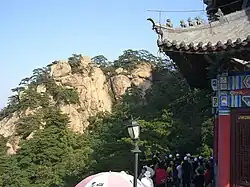
Beizhen Yiwulü Mountain (北镇医巫闾山) — about 70 km northeast of Jinzhou (in Beizhen, technically a county-level city under Jinzhou prefecture). One of the historical "Five Great Mountains" of imperial China, with Qing-era imperial inscriptions and pleasant hiking. A worthwhile half-day trip.
Fossils & paleontology (all in Yi County, ~70 km northwest of Jinzhou; reach via bus from Jinzhou Bus Station)
Yizhou Fossil Museum (宜州化石馆) — 66 Nanguan Street, Yi County, 150 m from the Yi County Bus Station. The first paleontological museum established in Liaoning after the 1990s discoveries; ~10,000 specimens including roughly 200 of major scientific significance. Now a branch of the Geological Museum of China. Open 09:00–16:00 (last entry 15:30). Free.
Sino-German Paleontological Museum (ä¸å¾·å?¤ç”Ÿç‰©å?šç‰©é¦†) — Hejiaxin Village, Toutai Town, Yi County, ~16 km west of Yi County Bus Station on the G305. Built at the discovery site of the dinosaur Bolong yixianensis, with a large mounted specimen plus an outdoor excavation site and petrified forest. Â¥40. Open 08:30–16:30 (Apr–Oct), 09:30–15:30 (Nov–Mar); closed Mondays and during Chinese New Year.
Time the Bijia Mountain causeway: Walking out to the island as the sea retreats — and racing the returning tide back — is the single most memorable thing to do near Jinzhou. Aim for spring or summer low tides; the local tourism office and most hotels can pull the daily tide table.
Beach time at Bijia Bay (笔架山海滨): In July–August, the beaches at the base of Bijia Mountain fill with Chinese domestic tourists for swimming, banana boats, and beachfront seafood.
Birdwatching at Jinzhou Beidagang / Jinzhou North Lake wetlands: Spring and autumn migration brings cranes, geese, and shorebirds to the wetlands ringing the city. Best visited March–May and September–November.
Hot-spring resorts: A cluster of resorts north and east of the city (the area around Yiwulü Mountain is best-regarded) makes a good winter day or overnight trip. Most offer combined indoor/outdoor pools and Chinese-style spa treatments.
Day trip to Yi County's fossil sites: Combining the Yizhou Fossil Museum, the Sino-German Paleontological Museum, and Fengguo Temple makes a single, satisfying day's outing covering 1,000-year-old wooden architecture and 120-million-year-old feathered dinosaurs.
Planning Jinzhou? Want these on a customised itinerary?
Ask on WhatsAppFood & Dining
Jinzhou's claim to gastronomic fame is Jinzhou shao kao (锦州烧烤) — a regional style of charcoal skewer barbecue that is genuinely a national obsession, distinguished by a heavy-handed cumin-and-chili rub, generous use of garlic, and grilling of unusual items (chicken hearts, gizzards, silkworm pupae, whole small fish, cabbage parcels stuffed with pork) alongside the standard lamb. It is best eaten late at night on a plastic stool, with cold beer. Beyond skewers, expect classic Northeastern (Dongbei) cooking: heavy stews, pickled cabbage, dumplings, and northeastern-style pancakes.
- Jinzhou Old Town night-market street food — around Old Town Center Square. Skewers, fried snacks, sugar-coated haw-on-a-stick (tanghulu), and grilled squid for ¥5–30 per item. The right introduction to the city.
- Jinzhou Old Restaurant (锦州��馆) — 58 Xishan Road. Classic Dongbei dishes: pork-and-cabbage stew, guo bao rou (sweet-and-sour battered pork), dumplings. Mains around ¥30–80.
- Goubangzi Smoked Chicken (沟帮å?ç†?鸡) — multiple branches across the city. Order a half or whole bird to take away; deeply smoky, lightly sweet, served cold. Around Â¥40–70 per bird.
- Any 24-hour shao kao joint — look for places with smoke pouring out the door after 21:00. A typical session of skewers and beers for two runs ¥80–150.
Vegetarian options are limited but possible — most Dongbei restaurants do good vegetable-and-tofu dishes (di san xian, dry-fried green beans, cold cucumber salad), and skewer joints will grill cauliflower, mushrooms, leeks, and cabbage. Halal (清真 qingzhen) restaurants are common given the regional Hui population; look for the green Arabic-script signage.
Cafes & Nightlife
Beer is the default companion to a Jinzhou meal, and the local mass-market brands (Snow / 雪花 and Harbin) are dirt cheap — expect ¥5–10 per large bottle in restaurants. The standard local spirit is baijiu, with regional Liaoning brands like Laolongkou (�龙�) widely available.
- Jinzhou Bar Street (Wenhua Road / 文化路) — the city's most concentrated nightlife strip, with bars, KTVs, and clubs popular with a young local crowd. Loudest from Friday through Sunday.
- Independent cafés in central Linghe — chains like Luckin and Manner have arrived, alongside a handful of small specialty cafés. Useful for a quiet break with reliable Wi-Fi.
- Tea: Northeastern Chinese tea-drinking is more casual than in the south; teahouses (chaguan) are scarce, but most restaurants will bring complimentary jasmine or pu'er.
Tap water is not drinkable — stick to bottled water (¥2–3 for 550 ml), or boil. Hotel rooms invariably provide a kettle and complimentary bottled water.
Planning Jinzhou? We’ll book the stays and dining for you.
Ask on WhatsAppPlaces to Stay
Budget
- Jinzhou Orange Hotel, Guta Park Branch (锦州橙å?酒店 å?¤å¡”å…¬å›åº—) — 23-67 Nanjing Road, Section 2. Clean, modern, walking distance to Guta Park. Around Â¥180–260 per night.
Mid-range
- Jinzhou Yunding Select Boutique Hotel (锦州云鼎智选精�酒店) — 26 Section 5, Jiefang Road, Linghe District. Comfortable boutique-style rooms, central location, decent breakfast. Around ¥350–500.
- Hanting / Atour / Ji Hotel branches in central Jinzhou are reliable mid-tier chain options at ¥250–400.
Upscale
- Jinzhou Grand Hotel (锦州大酒店) — 58 Section 3, Central Street. The city's long-standing flagship business hotel, with full conference and dining facilities. Around ¥500–800.
What to buy
Jinzhou is not a craft-shopping destination, but it has solid mid-market malls and good food markets:
- Jinzhou Shopping Center (锦州è´ç‰©ä¸å¿ƒ) — 21-1 Science and Technology Road, Taihe District. Department store, supermarket, food court, and cinema in one. Open daily 10:00–22:00.
- Carrefour Jinzhou (锦州家��) — 198 Longhu Road, Jinzhou Development Zone. Reliable for groceries, snacks for train rides, and household goods. Open daily 10:00–22:00.
- Local specialities to take home: Jinzhou shao kao seasoning packets (the city is famous nationally for its barbecue spice mix), Goubangzi smoked chicken (沟帮å?ç†?鸡) — a Liaoning-protected GI product from a town just outside Jinzhou — and Yi County fossil reproductions sold legally at the museum gift shops (avoid any "real" fossils sold streetside; export is illegal and most are fakes anyway).
Bargaining is normal at street markets and small independent stalls, not at malls, supermarkets, or chain restaurants. Mobile payment via WeChat Pay or Alipay is essentially universal — cash is a backup, and foreign cards remain awkward outside of major hotels.
Go next
- Chaoyang (�阳) — ~110 km west, ~1.5 hours by car or train. Another Liaoning fossil capital, with the Chaoyang Bird Fossil National Geopark and impressive Liao-era pagodas. A natural extension of any palaeontology-focused trip.
- Shenyang (沈阳) — ~225 km northeast, ~1–2 hours by high-speed train. The provincial capital, with the Mukden Palace (a UNESCO-listed Qing imperial complex) and excellent Manchu-Mongolian food.
- Dalian (大连) — ~380 km south, ~2.5 hours by G-train. Coastal city with a strong Russian-Japanese colonial legacy, beach resorts, and the country's most distinctive seafood scene.
- Shanhaiguan (山海关) — ~200 km southwest, ~1.5 hours by train. The eastern terminus of the Ming Great Wall, where the wall meets the Bohai Sea — a spectacular and surprisingly under-touristed stretch.
- Beizhen (北镇) and Yiwulü Mountain — ~70 km northeast, ~1 hour by car. Sacred Taoist mountain with Qing imperial inscriptions and good hiking; doable as a day trip from Jinzhou.
- Huludao (葫芦岛) and Xingcheng (兴城) — ~60–90 km southwest. Xingcheng has one of China's best-preserved Ming-era walled cities and easy beaches, often skipped by foreign travellers.
Nearby in Liaoning Sheng
More places to explore around Jinzhou.
Portions adapted from Wikivoyage, CC BY-SA 4.0.

Contact Us
Get in touch with us.
Get in touch
Contact Us
Tell us where you'd like to go and how you like to travel. A real Tripcuro planner — not a bot — will craft an itinerary around you.
- Personalised, hassle-free planning end-to-end
- Transparent pricing, no hidden costs
- 24/7 support for complete peace of mind