

Songyuan
Jilin Sheng, China
Why visit Songyuan?
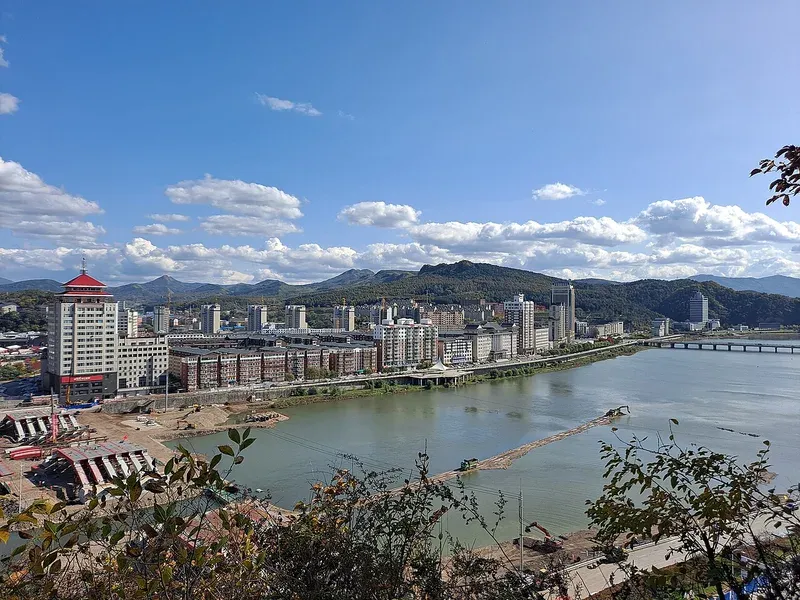
Songyuan (松原) sits in western Jilin Province at the confluence of the Songhua and Nen rivers, on the edge of the Songnen Plain. The area has been inhabited since ancient times and later fell within the orbit of several historical northeastern kingdoms. The modern city took shape in the early 20th century around a river-transport node and was promoted to prefecture-level status in the early 1990s. Oil — Songyuan is part of the Jilin Oilfield complex — has funded rapid expansion since, and the city today is a workmanlike industrial centre rather than a polished tourist stop, but its setting on the rivers and proximity to one of China's larger freshwater lakes give it real reasons to visit.
The destination most travellers come for is Chagan Lake, roughly an hour's drive northwest of the city, known for a winter ice-fishing festival rooted in Mongol-era traditions. Songyuan also has a substantial Mongol and Manchu cultural overlay — the surrounding Qian Gorlos Mongol Autonomous County is one of the few Mongol autonomous areas in northeast China — which shows up in food, festivals and place names.
Climate is severe continental: brutally cold, dry winters and warm, humid summers peaking in July. Most rainfall falls June–August. The two travel windows are late June through early September for warm-weather lake trips, and late December through January for the Chagan Lake winter fishing festival, the headline event, when the lake is drawn down through holes cut in thick ice using techniques said to be centuries old. Avoid the shoulder months (spring mud season, autumn freeze-up) unless you have a specific reason.
Planning Songyuan? Tell us your dates and we’ll tailor the trip.
Ask on WhatsAppHow do you get there?
By Plane
Songyuan does not have a major commercial airport of its own. The two practical options are Changchun Longjia International Airport (CGQ), with onward buses and trains to Songyuan, and Harbin Taiping International Airport (HRB), useful if arriving from points further north.
By Train
Songyuan is on the Beijing–Harbin corridor and is served by both conventional and high-speed services, with connections to Changchun, Harbin, Shenyang, Dalian and Beijing. There are two stations: the conventional station in the central city, and a dedicated high-speed station well outside the centre requiring a short taxi transfer. Book via 12306 or Trip.com; ID/passport required at the gate.
By Car / Road
Expressways connect Songyuan with Changchun, Harbin and Daqing, each roughly a two-hour drive or less. Intercity coaches run from Changchun's long-distance bus station throughout the day. Winter driving requires snow tyres and caution.
Central Songyuan is compact enough that the downtown grid south of the Songhua River is walkable end to end. Beyond that:
- City buses cover the urban area with a flat low fare.
- Taxis are plentiful and cheap; insist on the meter.
- Didi ride-hailing is the standard app and works reliably.
- Reaching Chagan Lake is the main out-of-town transport problem. Book a day-tour seat, take a shared minivan from the long-distance bus station, or charter a taxi for the day.
Scams are uncommon, but during the winter fishing festival inflated taxi quotes and unofficial "guides" hawking overpriced fish appear around Chagan Lake — agree prices before you commit.
What are the things to do?
Chagan Lake — one of China's larger freshwater lakes. The lakeside scenic area has boardwalks, viewing platforms and a Mongol-themed cultural park. In summer it's lotus blooms and birdwatching; in winter it's the ice-fishing pageant. About an hour's drive northwest of central Songyuan in Qian Gorlos Mongol Autonomous County.
Chagan Lake Winter Fishing Festival — held annually from late December through January, with the headline "net-haul" typically on the festival's opening day. The pre-dawn ceremony and the spectacle of large hauls of fish coming up through a single hole in the ice are genuinely distinctive to this place. Ticketed entry; arrive early for the prime viewing positions.
A large modern Buddhist temple complex on the south side of the city, built in recent decades and still expanding.
The Songhua River waterfront — a landscaped riverfront promenade through central Songyuan, pleasant in summer evenings.
An eroded "mud forest" landscape of earth pillars lies a couple of hours' drive west of the city, worth a half-day if driving the area.
Winter ice fishing at Chagan Lake — the once-a-year cultural set piece, with Mongol prayers, costumed fishermen, and the dramatic net haul. Tour operators in Changchun and Harbin run packages that include transport and accommodation.
Summer lake activities at Chagan Lake — boat cruises, lotus-pond walking, and birdwatching on this Ramsar-listed wetland, a stopover on the East Asian–Australasian flyway.
Try a Mongol grassland day trip — outfitters around Qian Gorlos run horseback rides and yurt-stay experiences in the warmer months; arrange through your hotel or at the Chagan Lake scenic area gate.
Bathhouses in winter — like the rest of the Dongbei, Songyuan takes its bathhouses seriously; a session of steam and scrub is a common local cure for deep-winter cold.
Planning Songyuan? Want these on a customised itinerary?
Ask on WhatsAppWhere to eat?
Songyuan's food is straight-up Dongbei (Northeast Chinese) with a strong fish-and-mutton accent from the lake and the surrounding Mongol pastures. Portions are large and prices are low by Chinese standards, and pickled cabbage shows up in everything from late autumn onward.
Signature dishes to look for: whole-fish banquets built around the day's catch from Chagan Lake, braised or stewed; northeastern stews of free-range chicken with dried mushrooms and glass noodles; pickled cabbage and pork-belly hotpot; and Mongol-style roast or hand-pulled mutton, better at lakeside restaurants than in the city centre.
Lakeside fish restaurants cluster around the Chagan Lake scenic area gate; local Dongbei stew houses are found in every neighbourhood in the city; and the upper-tier hotels around the city centre offer a more polished take on the same regional cuisine.
Vegetarians can navigate Dongbei cooking but should expect concessions — even "vegetable" stir-fries often start with pork lard. Halal restaurants exist around the bus station. Gluten-free is genuinely difficult; soy sauce, dumpling wrappers and noodle bases are everywhere.
Where to drink?
Baijiu is the social glue of Dongbei, and northeastern banquets default to high-proof sorghum spirit. Local beer runs to Snow and Harbin Beer. Mongol-influenced salty milk tea appears at lakeside Mongol restaurants and is worth trying once. National coffee chains have outlets in the central business district; independent third-wave cafés are rare.
Tap water is not potable. Drink bottled or boiled water; hotels provide thermoses of hot water as standard.
Planning Songyuan? We’ll book the stays and dining for you.
Ask on WhatsAppWhere to stay?
Songyuan has national budget chains (Hanting, 7 Days Inn and similar) near the railway station, established mid-tier chains (Jinjiang Inn, Vienna Hotel and similar), and a long-standing business-class hotel in central Songyuan that has historically been the city's most comfortable option. During the winter fishing festival, several resort-style properties operate on the Chagan Lake shore and can book out weeks ahead.
What should you buy?
Songyuan is not a shopping destination, but a few things are worth bringing home:
- Chagan Lake fish products — smoked, dried, and vacuum-packed fish from the lake, sold at lakeside markets and supermarkets in town.
- Mongol crafts — small leatherwork and felted items from souvenir stalls at Chagan Lake; quality is variable, bargain hard.
- Northeast China dry goods — fungi, pine nuts, and ginseng appear in dedicated shops around the bus station and in department stores.
Bargaining is normal at markets and souvenir stalls, not at malls or supermarkets.
Where to go next?
- Changchun — around two hours by train. The provincial capital, with the former Manchukuo Imperial Palace and the Changchun Film Studio.
- Harbin — a couple of hours by car or several hours by conventional train. Russian-influenced river city, famous for its January Ice and Snow Festival — pair with Chagan Lake for a complete northeast winter trip.
- Daqing — around ninety minutes by road. China's most famous oil city, with an easy industrial-history detour.
- Jilin City — a few hours by train or car. Famous for winter "rime ice" along the Songhua, plus the nearby Beidahu ski area.
- The eroded earth-pillar landscape west of the city — a half-day side trip combinable with Chagan Lake on the return leg.
- Hulunbuir grasslands (Inner Mongolia) — further afield, the natural extension of the Mongol-cultural thread that runs through Songyuan and Qian Gorlos.
Nearby in Jilin Sheng
More places to explore around Songyuan.

Guide content as of July 2026. Portions adapted from Wikivoyage, CC BY-SA 4.0.

Contact Us
Get in touch with us.
Get in touch
Contact Us
Tell us where you'd like to go and how you like to travel. A real Tripcuro planner — not a bot — will craft an itinerary around you.
- Personalised, hassle-free planning end-to-end
- Transparent pricing, no hidden costs
- 24/7 support for complete peace of mind